City
A visual history of Dupont Street
Dupont is one of those streets that's been more important to Toronto's development than it's generally given credit for. Referred to as both Van Horne and Royce before the street was straightened and unified, its proximity to the CPR tracks made it an important industrial manufacturing corridor. Whether it be the Ford Model T factory and showroom at Christie, the Evening Telegram building across the street, the Hamilton Gear plant at Dovercourt, or the abandoned Mono Lino Typesetting building near Howland, Dupont was a place were stuff was made.
Some of that "stuff" had quite the range. In his 1998 essay about the street in Taddle Creek Magazine, Alfred Holden writes of the presence of Hamilton gears in the locks of the St. Lawrence Waterway, the cockpit of the Avro Arrow and within the moving roof of the SkyDome (now the Rogers Centre). "When you know all this, Dupont Street, so flat, long and gritty, rises to heights," he explains. "It is a place where visions and achievements far-reaching, even spectacular, began. In ways unseen, unrecorded, Dupont Street in Toronto was one of the places where the twentieth century, now at a close, was made."
Evidence of Dupont's industrial past is still easy to spot if you take the time to walk across the roughly six kilometres it stretches from Avenue Road in the east to Dundas/Annette in the west. Even if most of the factories have been replaced or repurposed, the street still appears more pragmatic than anything else. And yet, somehow, that makes it all the more intriguing. This is a place that's been steadily transforming from the beginning, and in its current state, one gets to see the hodgepodge of its history.
PHOTOS
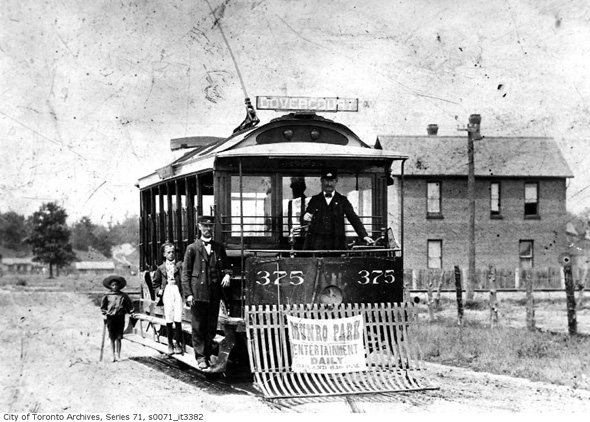
Dovercourt just north of Dupont, 1904
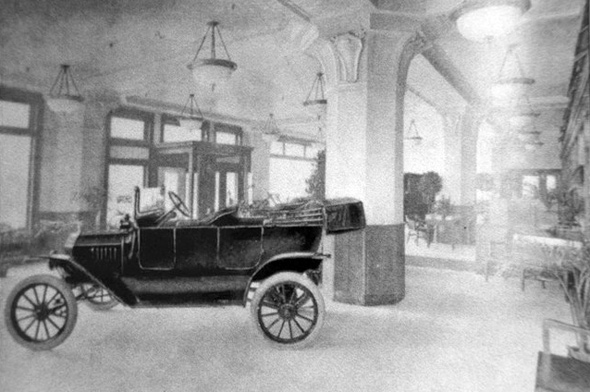
Interior of the Ford Model T showroom at Christie and Dupont, 1910s
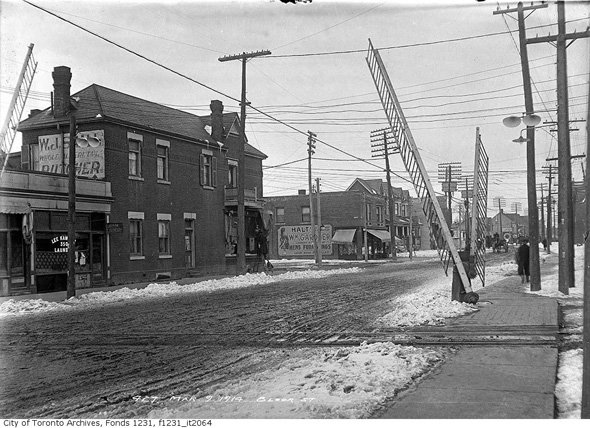
Dupont and Olser looking east, 1914
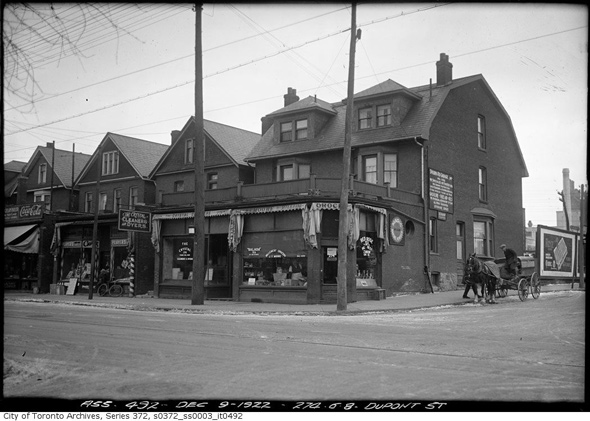
Dupont and Spadina, 1922
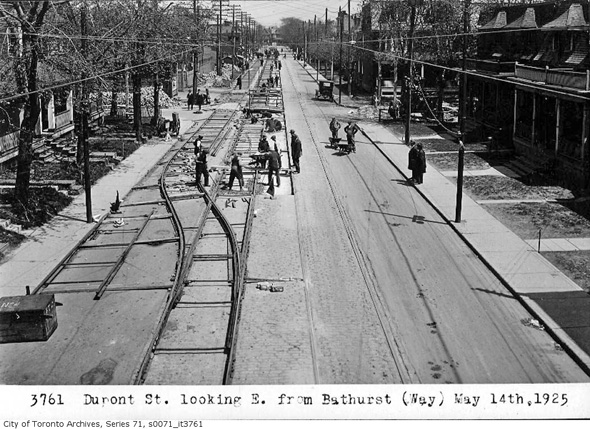
Dupont looking east of Bathurst, 1925
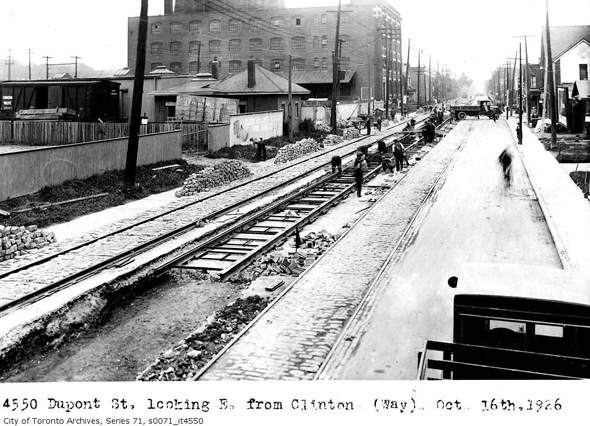
Dupont looking east toward Christie, 1926 (the photograph is mislabeled)
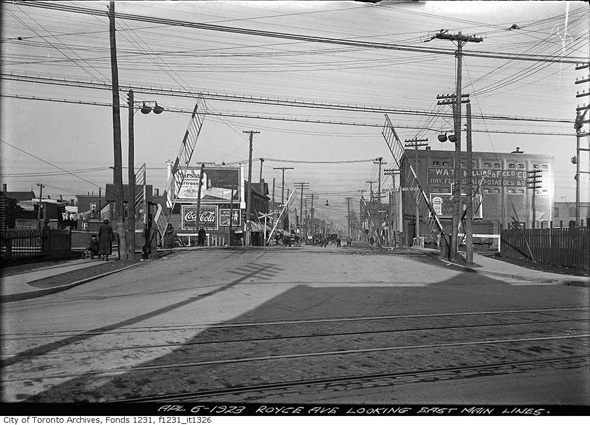
Royce (Dupont) and Dundas, 1923 (pre-underpass)
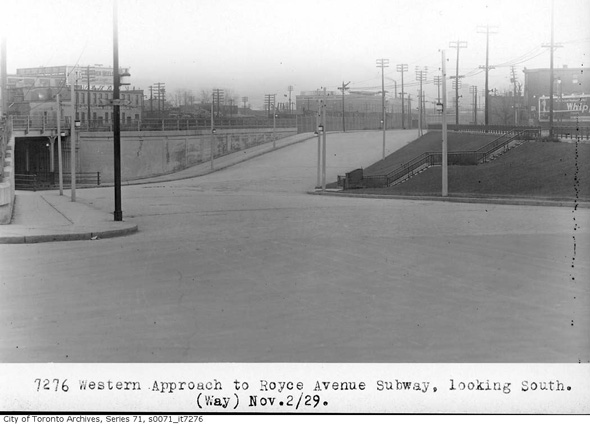
Royce (Dupont) and Dundas, 1929 (brand new underpass)
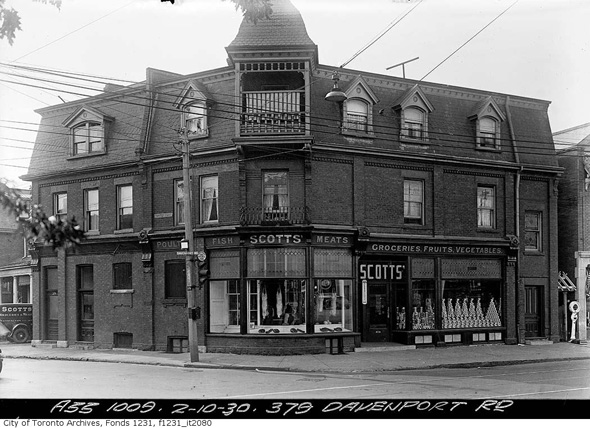
Davenport and Dupont, 1930
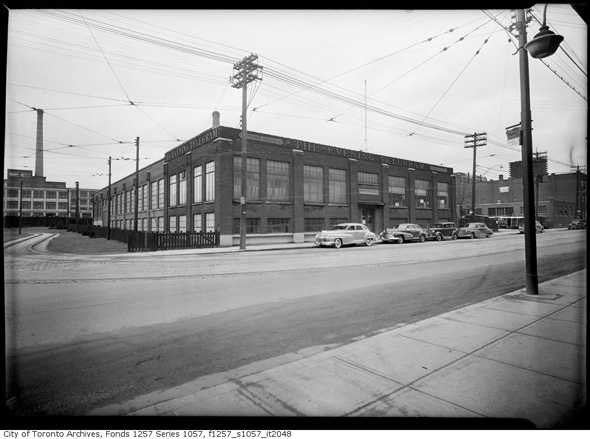
The Evening Telegram, 1940s (the site is now home to Loblaws)
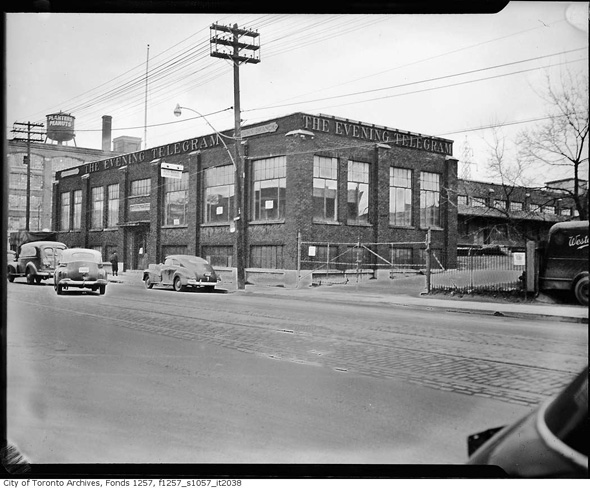
Evening Telegram, 1940s (ominously with a Weston truck parked out front)
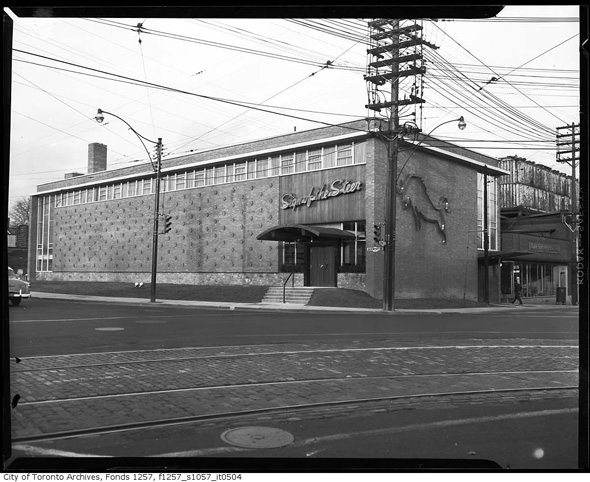
Sign of the Steer Restaurant at Dupont and Davenport, 1955
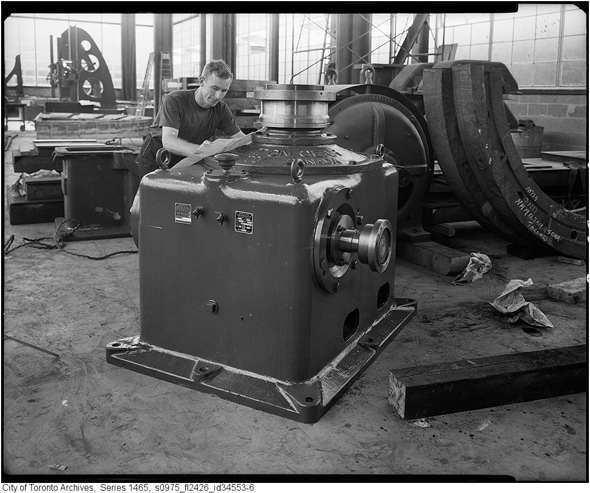
Hamilton Gear at Dupont and Dovercourt, 1957
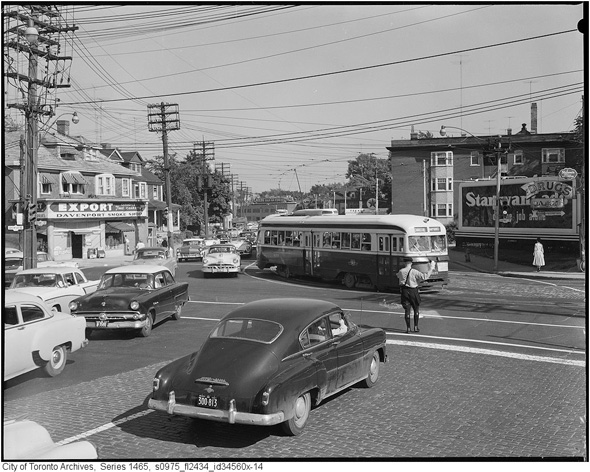
Dupont and Davenport, 1957
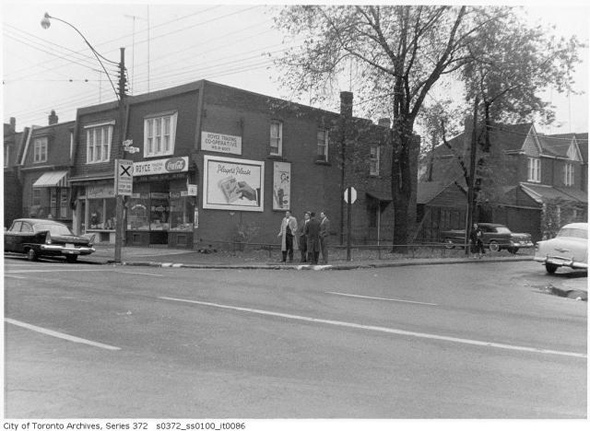
Dupont and Perth, 1958
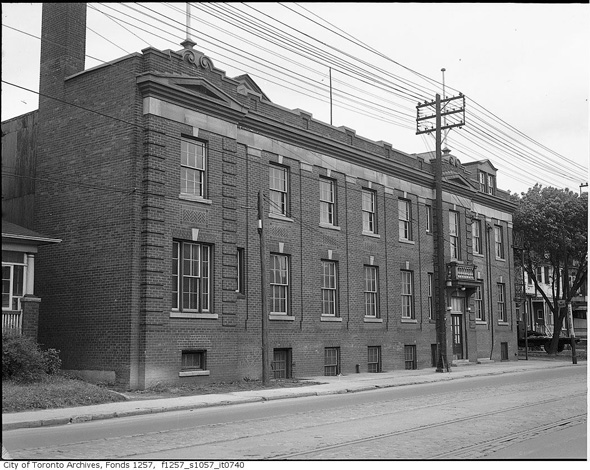
Dupont near Manning, 1960s (that's a skating rink in there — and now a private racquet club)
Dupont and Spadina, 1974
Contemporary Photos:
Various rail overpasses north of Dupont, 2009
The iconic Vesta Lunch
Dupont and Albany, 2010 (northwest corner)
Dupont and Christie, 2010
Historical photos from the Toronto Archives. Contemporary photographs by the author.


Discussion
14 Comments
Sort By Oldest First / Newest First
Subscribe
Also interesting is that when the building was a Ford factory, they used to test-drive the cars on the roof.
Said bar may have been removed: I'm not sure if the current occupants have the same work ethos as Henry had back then...
Ford plant was taken over Planters Peanuts. There were 5 pin bowling alleys on ground floor east end.
Ford had another building just north of the railway tracks which was taken over during WWI and became Christie Street military hospital until replaced by Sunnybrook. Went to school with David Hamilton of Hamilton Screw & Gear and renewed friendship as members of RCYC The building to the left of Evening Telegram with the large smoke stack was the T Eaton furniture warehouse. It had a great baseball diamond on it's east side for the employees. Although we weren't supposed to the kids in the neighourhood took it over in the evenings. To the east of the Telegram building was Weston's Bakery where we would head after playing baseball. We could always get free misshapen rolls which were still hot. Just peaking over the right hand side of the Telegram building is another smoke stack. This belonged to Union Carbide and was where they made Eveready Batteries and Prestone Antifreeze.
That's where I started work. I stayed with the parent company for 40 years. Our house abutted the company's playing ground which included a baseball diamond, a soccer field, putting greens, bowling greens, croquet courts, horsehoe pitches and most important for me 3 soft tennis courts. Roma lived about7 doors west of us.