City
What Queen's Quay looked like before the condos
Queen's Quay, like so many areas around downtown Toronto, has undergone massive change over the last 30 years or so. Once a street that serviced waterfront industry and passengers about to embark on ferries headed to the Toronto Islands, our city's most southerly street (at least in terms of the downtown core) is now something of a neighbourhood unto itself, complete with condos galore, tourist attractions (Harbourfront Centre), and office space in the York Quay Centre.
And more change is on the way. Waterfront Toronto has big plans for the section of Queen's Quay to the east of Yonge, where the future is only hinted at in developments like Sugar Beach, Sherbourne Common and the Corus Building. There's even a snazzy new video that'll show you what it's all supposed to look like when the construction is finally complete. But what did the street look like before all this development? Although it's probably not a place to get particularly nostalgic about, it's always intriguing to situate the city within the context of its industrial past.
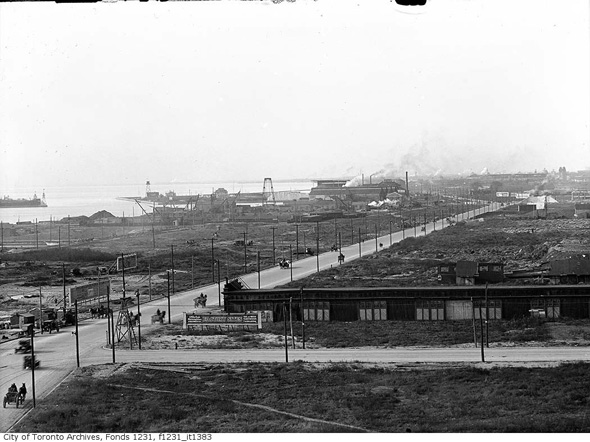
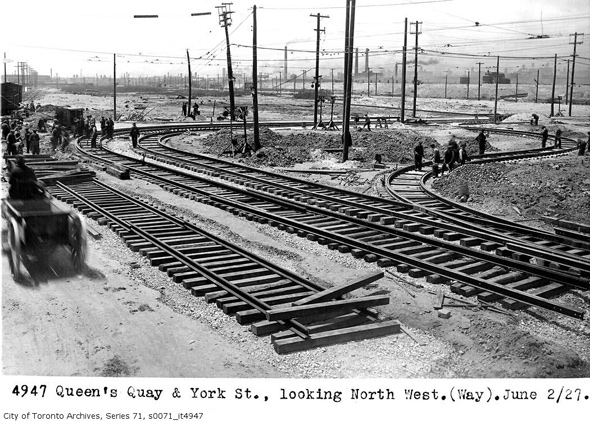
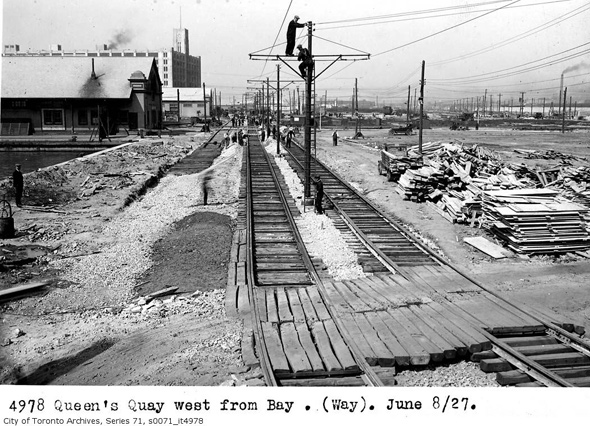
Queen's Quay was born, as it were, at the turn to the 20th century when various efforts were made to expand the city southward by filling in the harbour. Up until the early 1970s, the street bore an almost exclusively industrial character save for the ferry docks. Streetcar service arrived in the late 1920s, only to disappear some 50 years years later before its eventual return in 1989. Throughout this period, Queen's Quay was a mostly tired stretch of road, home to various silos and warehouses, and, of course, the Toronto Terminal Warehouse.
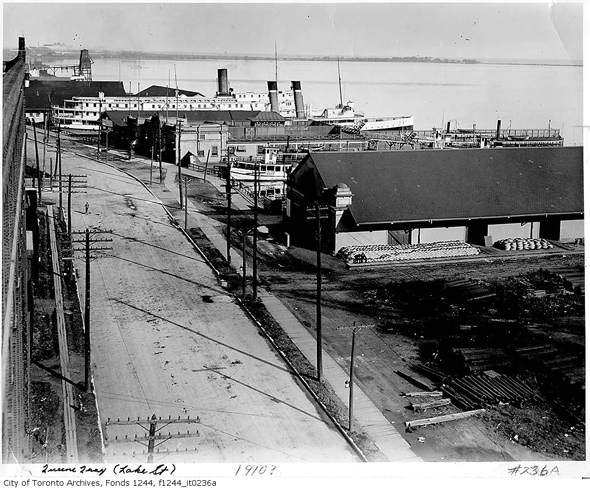
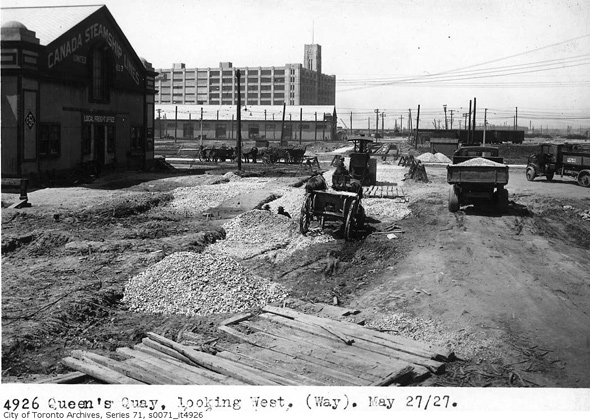
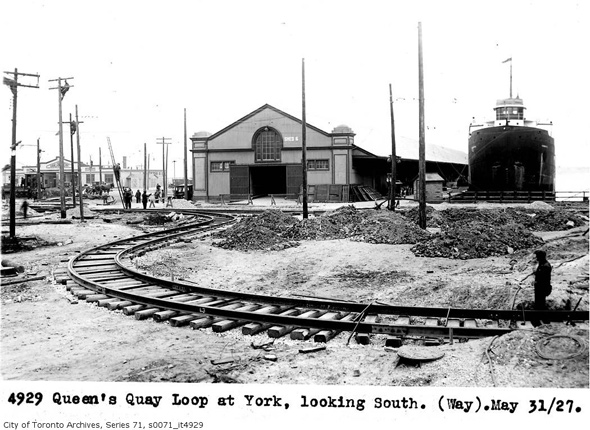
If you weren't going to work here or destined for a ferry boat, chances are you skipped Queen's Quay altogether. Things would slowly change in the 1970s when the Toronto Terminal was converted to the York Quay Centre and the Westin Harbour Castle Hotel was built. In the years that followed, condos slowly sprouted up between these two anchors, before the street was officially extended west from Rees Street to Stadium Road in the mid 1980s.
By that time, the a real estate boom was starting to to gear up, and the prime waterfront property would quickly be bought up by developers. It's not all about condos here, however. Although they tend to dominate the north side of the street — creating, some will say, a barrier to the waterfront — the southern tip has seen promising developments like HTO park and the revitalized Power Plant art gallery.
And that's not to mention what's taking place east of Yonge. It remains to be seen just what the character of the street will be when development pushes beyond Sherbourne, but if recent projects are any indication, there's reason to be optimistic about the future.
PHOTOS
Queen's Quay near, 1910
Looking west from Bay Street, 1927
Looking south near York Street, 1927
Looking northwest from York Street, 1927
Looking west from Bay Street, 1927
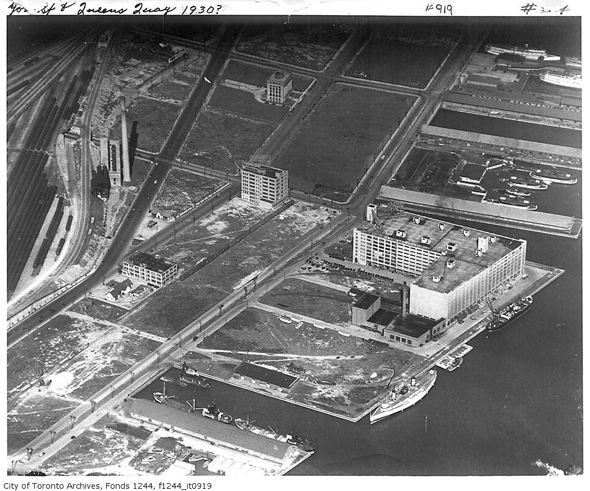
Queen's Quay and York Street, 1930
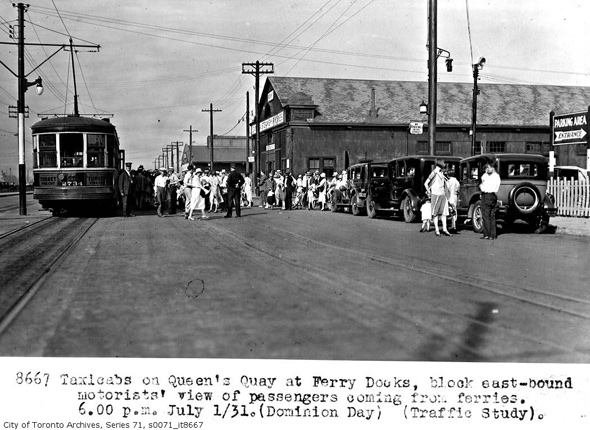
Taxis at the ferry docks, 1931
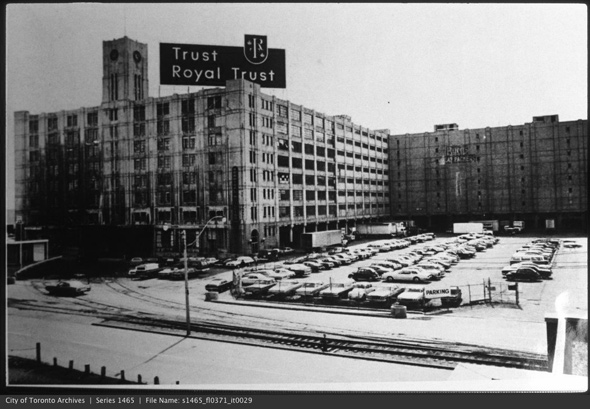
Royal Trust Building, 1960s
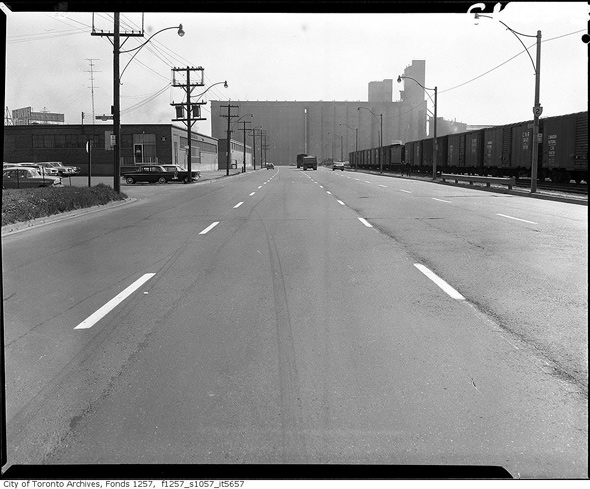
Looking east at Bonnycastle, 1960s
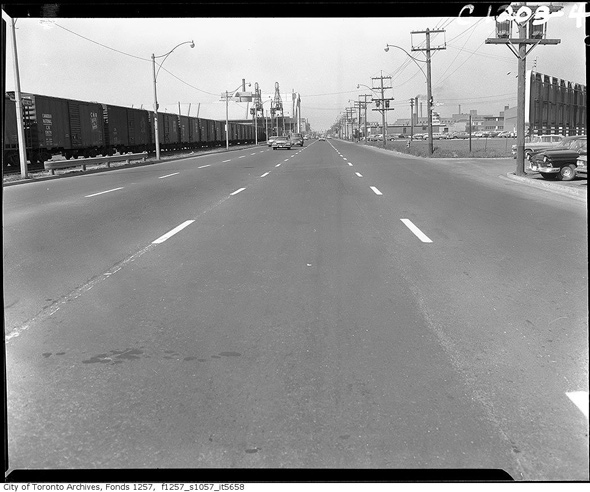
Looking west at Bonnycastle
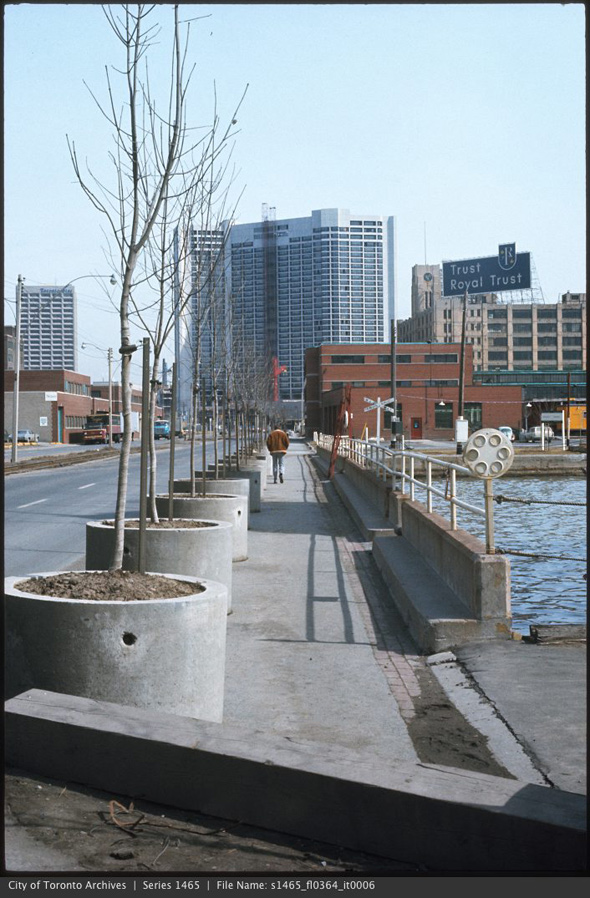
Queen's Quay, 1970s
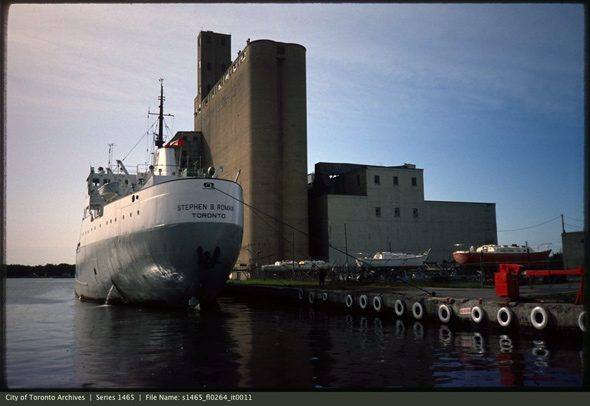
Canada Malting, 1970s
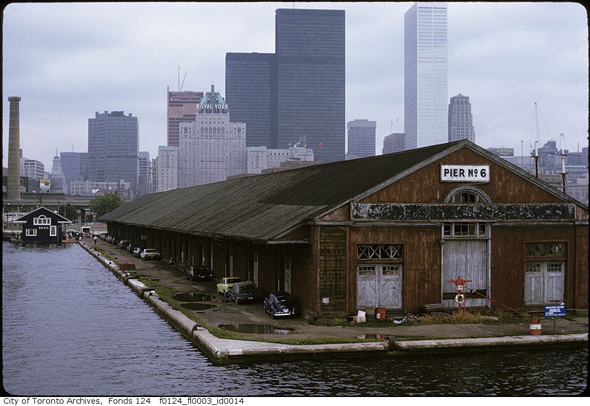
Pier 6 (now demolished), mid 1970s
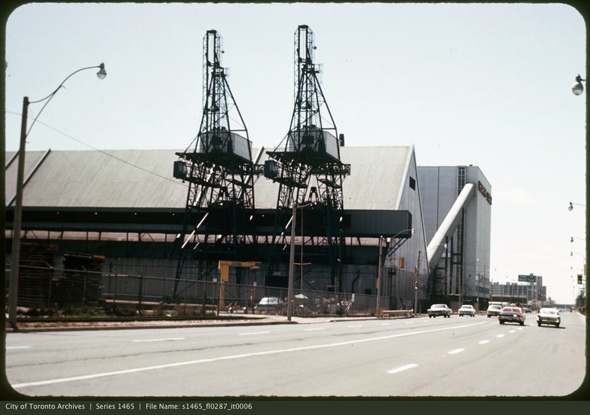
Redpath Sugar, 1970s
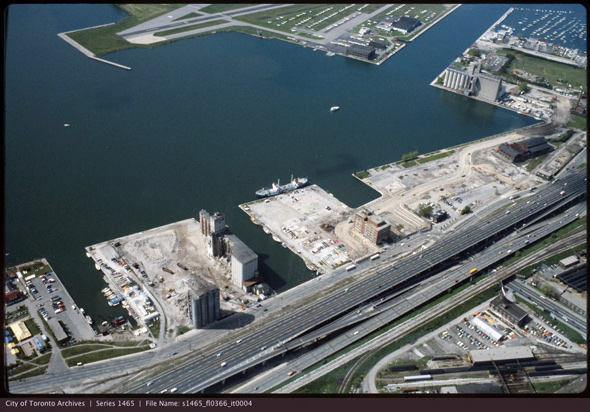
Aerial view, 1970s
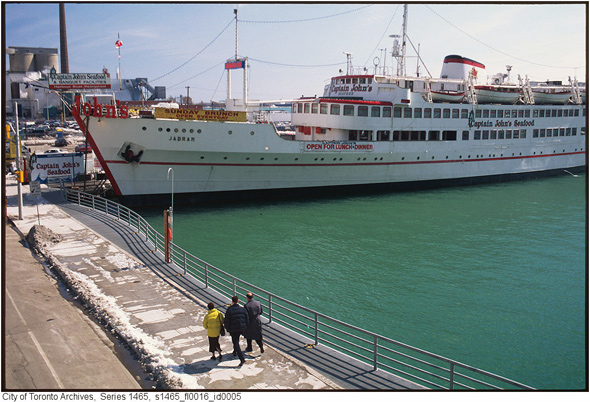
Captain Johns, 1980s
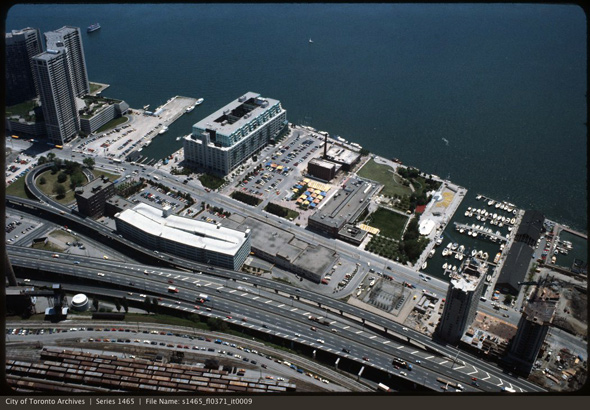
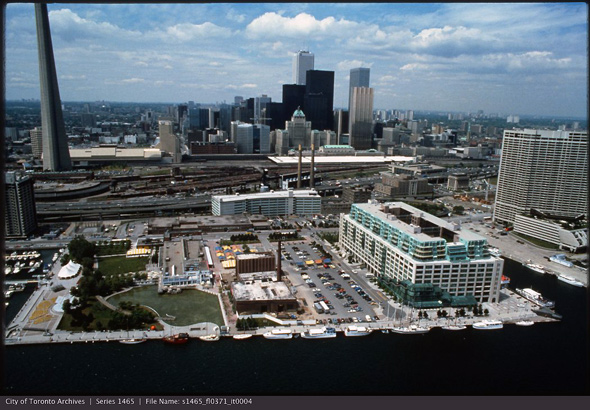
Aerial view York Quay, 1980s
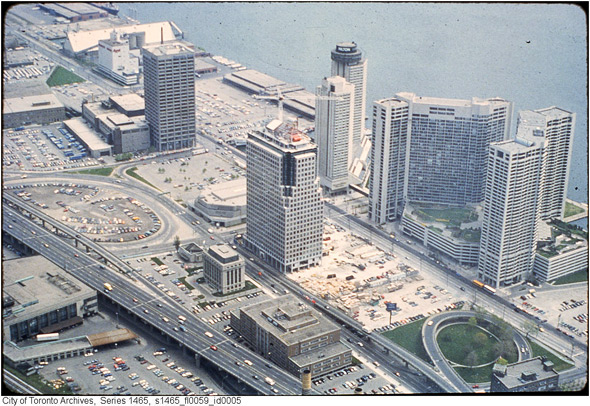
Aerial view, early 1980s (future site of ACC at bottom left)
Queen's Quay and skyline, 1980s
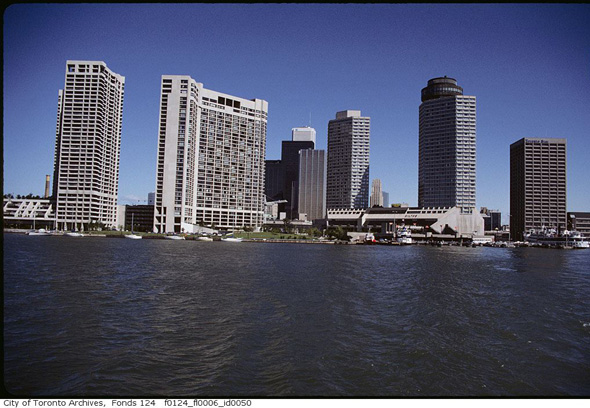
Queen's Quay skyline, 1980s
Photo by ettml
Photo by Richard Braeken


Discussion
35 Comments
Sort By Oldest First / Newest First
Subscribe
But I suppose when your baseline is the Huang & Danczkay buildings, even the condos built since aren't that bad.
And yes, the condo boom saved this city, and that includes the waterfront. As these images clearly show, anyone who says otherwise has no idea what they are talking about.
And that "Aerial View 1970s" with the corner of the Island Airport visible: is that the Maple Leaf Mills being demolished there? If so, it's 1983/84-ish...
Great pics - keep up the good work, BlogTO, with these archive photos. The articles as always are presented without any slant, just "this is how it was, now this is how it is..."
Just ride the bike out there, or walk out there, bring a bottle, adventure, drink, sleep, fresh air, pass out. Red Red Wine!!! OR RUM!!!!
Even in the 1970s, I remember going to the Harbourfront comedy cabaret on Sunday nights and walking past boxcars parked on Queen's Quay. I had hoped that the waterfront would have been made into a greater park area without all the buildings that now dominate the landscape.
We lost our view of the water several decades ago just like how Londoners lost their classic and grand view of St. Paul's from the water.
No justice in this world, is there.
[deep breath]
@Joebyer - Are you trying to be clever with 'JoeBuyer,' or is it that you can't spell? Perhaps you are too young to remember, or are one of the many transplants from Canyon Hell that still think Toronto is a version of Paradise, but there was a time, during the Crombie/Sewell years, I believe, where the RyHi grads were telling us that tall was bad. They saddled us with 20 years of ugly, non-descript stucco/concrete slabs, 8-10 storeys, built right to the curb. St. Lawrence Market and other ugly areas come to mind.
I love tall buildings as much as the next guy, but the way this city is slapping them up these days, nobody has any clue where this is all leading. (Four 50 storey towers slated for a 2 block stretch between Granville and Breadalbane, on Yonge? Seriously?)
@ Yoyo - so you like those tall, green glass towers, built right to the curb? Yeah, Toronto is probably better off without those couple thousand or so high-paying warehouse and factory jobs that this landfill was built for. I get that cities change, but the fall of Canada from the industrial power it once was (and by extension, Toronto), and the rise of Wal-Mart and Starbucks is hardly worth rejoicing. Toronto had Sunnyside and the Beaches.
Every strip of waterfront did not and does not have to be dedicated to 'public access.' As a former dog owner, I spent quite a bit of time along the waterfront in the 'other' 9 months, and with the exception of a tiny strip of Queen's Quay and only on the weekends, the waterfront is pretty desolate most of the year.
@ iSkyscraper - [shakes head] Where do I start with you? Toronto was 'saved by the condo boom?' So, 30-50 storey towers, built right to the curb, with no regard for infrastructure or their impact on the local neighborhood is good for the city? Russian and Chinese money, being used to employ imported Eastern European labor to build homes for Asian transplants to buy, is good for the city? Really? Barring for the fact that you are most likely one of those realtors that benefits from the ongoing Ponzi scheme that Toronto (and Vancouver) have become, just where do you see any benefit for the locals? The city is not plowing the windfall revenues into infrastructure. Our roads, sewers and electrical network have not kept up.
Just one seemingly small change to the city - upgrading the streetcar stops on Bathurst at King, is having a greater impact. Very quietly, a lane on Bathurst in either direction has been lost. Okay, doesn't seem so bad. Except that 50,000 people are in the process of moving into the area. Strachan was deliberately (and criminally, IMO) narrowed to a single lane in each direction just as Liberty Village rose.
Now, the Portlands, Regent Park and Corktown are succumbing to condo hell, and already I am seeing the tensions with the interminable dust, lane closures, streetcar slow downs, etc. weighing on the local residents. Developers are quietly having commercial space rezoned for anything but commercial because there is no business case for many of these areas.
To the Condos and Bicycle Lanes Forever gallery, what is the End Game here? Where will this city be in 30 years when another million people have moved south of Steeles and we are still (as the photos above indicate) saddles with 1920s infrastructure?
The Portlands and Liberty Village are going to be very interesting case studies on epic failure. I lived at Jefferson/King 30 years ago, having moved from St. Jamestown, to Crombie Park and then west. I have lived the Ry-hi grads eternal promises, but all I see is a city in serious decline.
The neighbourhood and the street are spelled Queens Quay.
The terminal building is the Queen's Quay Terminal, which is the only version on the name that uses the apostrophe.
Thanks!
Again with your ridiculous handwringing alarmist bullshit. The north side of the intersection used to have a VERY WIDE curb lane for through traffic and right-turning traffic. It still has a lane for that, and the south side now has a wide combined right/through lane. Plus more people waiting for the streetcar can be on the island instead of stepping into the street from the curb AND traffic through that intersection is way below the level needed for that situation to cause problems.
Main point: stop building neighbourhoods out of entirely condos, or entirely houses, or entirely apartment blocks, or entirely office towers, or entirely warehouses, etc.
and sometimes give a great view. But they are hot in the summer, requiring high air conditioning costs. They are cool in the winter requiring high heating cost. And some of them have windows that will not last more than 10 years and up. If not properly sealed they emit a lot of draft, sometimes moisture, and they could pop right out of their casing. We may have a disaster waiting to happen similar to the leaking condos that were so costly to repair in Vancouver some years back. Who will pay for the cleanup if this happens as some experts have predicted?
I read through the comments here... wow, such haters. To the haters I say: if you despise this city so much, why bother living here? We don't need you.