Wednesday, June 19, 2013Clear 14°C
City

That time when Toronto went boom

Posted by Derek Flack / April 10, 2012

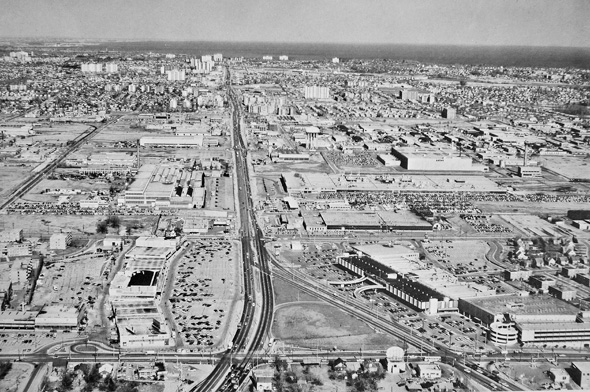
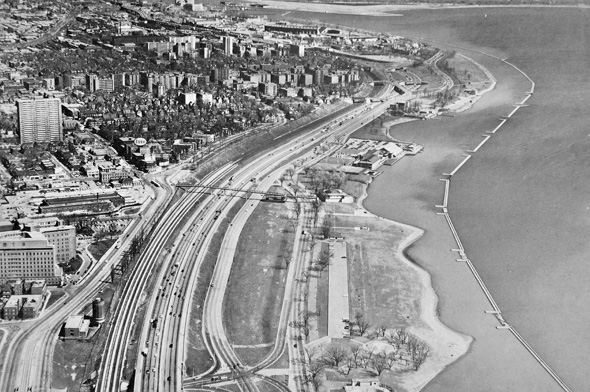
Boomtown Metropolitan TorontoThe Toronto that most of us know today was born during the 20 year period between 1950 and 1970. Prior to the '50s, the city wasn't just a quiet and stiff place — Toronto the good, as it was often called — it was also profoundly less developed. Not only did the city basically end at Wilson / York Mills, but even in more densely populated downtown areas, 10+ storey buildings were scarce.

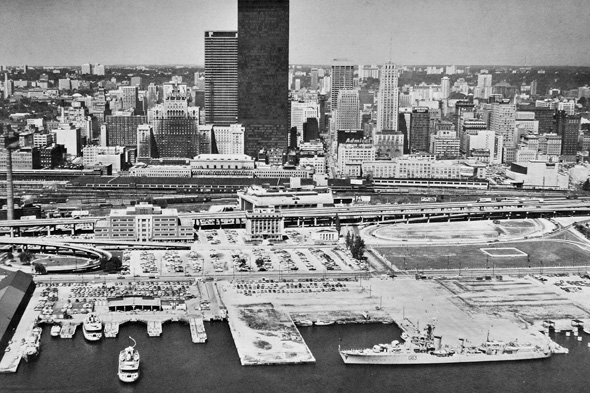
And then everything changed. Between 1950 and 1970, Metropolitan Toronto was founded, the subway arrived, the positively futuristic-looking New City Hall was built, major expressways like the Gardiner and 401 cut across the city, and the modern skyline was born with the arrival of the Mies van der Rohe-designed TD Centre. The amount of development that took place during this period is almost mind-boggling — and, to be honest, if I hadn't stumbled across a collection of photos documenting it, I'd have great difficultly putting it into perspective.

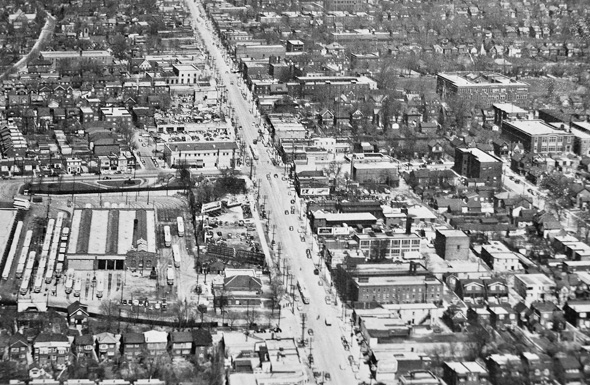
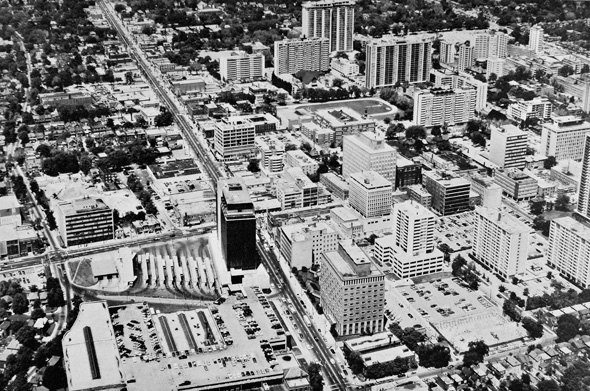
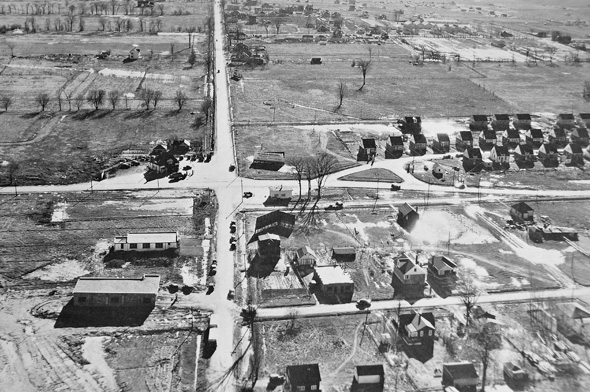
Boomtown: Metropolitan Toronto is one of those historical treasures that you come across when you spend enough time digging around in libraries or archives. Published in 1969, the now-out-of-print book presents a series of aerial views photographed by the Lockwood Survey Corporation that dramatically captures the development boom that accompanied the birth of Metro Toronto. The text, written by Donald Boyce Kirkup, brims with overly optimistic descriptions of the booming city, but that's okay because the photos are the real calling card here.

I've put together a representative selection of what Boomtown has to offer, but if you're keen on getting a look at the entire collection, a visit to the Reference Library may in your future (a couple other branches have copies, too). It's a rather remarkable historical document, and just the type of book that you can lose an afternoon to poring over its pages.

PHOTOS
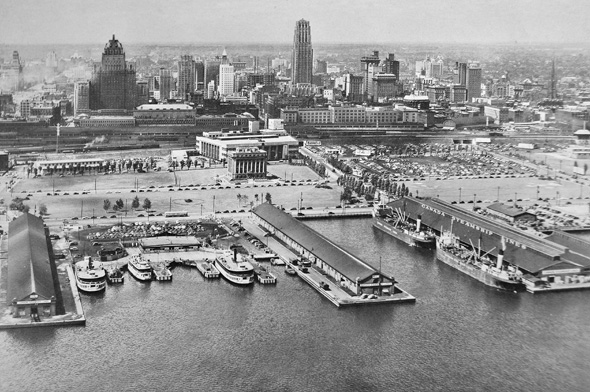
2012410-skyline-aerial-1949.jpgToronto Skyline, 1949

2012410-skyline-1969-2.jpgToronto Skyline, 1969

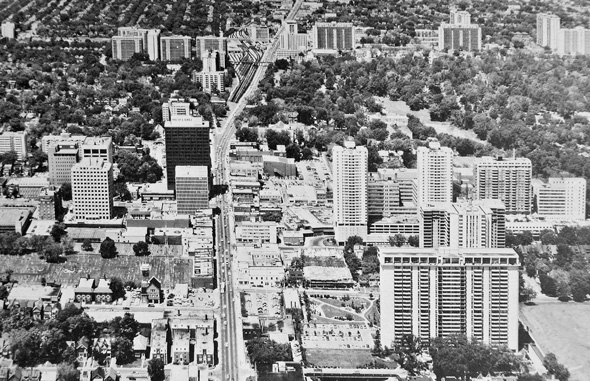
2012410-YandE-1951.jpgYonge and Eglinton, 1951

2012410-ye-20years.jpgYonge and Eglinton, Ca. 1969

2012410-dufferin-wilson-1949.jpgDufferin and Wilson, 1949

2012410-dufferin-wilson-1969.jpgDufferin and Wilson, Ca. 1969

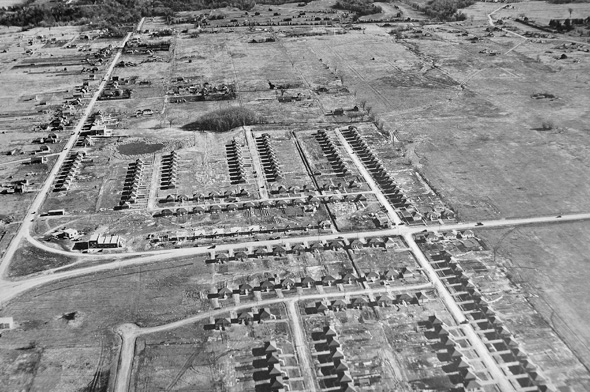
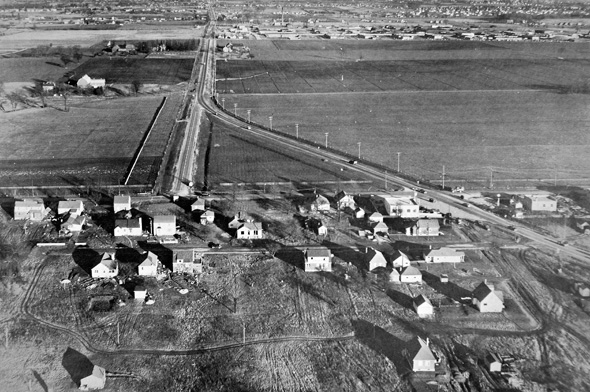
2012410-wilson-heights-1949.jpgLooking east on Sheppard towards Bathurst Street, 1949
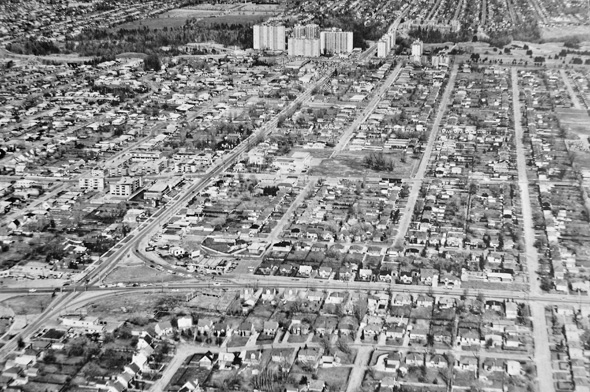
2012410-wilson-heights-1969.jpgSimilar angle, Ca. 1969

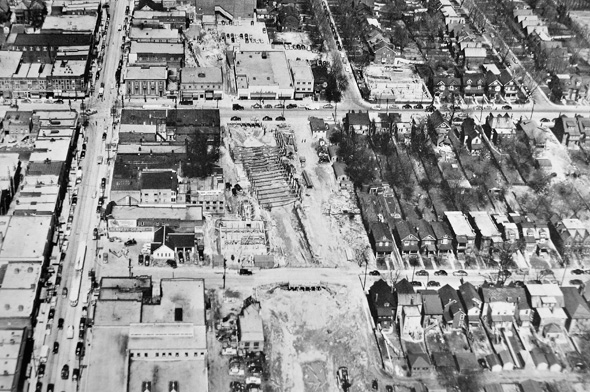
2012410-yonge-stclair-1951.jpgYonge and St. Clair, 1951

2012410-yonge-stclair-20years.jpgYonge and St. Clair, 1969

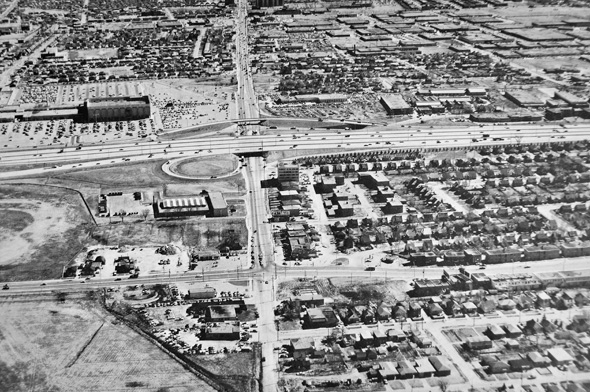
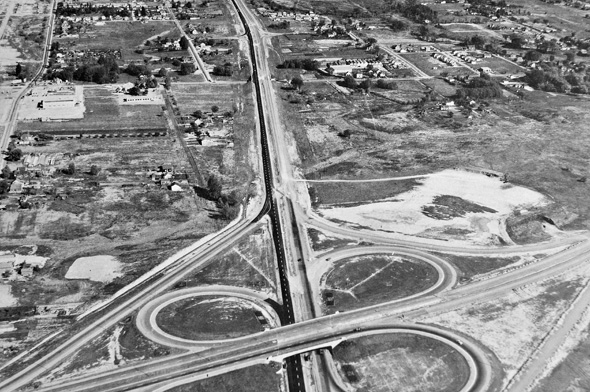
2012410-401-400-1953.jpg401 / 400 interchange, 1953

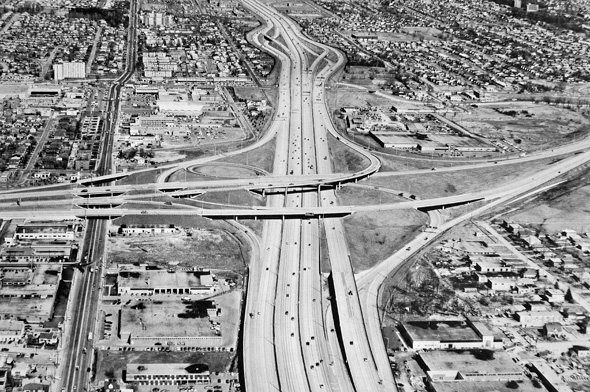
2012410-401-400-1970.jpg401 / 400 interchange, Ca. 1969

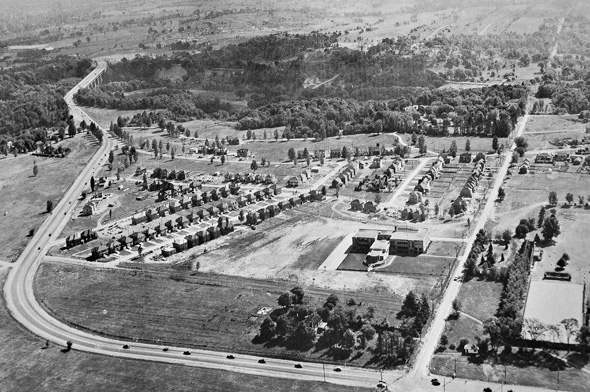
2012410-ave-wilson-1949.jpgAvenue and Wilson looking towards Hogg's Hollow, 1949
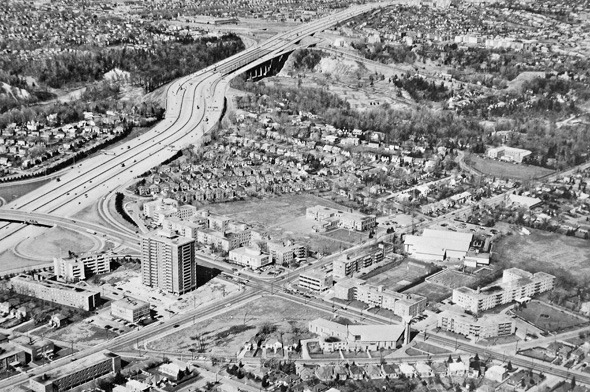
2012410-ave-wilson-20years.jpgSimilar view, 1969

2012410-golden-mile-1949.jpgEglinton and Victoria Park, 1949

2012410-golden-mile-20-years.jpgSimilar view (now the Golden Mile), Ca. 1969
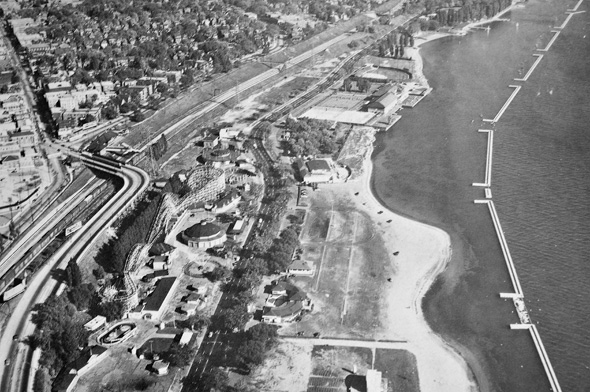
2012410-sunnyside-1949.jpgSunnyside, 1949

2012410-sunnyside-20years.jpgSunnyside, 1969

Discussion

11 Comments

Fred / April 10, 2012 at 02:20 pm
user-pic
Is that a bridge connecting Avenue Road to Yonge Street in the Hogg's Hollow photo?
AmH / April 10, 2012 at 02:36 pm
user-pic
My parents actually have this book. I've spent hours looking through it. Good find.
JB / April 10, 2012 at 03:44 pm
user-pic
Is it just me or does Sunnyside look better in '49 than '69?
Al / April 10, 2012 at 03:52 pm
user-pic
Toronto was slowly supplanting Montreal as the population and economic centre of Canada during this period. It's resulted in a city that is forever reinventing itself while Montreal embraces its past. Twenty years ago Toronto was a different city, and it will be a different city 20 years from now. Montreal stays the same.
vampchick21 replying to a comment from JB / April 10, 2012 at 04:49 pm
user-pic
It's not just you JB! I live in that area, and oh! What a piece of lakeside heaven Sunnyside looks to have been back in 49!
NotthatJack / April 10, 2012 at 04:51 pm
user-pic
There's a copy at my barber, a museum piece from the 70's and gentlemen coming in once a week and reminiscing about the old days.

Tommy replying to a comment from Fred / April 10, 2012 at 05:15 pm
user-pic
Yes, Avenue Road took a right turn over Hoggs Hollow and linked up with Yonge at the present day Yonge/401 interchange. When the Trans-Canada Highway went it, the bridge was reused for the center spans of the highway, and expanded on both sides.

It's interesting that in the grand scheme of things, Avenue Road this far north is a comparatively young road, and was only built up as the subdivisions as far north as Armour Heights were constructed (~1940's). Once upon a time, the TTC ran buses on Elm north of Lawrence before Avenue Road was complete!
Tom / April 10, 2012 at 07:16 pm
user-pic
The photos 'Looking east on Sheppard towards Bathurst Street' would be better described as 'Sheppard & Wilson Heights Blvd, looking east'
Ericm replying to a comment from Al / April 11, 2012 at 08:01 am
user-pic
To bad for Montreal then. Although it's a fun city and a place I was once from, it's a place that is in bad need of development that probably wont come.
dave / April 11, 2012 at 08:41 am
user-pic
This is a great set of photos. From these photos, it appears that Toronto was lacking a coherent development plan even back as far as 1950. Toronto has many good things but those things are the people, the food and the prosperity, emphatically not the cityscape or the streets. The frustrating thing to me is that I think Toronto could be so much better with only a slight amount of planning. I do see improvements coming but there is a lot of real-estate "inertia" to fight. I'd love to see more pieces on the urban development of Toronto in the To culture blogs.
Sjsjsj replying to a comment from Ericm / April 12, 2012 at 10:54 am
user-pic
Well there's Pier 27...

Add a Comment

Other Cities: Montreal