City
What Liberty Village looked like before the condos
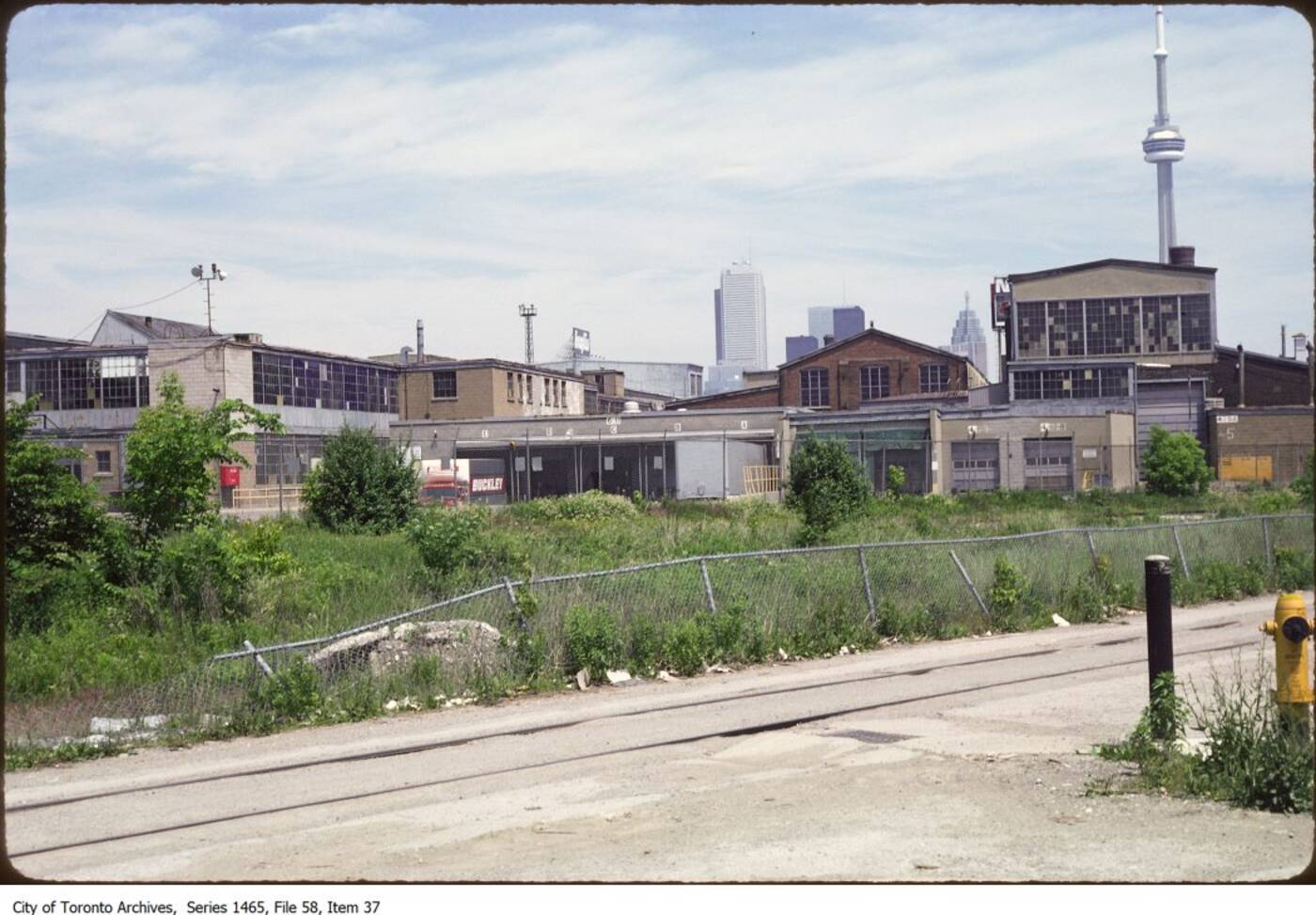
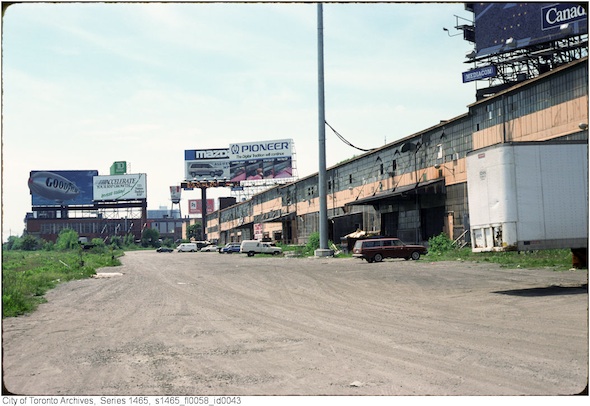
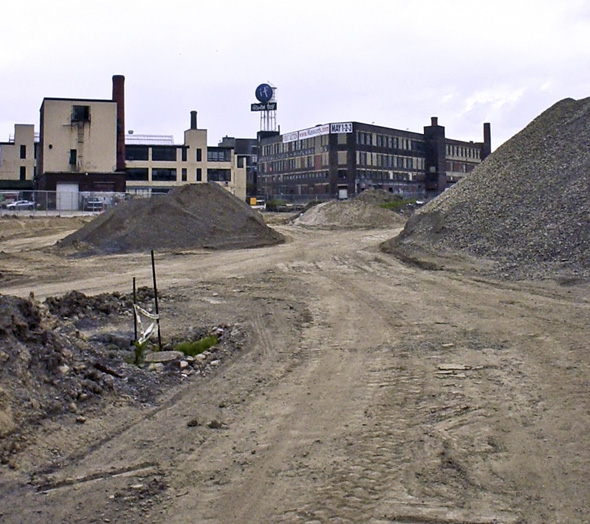
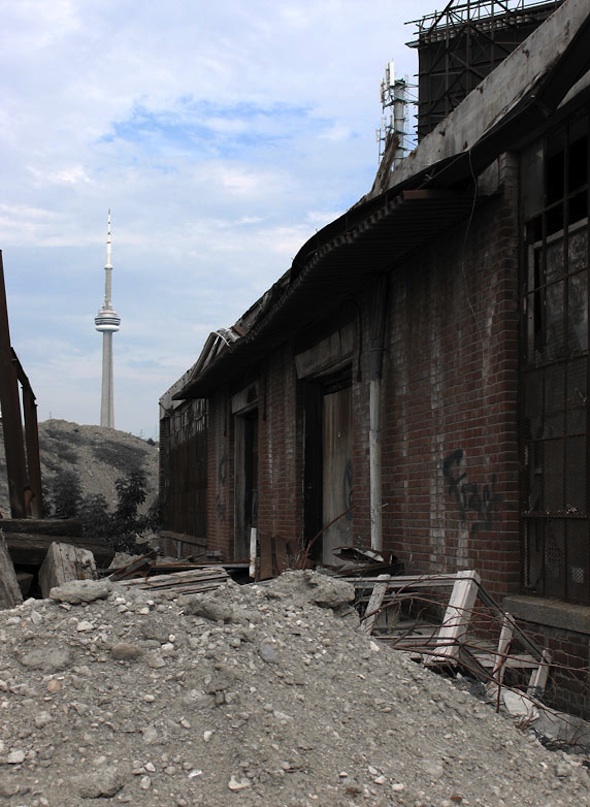
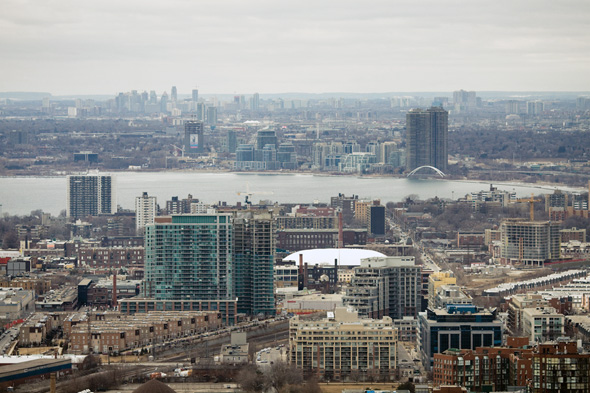
For all the development that's shaped Liberty Village over the last decade or so, the area's industrial past retains something of a ghostly presence — at least if one confines himself to exploring the western half of the neighbourhood. The eastern end, leading in across the still new-feeling East Liberty Street from Strachan Avenue, on the other hand, remains a source of angst for heritage preservationists who lament this city's near-complete contempt for 19th and early 20th century industrial architecture.
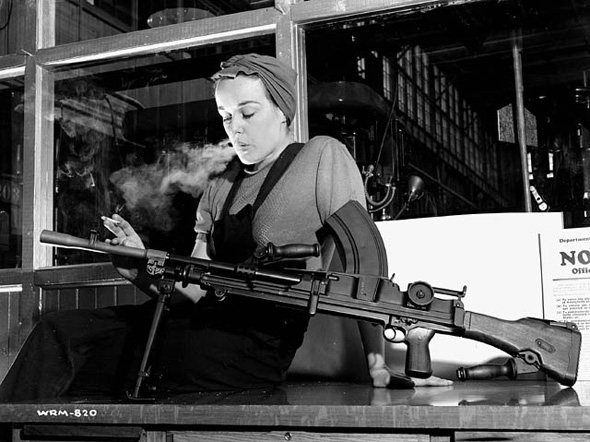
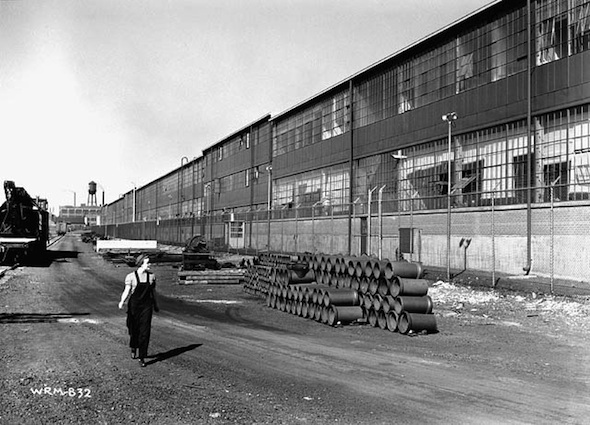
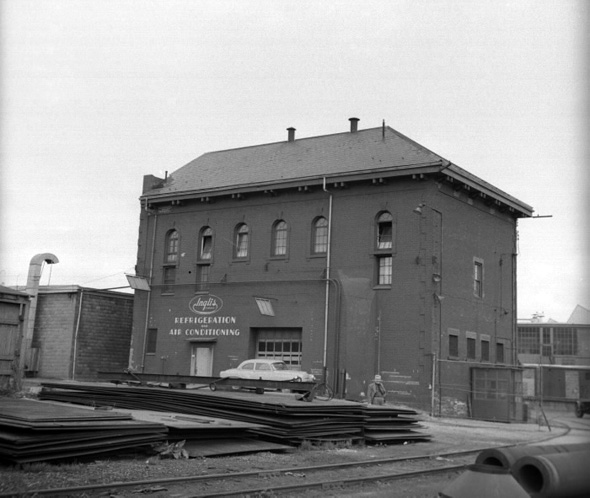
Once home to the mighty Inglis factory — a key player in the local war movements of the previous century and a major manufacturer of the Bren light machine gun — the area is marked by a pseudo-suburban housing development that is as cold as it's removed from its important place in this city's history. Artist Gene Threndyle, writing in John Martins-Manteiga's solemn rhapsody for Toronto's lost modern heritage, Endangered Species, probably offers the best summary of the preservationist's view in saying that this new neighbourhood "does everything wrong."
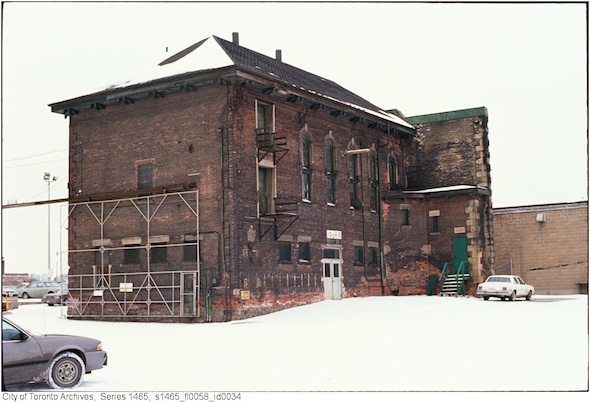
With the exception of the old chapel from the former Central Prison, this section of current day Liberty Village was completely razed in the late 1990s and early 2000s. It's this tension — between the old industrial warehouses that played host to an IT boom that paved the way for the renewal of the area and the condo-based developments that continue to this day — that got me curious about the history of the site.
Before it was an industrial hub, what's now called Liberty Village was home not only to the previously mentioned Central Prison, but also the Andrew Mercer Reformatory for Women. According to Mike Filey in Toronto Sketches 6, it was these institutions that gave birth to the main strip's name. Liberty "was the street upon which reformed prisoners set foot when they'd served their time," he explains. The former jail was demolished in 1915 save for two buildings, while the latter was abandoned in 1969 after a reports of substandard conditions were brought to a grand jury. Lamport Stadium, which still occupies the site was built in 1974.
As was the case with West Queen West to the north, the decline of industry led to the arrival of small population of artists in the 1980s. Attracted to the low rents and and warehouse buildings, they remained until the mid 1990s or so.
According to a report from the University of Toronto's Centre for Urban and Community Studies, "municipal deregulation of land uses in the King Street West area in 1994 contributed to the attraction of the area for developers and real estate speculators...Many small businesses and low-income tenants were evicted to allow property owners to renovate their buildings. The deregulation of zoning bylaws had increased the pressure to redevelop industrial lands and put planners under constant pressure to allow the conversion of old industrial buildings for residential or office use."
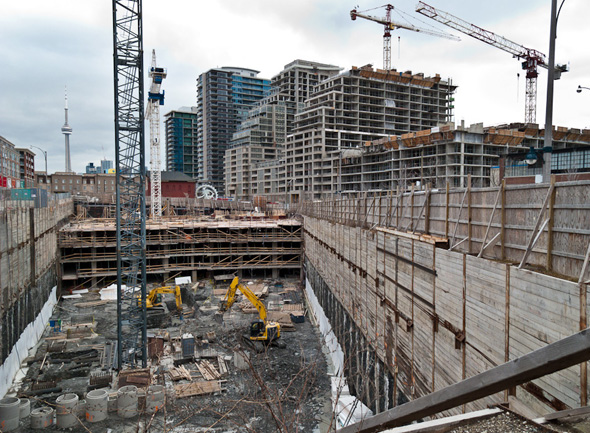
And that's when the redevelopment of the area went boom. By the mid 2000s most of the Inglis buildings were gone, following the destruction of the Massey Ferguson site on King West a few years earlier. A small group of heritage enthusiasts tried to save the industrial character of the eastern end of Liberty Village, but they didn't stand much of a chance given the value of the property in question and the incentives developers had to build residential properties.
What remains now is a thoroughly mixed neighbourhood that lacks the historical identity of something like the Distillery District, but has nevertheless escaped the complete destruction of industrial heritage experienced by its neighbours to the north and northeast.
PHOTOS
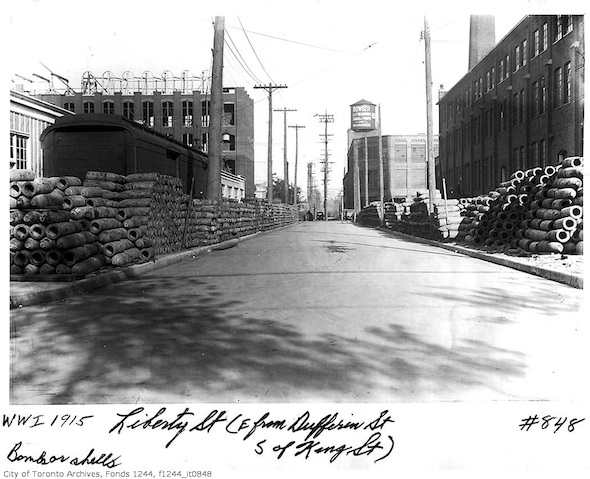
Liberty Street, 1915
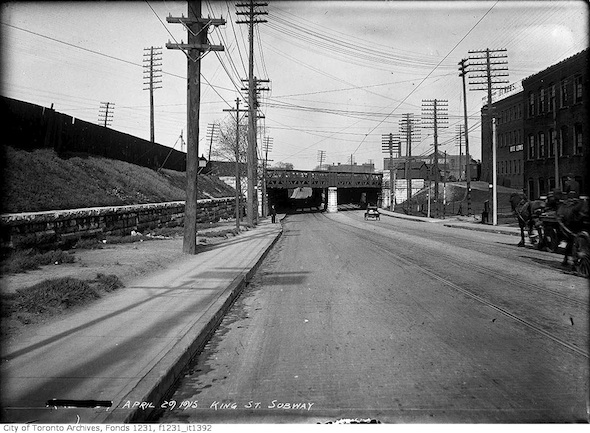
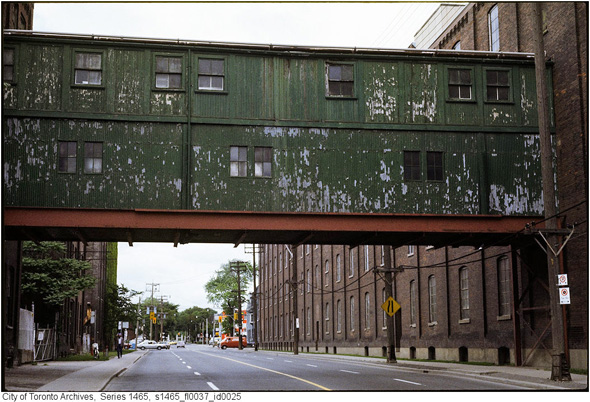
King West subway, 1915
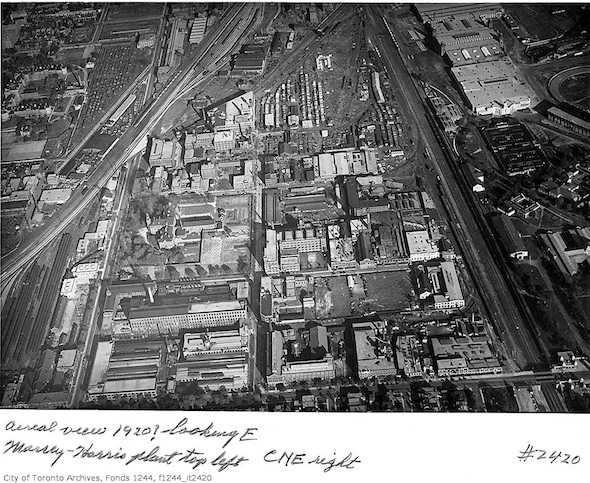
Ariel view of King West and Liberty Village
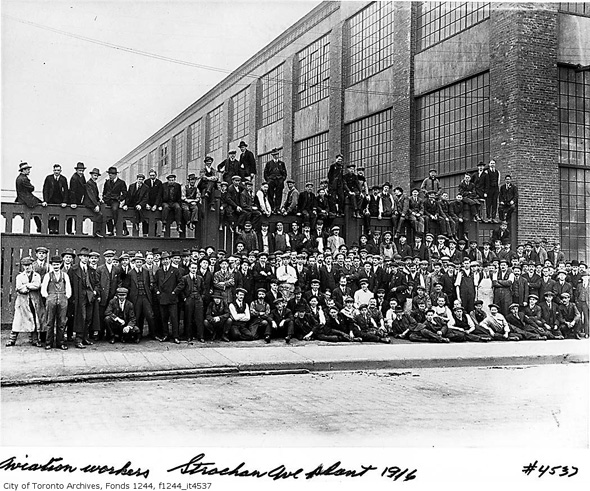
Curtiss Aeroplane plant, Strachan Avenue
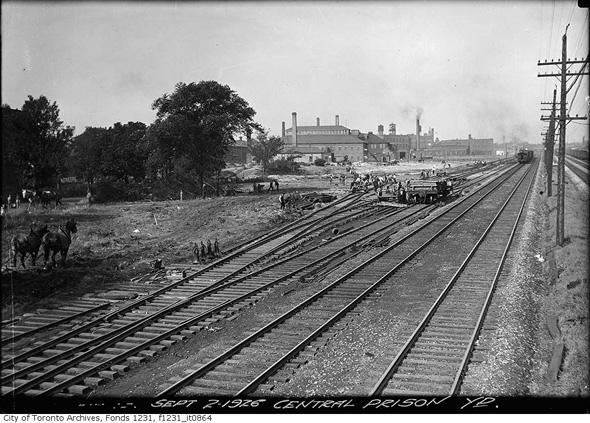
Central Prison Yard, 1926
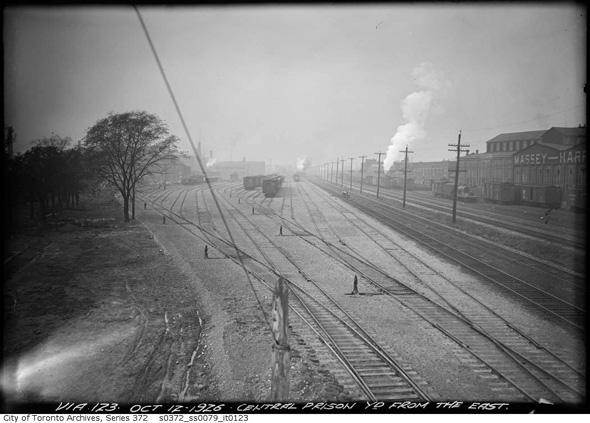
Central Prison Yard and Massey Ferguson Buildings (right), 1926
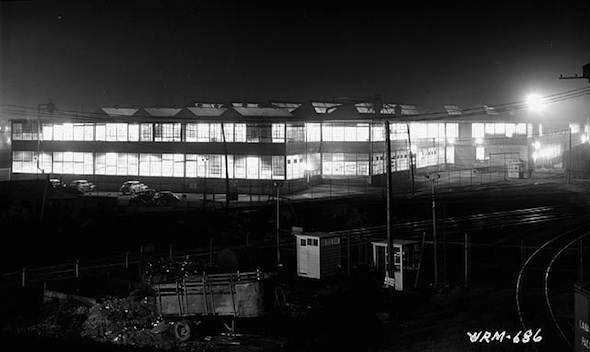
Inglis factory at night, 1940s (via Gary Blakeley)
Baseball game women workers, 1940s (via Archives Canada)
Veronica Foster, Bren Gun Girl, 1940s (via the Wikimedia Commons)
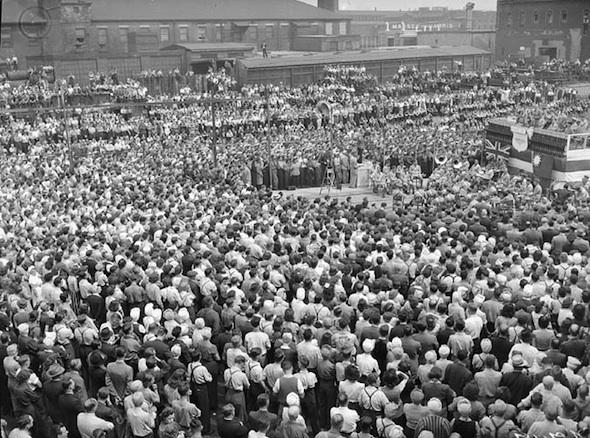
War workers, 1940s (via Gary Blakey)
Compare to shot from 1990s (via Gary Blakeley)
Central Prison Chapel, 1953 (via Toronto Public Library)
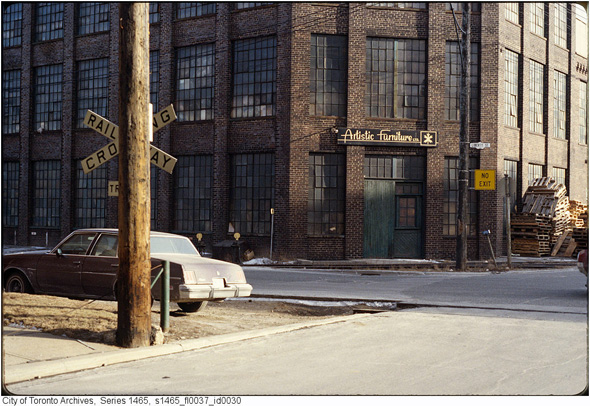
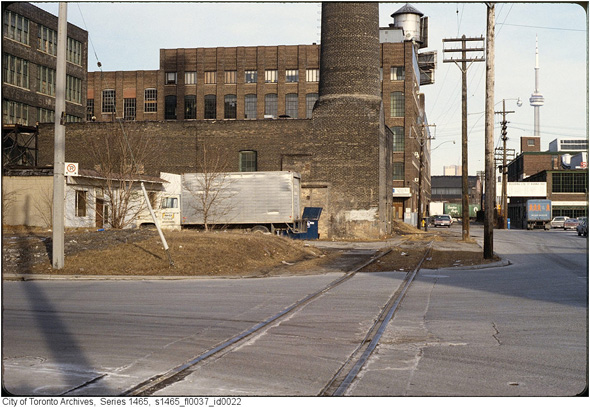
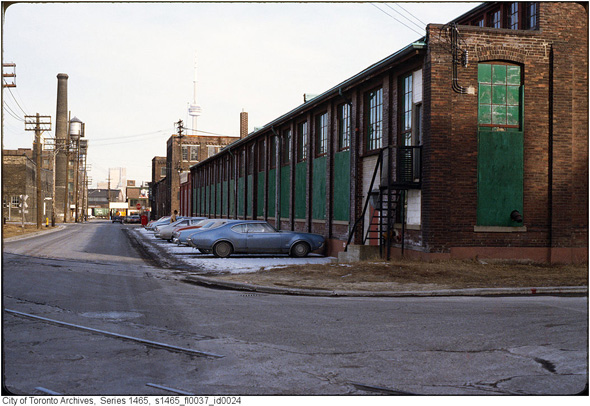
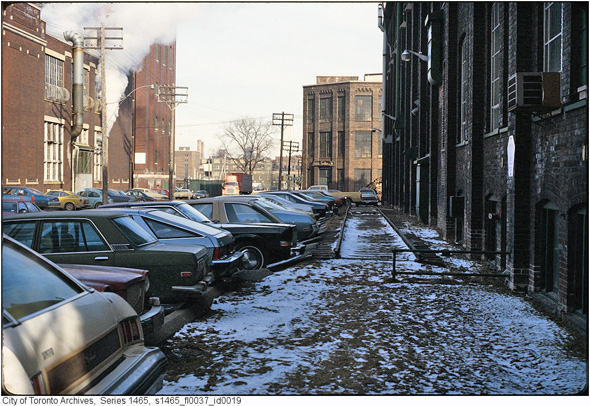
Liberty Street, late 1970s
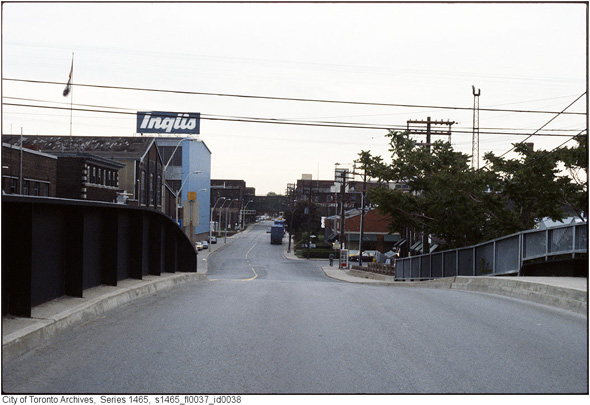
Off Liberty Street, late 1970s
Liberty Street, 1970s
Compare to 1915 photo above
Liberty Street and Jefferson Avenue, 1970s (the buildings on southeast and west corners still stand)
Liberty Street looking west, 1970s
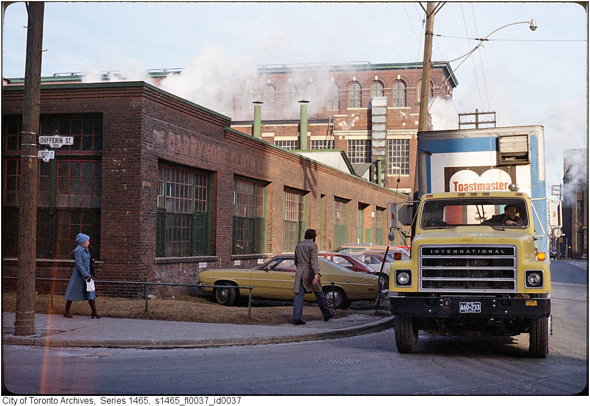
Dufferin & Liberty streets, 1970s
Strachan Avenue looking towards King Street, 1980s
Strachan Avenue and Inglis factory, 1980s
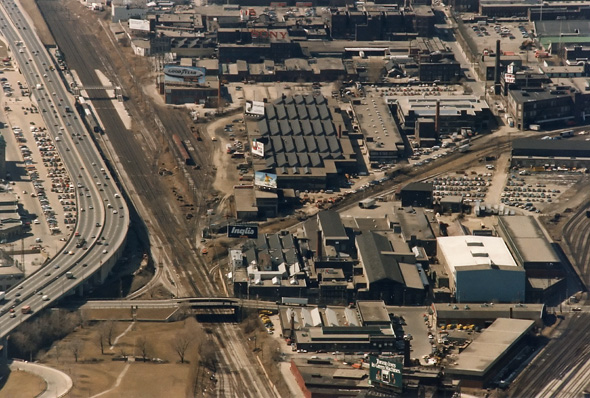
Aerial view, 1980s (Photo by Eugene D. Burles via Trainweb)
Foot of Hannah Avenue, Inglis Complex 1990s
Inglis Warehouse rooftopping, 1990s
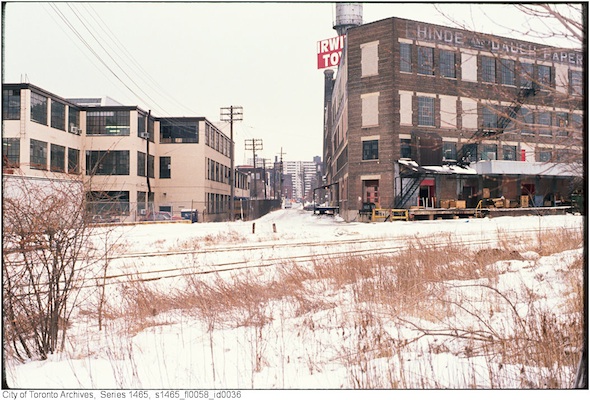
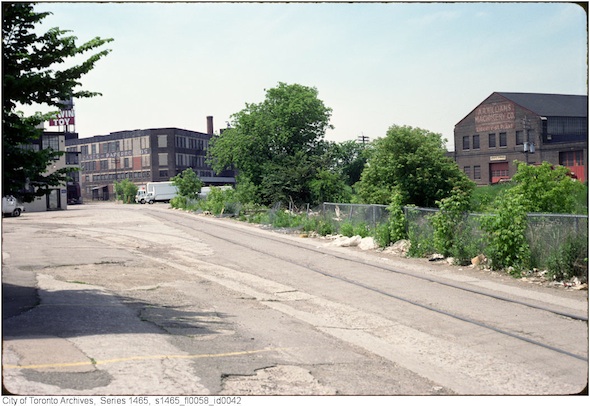
Irwin Toys (now the Toy Factory Lofts), 1990s
Approaching Irwin Toys, 1990s
Central Prison chapel, 1990s
Strachan Ave, old Inglis factory (Collations)
Off Strachan Avenue (Photo by Patrick Cummins)
Inglis plant, 1992 (Photo by Martin Reis)
The birth of East Liberty Street, 2003 (Photo by Christ Smart)
Transition time, 2005 (Photo by Chris Smart)
East Liberty Street, 2006 (Photo by Alex Luyckx)
Liberty Village, 2009 (Photo by Stephen Sokolov)
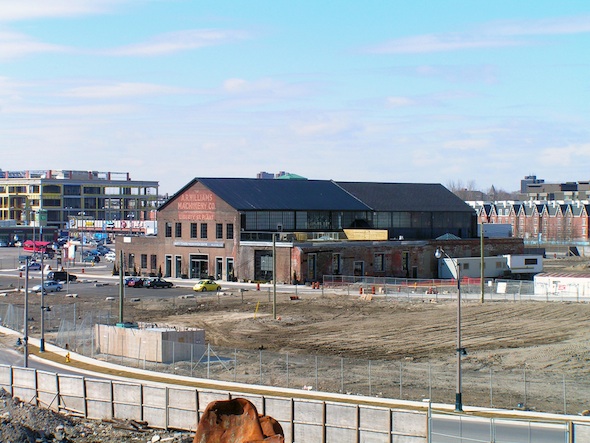
Looking west across Liberty Village, 2010 (photo by Tom Ryaboi)
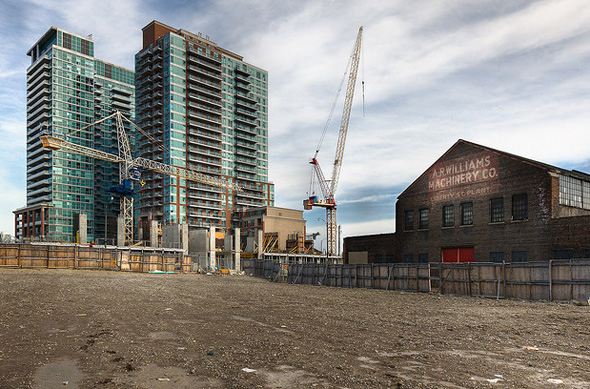
Construction continues, 2012 (Photo by Toronto.Pictures)
Photos from the Toronto Archives unless otherwise noted


Discussion
55 Comments
Sort By Oldest First / Newest First
Subscribe
And now? Just a sea of lifeless condos....
Derek: The first caption should be 'bombs or shells' as noted in the photo. There is an 'or' in between questioning the cylinders piled up.
* (for white heterosexual men who were rich only)
That picture of Veronica Foster, Bren Gun Girl, is stunning!
How cute.
place was a dump back then.
place will be a dump again in 20-30 years.
Cyclical kids, cyclical.
77, been there a few times...
http://web.mac.com/smacadam1/MRCT/Welcome.html
There were a bunch of neat studio's and suchlike in the western edge of it in the late 1980's. I know it wasn't doors open, but we went down there I think in 89, and went through a bunch over a weekend. I know we went into a recording studio (I'd think something like 53 Hanna Ave, not sure). My friend had a job @ the ice cream factory just on bathhurst, same sort of time frame. (88, because I have my 89 TTC bus pass, but not my 88 one, and I got booted off the streetcar & had to walk home...evil driver!)
Anyway, it definitely would be interesting to see what the stats are of those in 20 years from now. I love the area personally...then and now.
It seems to me like like all the cool and interesting spaces people moved here to be around, are being torn down to build the the condo apartments.
I have a few friends who had artist studio's and workspaces down there who have just given up and moved out to Etocicoke where you can still find reasoanbly priced big spaces.
I am thinking I am going to do the same soon it is just too crazy around here now. It is like being surrounded by boring suburban devlopements.
As for Klowns comment, there is room to keep the character of the neighbourhood, and develop it intelligently.
In my crazy, experimental youth, back when I had meaningless jobs and just enough for the rent, I tried wild and crazy things like bicycling to my job at College/Bay for several weeks. (Crazy, I thought - what nutcase would willingly do that?) So, I tried the TTC for a couple years. Even in those days, with Massey Ferguson recently closed, I'd often have to wait for 2 or 3 streetcars at 7:20 a.m. before I could actually get on. I finally got a real job, a good paycheck and bought a car. Never looked back.
Thirty years later, so much has changed. Not. King St. is still 4 lanes. Streetcars will have to crawl under the railroad bridge. The condo towers, and those two ugly office towers at Strachan ensure that as the city reaches 3, then 4 and even 5 million - King St. will forever be 4 lanes. But that's okay, you can take Queen - OOPS! 4 lanes, too! Not even room for a streetcar ROW. I wonder what long term plan the city has, other than simply banning cars, since they've let 30 years worth of opportunity slip through their fingers. Starting with the Summit, King St could be six lanes by now. Instead of improvements, Bathurst loses a lane at King, thanks to the new and improved TTC island. Thanks, Toronto! Always a step back.
I want to thank the city for a source of merriment while I get my morning coffee at Tim Horton's at King/Strachan: watching the 80 foot (3/4 empty) TTC bus try to navigate the right turn onto Strachan is hilarious. Why wouldn't we narrow Strachan when the only other way across those tracks is Bathurst, more than a km to the east and Dufferin more than a km west?
And then there's Strachan itself. A street that used to be 4 lanes, but thanks to the city's esteemed wisdom was narrowed to 2, just as 50,000 people were dumped into a triangle surrounded by railroad tracks. Trapped. Nowhere to get in or out except East Liberty, or Atlantic/Jefferson at the other end.
Yes, indeed, LIberty Village, every commissioned sales agent's wet dream. The Tower and King West, collectively 1,700 units, about to dump 1,500 cars onto those carefully planned streets in the next year. That's on top of the half dozen other buildings already going up or planned.
Good fun! That should make East LIberty/Strachan one of the most hated intersections in the city.
Oh, I saved the punchline for last: 80% of the sales in Liberty Village has been to Asian 'investors.' What's that popping noise I hear? The sound of a balloon bursting? Rents in the area are already slowly winding down. (Last year , one of the major developers I used to work for was suddenly in an awful rush to dump the units they had held back for 'investment,' even to the point of breaking 2 year leases on some tenants.)
Yes, Liberty Village will be fun to watch over the next 5 years. It epitomizes everything that is wrong with the city.
If we close our eyes and squeeze real tight, maybe automobiles (and the hundreds of millions they contribute to the city's coffers) will be gone when we open them. Presto! Just like that. Thank God those ugly factories, with their high paying, stable jobs are all gone: I'd rather work at the Metro or Starbucks, making $10 an hour. Too bad you won't be able to afford to live in the area. Ah, well, Parkdale is only 10 minutes west.
And just as a sidebar, to all those regulars (and you know who you are) who truly believe the city ends at High Park, Main St. and St. Clair: a recent assignment of mine takes me to the yonder kingdom of Brampton every day, a drive that used to take 40 minutes once upon a time, now takes me (optimistically) an hour in the morning and 90 minutes if I dare leave at 5:30 from Brampton, rather than 5:00.
Imagine my amazement as I sit in traffic in the evening, first the inbound 401 is plugged from Dixie (20 km/hr is still faster than a bike, I might add), then the 427 south ramp is jammed, then the 427 south - at 6:15 pm, jammed southbound! Well, that simply MUST be those nasty 905ers using OUR roads to get back to their lifeless suburban homes. Ah, but the traffic on the eastbound ramp into the city is now worse than the westbound ramp to the slums of Missisauga and Oakville!
GASP! Whatever could the matter be? No, say it isn't so. COULD IT BE THAT JUST AS MANY DOWNTOWNERS (guilty as charged) ARE COMMUTING TO THEIR JOBS IN THE SUBURBS AS ARE SUBURBANITES COMMUTING INTO THE CITY?
But, hey - let's slap a toll on the Gardiner, the only functioning E-W corridor south of the 401, to keep those nasty 905ers out Never mind that the traffic coming INTO the city at 6:30 pm is slower than the traffic heading OUT. (Let's not confuse the 905 haters with facts, shall we?)
@ Frown - You're on the right path, but off by a factor of 10. King West alone is almost 1,400 units. That's 3,000 residents (all renters, BTW) that will be unleashed in this calender year. The overall population of that island has to be 50,000.
@ Lee - and you know this because...? Did you ever live down there? I lived almost at the corner of Atlantic/King from 1981 to 1984. Nothing dangerous about it. I celebrated New Year's 1999 at a huge rave in a massive warehouse just west of Strachan, right where the ugly townhouses are jammed today.
The so-called Entertainment District was actually more entertaining before the chattering class got their monied hooks into it. All those warehouses from John to beyond Spadina housed many after hours clubs, some legal, some not. There were no $20 covers, bouncers in tuxedos, fist fights in the alleys, or taxi chaos on King at 2 a.m. Taxes were cheap, the police looked the other way, and fun clubs were easy to slap up - just like Montreal still is today.
Those who did not live this city back then should stop reading the Star's press clippings and Jane Jacob's ramblings. Try opening your eyes and see this city's decline for what it really is. Ah, but then you would have to a) actually travel around and beyond the city to get a feel for that and b) have a sense of history, of lineage to where the city was and what it could have been.
You're not going to find that in Wikipedia, nor from your bicycle seat.
You've already said all of that at least once before. Except maybe the part about the streetcar island (which isn't true - there wasn't another lane there before) and bike speeds (bike commuting means easily reaching speeds of 20-25 km/h, averaging 15-20).
Really? From what I see (although not really on BlogTo, but, er, elsewhere), most believe the city ends, east-wise at least, at the Don. There may be some reluctant "OKs" about Greektown, but most "Top 10" lists I've seen lately don't get very far from the Queen-Ossington-Bloor-Wellesley square.
You can safely disregard namehijacked - he's just pissy because no one seems to share his concern about how oppressed he is as someone who likes to drive everywhere, how the roads aren't wide enough, the condo situation is getting out of control, and how everything is generally going to hell in a handbasket.
http://www.libertyvillagetoronto.com
I can't deny it's an awesome little community now though. Not many unpolished venues left.
http://vimeo.com/25425789