City
That time when Toronto was a city of parking lots
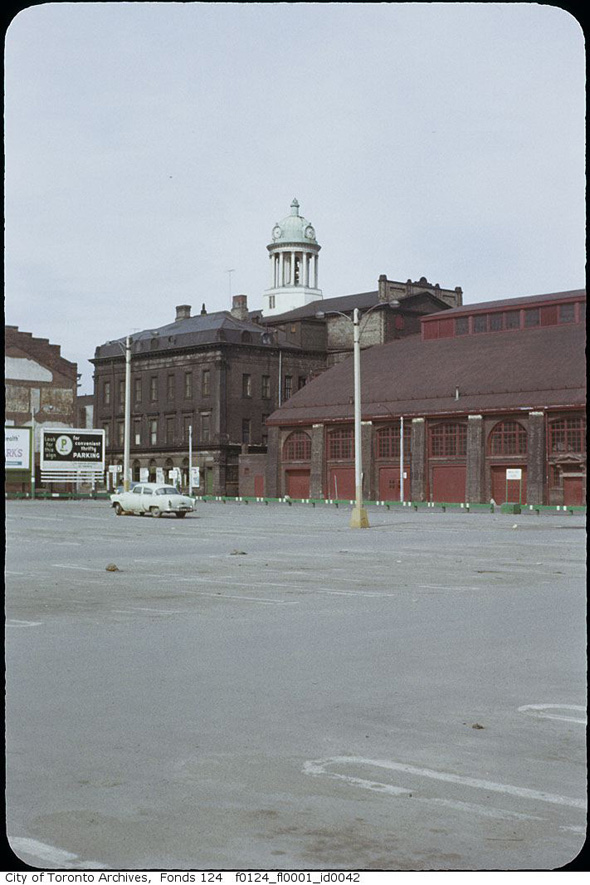
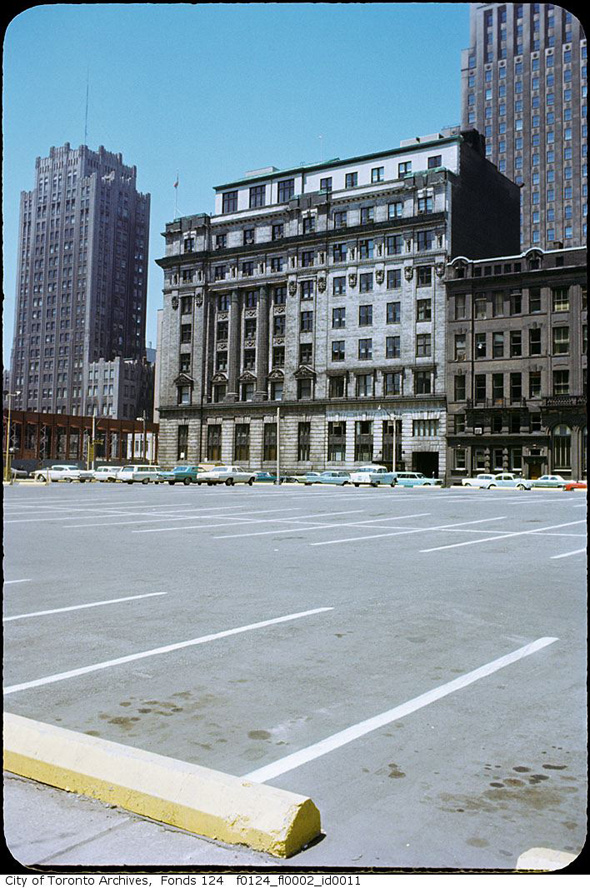
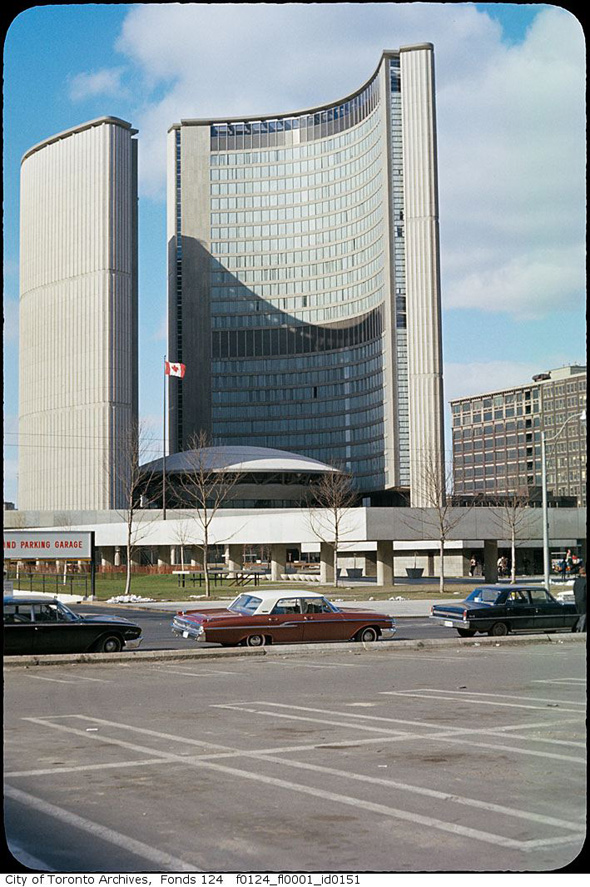
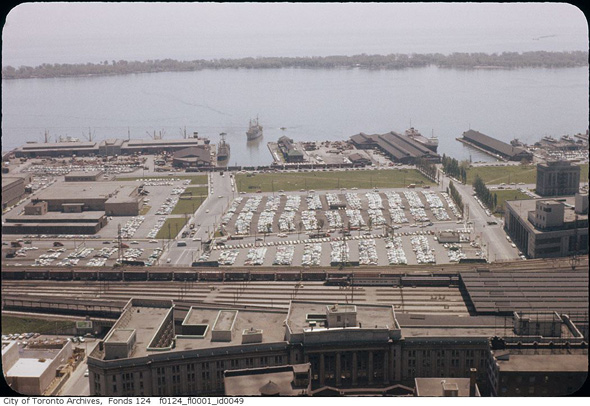
Talk of demolition and the loss of heritage structures is a common refrain in these historical photo posts, and for good reason. Throughout the 1960s and 1970s Toronto's planners and policy makers were little seduced by the city's old buildings, and in many cases sought to expand and develop Toronto from the ground up. There are countless ways that one could track this particular strand of Toronto's story — by looking at the old plans for superhighways that would cut through downtown neighbourhoods, at the grand buildings that were lost to this shortsightedness, or even at aerial photos that depict the changing shape of the city — but perhaps the starkest visual evidence of this philosophy (if it can really be called that) is the preponderance of parking lots that dotted the downtown core during this period.
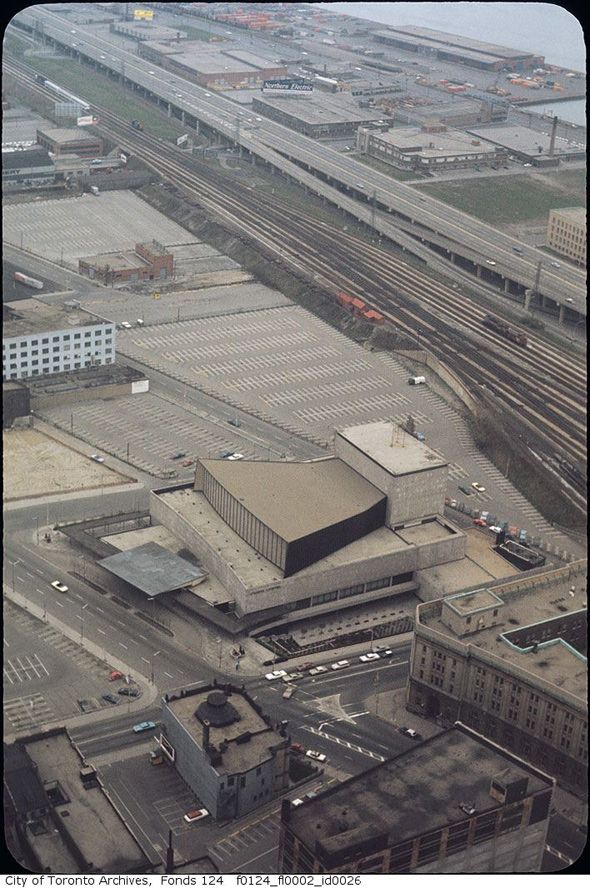
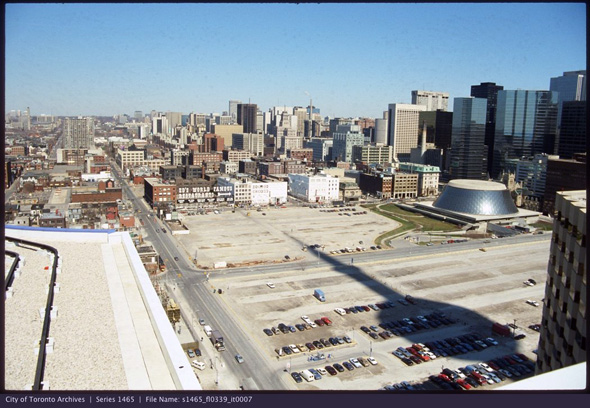
At the time, buildings weren't just knocked down in order to be replaced with newer structures, but to sit in limbo before development eventually proceeded. Perhaps the best example of this involves the former Board of Trade Building, located at Yonge and Front streets, which was knocked down in 1958 only to sit vacant (save for a few parked cars) until construction began on the EDS Building in the early 1980s. Take a look at the area southeast of this site in the photo above to see just how many other examples of this parking lot fever one could cite.
Most of the empty spaces in these images have since been filled via Toronto's various real estate and development booms, though some not until more recently than you might think. It nevertheless remains mind-boggling to see just how thinned out these areas were only 30 years ago, particularly considering that they were generally quite dense to begin with. Here's a look at Toronto of the 1960s and 70s, a place where it was never hard to find a parking spot!
Thanks to Rick McGinnis, whose comment on a previous post inspired this one. Also check out Urban Toronto's thread More Lost Toronto in Colour, which also touches on this topic.
PHOTOS
For context: The area around the St. Lawrence Market (also depicted above) in the 1910s
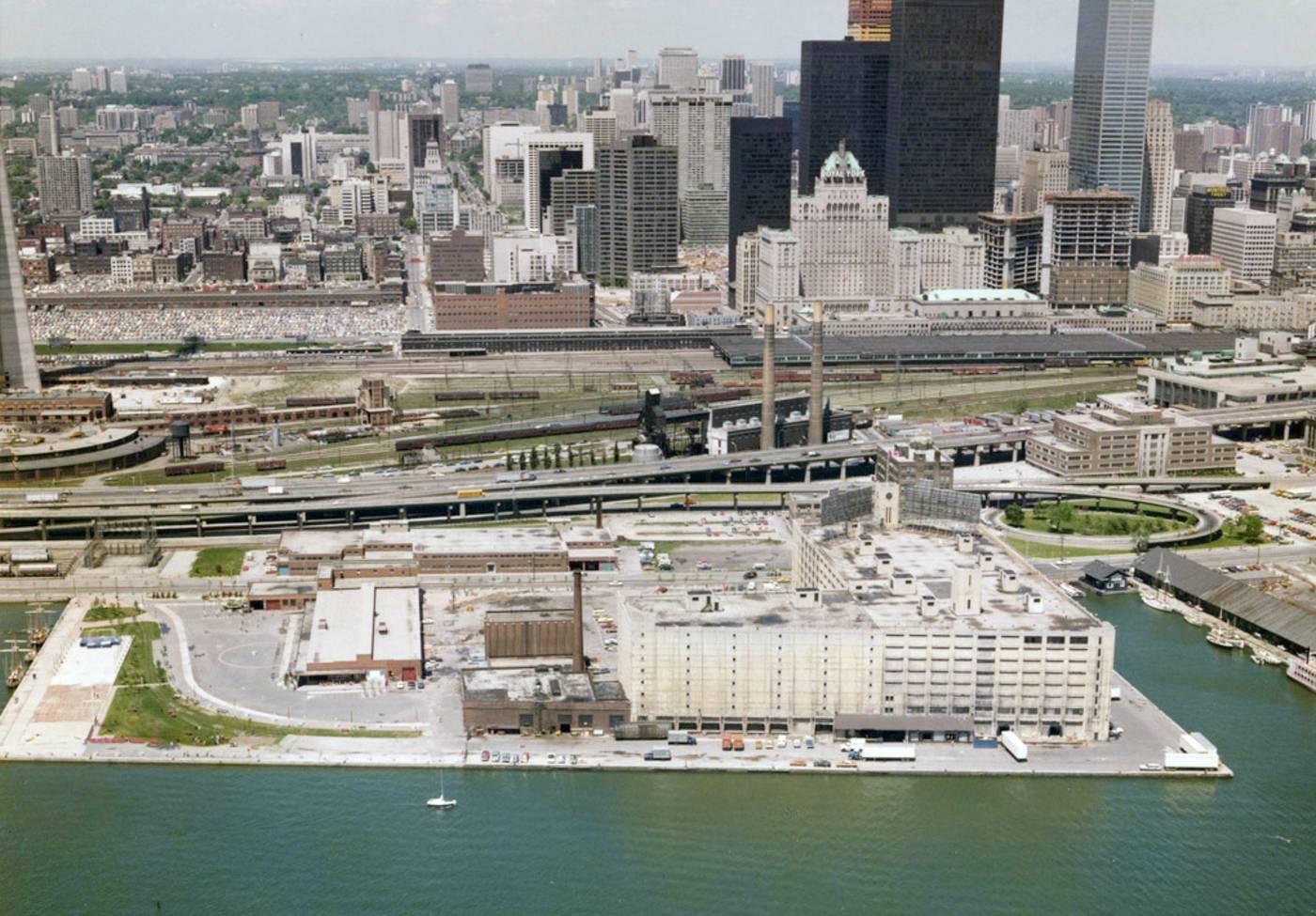
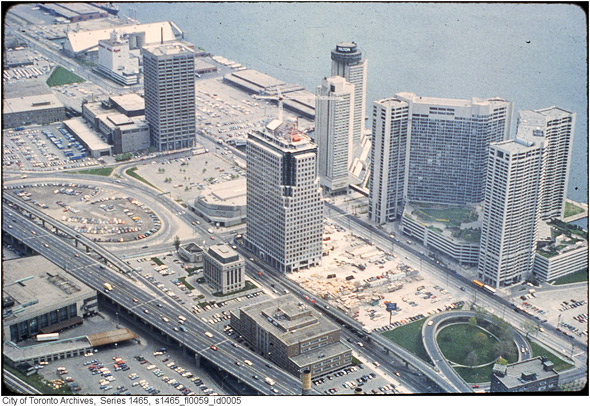
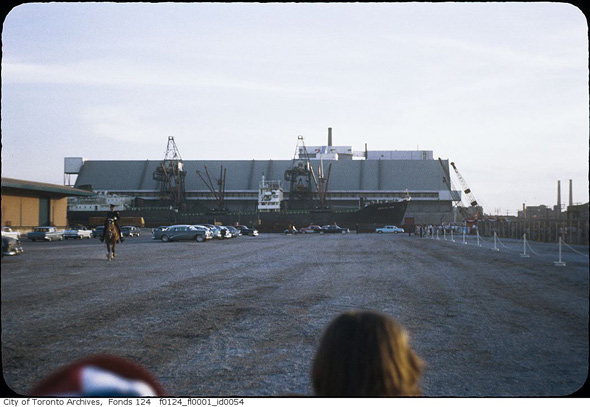
Queen's Quay and Lower Jarvis / Sherbourne area, 1960s (the current site of the Corus Quay building)
Parking lot beside the old north building at the St. Lawrence Market, pre-1968
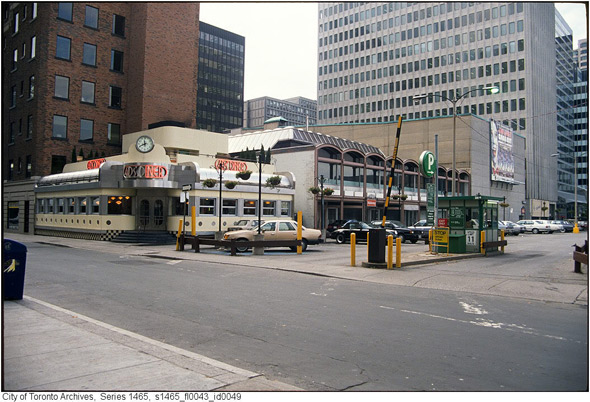
Parking lot near Wellington and Yonge, 1960s
For context: Yonge and Front, looking north toward Wellington, 1910s
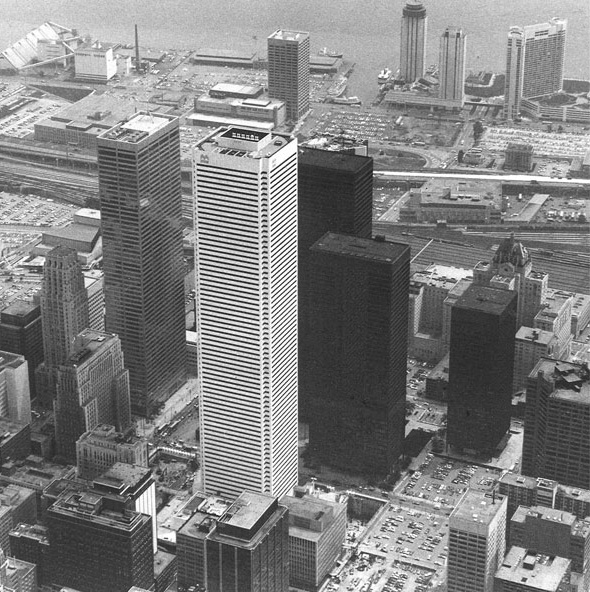
Aerial view of downtown Toronto, 1967 (note the parking areas to the west of the Financial District)
Parking across from City Hall, late 1960s
Area between Bay and Yonge south of Front, late 1960s
Parking lots abound around the St. Lawrence Market, 1970s
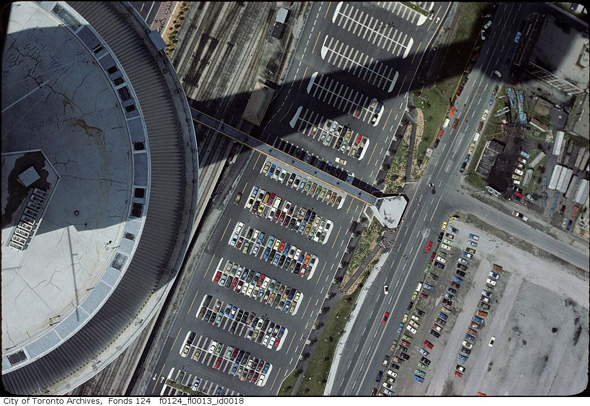
View from the CN Tower, mid 1970s
First Canadian Place and area around King and Bay, 1976
Area around the Harbour Commision Building, 1980s (current site of the ACC is at the bottom left of the photo)
Bellair between Bloor and Cumberland, 1980s
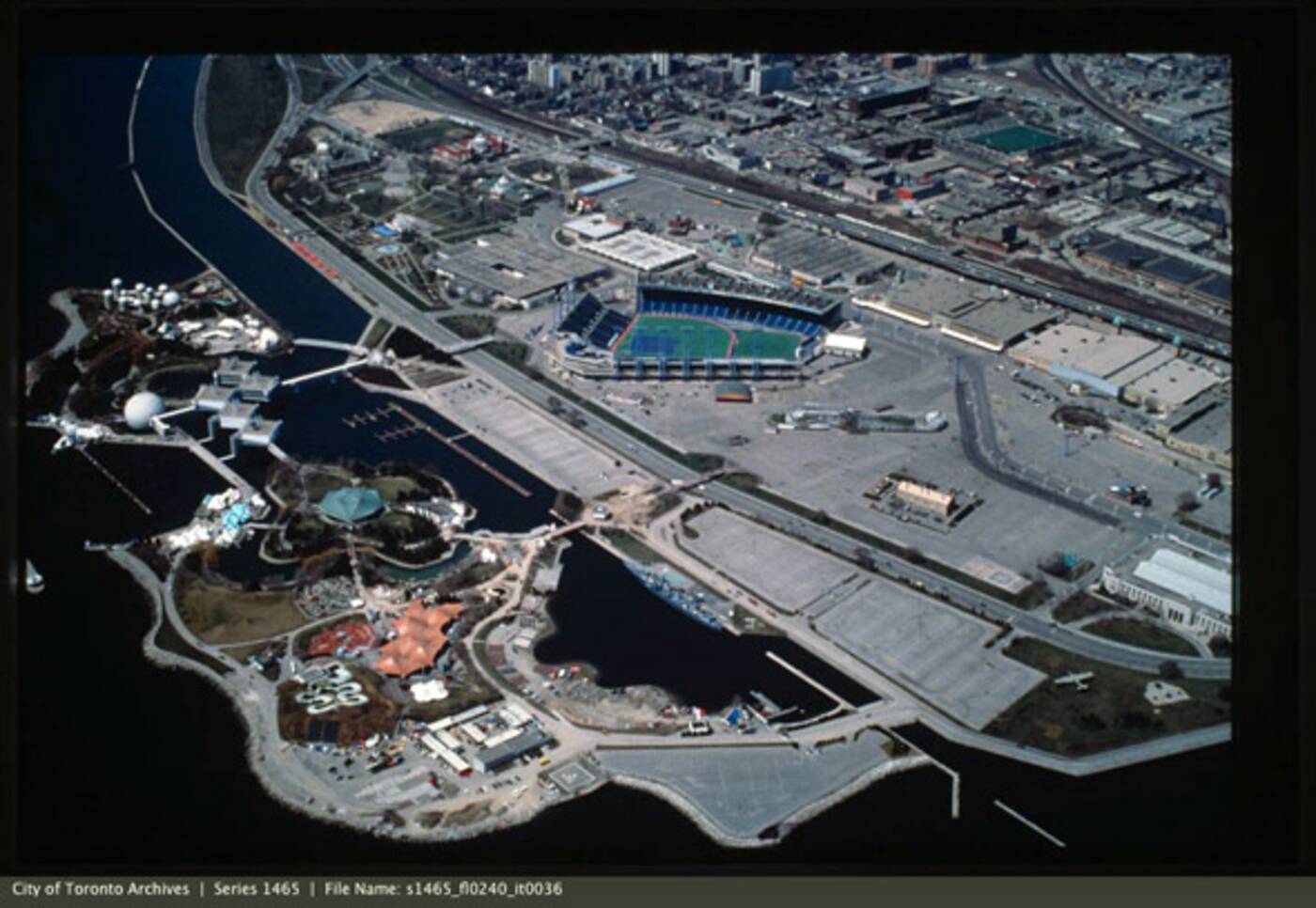
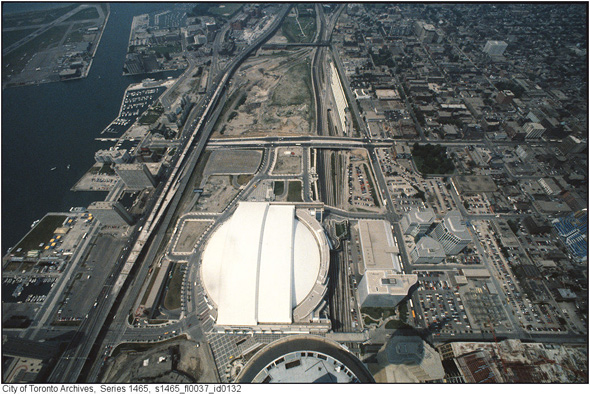
Parking lots around the newly built Dome, early 1990s
Wellington and John area, 1980s
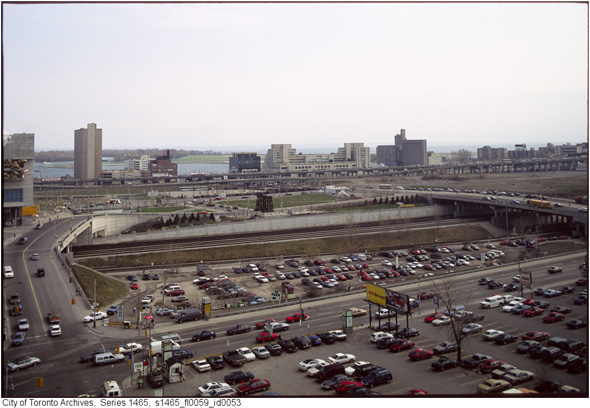
Blue Jays Way and Front (Spadina at the right of picture), early 1990s
Photos from the Toronto Archives with the exception of the one depicting First Canadian Place, which is from Panda Associates


Discussion
30 Comments
Sort By Oldest First / Newest First
Subscribe
South of Wellington was a wasteland, and the lakefront and harbour were a picture of pure desolation. I still remember Queen's Quay Terminal, before the renovation; it's hard to imagine now, but Harbourfront felt like a real gamble - just getting down there required a walk through dim, dead grey zones of empty lots and vast parking lots. I frankly didn't imagine that it would be any kind of success.
Another thing I'd like to point out is how dingy and black St. Lawrence Town Hall looks like in one of the shots. Most of the older buildings downtown had the same appearance, a patina of coal smoke, mostly, and that dinginess was one of the reasons it was easy to convince the public that the old buildings were ugly and needed to be replaced with something new. It was a shock when Old City Hall - nearly demolished, as you know - was cleaned up, revealing all that vivid red sandstone underneath. Going through albums of old photos on Urban Toronto is a testament to how grim and worn out Toronto looked in the '60s and '70s.
If that angers you so much, go somewhere else.
They should have built a 10 lane highway through there when they had the chance. That would have made Toronto a better place.
In particular: the parking lots shown next to Roy Thomson Hall, some of the lots near the O'Keefe Centre, and just about everything near the CN Tower and Skydome replaced railway infrastructure. This is plainly visible in other archive photos and maps.
It seems that the people on this site are so eager to bemoan the evils of roads, and 50s/60s era development that they can't be bothered to look at the actual history.
On the subject of the railway lands, Derek might want to do a post - perhaps even several - on what a railway town this once was. Toronto was built as a port, but as soon as rail became the country's dominant mode of transport, our eagerness to devote vast tracts of the city to rail hub and sidings made it a commercial and industrial centre. The railways made Toronto just as surely as the Methodist/Presbyterian merchants did. It's worth remembering when you find yourself trying to find a way around traffic on Queen and King West and end up on dead end side streets made by the rail corridors.
What is desperately needed is a downtown relief line, probably starting down Don Mills Road. However, it seems that is not much more than a line on the map where it crosses Eglinton. Hopefully that is built before any more extensions to the Yonge line - then most Toronto residents will have great difficulty using the subway.
Another thing that replace the parking lots is The Path - the network of pedestrian walkways linking many of the new buildings. Our road system could not handle it if those underground walkers had to move at street level and compete with cars at intersections (and between).
Unfortunately gadfly has no clue about cities and for some reason continues to live in Toronto when he wants parking where he could be better served in Detroit, Chicago, Atlanta, or Houston (all world class cities, hahaha). He's just a troll, so I've just begun to ignore his wildly incorrect and misplaced comments on cities and planning.