City
Aerial photographs of Toronto from the 1920s to 1980s
If the most fascinating thing about historical photos of Toronto is that they allow the viewer to track just how much the city has changed, then aerial shots would have to sit somewhere near the top of the archival heap. The macro-perspective they afford may not make for the most rewarding study of buildings that have survived the test of time, but there's probably no better way to get a sense for how Toronto's built environment has expanded over the years than by looking at the city from the air over the decades. What might be familiar geography today can look completely foreign in the absence of development or infrastructure that's now ingrained in our minds as part of the landscape.
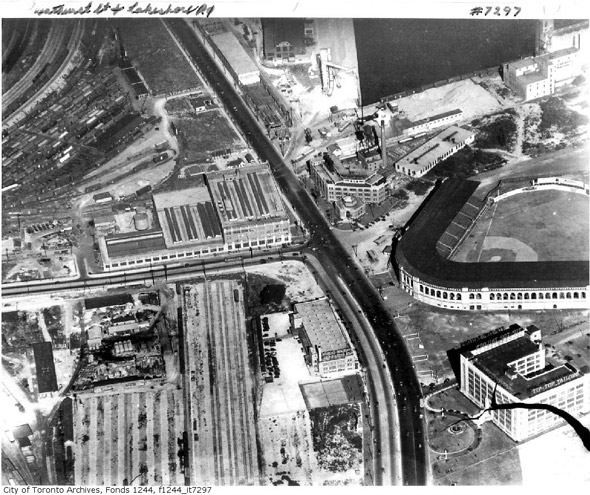
Over and above the sweeping changes that these images reveal, discrete developments are also satisfying to note. If you've ever wondered where the old Maple Leaf Stadium was or what the Port Lands looked like when they were still an industrial hotbed, here's your chance. It's tough to pick favourites, but I'd be remiss not to point out just how eerie it is to see the R-101 Dirigible cruising across Toronto in the 1930s.
PHOTOS
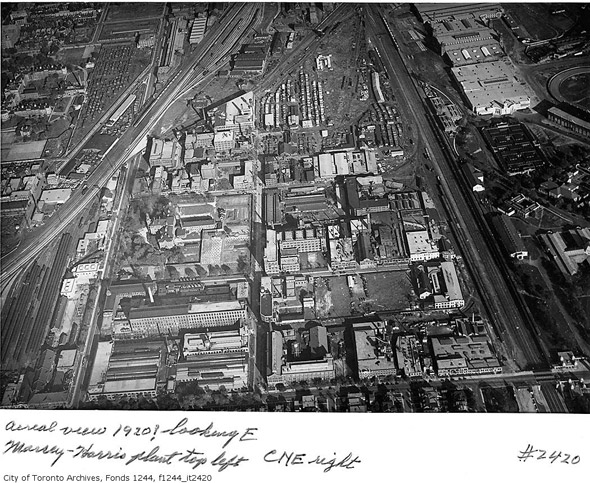
King West and what is now Liberty Village in 1920
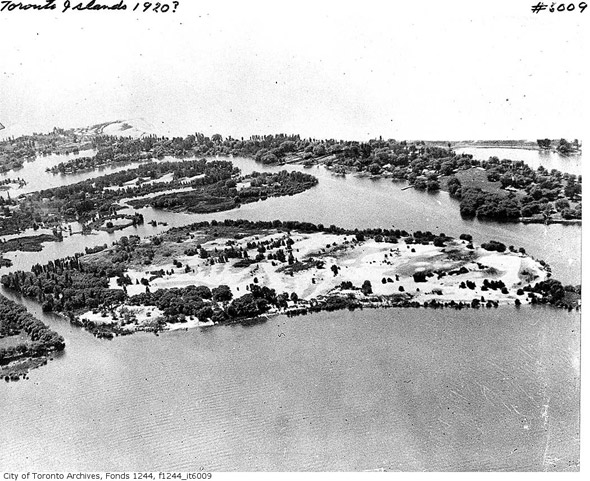
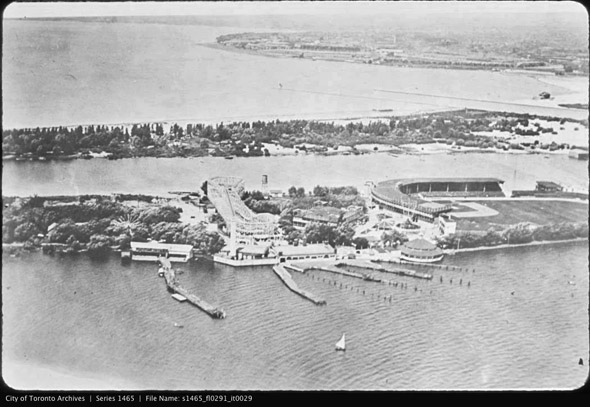
Toronto Islands 1920
Toronto Islands and Hanlan's Point Stadium, where Babe Ruth hit his first professional home run
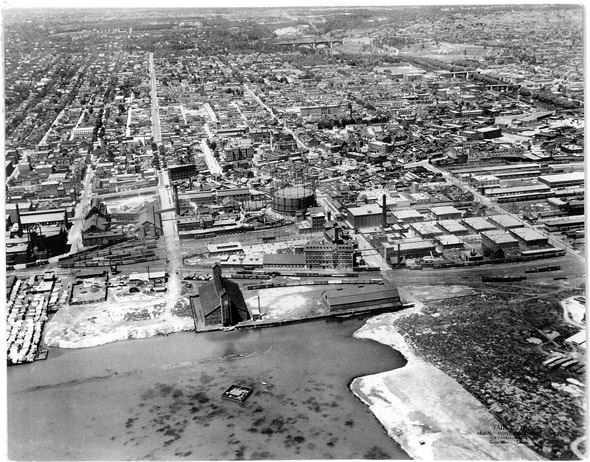
The Distillery District was just a touch bigger in 1927
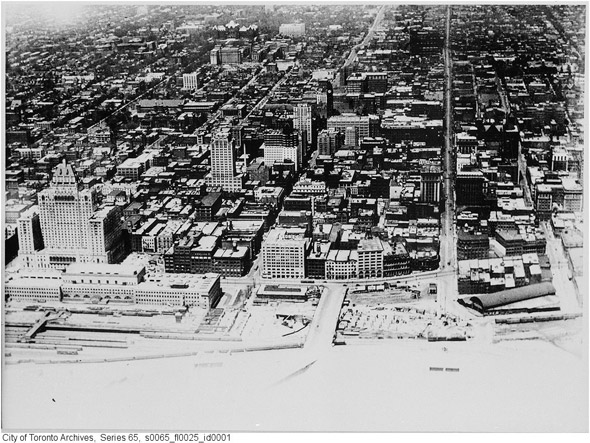
Looking north across Toronto Ca. 1929 (thanks, Adam!)
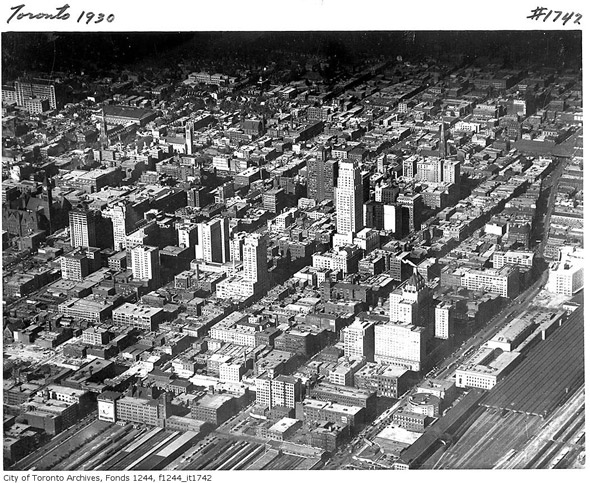
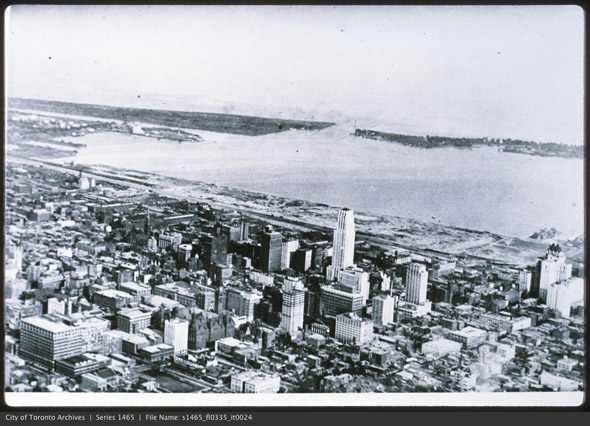
Downtown Toronto 1930
Bayview and Lawrence in 1930
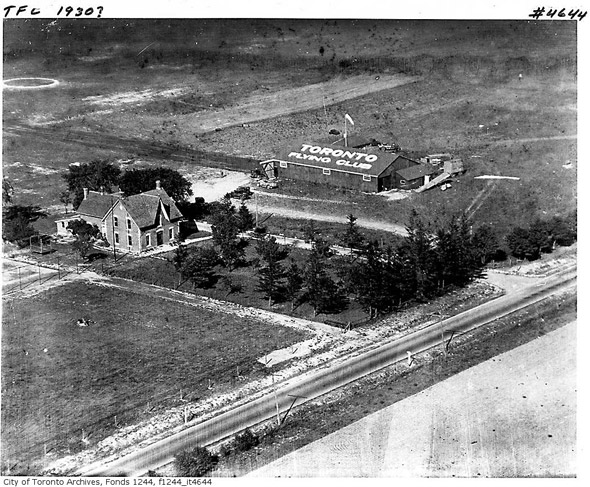
Above what is now Pearson International in 1930
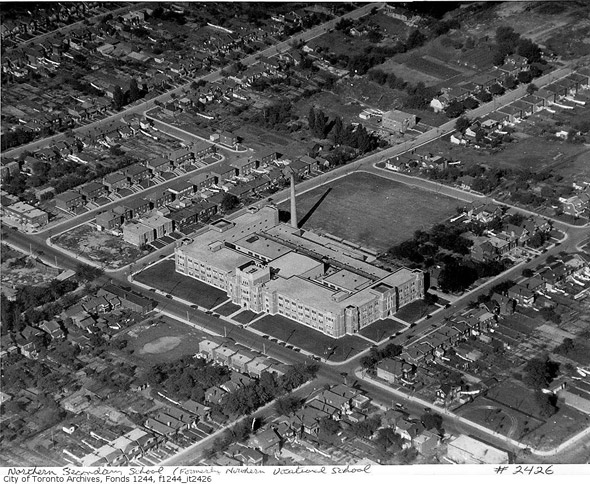
Northern Secondary School 1930
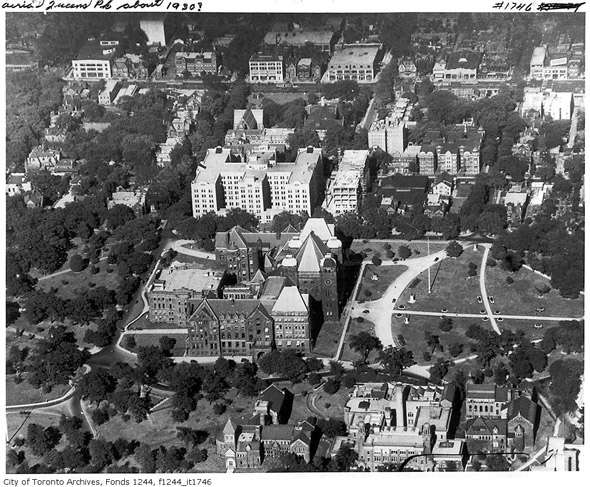
Queen's Park 1930
Maple Leaf Stadium near Bathurst and Lake Shore 1930
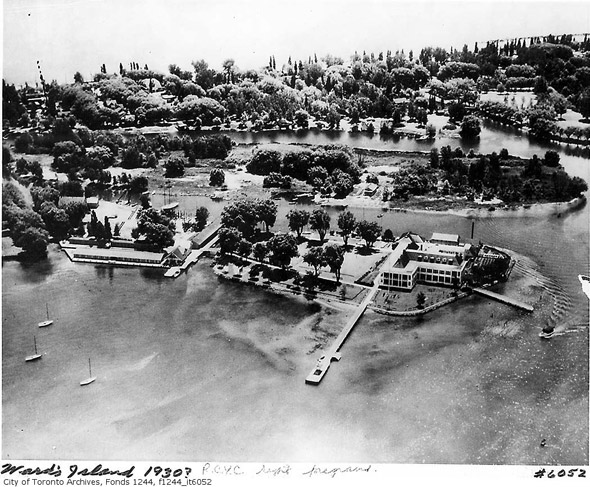
Toronto Islands 1930
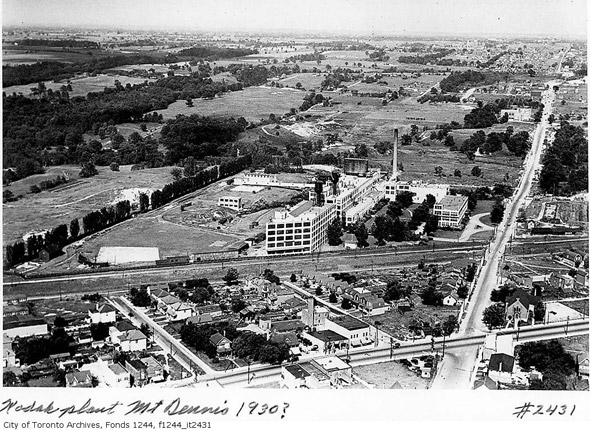
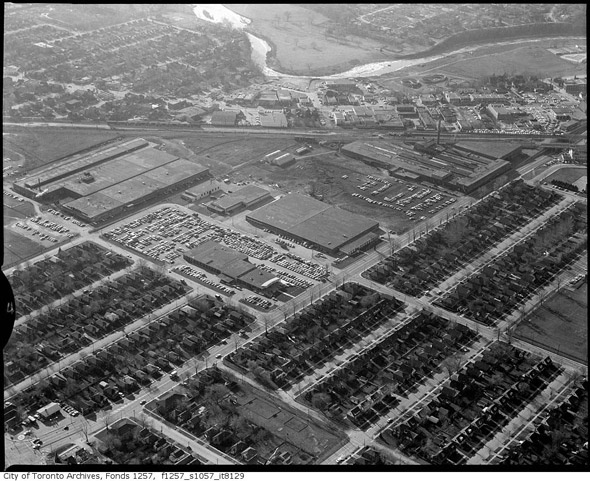
Mount Dennis and Kodak Plant 1930
Looking southeast across Toronto 1930 (The Canadian Imperial Bank of Commerce Building was quite prominent back then)
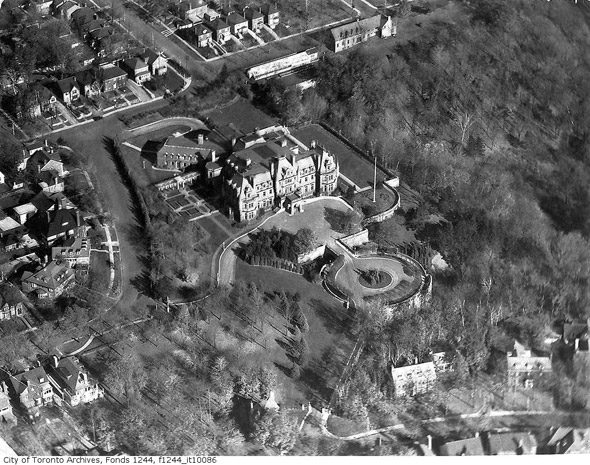
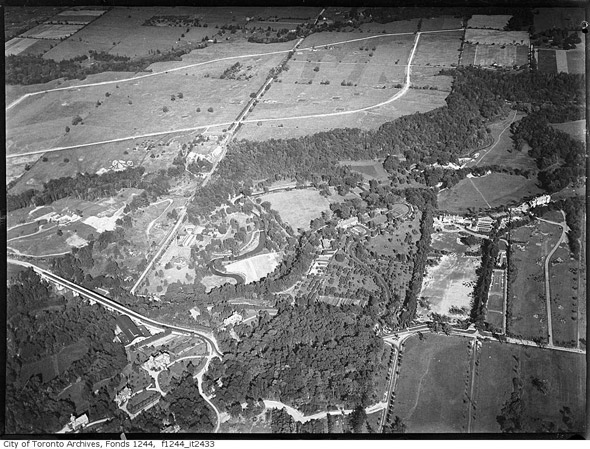
Chorley Park 1930 (the trace of which can still be seen from the air)
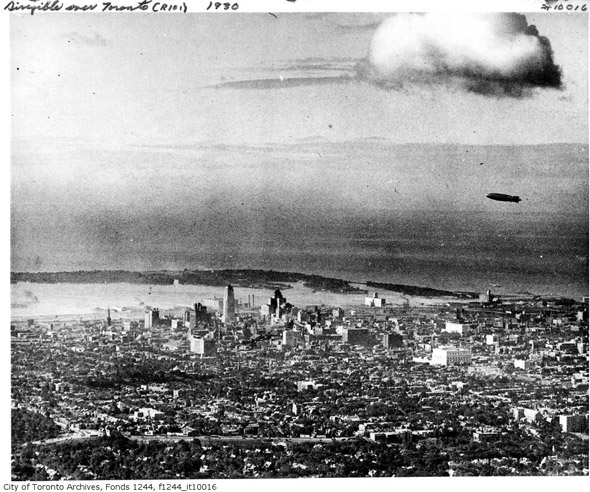
Aerial with R101 Dirigible in view 1930s
Downtown Toronto 1932
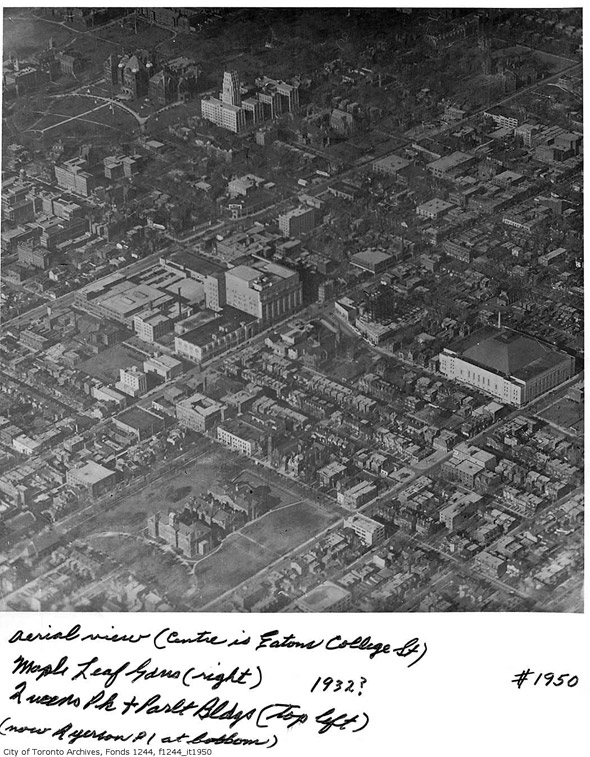
Maple Leaf Gardens and the now demolished Normal School (Ryerson campus today)
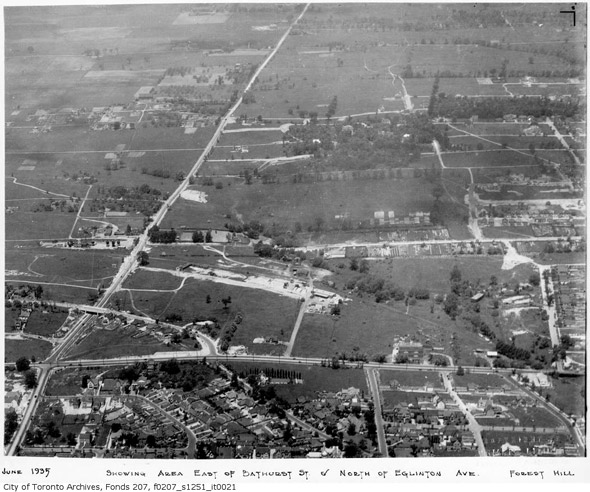
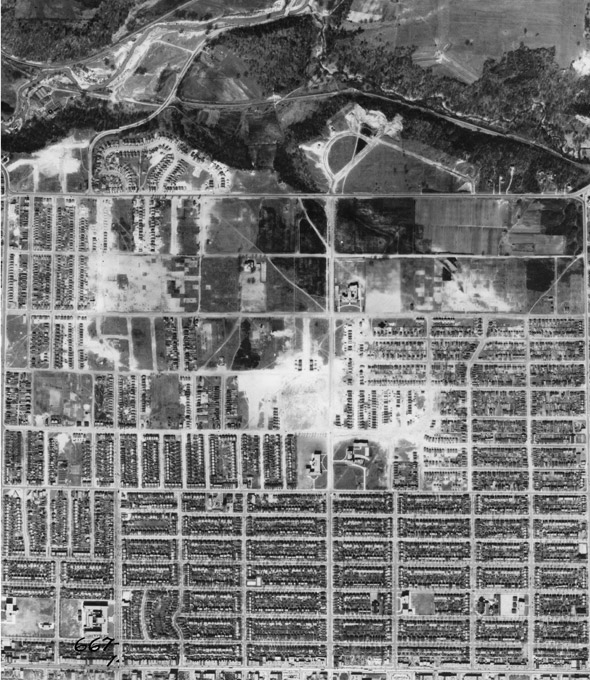
Bathurst north of Eglinton had yet to be developed much in the 1930s
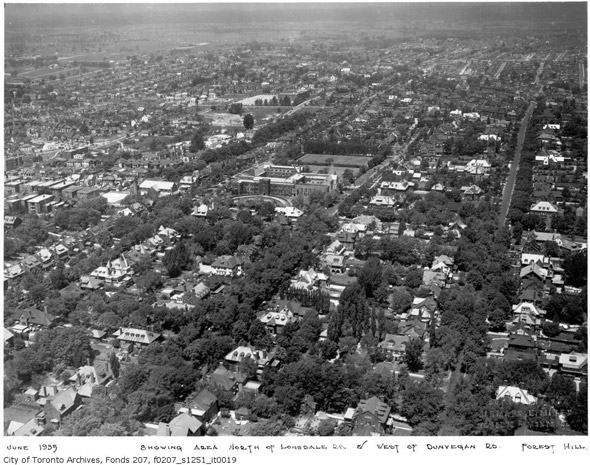
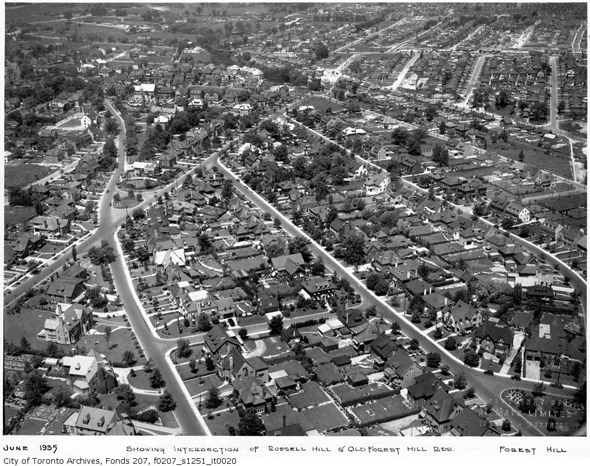
Above Forest Hill 1935
Different Angle, same year
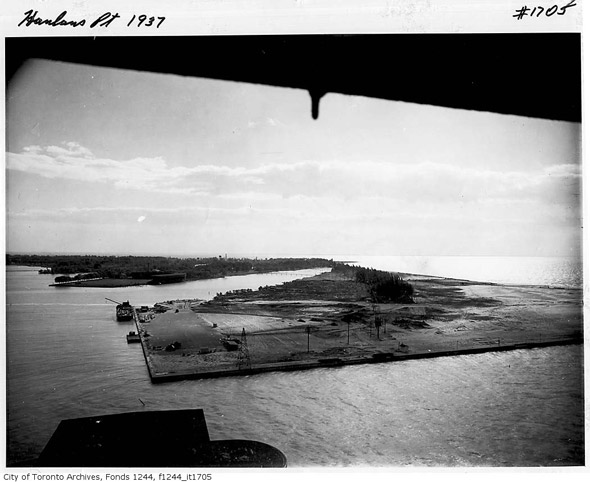
The current site of the Island Airport 1937
Above Toronto in the 1940s
East York Aerial 1942
St. James Town Aerial 1942
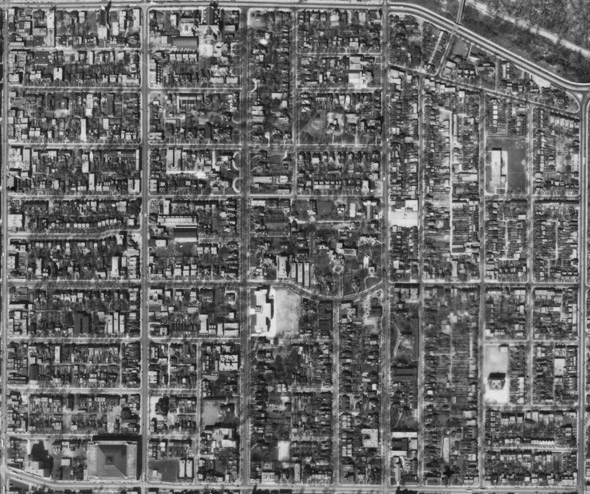
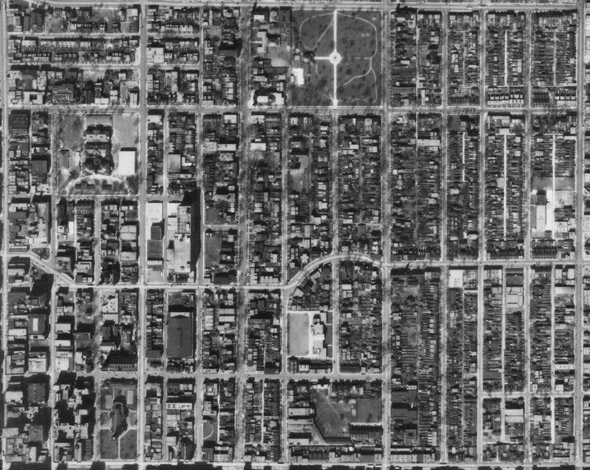
The Garden District 1942
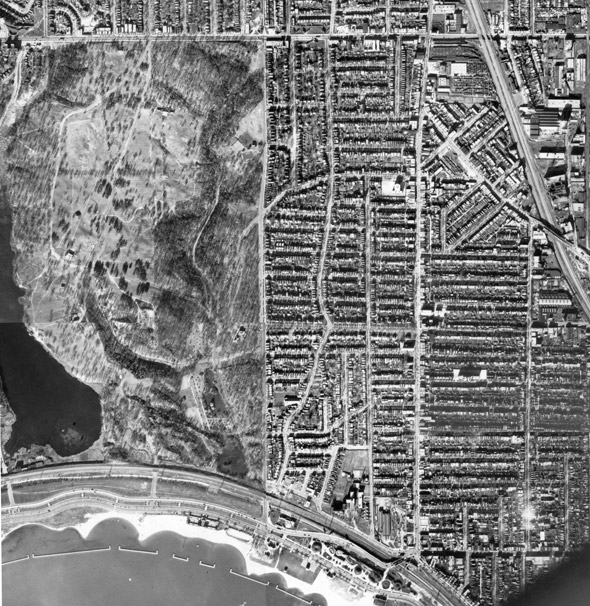
High Park Aerial 1942
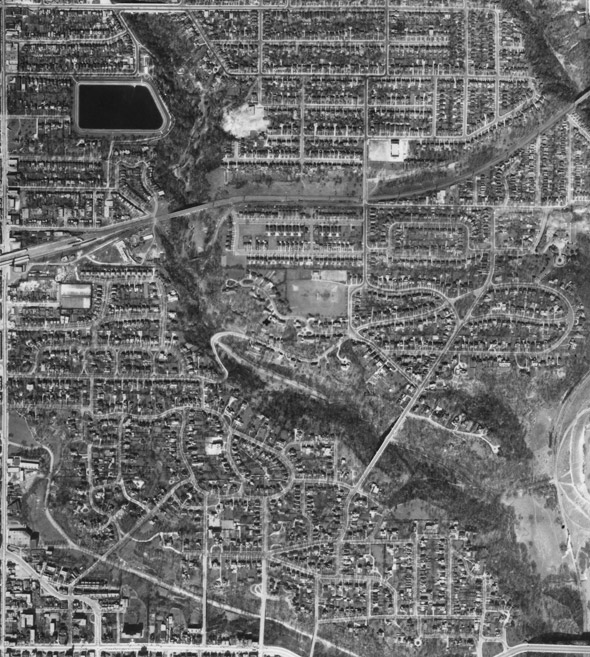
Rosedale north to St. Clair Aerial 1942 (notice the Rosehill Reservoir was yet to be covered)
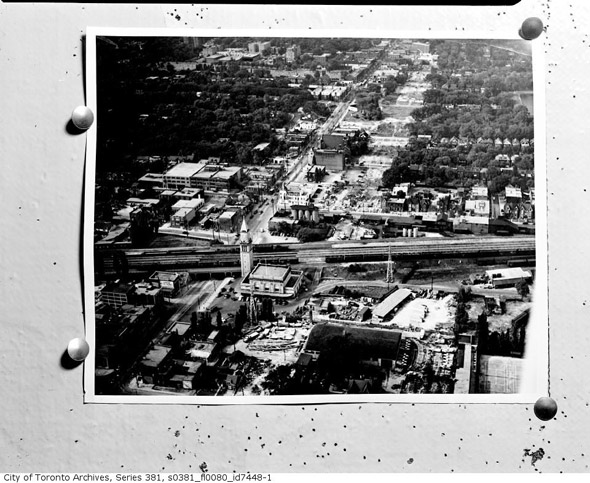
Summerhil CPR Station 1950
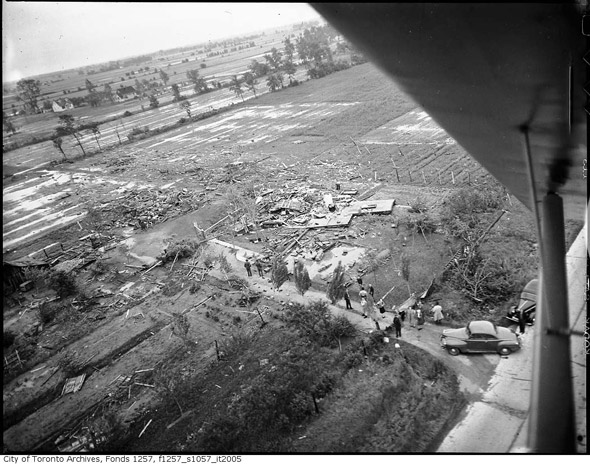
Damage from Hurricane Hazel north of Toronto 1954
Looking southwest from around Jane and Lawrence 1950s
A freshly demolished Maple Leaf Stadium 1960s
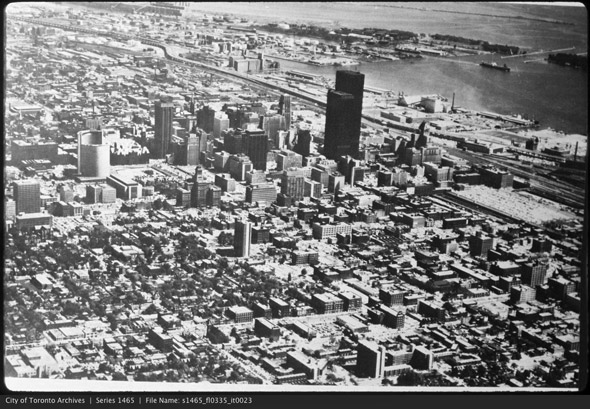
The TD Centre has arrived late 1960s
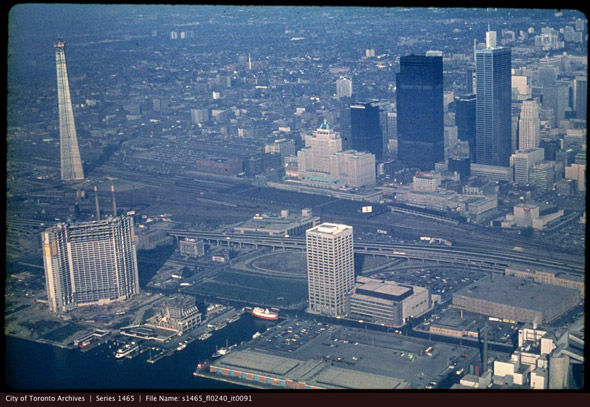
Hello CN Tower mid-1970s
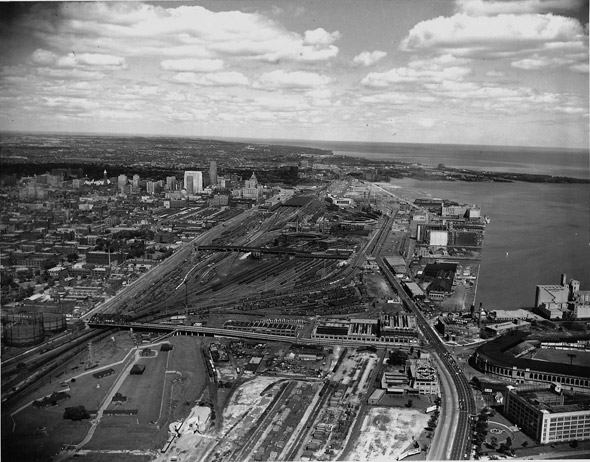
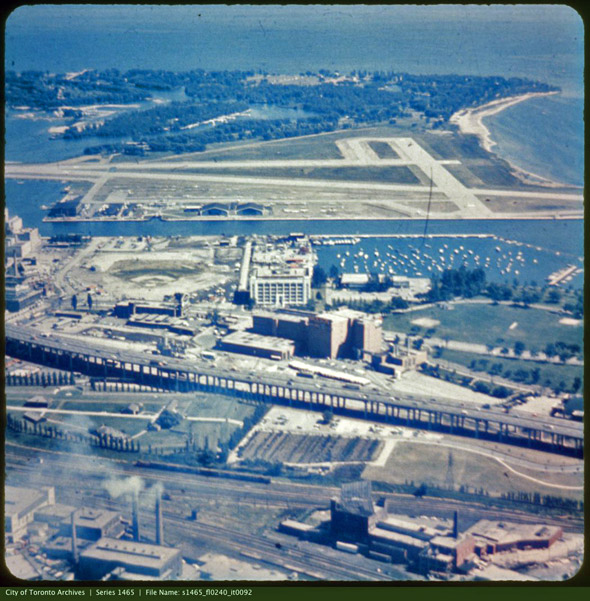
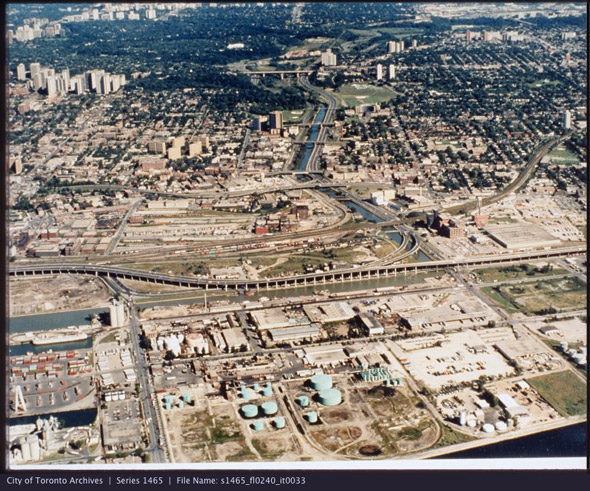
The Port Lands in the 1970s
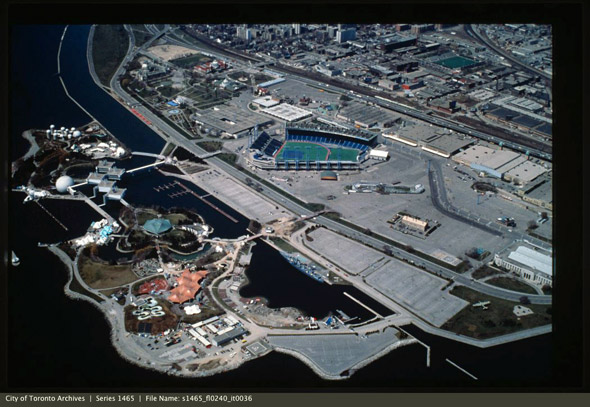
Exhibition Stadium and the CNE grounds 1980s
For context:
Looking straight up the city, 2008
Photos from the Toronto Archives (with the exception of the last, which is by the author)


Discussion
40 Comments
Sort By Oldest First / Newest First
Subscribe
http://www.trainweb.org/oldtimetrains/CPR_Toronto/parkdale_aerial.htm
You can also see that Mount Pleasant Rd didn't extend south of St Clair yet - if you follow the ravine southeast past the railway overpass, the squiggle is how Roxborough used to run before the new road separated them.
old and new! Thank you!
"Under mayor Nathan Phillips in 1960, the City of Toronto bought the house for $100,000 in order to destroy it and create municipal parkland.[10] At the time, Chorley Park was considered dilapidated and outmoded, and municipal dollars were being spent demolishing heritage structures throughout Toronto to make room for modern buildings. The building was demolished in 1961, and the grounds of the estate were added to the civic parks system.
The only trace of Government House left is the bridge to the forecourt, and some depressions in the earth that outline the rough footprint of its foundations. The once formal gardens have long gone fallow and today Chorley Park is a 'naturalized' park."
*From Wiki
"Under mayor Nathan Phillips in 1960, the City of Toronto bought the house for $100,000 in order to destroy it and create municipal parkland.[10] At the time, Chorley Park was considered dilapidated and outmoded, and municipal dollars were being spent demolishing heritage structures throughout Toronto to make room for modern buildings. The building was demolished in 1961, and the grounds of the estate were added to the civic parks system.
The only trace of Government House left is the bridge to the forecourt, and some depressions in the earth that outline the rough footprint of its foundations. The once formal gardens have long gone fallow and today Chorley Park is a 'naturalized' park."
Your effort was very much appreciated by me.
Much Love
Utterly sad what happened to the U of T campus when they brutalized it with the Medical Sciences Centre. Had that single complex been placed outside the historic core of the campus, as was normal at other universities (Duke, etc.), U of T would have had a shot at having a campus as good as the urban Ivies.
I can't figure out where and what the Garden District is. Can someone pls point out a familiar couple of landmarks that still exist?
Also, are there any aerial pics that show the Mutual Street arena?
Now, it's the other way round. Sadly, there is no "room" around the building and that also reduces its visual impact.
The ManuLife building at 200 Bloor St. East is massive and grand and it is set back from the street and is not crowded like the Royal York is. ManuLife has breathing room and the Royal York is asphyxiated in its location
Thanks so much for this amazing post!
http://commons.wikimedia.org/wiki/File:TorontoTodmordenAerial1942.jpg
Also of interest: In the picture of the Kodak Plant in Mount Dennis, it looks like Building # 9 hasn't been built yet. (Building 9 is the only structure remaining on that site)
cash and vouchers for drinks, food - and dollars off of tabs.
They feature almost nightly drink specials and
some form of entertainment every night of the week--DJ's, live music, trivia, you name it.
And for "CN Tower mid-1970s", it would be about mid September 1973 based on my CN Tower construction history information.