
The CN Tower turns 35-years-old
Happy 35th birthday, CN Tower! What would Toronto's skyline be without you? In honour of this occasion (which actually took place yesterday), I think it's fitting to look back at your birth, so to speak.
Although construction on the tower began in 1973, its conception dates back to 1968 and one of many plans to revitalize Toronto's downtown railway lands was proposed in the form of the Metro Centre. Although the larger plan â which called for the demolition of Union Station â never came to be, the idea of a major communications tower survived Metro Centre's demise. Fortunately, the original plans for the tower, which featured three cylinders of various lengths, were also abandoned in favour of the current design.
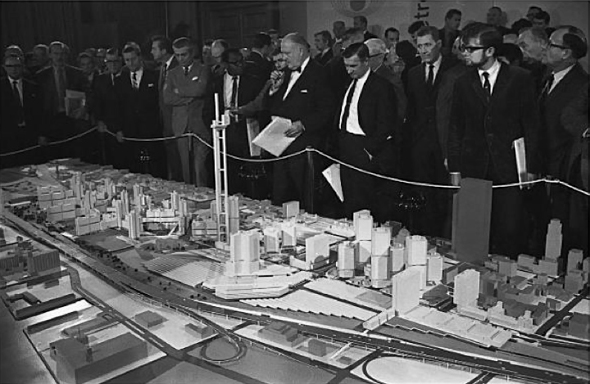
Along with its symbolic function as an illustration of CN's prosperity, the tower served a rather pragmatic purpose when it was built. On account of the rise of modern skyscrapers in Toronto (starting in 1968 with the TD Centre), the quality of television broadcasts was severely compromised by signal reflection. To solve the problem, the tower would need to be taller than the other buildings in the downtown core, which it is to this day.
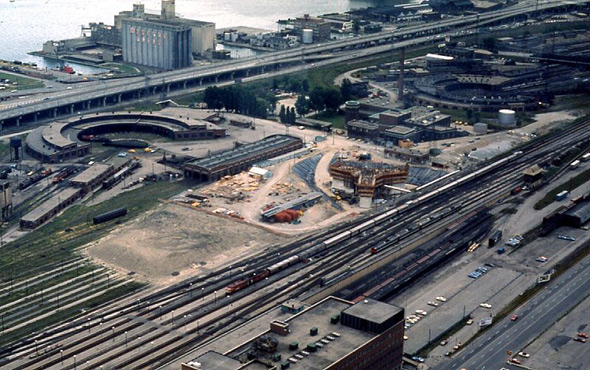
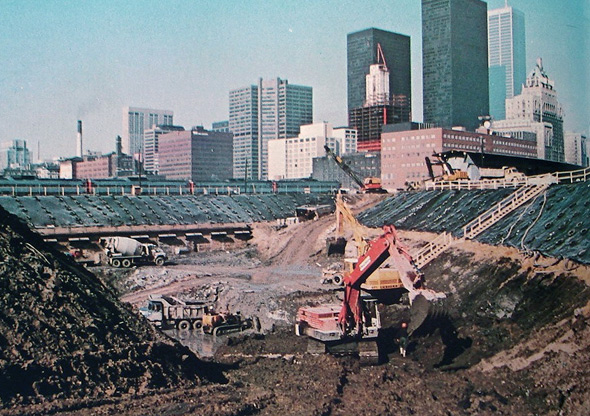
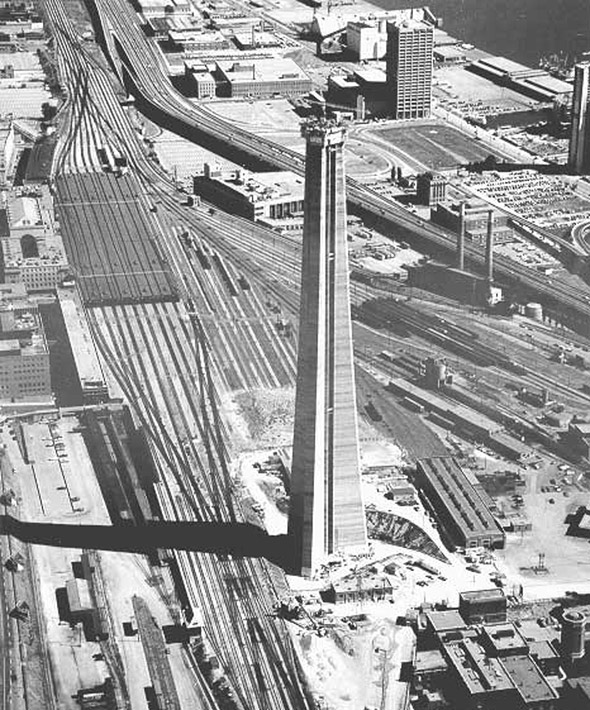
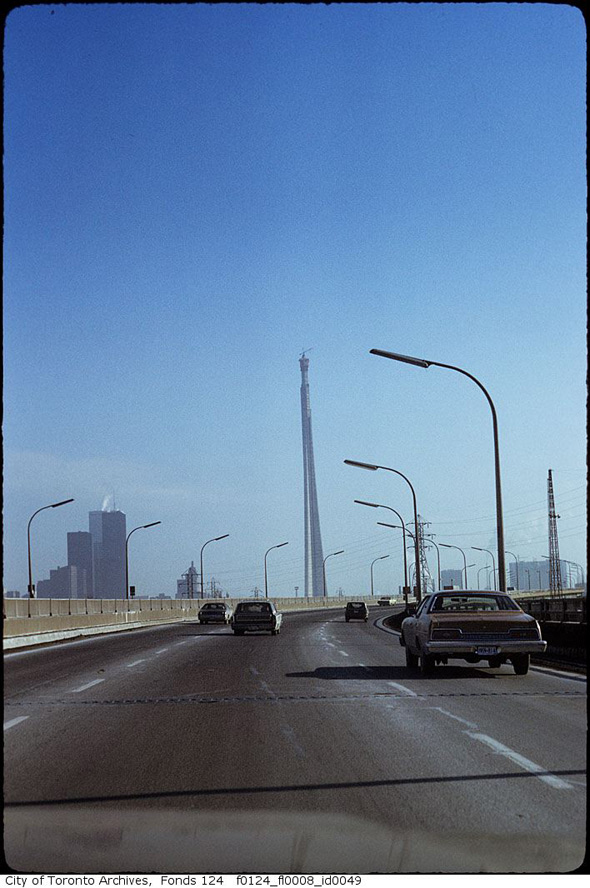
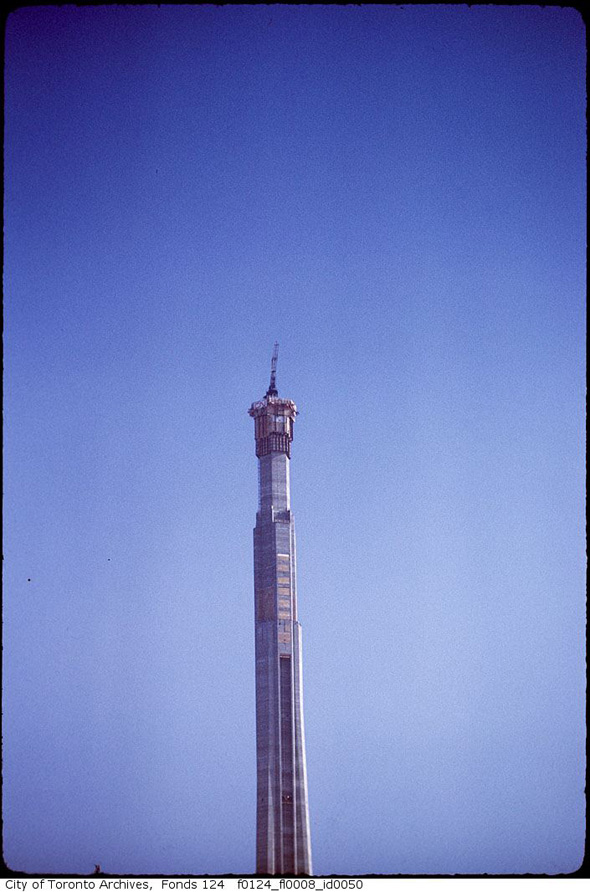
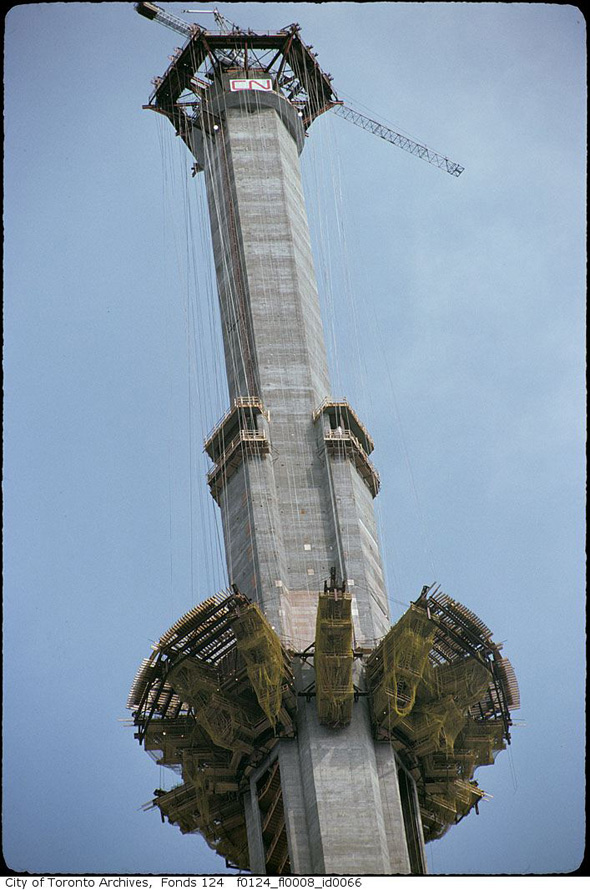
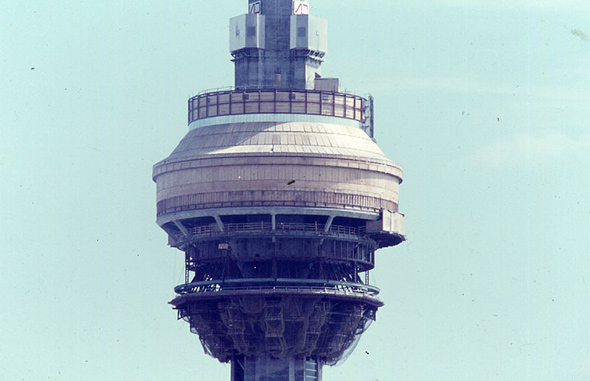
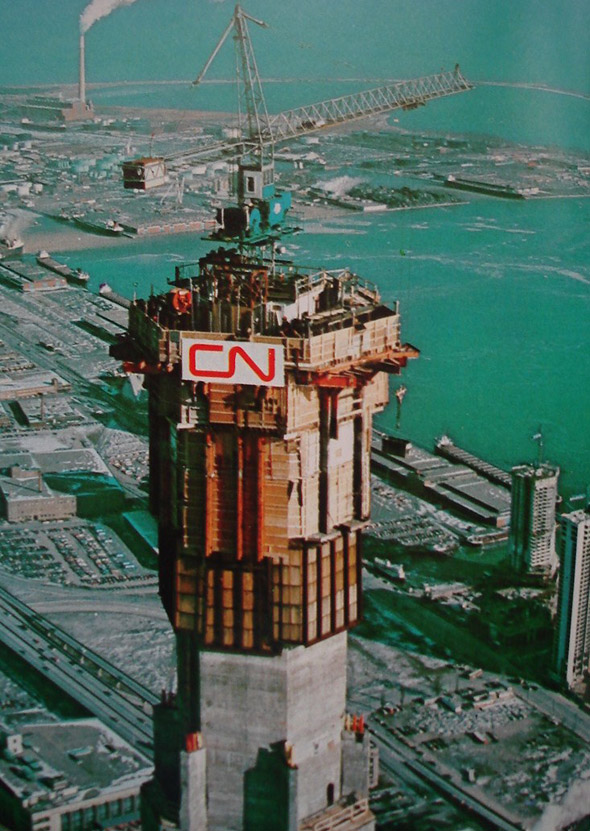
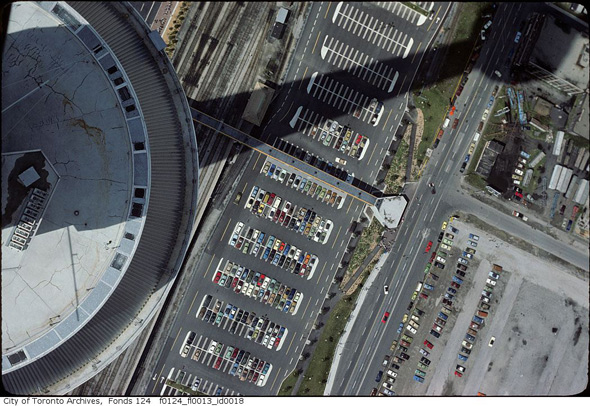
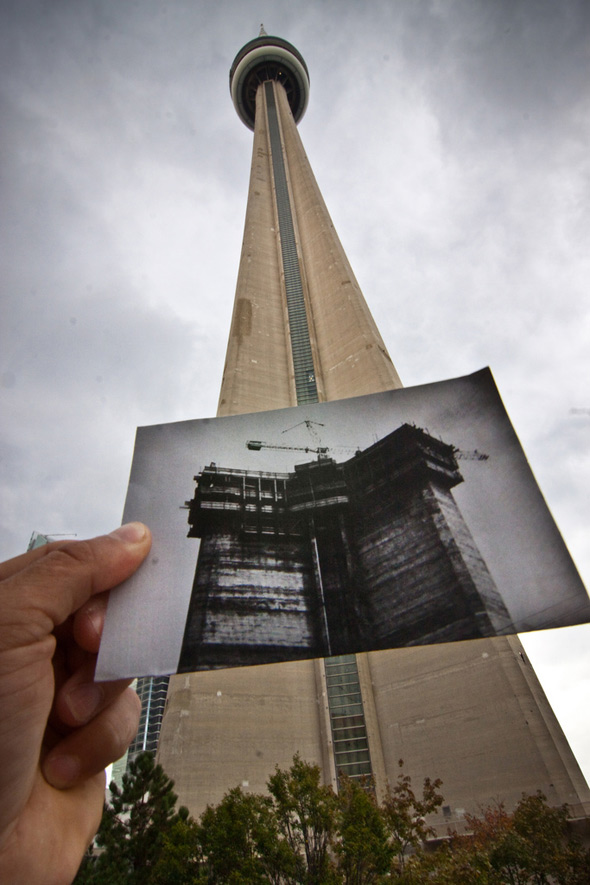
After the foundation had been laid in a rather speedy four months, construction began on the tower portion, which gradually proceeded upwards via the use of a slipform, which allowed for concrete to be poured seamlessly rather than in pieces. By late summer of 1974, work had commenced on the main pod, which is itself seven-storeys high. The radome at the bottom of this section is were the communications equipment is housed.
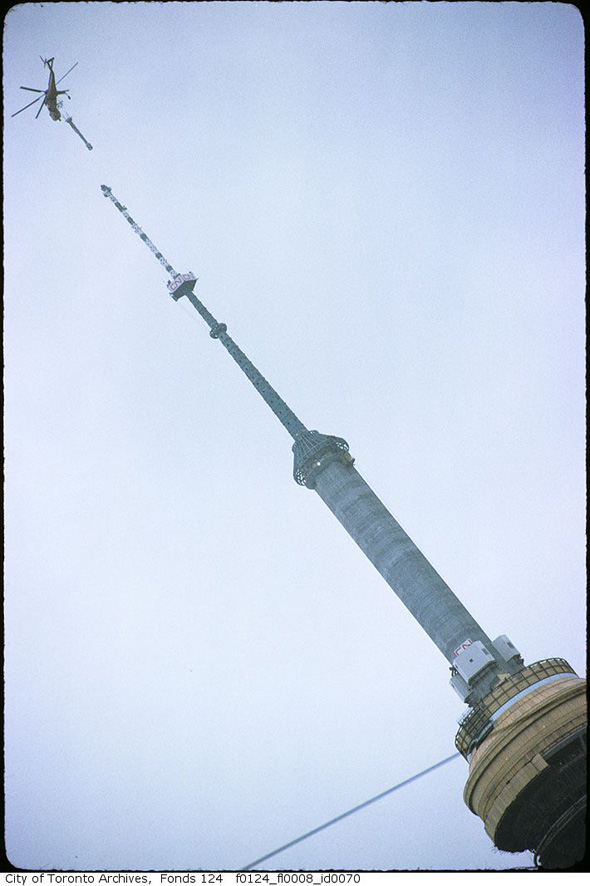
The final stage of construction involved the antenna section, which was assembled via 36 separate pieces. The original plan was to use a crane for this part of the work, but a Skycrane helicopter was used instead, which saved considerable time. The tower was topped off on April 2, 1975 and eventually opened on June 26, 1976. Since that time, it has served as the centrepiece of our skyline and the city's most recognized icon.
PHOTOS

VIDEO
RELATED
Video from the CBC Archives. Photos from the Toronto Archives (where marked), Photoscream, Time Magazine, and squirrel brand (last).


