City
Should the TTC Be Designated an Essential Service?
Later today, Liberal MPP, David Caplan (Don Valley East) will introduce private-member's legislation that would designate the TTC an essential service. Although such legislation doesn't often become law, the effort will, no doubt, re-ignite the longstanding debate about whether or not transit workers should have the legal right to strike.
And while Mayor David Miller and a number of city councillors have indicated in the past that they're against such legislation -- generally citing increased arbitrated wage statements -- Caplan's clout and the growing perception that TTC workers demonstrate an alarming sense of entitlement may be enough to give this proposal legs.
Caplan's argument for the legislation is pretty straightforward. As he told the Star, "Without [the TTC], we grind to a halt. There's a tremendous economic cost, but there's also a tremendous social cost. It's clear that it is an essential service and it ought to be declared one."
"The party line is that these kinds of arbitration processes cost more than collective bargaining. I don't buy that," he continued.
Regardless of whether or not Caplan "buys it," there is evidence to suggest that designating the TTC an essential service will increase the cost of negotiated wage settlements by as much as $23 million over a three-year contract.
But, as important as the economics are, there's a more fundamental obstacle that Caplan's bill will face, and that's the very definition of what constitutes an essential service.
According to the Public Service Labour Relations Act (PSLRA), essential services are those that are "or will be, at any time, necessary for the safety or security of the public or a segment of the public." Or, as the Treasury Board of Canada Secretariat website explains, "Services should be identified as essential where there are reasonable grounds for accepting the probability, or even the possibility, that human life or public safety would suffer if a work stoppage interrupted the duties of these employees."
So, while few would disagree with Caplan's point that "We've had too many work stoppages over the course of recent years," such a fact doesn't seem to warrant the official designation of transit workers as essential.
As inconvenient as TTC strikes are, it'd be a tough to argue convincingly that the cessation of transit services jeopardizes public safety. But, perhaps that's the whole point. Might it be that the legal terminology is too narrow? There is, after all, some ambiguity surrounding the term "essential," and if safety wasn't the chief factor, it'd be considerably less difficult to make a case that public transit is the type of service that must remain operative at all times.
What do you think about Caplan's proposed legislation? Should the TTC be designated an essential service? Or, bearing in mind the letter of the law, is this just another installment in a longstanding, but ultimately irrelevant, debate?
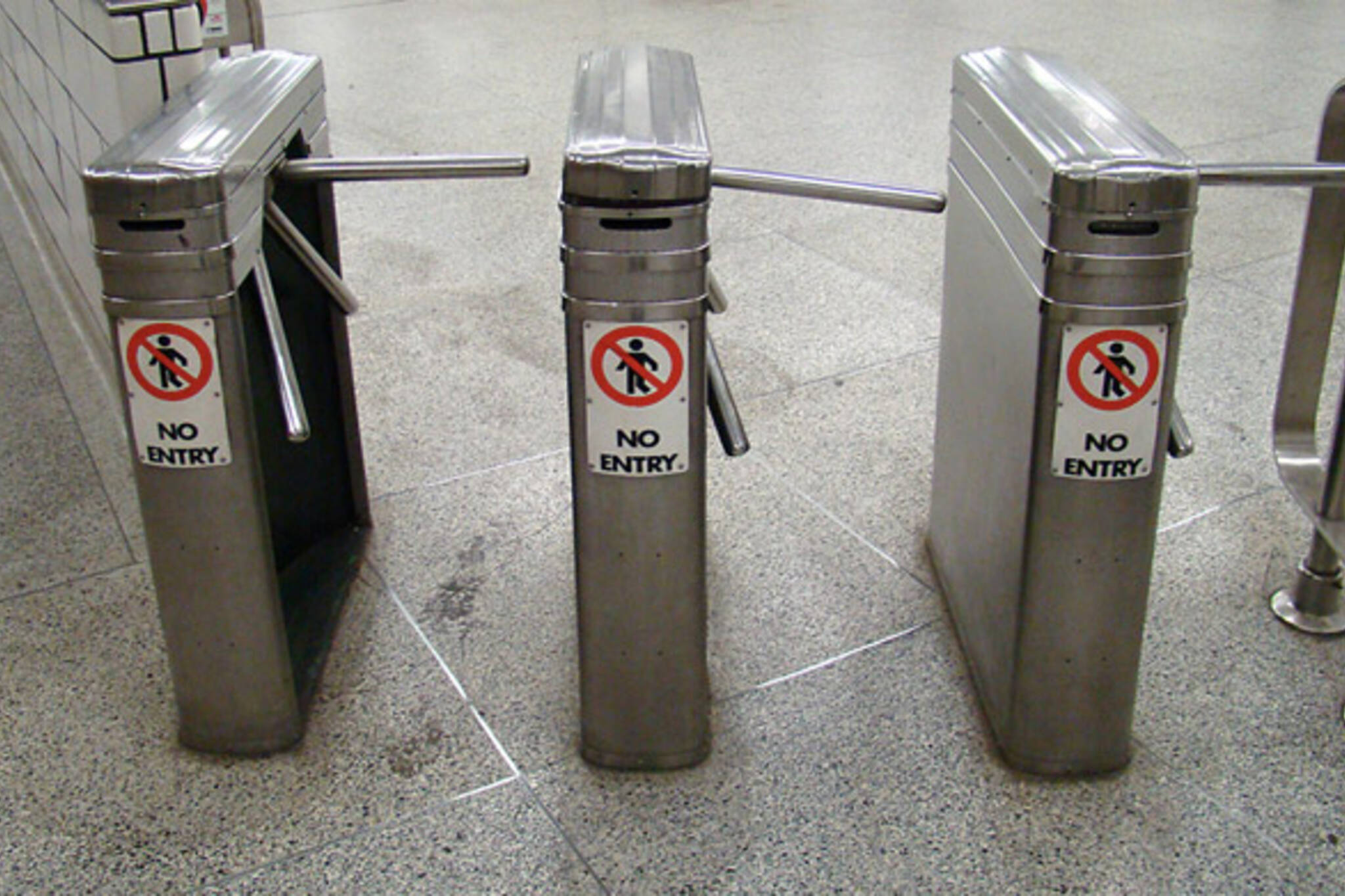
Photo by sniderscion, member of the blogTO Flickr pool.


Discussion
58 Comments
Sort By Oldest First / Newest First
Subscribe
This would allow workers the right to action, while preserving the public's right to access.
Also, EricM, wildcat strikes are by definition not in compliance with a labour agreement, thus your argument doesn't provide a reason to grant essential status -- that would only prevent legal planned strikes.
It's appalling that nobody has the balls to make it official.
Given the definition provided in the article (safety and security), it's not an essential service.
Nonetheless, if you can't take the TTC, you can still walk, bike, take a cab, drive.
It's not about having the balls. It's about having the brains. So take a minute to actually think about it. Not every decision that hasn't been made according to your gut reaction isn't due to utter stupidity... or at least, not due to someone else's.
Everytime their contract comes up, they strike to get more money, and the cowards we call our leaders give in everytime.
If they were an essential service, their go-to-move of holding the city hostage, would no longer hold any weight. And having an arbitrator ultimately deciding whether they should get raises or not, could be a good thing for us finally (as long as it's not Miller!)...
I like the idea of them having to accept an arbitrator's decision, instead of just turning up their noses at anything being offered, and threatning the hard working tax paying citizens with them not providing a way for them to go to work everyday.. At the end of the day, what choice do we have when put to that decision??
--jackandcokewithalime
I couldn't give less of a f*ck what the current definition of essential services is. It clearly doesn't adequately define what the citizens of this city feel the TTC's role is, so it's time to create a new designation and create new guidelines: "necessary service", "crucial service", "balloons and sunshine service" - anything to get semantic sh*theads get off their high horses and let people get back to solving the problem.
2
Only a simpleton would call using the TTC as a matter of convenience rather than a matter of economic necessity. The "pffft go buy a car" line is so f*cking detached from economic reality.
Perhaps these sh*theads could explain how the cost of 12 metro passes is equivalent to car payments + insurance + gas + parking. Do us a favour and stfu.
3
Sorry I don't see how negotiations with the union will suddenly become more difficult/expensive if the TTC is designated a (insert buzzword) service. They certainly couldn't get any stupider, given the outrageous things the union has scored from the morons from the city.
Also, the essential service designation does not come free. Because the unions are asked to give up a right granted to them by the Human Rights Commission of Canada (the right to strike) there is more room given in terms of concessions from the employer.
And they don't HAVE to accept an arbitrators decision the way you are implying. Only IF the negotiation process breaks down to the point that an arbitrator is the only last resort. This is how it also currently is, however when something is essential it's granted by default rather than by hearing.
I told you, nothing you say can't be taken seriously when it comes to the TTC or any union.
http://www.blogto.com/city/2010/02/morning_brew_fighting_for_ultimate_fighting_in_ontario_ttc_customer_service_czar_named_giambrone_returns_carlton_cinemas_saved_raccoons_dying_of_distemper_reporting_abandoned_bikes/
Having the TTC labelled as an essential service, is the worst thing that could happen for the union (and for fellow unionites like yourself)..
Go away. Unions are what's wrong with this country, and keven, you are what's wrong with this board.
--jackandcokewithalime
You could scream bias if I CURRENTLY worked or EVER worked for a union. What my mother does for a living has no bearing on my opinion (although you'd probably be surprised to know I'm not exactly pro-union).
My education on the matter outdoes yours, this much is obvious. Perhaps you should stop kicking and screaming and actually refute ANY point you've EVER made with an actual factoid instead of just defaulting to personal insults. I mean the amount of brain power it takes to insult someone is akin to that of goldfish.
Yes, you make a valid point that you're a very miserable person who is more interested in screaming like a 2 year old child teething, then by acting like an adult and discussing anything outside of your narcissistic and delusional little, lonely world with anything resembling a factoid.
I'm just waiting now for your friends to pass by and start supporting you again undercover...
You did call them already, right?
--jackandcokewithalime
This is my point, what you "don't see" is pretty important, and matters a great deal. And it's not a matter of buzzwords, the designation is the whole point and all of the implications that you claim to care about would flow from that. Historically, in Ontario when a bargaining unit has has the essential service desgination applied: a substantial abitral award has resulted in compensation to employees for the loss of the right to strike. If that's a cost you're willing to pay, then good on you. But huffing and puffing or flauting pride in your ignorance is unproductive.
The right to strike is not granted by the Human Rights Commission. Unions are covered under provincial labour law and the right to associate (and its negative corollary - the right NOT to associate) are governed by the Charter of Rights and Freedoms.
Wages do not "reflect the fact that they are essential" but are to be determined by various market factors and by comparison to other jurisdictions, etc. The fact that cannot they cannot negotiate in the normal way under the Labour Relations Act due to being deemed "essential" is what typically leads to higher cost outcomes as opposed to hard-fought negotiations between employer and employee.
And yes, they do have to accept BINDING mediation/arbitration.
Try knowing something before posting.
"The fact that cannot they cannot negotiate in the normal way under the Labour Relations Act due to being deemed "essential" is what typically leads to higher cost outcomes as opposed to hard-fought negotiations between employer and employee."
Which is exactly what I said...
"And yes, they do have to accept BINDING mediation/arbitration."
and yes, my point still stands, read what I wrote in context to the person I was replying to:
"Only IF the negotiation process breaks down to the point that an arbitrator is the only last resort. "
Try reading something before... ;)
The point that has been made several times by previous posters, yet still doesn't seem to hitting home with a lot of people, is that there is a very real and immediate financial cost to declaring something an "essential service". They may lose the right to strike, but they get paid for it. There is a lot of data to suggest that arbitrated settlements tend to cost more than negotiated ones. Given that a lot of the same people screaming for the "essential service" designation are also the ones accusing TTC workers of being overpaid, I can't help but think that some people should do a bit more reading, and less yelling.
The TTC is a mess verging on a disaster. The solutions to what currently ails it will invariably be more complicated than "Privatize the whole thing!" "Smash the union", "Fire all of them and hire people who want to work", or now "Declare them an essential service".
Something that a lot of you have wrong is that collective bargaining still occurs between governments and their unions who are deemed essential. Sometimes they can take an agreement to the arbitrator and as for a rubber stamp; other times, they give their demands to the arbitrator who makes a binding decision. There's a very clearly laid out process that's followed that is similar to any other union's rights, albeit with some differences (bargaining, conciliation, arbitration).
Here's how it's laid out in the Police Services Act: http://www.e-laws.gov.on.ca/html/statutes/english/elaws_statutes_90p15_e.htm#BK140
P.S. Don't forget that the outside workers' union didn't make any gains from the city's offer in their binding arbitration. The city "won," if that's even the right way of putting things.
--jackandcokewithalime
I would add that the 'arbitration' be moderated to avoid the over valued handouts of the past. the arbitrators themselves need to join the real world economy.
unfortunately, mr. miller et al played the arbitration to give the unions as much as possible to go into the process with. let's burst that bubble and the unions.
The real problem is management. There is none of any value. And the politicians make it even worse.
TTC was created to be independent of politics to avoid it becoming a pawn. It needs to be reorganized into a free standing business with a hands off policy re the pols if it/we are to stand a chance.
Otherwise these guys use it as a play thing, a toy train bigger than they had as kids. They have zero experience and it shows.
The unions are smart. They see the holes and go for it. It's not ethical but they figure why not join the other pigs at the trough.
And then what will happen with the laundry list of complaints about the "hands-off" private transit company? Can you think of a love-to-hate privatized transportation asset that's a part of many a GTA commute that *no one* can do *anything* about because it's "hands off"? *cough* 407/ETR *cough* Yes, there are lots of models for private delivery of public services in between fully-private and fully-public devliery of services, but no matter what, there will be complaints made and unresponsive people to be mad at. The politicians at least are in some sense accountable. A private transport operator would have the city by the balls just as much as the union does... mark my wordz.
How do people think most nurses get to work every day? A good portion cannot afford to own a car (Let alone pay for parking in the city) or live anywhere close to work. That goes for a good portion of all the other people that work in hospitals and clinics. One or two days of TTC might is bearable for most to get to work, but a long strike could cripple workforce supply of other city essential service.
I'm not sure I'd be looking forward to heading to a hospital trying to get a cab which is tough because even they are swamped only to finally arrive to 1/3 of the work force missing cause they can't get into work.
What this city needs is a true leader for the future and less red tape and bureaucracy. The TTC has never had a true vision. Look at the infrastructure we have in 2010. It's quite sad really.
Booo hooo, look at all this sad infrastructure! Well guess what, we've elected a crew who're too chickenshit to make the case to buld the support to raise the funds needed to buy the concrete & steel and plant it in the ground.
Despite the fact that Toronto should be able to get what it needs from Queen's Park, it's not going to get it. So we're going to have to put up the extra dough ourselves.
Time to quit bitching. Blaming the unions needs to stop -- and the trade off, for the union, is that the gravy train stops now, too. No grandstanding about clawbacks, but no crazy gains above cost-of-living, either. Your workplace and quality of life will improve because a better city for everyone means a better day at work for the same pay.
How's that for a start? Why don't we try working together for a change?
inb4commie
The arbitrator, in the end, awarded a contract that was virtually identical to the one negotiated by both parties. They keyword here is negotiated.
With an essential service declaration, the negotiation process is much different. Both parties go into negotiations knowing that a strike or lockout is not in the cards. The urgency to bargain and reach a deal, therefore, isn't as strong as it might otherwise be when there is something at stake, i.e. a work stoppage.
An arbitrated settlement in an essential service model would be based on submissions that would likely be very far apart. As a result, a negotiated settlement is always preferred - the employer knows what is affordable; there is give and take on a range of non-monetary issues; and both parties "own" what has been agreed to mutually, rather than through a third party.
Brad Ross
Case in point: New York does not allow transit workers to strike. Toronto, for better or worse, is a mini-New York and should consider similar.
Unless of course you forgot that you're posting as an alias MP?
How you can say the union blaming has to stop is beyond me. Unions are the problem in the public sector. Any time a group of people with no sense of reality can hold a city hostage until they get their way it is a travesty. When unions keep asking for wages because some other city union has them it is ruinous. The ATU113 demanded that the TTC employees be the highest paid transit workers in the GTA so now their contract requires a wage increase to better any wages given to any other transit workers by any other city council. What basis is that on? Now we in Toronto have abdicated our responsibility for TTC wages to other councils. In the paper this morning was a picture of marching public sector unions in Quebec demanding a wage increase to bring them into line with other public sector employees elsewhere in Canada. WTF? Why should a union in one part of the country demand to be paid what some other union in some other part of the country with different circumstances gets? It is idiocy and it is the problem. Until we can be rid of the leeches the blood-letting won't stop.
cheers