City
What horse racetracks used to look like in Toronto
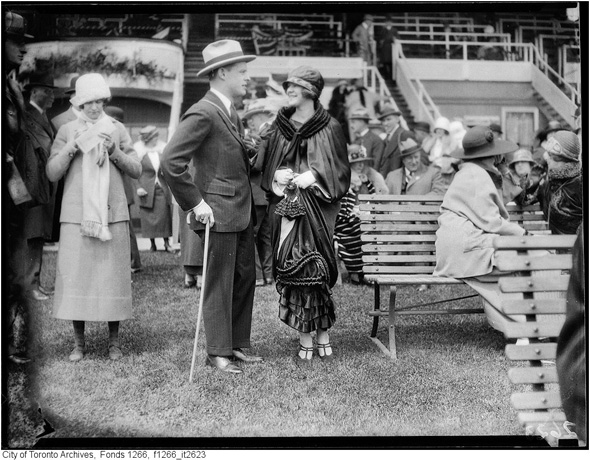
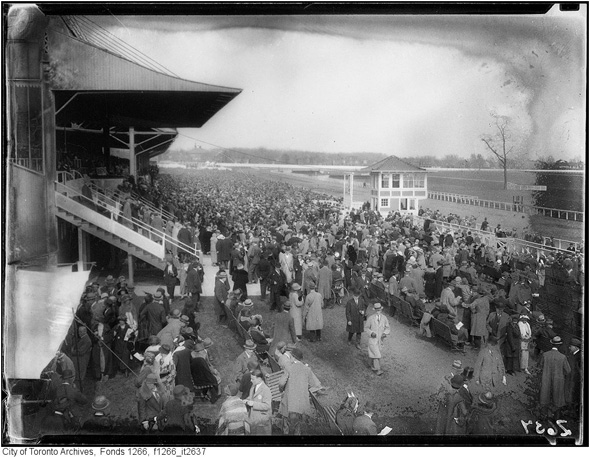
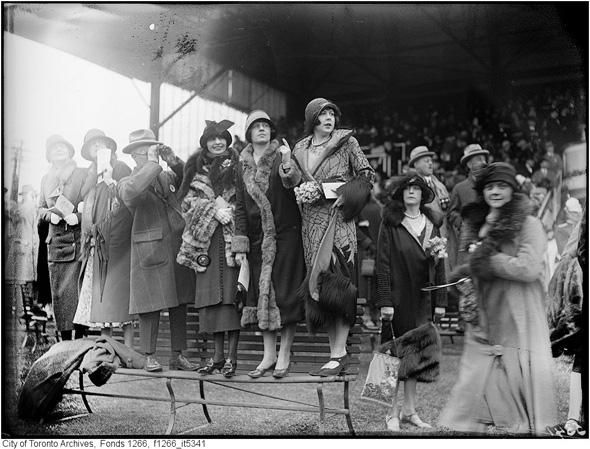
It's difficult to imagine today, but horse racing was once a marquee event in Toronto. Not only did the city's various tracks bring out big crowds during their heyday in the early 20th century, but a day at the races represented an opportunity for Toronto's upper crust to show off just how fashionable they were. Few occasions today serve as quite the same opportunity to dress to the nines during the middle of the day.
While Rexdale's Woodbine Racetrack — opened in 1956 — keeps up the tradition of a day at the track, a hundred years ago one would have also found tracks at/near Woodbine and Queen, Dufferin and Bloor, Davenport and Bathurst, Thorncliffe Park, and a little later, at Evans and Kipling in Etobicoke. Once you know this, it makes more sense why the Dufferin Mall and the TTC yards at Hillcrest are so sprawling, despite their relatively central locations.
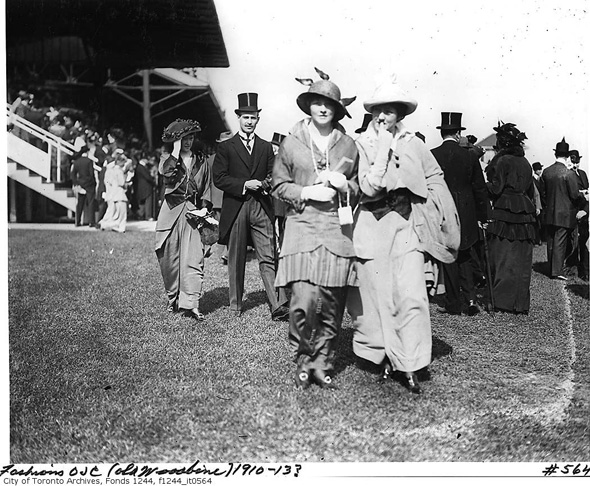
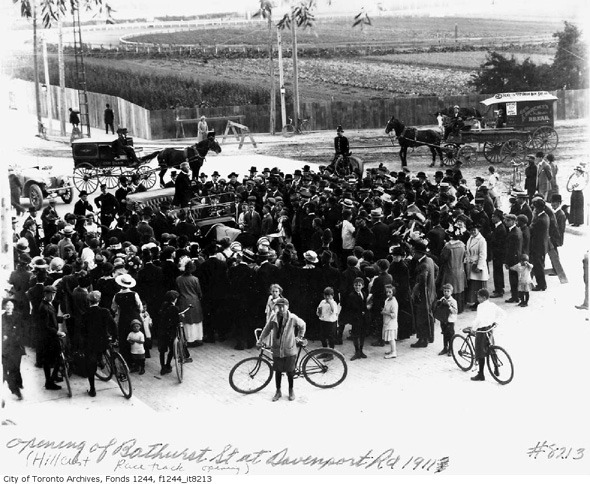
By the late 1950s, a number of these tracks had closed down as marquee events were consolidated at the new Woodbine location. In the years that followed, horse racing in general suffered from a dip in popularity. For most, the idea of heading out to the track has become something of a novelty nowadays. Off Track Betting hasn't necessarily helped the local manifestation of the sport, as the participants in that particular ritual can place bets on races taking place all across North America. Big events like the Queen's Plate (founded in 1860) still draw a crowd, but in general horse racing has taken on a niche character in Toronto.
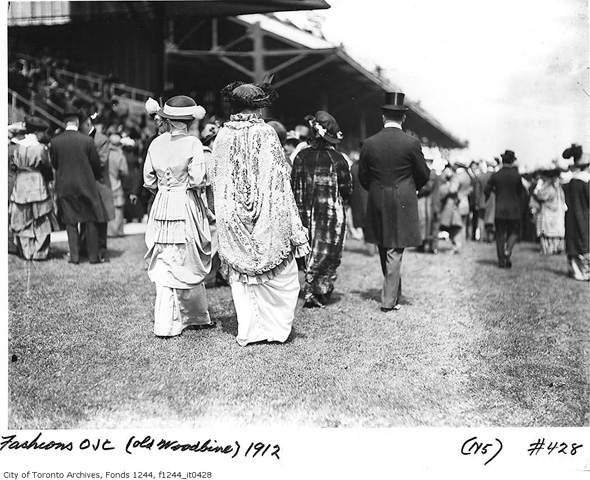
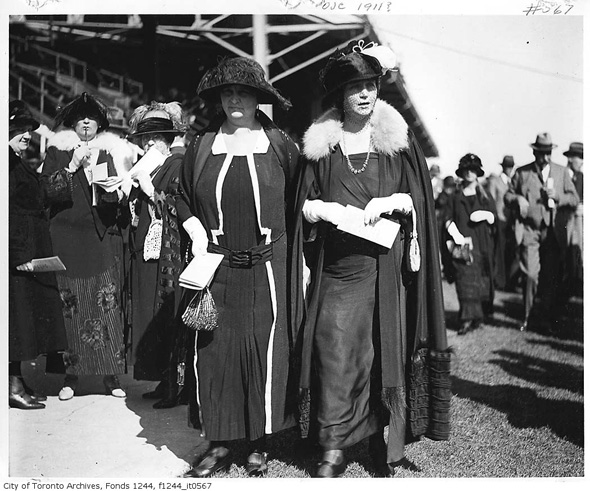
For more on the rise of horse racing in Toronto, see Toronto's Horse Racing History by David Wencer for Heritage Toronto.
PHOTOS
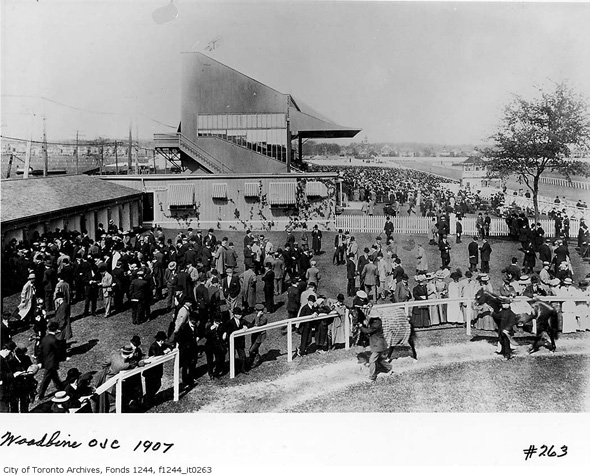
Woodbine 1907
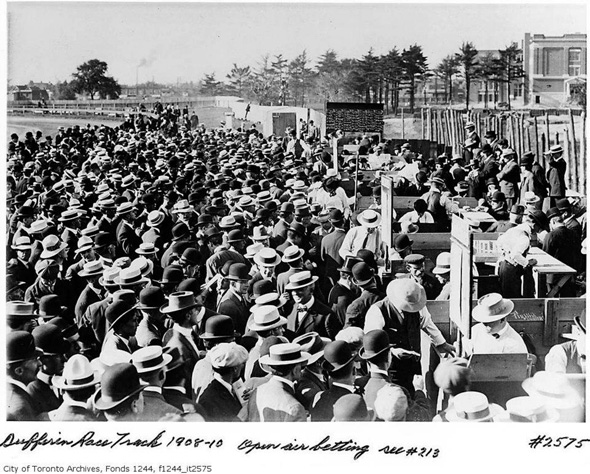
Dufferin Race Track, 1908
Woodbine, 1910
Hillcrest, 1911
Woodbine, 1912
Fashions at Woodbine, 1912
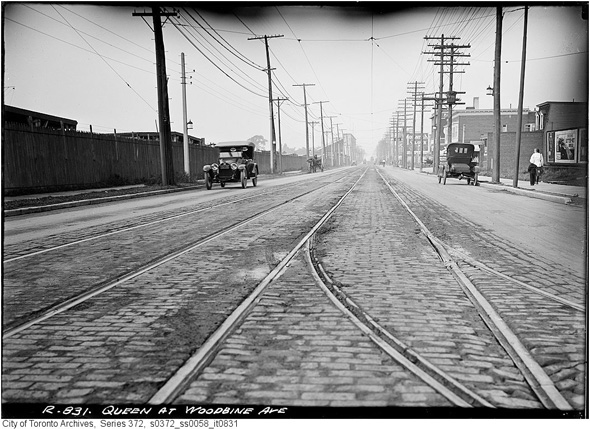
Queen Street East (looking west) 1919, Woodbine in the far distance
Woodbine 1923
Woodbine 1924
Woodbine 1924
Woodbine 1924
Woodbine fashions, 1925
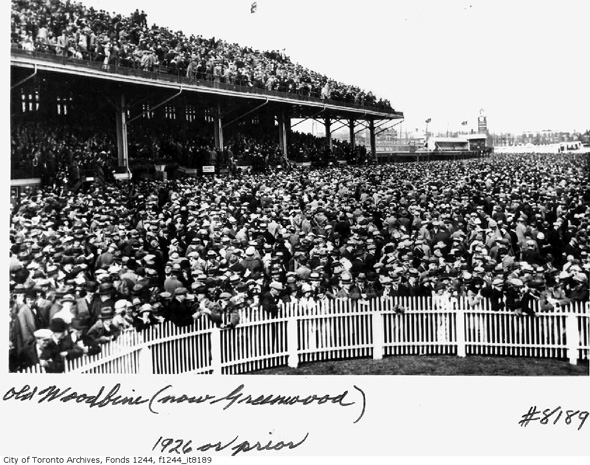
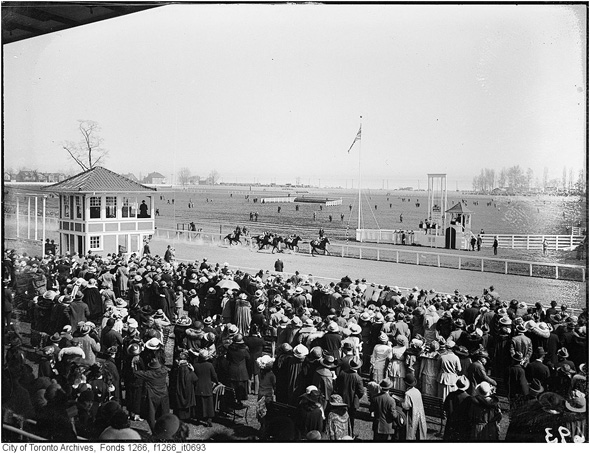
Woodbine, 1926
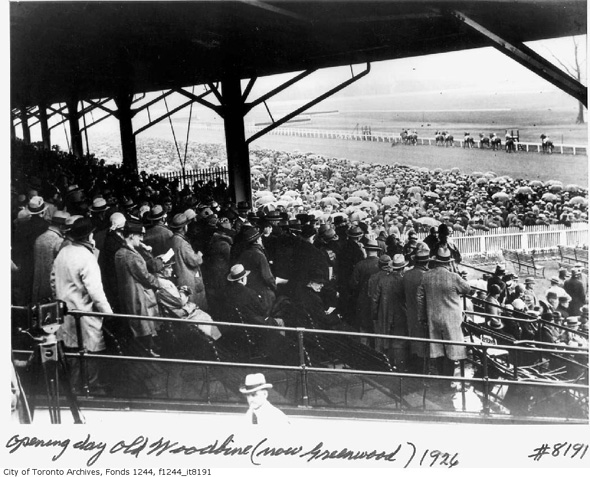
Woodbine, 1926
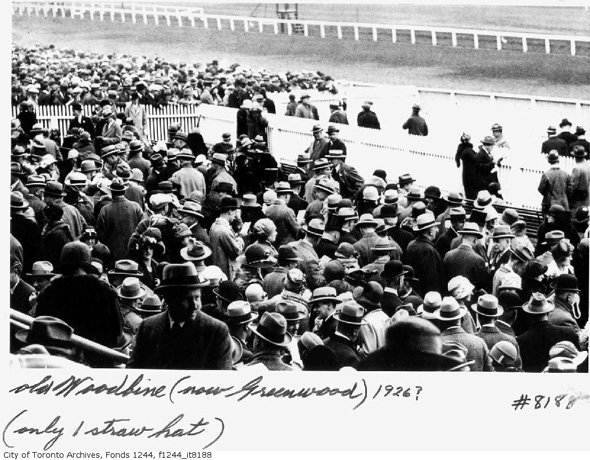
Woodbine, 1926
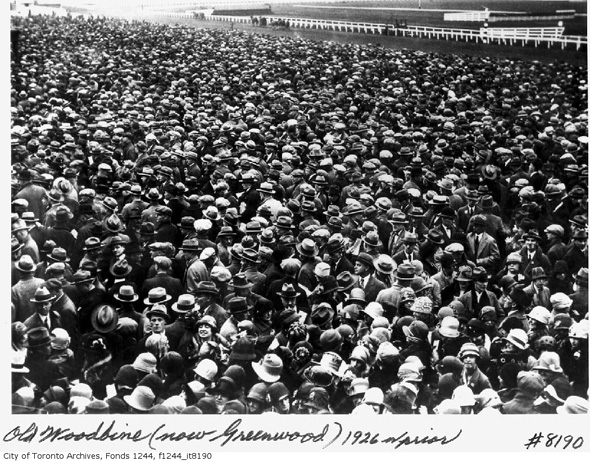
Woodbine crowds, 1926
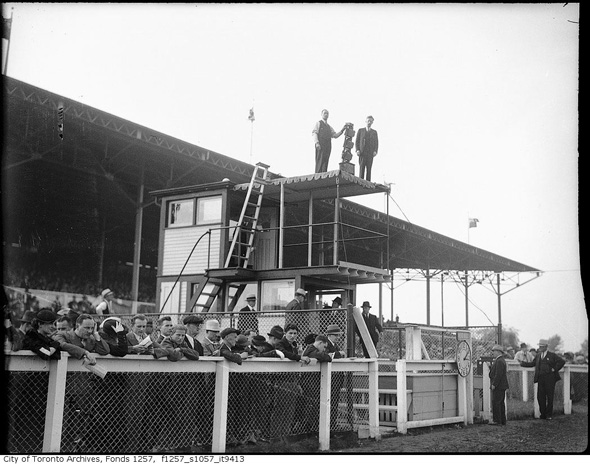
Thorncliffe Race Track, Ca. 1920s
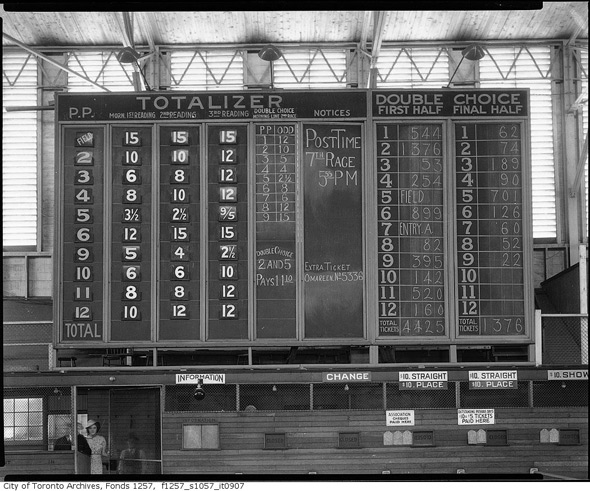
The Totalizer! Ca. 1920s
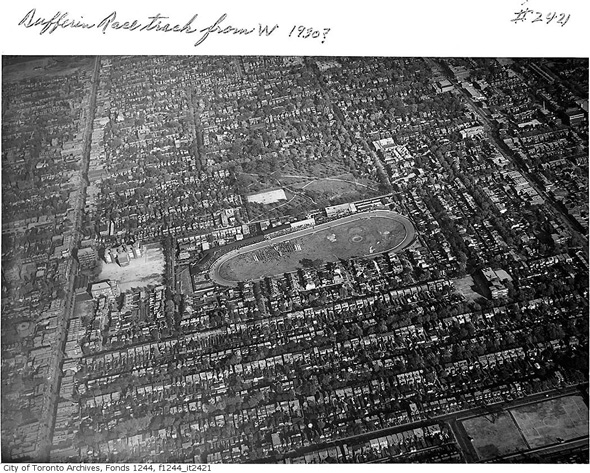
Dufferin Race Track, 1930
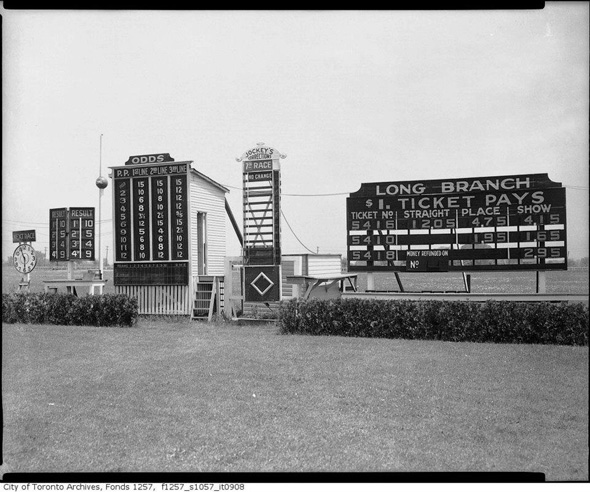
Long Branch Race Track (at Evans & Kipling)
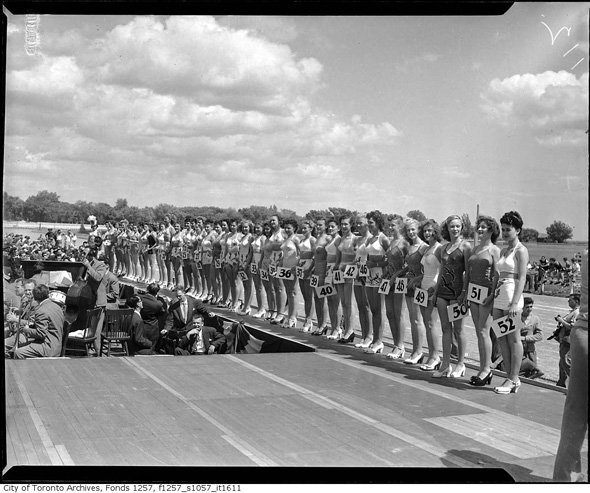
Beauty contest at Woodbine, 1948
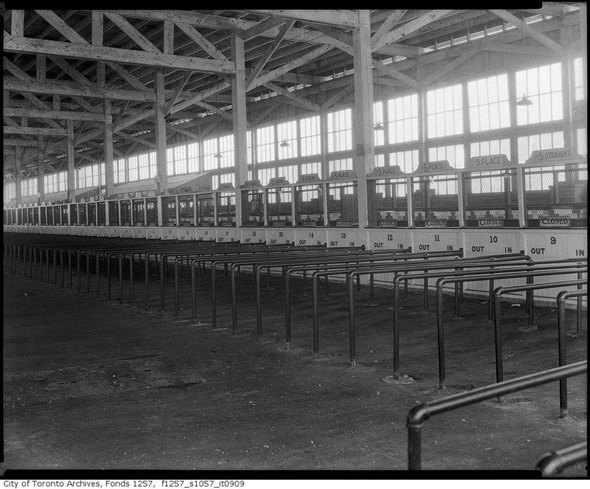
Unidentified track, ca. 1940s (?)
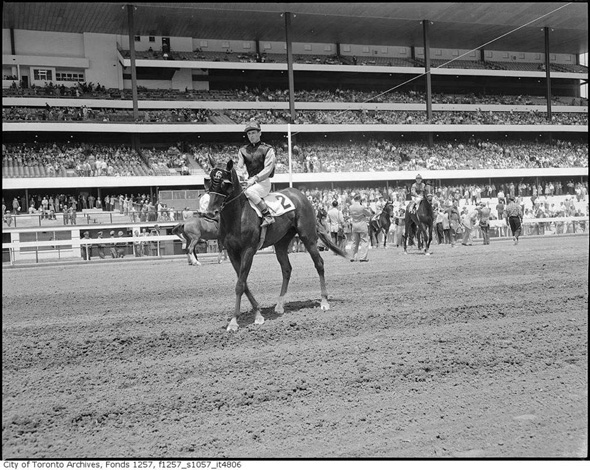
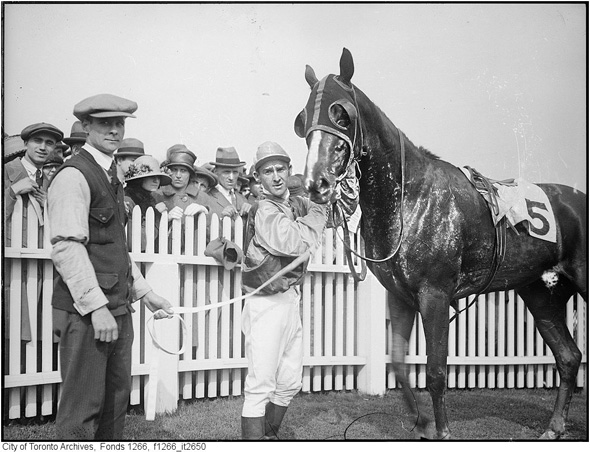
Woodbine jockey, 1950s
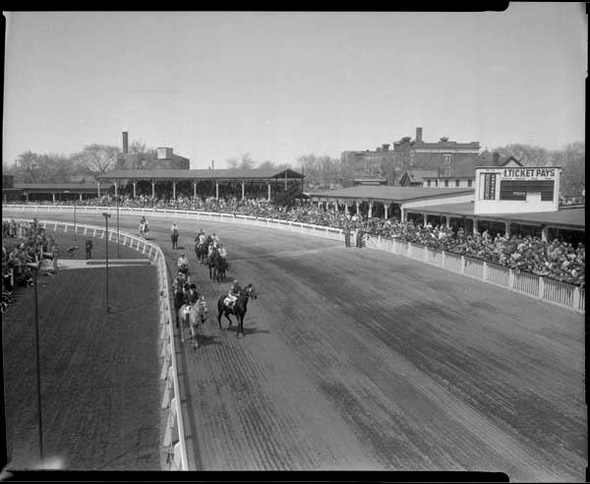
Dufferin Race Track, 1950
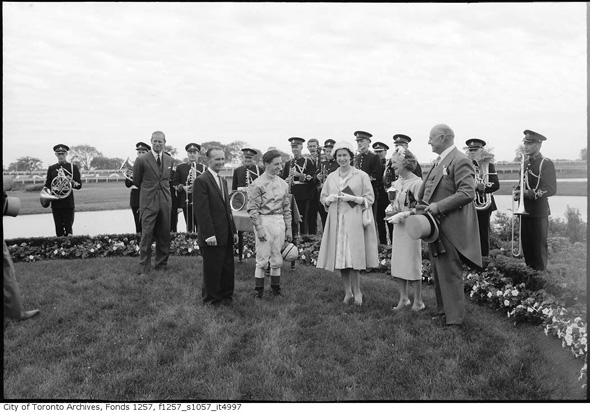
Queen Elizabeth presides over the Queen's Plate, 1959
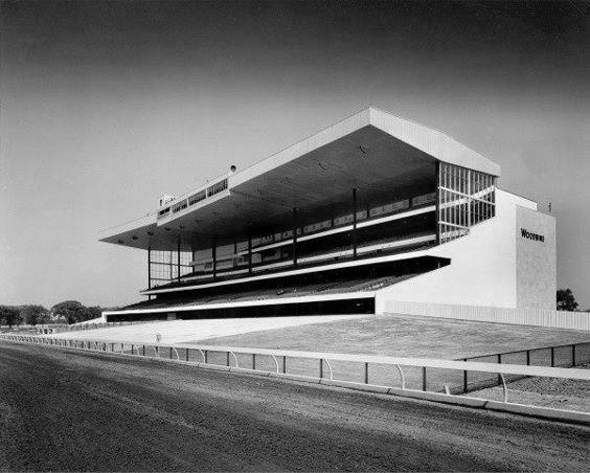
New Woodbine, 1950s
All but the last photos from the Toronto Archives. With the exception of the last image (via the York University Archives) references to Woodbine refer to the Queen East racetrack also known as Greenwood Raceway post 1956.


Discussion
13 Comments
Sort By Oldest First / Newest First
Subscribe
Yes, there used to be a racetrack where Dufferin Mall now stands. Seriously.
Old racetrack / racehorse / jockey photos are such a pleasure to look at....thank you Derek. I've been to the ponies a few dozen times in my life in different cities, so I thought if I studied the Totalizer for a few minutes I'd figure most of it out. Nope. All I can determine is the post time for the 7th race is 5.30pm.
The plaque is on Horner Avenue adjacent to the railway siding (SW corner of the property
http://www.torontoplaques.com/Pages_JKL/Long_Branch_Race_Track.html
How the Canadian National Exhibition is Managed
By S. J. Lombard
AT this season of the year a short history of what is being done in other parts of the country in an agricultural fair way may possibly be of interest. This year I had the opportunity of inspecting the grounds and buildings where the Canadian National Exposition is held. This exposition covers 350 acres of lake front property at Toronto and drew an attendance in 1927 of 1,800,000 people. The high point for a single day's attendance was 280,000.
The price of admission is only 25 cents and as a result the residents of Toronto and other near-by cities attend not only once but every day.
The size and magnitude of the Canadian National Exposition, in addition to the remarkable attendance figures just stated, may be better appreciated from the following partial list of the buildings used in connection with the exposition : Electrical , furniture, government, industrial, international, machinery manufacturers, music, pure food, radio, stove, and railroad.
The building in which the coliseum is located has a total floor area of over twelve acres and other buildings on the grounds have very large amounts of exhibition space.
One of the unique features in connection with this wonderful exposition is the way the buildings are paid for. When the exposition management decides that a new building is required, as for example an electrical building, all electrical supply and manufacturing con cerns are visited and space is rented on a tenyear contract basis and when a sufficient amount of space has been sold on this basis the City of Toronto raises the money and builds the structure. In ten years' time the indebtedness is paid solely from rentals. The building immediately becomes the property of the exposition and all upkeep and other matters of expense are borne by the exposition. With the single exception of the Dominion Government Building all buildings on the exposition grounds have been built in the way and manner described.
This exposition draws exhibits from all over the world and many of the foreign concerns occupy the same space year after year, putting labor as well as money into construction work and permanent booth equipment.
The grounds are located on the shore of Lake Ontario and a beautiful view of the lake is obtainable from any part of the grounds. The grounds are a public park and used by the residents of Toronto during the entire year with the single exception of the two weeks of the exposition when an admission as stated of 25 cents is charged.
This show may properly be termed a small world's fair as the buildings are all of either brick, cement or stone construction and the air of permanency to the whole plant impresses one at once.
The exposition was started in 1879 and has been held annually ever since. The grandstand has a seating capacity of 16,800 with additional standing room for 8,000 more. Over $100,000 is spent annually for free acts and other attractions for the entertainment of the patrons of the fair.
After having the privilege of inspecting the wonderful buildings and looking over the plant one cannot help but be impressed with the idea that agricultural and industrial expositions have a glorious future both in the United States and Canada.