City
A visual history of Jarvis Street
I've been wanting to add Jarvis Street to our visual histories series for a while. As much as every street in the city has changed over the years, the measure of difference on Jarvis is something to behold, particularly because there remain just a few hints at what it all used to look like. Prior to the 1940s, Jarvis Street was probably the most beautiful in all of Toronto, lined with the mansions of some of Toronto's wealthiest families.
And then, in 1947, the street was forever changed when many of its trees were ripped out to widen it for increased automobile traffic. Take a look at the before and after photos below to see what I mean. While the project might have been necessary to accommodate a growing city, it's sad to think of what was lost in the process.
From that point forward, the transformation on Jarvis continued until the street became five lanes wide and marked by a mostly soulless-looking a mix of commercial and high-rise residential properties. Nevertheless, traces of its former glory can still be spotted in the form of Euclid Hall (now the Keg Mansion) and the Gooderham residence (now a restaurant). Contemporary additions like the National Ballet have brought noteworthy architecture back to the street, but, as a whole, it still leaves much to be desired.
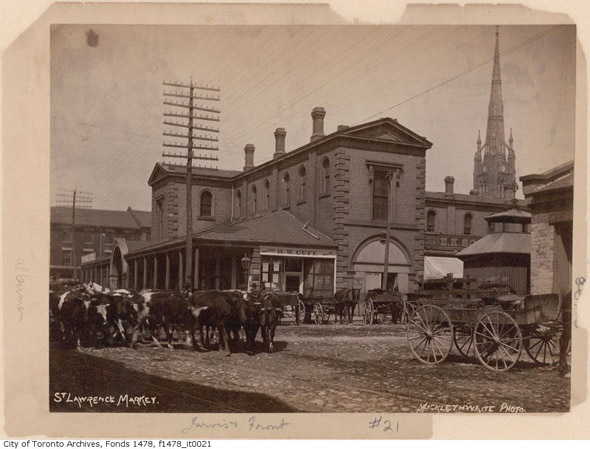
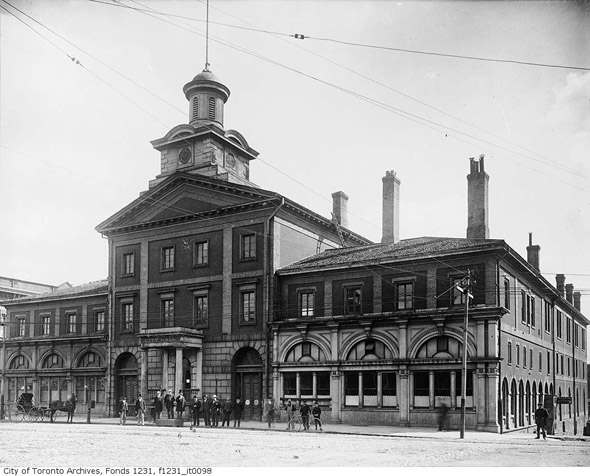
1890s
St. Lawrence Market

Old (old) City Hall
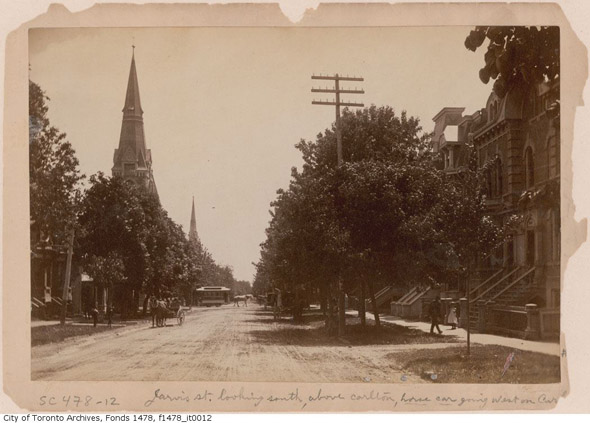
Jarvis south from Carlton
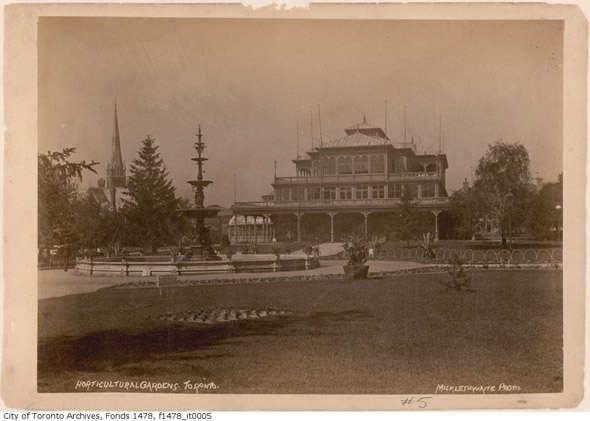
Horticultural Gardens (between Jarvis and Sherbourne)

1900s
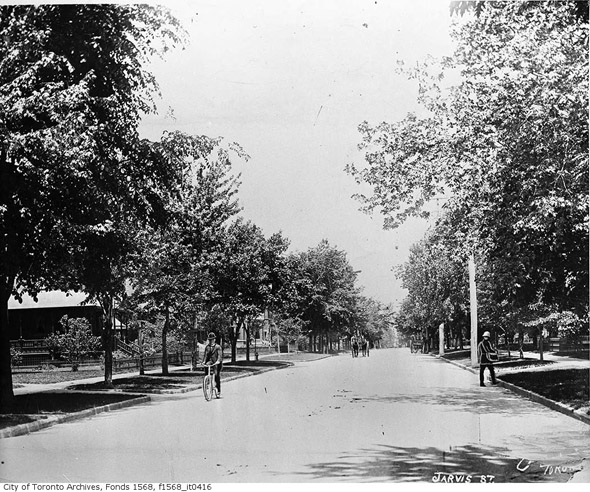
Jarvis in 1903
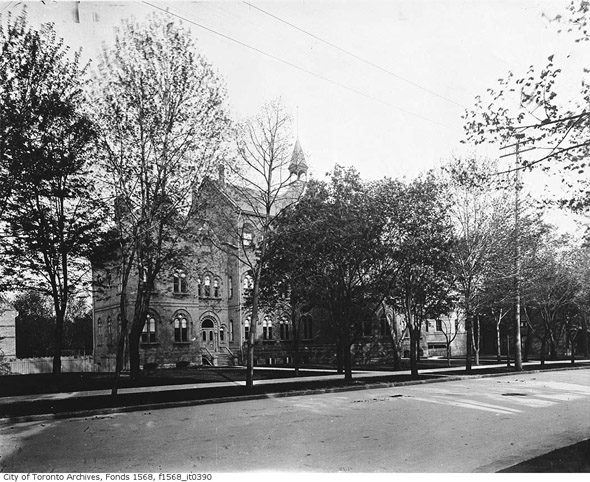
The first Jarvis Collegiate

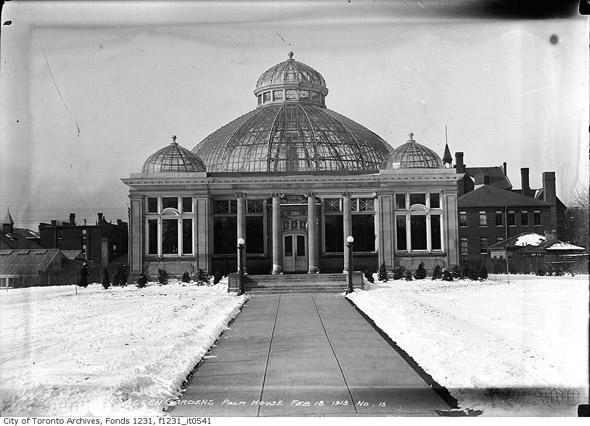
1910s
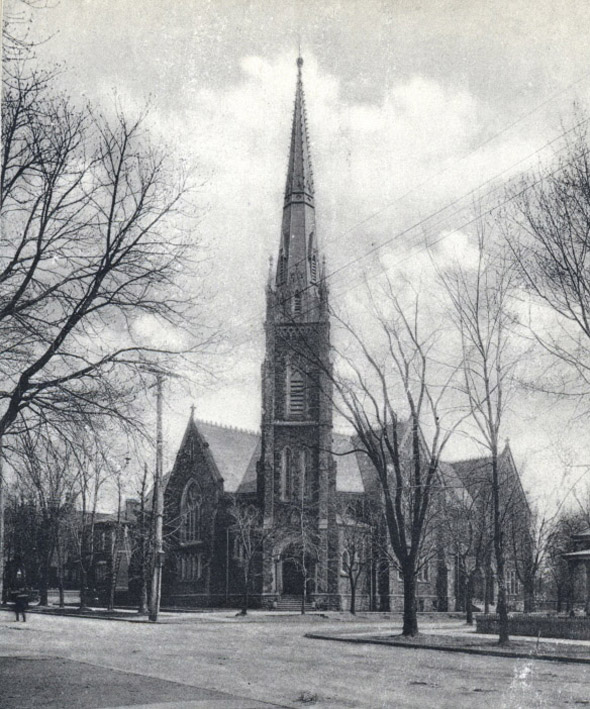
Jarvis Street Baptist Church (via the McCord Museum)

Allan Gardens Palm House

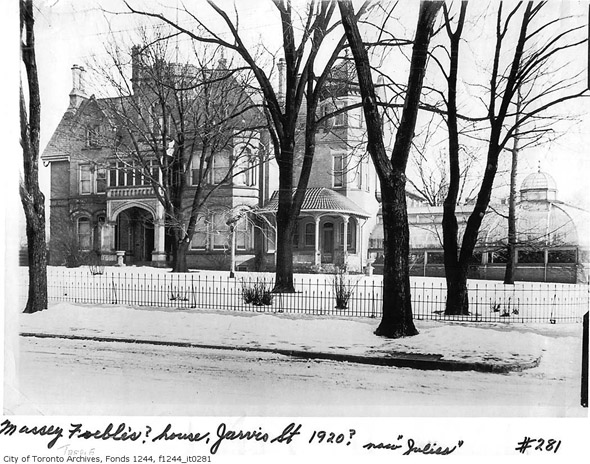
1920s

Juvenile Court Building at 311 Jarvis
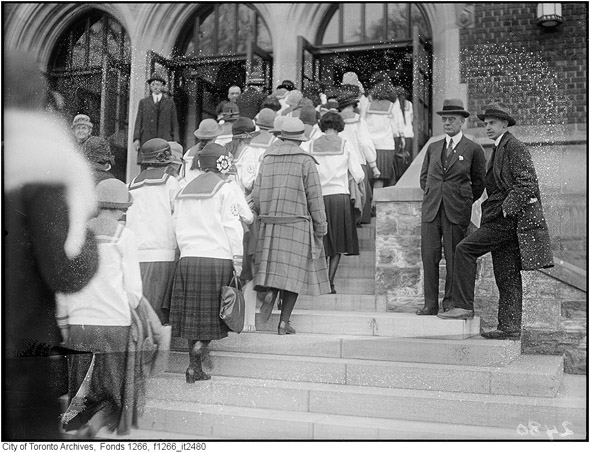
The (then) new Jarvis Collegiate in 1924

1930s
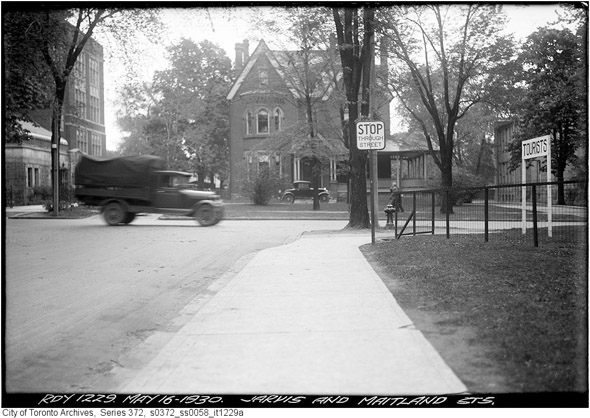
Jarvis and Maitland
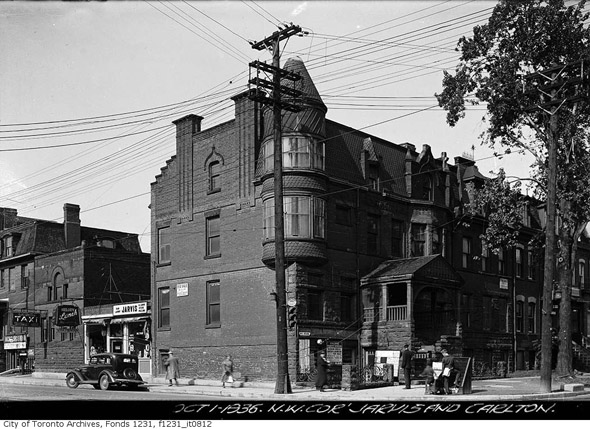
Jarvis and Carlton (northwest corner) 1931

1940s
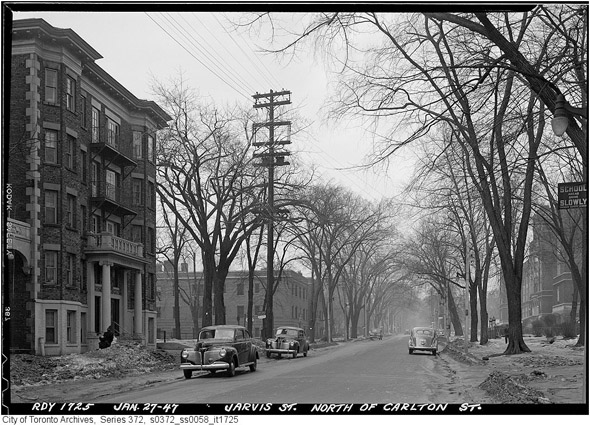
Jarvis and Carlton pre-street widening 1947
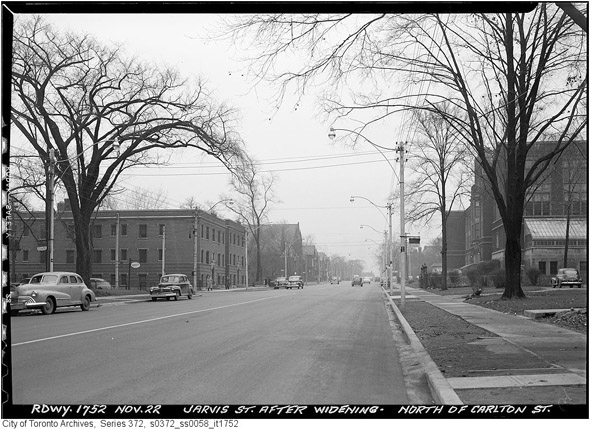
Jarvis north of Carlton post-street widening 1947

1950s
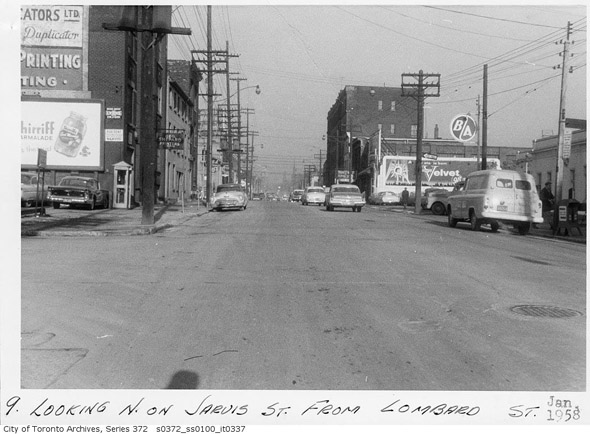
Jarvis north of Lombard Street

1960s
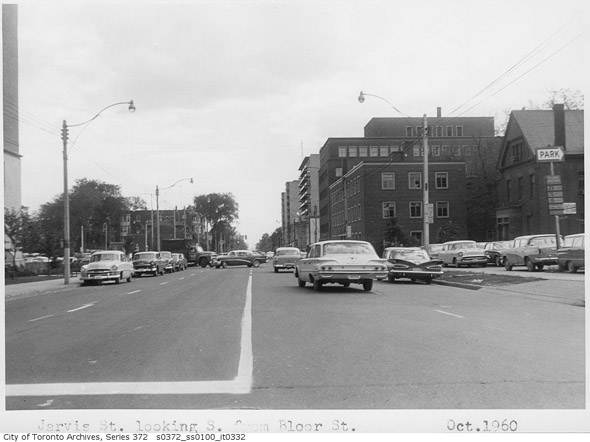
Jarvis south of Bloor
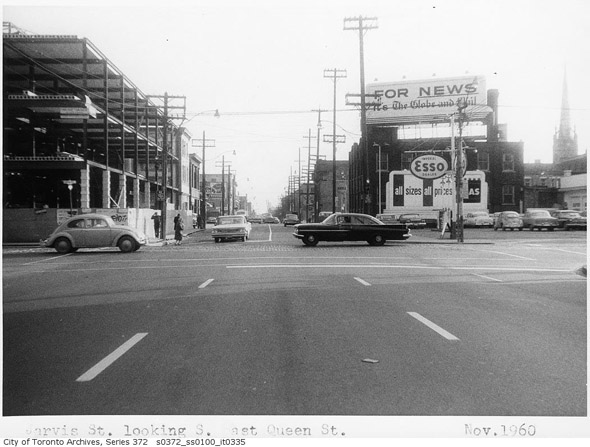
Jarvis and Queen (looking south)
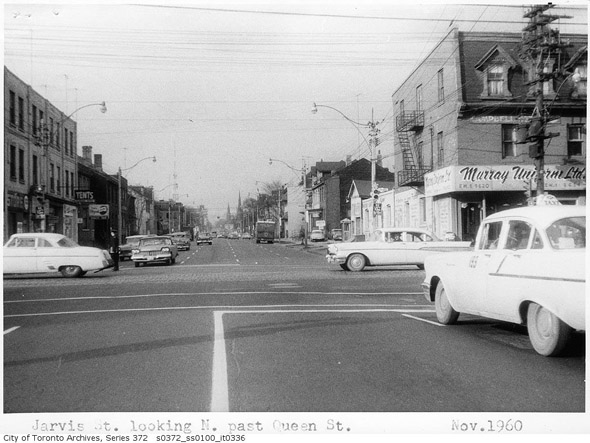
Jarvis and Queen (looking north)
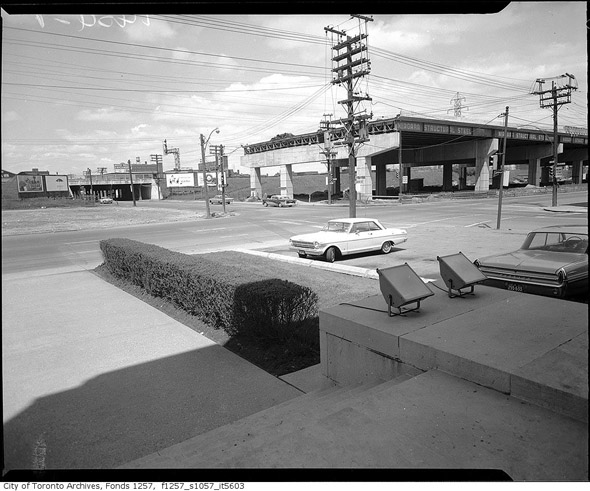
The birth of the Gardiner 1963

Contemporary
Euclid Hall (the Keg Mansion via the Wikimedia Commons)

Jarvis looking south (via the Wikimedia Commons)

Former Gooderham House (via the Wikimedia Commons)

From above (Photo by Jennifer Tse)

Other posts in the series:
- A visual history of Yonge and Dundas
- A visual history of Yonge and Bloor
- A visual history of Queen, King and Roncesvalles
- A visual history of Yonge and Queen
Photos from the Toronto Archives unless otherwise noted.


Discussion
14 Comments
Sort By Oldest First / Newest First
Subscribe
I think the pre and post street widening ones may be switched, the post widening looks wider than the pre widening. Or is it just how they look?
I notice that the 1903 photo has a cyclist and no cars, just a horse drawn carriage, oh and pedestrians.
I very much enjoy these occasional pieces. A minor correction for the caption labeled "Jarvis south from Carlton" should actually be "Jarvis south from above Carlton" The first steeple is St Andrews on the SE corner of Carlton and Jarvis and the second is Jarvis St Baptist on the NE corner of Gerrard and Jarvis. As an aside, some of the houses on the right of that photo are still in existance.
Oh, you mean those filthy, nasty people from the 'surburbs.' If you mean Moore Park, Leaside, etc., then your definition of the suburbs is dated.
The sad thing about the 'not in my sandbox' crowd, is that they reflect their own narrow lifestyle on what everyone else 'should' do. I live downtown, with one sister in Pickering, the other far north of Toronto, with various aunts/uncles scattered throughout Brampton, Mississauga, etc. In YOUR world, you would have people who have lives spend half a day just to visit a relative? So a few people want to turn back the clock and make Jarvis look like it did in the 1890s? That may be YOUR version of utopia, but time and time again the 'car culture' is voting with their checkbooks.
BTW, Toronto's growth was only possible because of the 'car culture.' Greater London (at 607 sq mi) is slightly smaller than Toronto (at 630 sq mi), yet London has 2.5 times the population. And you think London or Paris or Copenhagen have no 5 or 6 lane roads in their core.
Please, although these photo spreads are interesting, why don't we just return to Kingston Rd and Yonge St. as dirt cow paths and really get back to nature?
Probably