
10 secret streets to explore in Toronto
Secret streets in Toronto only deserve such a designation if you don't know where to look for them. You could pass them a hundred times without noticing, but once you've been tipped off, you'll always be able to find them. And you'll want to do just that, as they are some of the coolest places in the city.
Here are some secret streets to explore in Toronto.
Elmsley Place
Did you know that U of T has a private street? There's a gated entrance off of St. Joseph St. that leads to Elmsley Place, which St. Michael's College acquired in the 1920s. Pedestrian access is welcome, which is a good thing â it might be one of the nicest streets in the city.
Glasgow Street
Possibly one of the coolest streets in Toronto, you enter off of Cecil Ave. and walk north until you encounter a row of Second Empire houses across from a hidden parkette. The whole time you'll feel in on an urban secret.
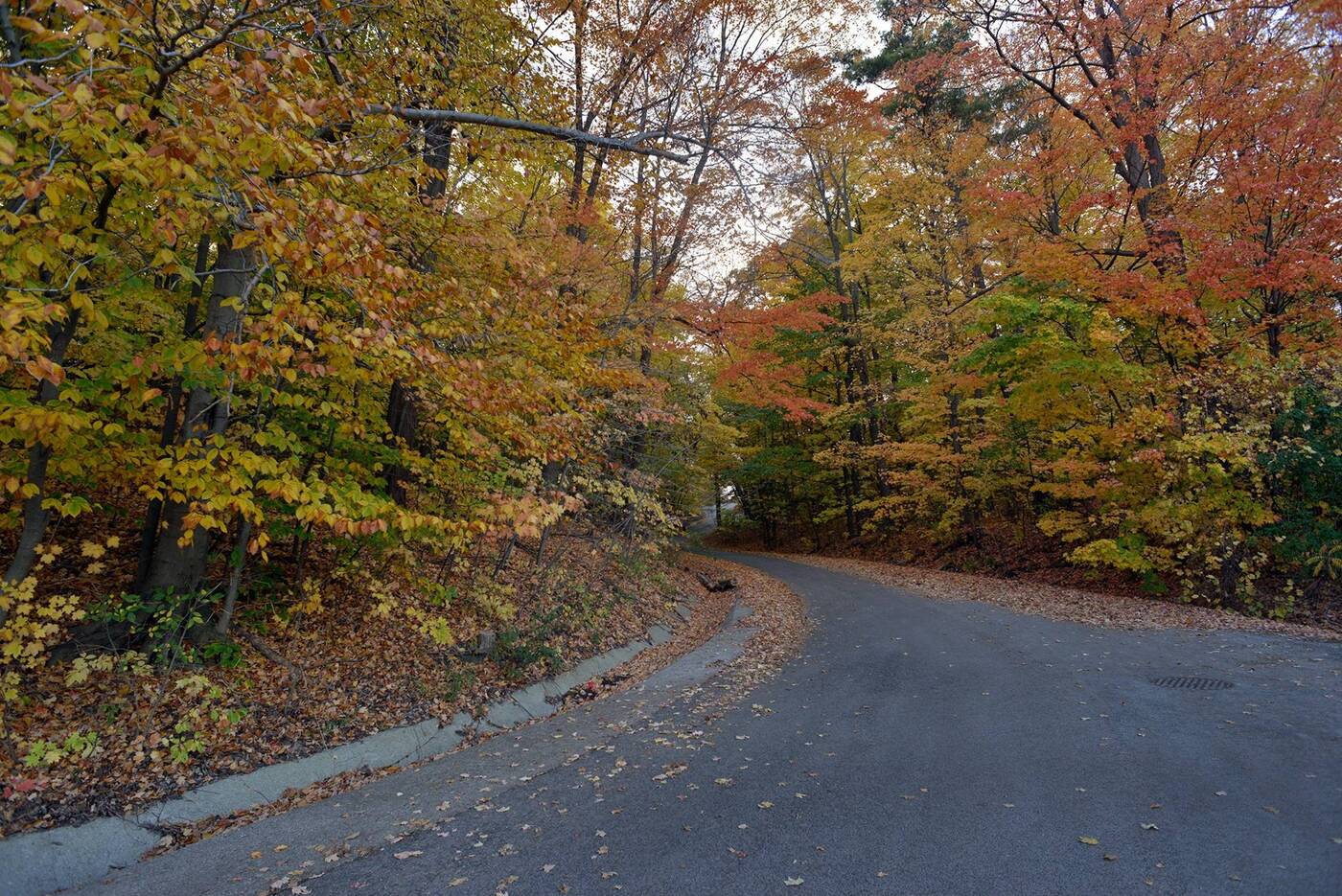
The steep gradient of Redway Rd. in the fall.
Redway Road
This one won't be a secret to Toronto's cycling community, who test their mettle by climbing one of the steepest hills in the city. This winding road leads down the ravine at Crothers Woods to the North Toronto Sewage Treatment Plant.
Beechwood Drive
This one runs along the opposite side of the Don Valley, tucked off of O'Connor Drive. Its secret status owes mostly to the fact that it leads only to the Toronto Police dog services facility. If not for that, it'd make the perfect spot to park on a romantic drive.
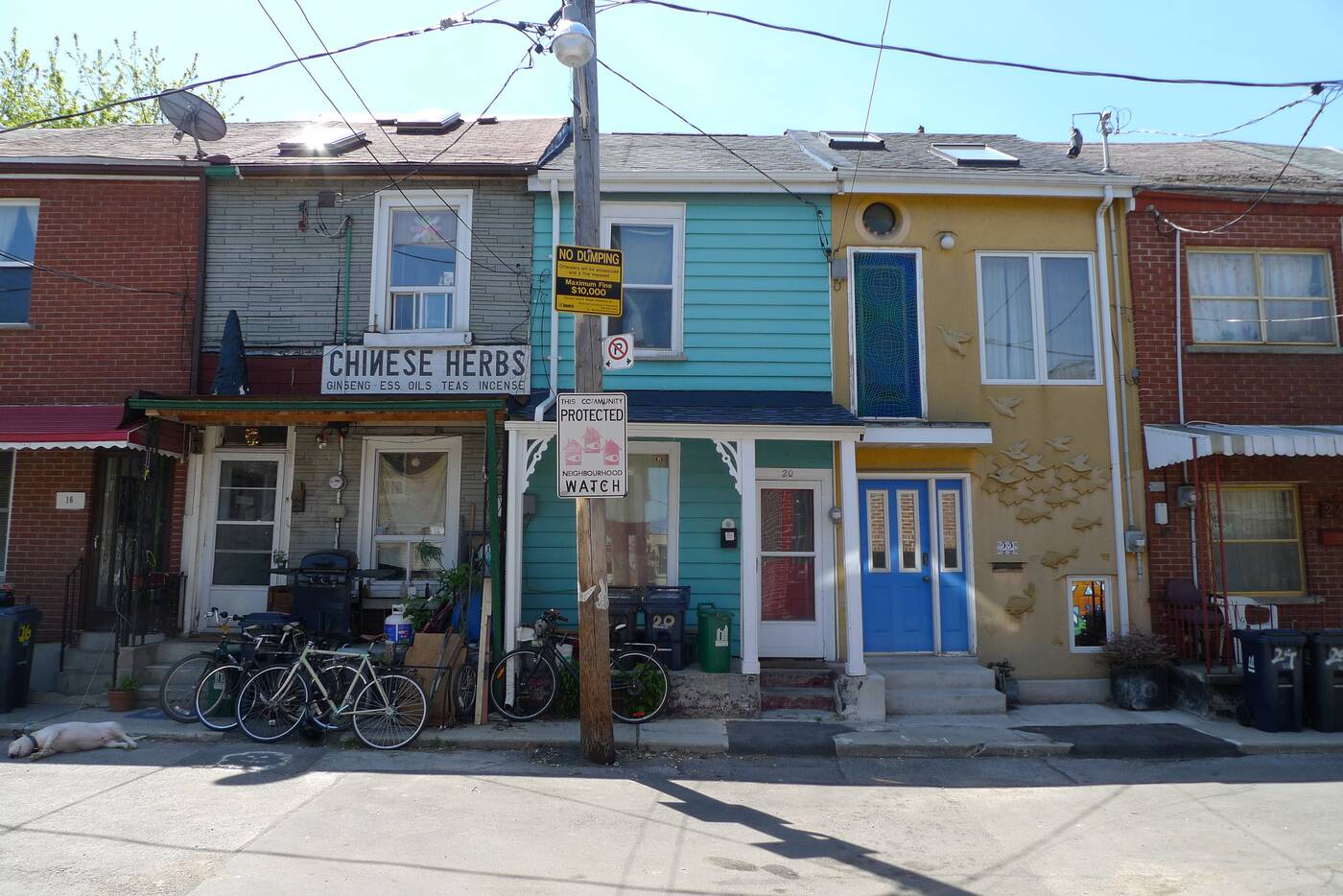
Urban hodgepodge at Kensington Place. Photo by bricoleurbanism.
Kensington Place
One of a few hidden laneways in Kensington Market, this one is probably the most interesting of the bunch. A short laneway opens to a collection of eclectic homes the likes of which you won't encounter anywhere else in the city.
Fitzroy Terrace
Located just a few minutes walk south from Kensington Place, Fitzroy Terrace is home to the oldest house in the Market. Right beside it is Gradient House, a revamped cottage designed by Superkul Architects. It's like a mini history of Kensington Market in the span of a few metres.
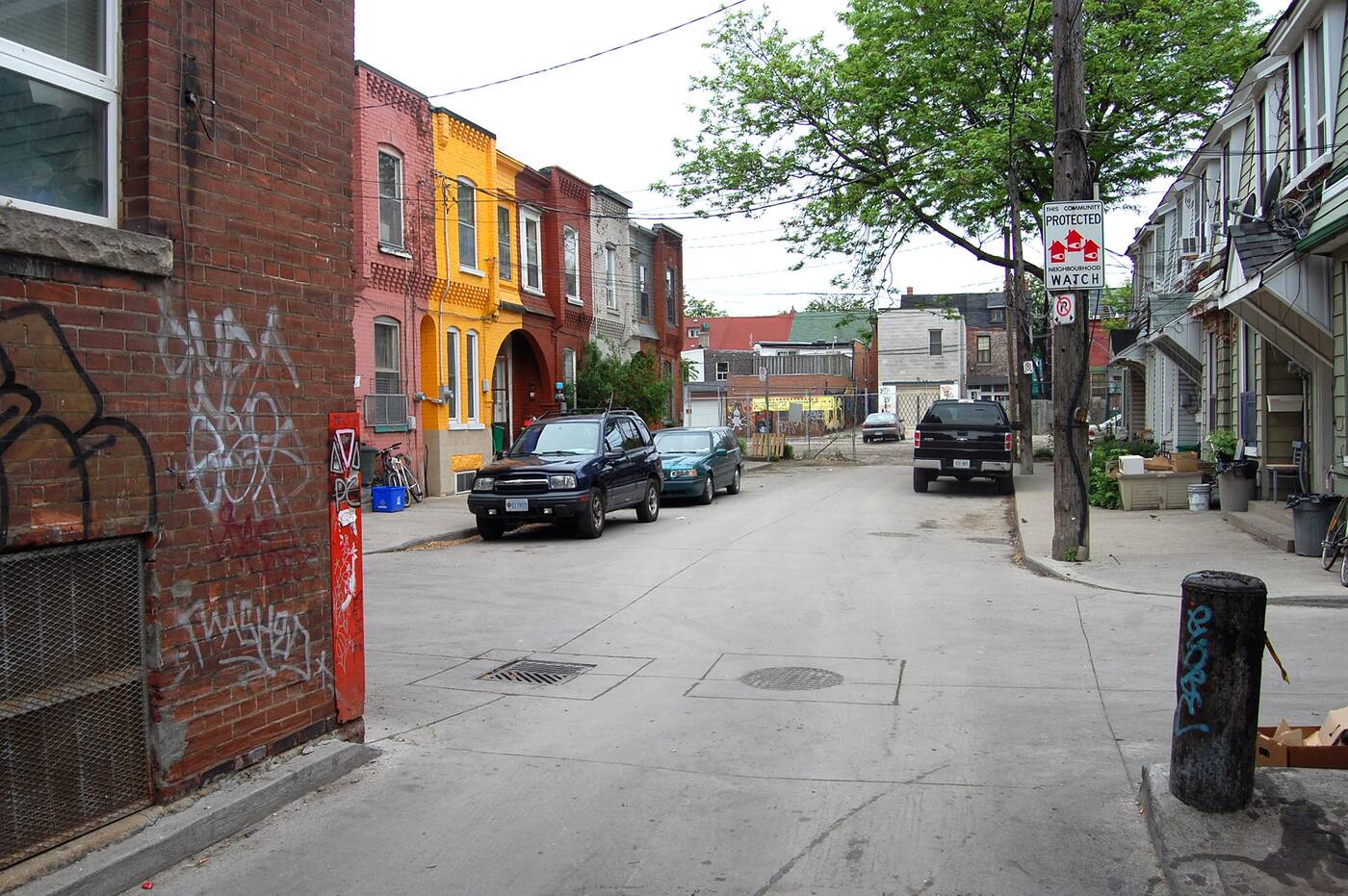
The colourful homes of Glen Baillie Place. Photo by Patrick Cummins.
Glen Baillie Place
Blink and you'll miss the entrance to this cul-de-sac off of bustling Spadina Ave. in the heart of Chinatown. If you do manage to find your way here, you'll encounter a collection of colourful row homes that harken back to late 19th century Toronto.
Benlamond Drive
Quite possibly the most secret street in Toronto, this one doesn't appear on Google Maps, but if you follow along Glen Oak Drive after Benlamond Ave. you'll see the street sign marking this most private of laneways.
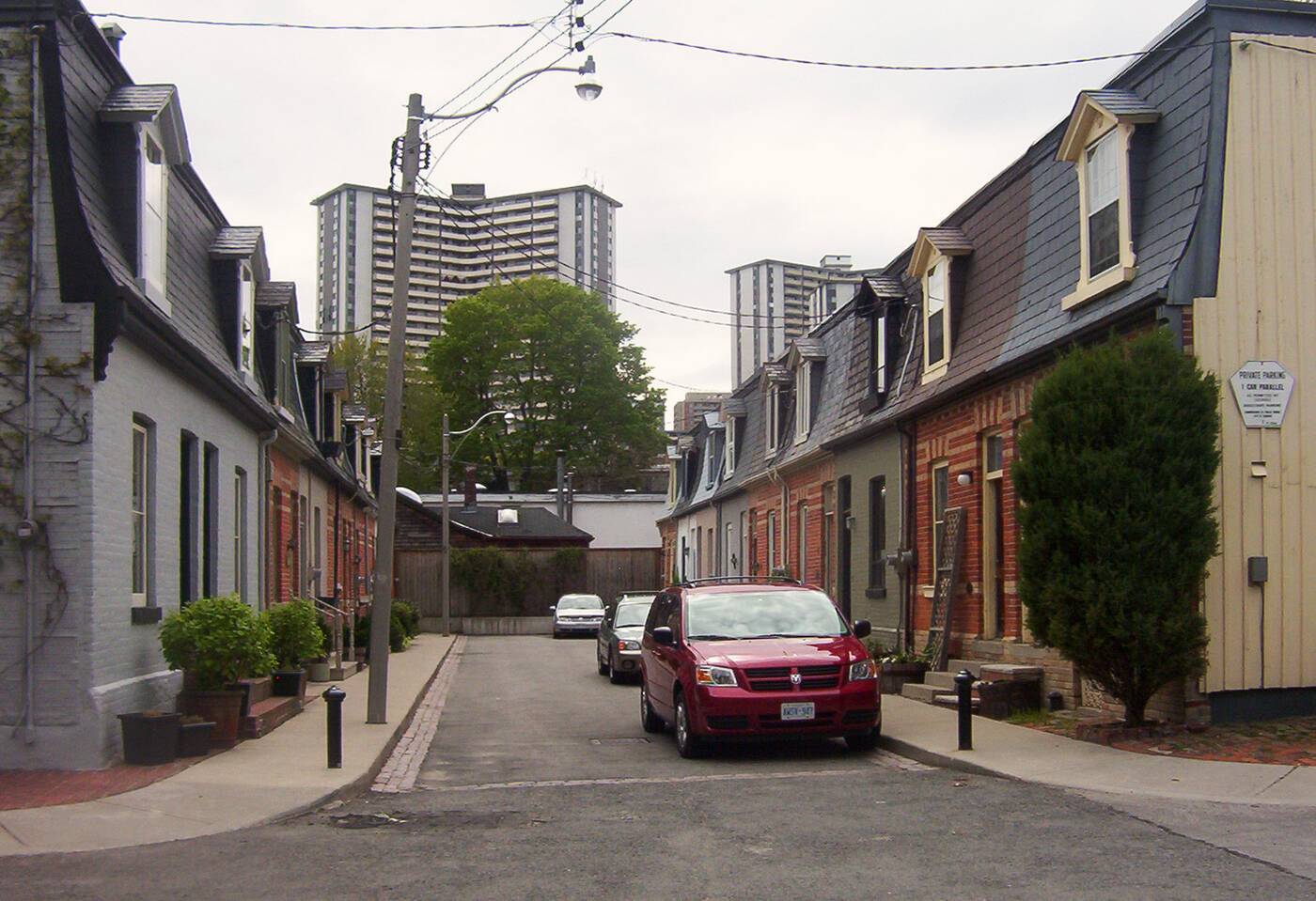
Rows of workers' cottages line the mostly hidden Alpha Avenue. Photo by Agatha Barc.
Alpha Avenue
One of a number of quirky streets throughout Cabbagetown, Alpha Avenue is lined with late 19th century workers' cottages under the shadow of the hulking towers of St. James Town.
Bisley Street
One of Leslieville's hidden gems, Bisley Street is home to a secret little row of brick homes that date back to the 1890s, when it seems access was made directly from Queen Street. This private street once made an L-shape turn to Verral Avenue, but at some point in its history that connection was severed. Today there are only two ways to access it, one is disguised as an unpaved service road off Verral Avenue near Queen and Carlaw, but the main entrance runs south off Busy Street and takes you through a small parking lot before you find the entrance to the street's garden courtyard.
 Known as the "Bisley Street Brownstones," this row of unique century-old three-storey brick homes is surprisingly spacious with backyards that sit directly across from a cluster of almost identical houses that face Verral Avenue. Local legend has it that all the homes were originally part of a hand-blown glass factory, and at one point the city's first monastery. Whether fact or folklore, the stories only add to the charm of this hidden enclave.
 The only thing that betrays the existence of this unique private strip is a blue-and-white city street sign on Busy Street and a pair of century-old ornamental cherry trees. Each spring, the trees erupt into spectacular pink blossoms that are nearly impossible to miss.
Robert Prior at Elmsley Place


