City
Do park-and-ride schemes lead to more congestion?
New research out of the Netherlands suggests park-and-ride facilities at commuter rail stations may have the unfortunate effect of increasing road and vehicle use, according to a post over at Atlantic Cities.
GO Transit said last month it was considering introducing a parking charge to fund new infrastructure and bring it in line with the TTC and other transit companies. According to the Toronto Star, the TTC gets $10 million from each year from this revenue stream. Parking is currently free in all unreserved spaces at GO stations.
The results of the survey, gleaned from users of parking facilities by Dutch researcher Giuliano Mingardo, provide evidence that people who used to bike or use public transit for their entire journey were more likely to drive to a park and ride facility. People surveyed were also made more trips because the cost of travel was lower.
Increasing car usage appears to run against GO Transit's mandate to reduce congestion in the GTA. The study did find, however, that park-and-ride lots in the suburbs that snag commuters before they enter the core of a city performed well at reducing vehicle miles. Paid parking, Mingardo found, reduced some of the negative side-effects.
GO says it's "examining these issues" as part of an investment strategy it's due to deliver in June 2013 for the next wave of Big Move projects.
What are your experiences with GO parking? Would charging for parking encourage you to use alternative modes of transportation or simply force transit riders to make their entire journey by car?
Chris Bateman is a staff writer at blogTO. Follow him on Twitter at @chrisbateman.
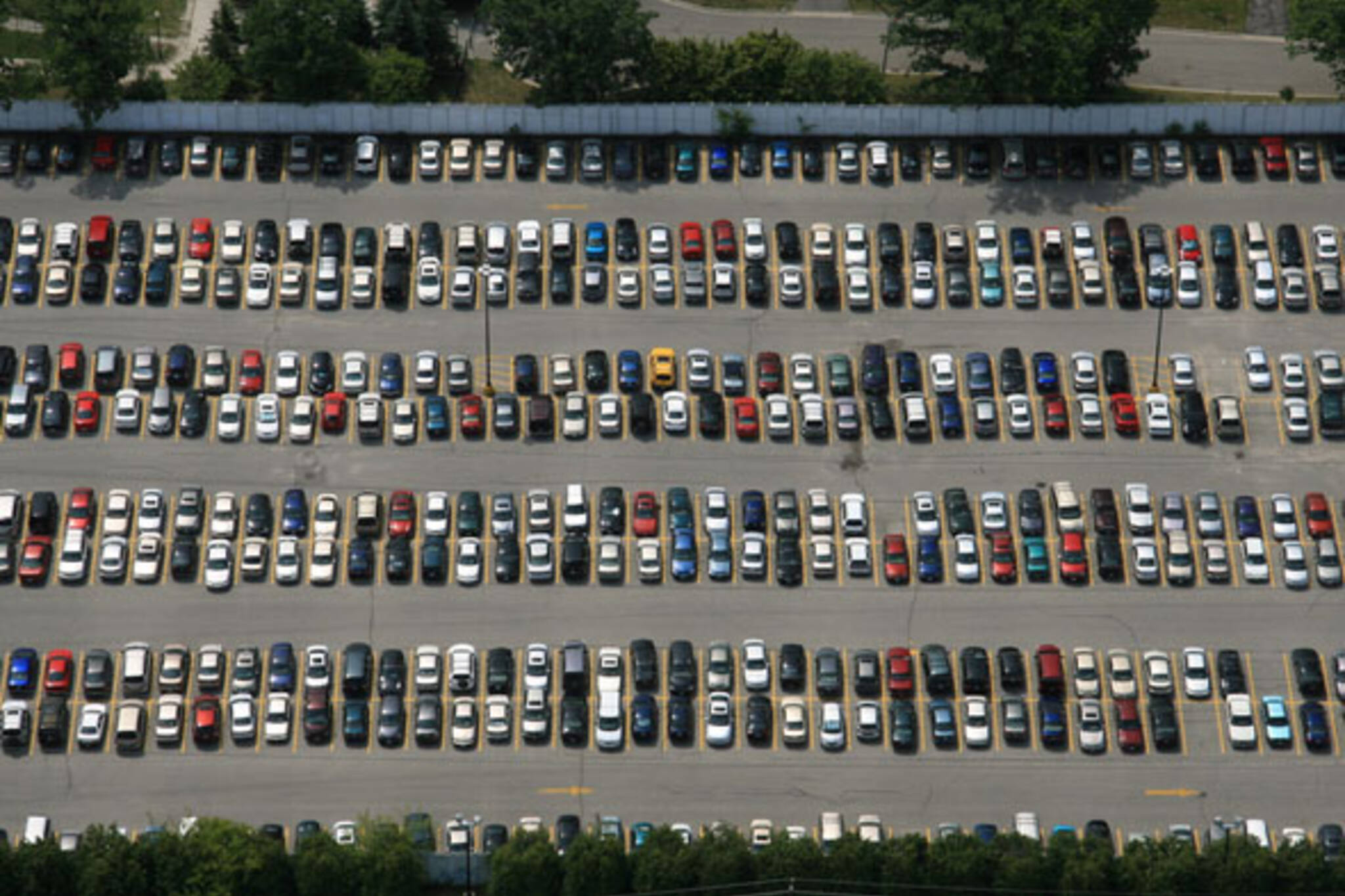
Image: "TTC Commuter Lot" by Tom Podolec/blogTO Flickr pool.


Discussion
17 Comments
Sort By Oldest First / Newest First
Subscribe
Do commuters know that there are buses or shuttle buses in their local municipality that go to the stations? Maybe GO Transit should work with the local transit companies and let customers know that there are other options to get them to their stations rather than driving.
When I was taking the GO train downtown and I couldn't drive to the station, I took the bus (which cost 60 cents) and the bus stopped right outside the station.
Yes you have to give yourself a little more time and it limits you with commuting when you get back to the station. I think the people that can do it will.
But suburbia is full of a lot of lazy people who will just put up with paying the fee so they can drive in comfort.
But to me that is the more interesting comparison, not some study from the Netherlands which has a completely different geospatial arrangement of cities and suburbs. (And seriously, no one is being displaced from cycling by using GO. We don't have that infrastructure yet.)
Such judgement!
Here's the way I'd re-phrase it: "Suburbia and GO were usually planned independently of one another, and so it's often completely impractical for commuters to walk or take transit to the stations."
Exactly. Commuter rail in the NL is basically just short-distance travel on the national rail network, in which very few stations have extensive car parking and almost all stations are fed by local transit in urban centres, i.e., very unlike GO.
So under those circumstances, I think the GO is definitely reducing congestion in the GTA.
THIS.
Most GO stations are hard to get to.
The things Joe Commuter cares about are convenience, cost, time and comfort.
That said, GO will probably have to start charging for parking at some point. And people will pay it because they won't want to drive, not because it costs any less, but because of the nonstop gridlock. Look at how New York works -- many of its commuter rail stations have paid parking where you have to get a permit costing $300 to $600 dollars a year, and yet the waitlist for permits can be years long. Others have lots with daily fees of around $6. Chicago is similar, if a bit cheaper.
So yes, it will still happen, and it's going to cost money. And people will line up to pay it because that's what happens in big successful cities with huge populations and an overloaded road and transit infrastructure.
But GO Transit is absolutely necessary to reduce highway traffic; the thousands of daily riders point to its necessity. I used the GO train every day for more than thirteen years to commute to and from work (until I moved into the city), and still use it, as I don't own a vehicle. And now my brother rides that same train.
http://www.sciencedirect.com/science/article/pii/S0966692313000185
This is some sort of threat that people in the suburbs always make but will never follow through on.
You would not decide to drive and park downtown if GO raised prices but a few pesos.
1 - have fun driving in and out of the city during rush hour... Once you realize that your monthly gas bill jumps considerably you will change your mind.
2- Even if the gas and the pain of rush hour doesn't get you, parking downtown will. Im sure that you are willing to pay $25+ every week day to park your shit box of a car downtown.
Now, every time I drove I could see how much each trip cost...measured in terms of money spent or fuel use or percentage of time idling.
I learned some very interesting things ... most importantly that my 5km trip to the GO station used 60-70c worth of fuel (cold starts and short trips burn a lot of fuel and the typical GO park & ride commuter does this twice a day.).
The other important thing I learned was that no matter what I did, around 20-25% of each trip was spent idling and wasting fuel. So, I started turning off the car at red lights (especially those long 3phase traffic signals) and saved money.
Taking the car costs money already...even if the parking is 'free' it still costs you.