City
That time Toronto banned street parking downtown
For all its differences, the Toronto of 1931 had a very relatable problem: traffic. Parked cars on major crosstown routes blocked streetcars and forced moving vehicles to share a lane with public transit. At the time, cars park on King, Richmond, Yonge, and other major routes without fear of a ticket.
New mayor William Stewart, who had arrived in office earlier in the year, changed all that by pushing a new parking by-law through council, banning or restricting parking on key routes through the city. During rush hour, curbside waiting was halted entirely in an attempt to keep streetcars and private autos moving. Speaking on April 27, 1931, days before the rules came into effect, Steward declared:
"The parking situation is particularly unsatisfactory. Too many of us have come to regard street parking, not as a privilege, which it is, but rather as a statutory right, which, decidedly, it is not."
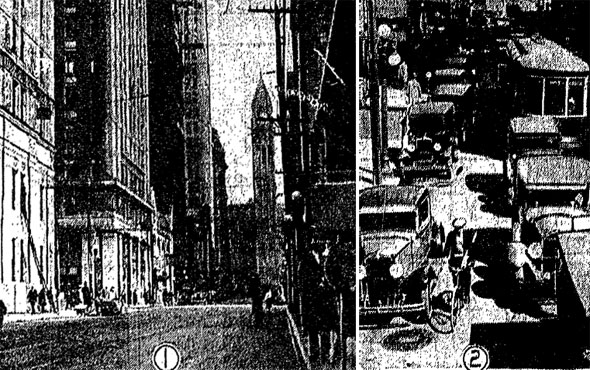
In the days after the ban, as photographs attest, the weight of traffic on the most congested routes access roads to the downtown core was dramatically reduced. In a radio address, mayor Steward said the by-law would "assist our people to operate their vehicles in their own interests, in the interests of their fellow citizens, and for the good of the city."
Though it clearly was effective at unclogging Toronto's busiest streets, shopkeepers and business owners cried foul, claiming the city had inadvertently stymied trading. Pedestrians were not immune from regulation; traffic officers handed tickets to "jaywalkers" who crossed mid-block. Despite some confusion on May 1, the first day of the new rules, the Toronto Star "successful, even beyond the hopes of those concerned."
Interestingly, private parking lot owners who fiendishly inflated their prices in anticipation of a spike in demand found many drivers simply left their cars at home and hopped on the streetcar.
Many of these rules are still in effect on parts of King and Yonge, but is it time the city did something about the parking situation on Queen and other roads? Could restricting parking there improve streetcar service in peak periods or would that have a negative effect on local business?
Chris Bateman is a staff writer at blogTO. Follow him on Twitter at @chrisbateman.
Images: Toronto Star.


Discussion
22 Comments
Sort By Oldest First / Newest First
Subscribe
http://mitpress.mit.edu/books/fighting-traffic
This was one of the last efforts by transit engineers to design city streets around moving people. Soon after, the metric was changed to moving automobiles.
For all those who still complain about streetcars, what's a better use of our limited road space? A moving streetcar carrying 100 passengers, or an empty, stationary car taking up a whole lane?
I don't care how much revenue it brings in.
It will really help congestion.
Vola, people (no matter what mode of transit they choose) are now moving.
I've always wondered why this is the only street that has such harsh restrictions, especially since it doesn't even have streetcars on it (besides a short diversion track).
I'd like to see the same restrictions on King, Queen and other major routes in the core. There is no reason why these streets should be down to one driving lane at anytime of day during weekdays. Violators of the No Stopping zones should be fined or towed without warning. There is a culture out there where people will just figure "Oh the parking guy will tell me to move" and it creates massive gridlock. People can park and wait on side streets or in parking lots.
This. This about so many things in our city now.
Side-street parking is easy to find around places like College at St Clair and yet we somehow have to preserve on-street parking there because of complaints that it's supposedly bad for business to remove/reduce it.
Another thing that needs to be tackled is the sheer volume of taxis allowed to congregate on streets like King and Front - they are there for hours on end, doing nothing but taking up space.
As Antony points out, this has been a fascinating area of study lately. Tom Vanderbilt also has a book, Traffic, that is very enjoyable if you want to read more on the subject.
For the future, Toronto has two choices. Either remake the streets so that streetcars have their own ROW, or remove parking, turns and other barriers to streetcar flow. (While you're at it, remove half the stops too). Since rebuilding the streets at this point is impossible and possibly not even desirable, that leaves us with more parking and turn restrictions. In a city with a massive and growing downtown population this should at least be tried.
http://www.howwedrive.com/
you know you don't have to be gay to park on Church St.
You would think a person with a brain would understand that this is in fact a conservative position. But, you know...