
A visual history of Queen and Bay
It wouldn't be too difficult to make the case that the intersection Queen and Bay streets is one of Toronto's most important hubs â or at least that it has been for the last 112 years or so. This time-span, of course, covers the period in which the intersection in question has housed Toronto's City Hall, first with E.J. Lennox's Romanesque Revival masterpiece on the northeast corner (1899-1966) and then with Viljo Revell's modernist icon (completed in 1965), which still serves as our house of municipal governance today.
Although there was a brief period in the 1960s during which it appeared Old City Hall might be lost to the development of a much larger Eaton Centre than was eventually built, looking back it was the construction of Revell's building that most changed the surrounding area. Over and above the buildings that were demolished for its enormous site (which included Nathan Phillips Square), the City also expropriated a swath of land on the south side of the street because the buildings that were there didn't match the architecture of the new centerpiece. In their place, (amongst other things) we now have the Sheraton Hotel, which while a successful Brutalist structure, is just awful at street level.
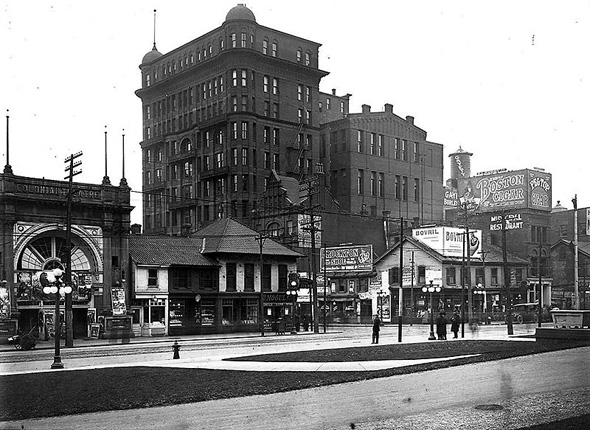
Lastly, I must mention that the southwest corner was once home to what's commonly referred to as Toronto's first skyscraper â the Temple Building. Demolished in 1970 to make way for the anonymous Queen-Bay Centre, its loss remains one of the most painful preservation failures in Toronto's history.
Here is a visual history of Queen and Bay streets.
1899 - A cyclist approaches Bay Street
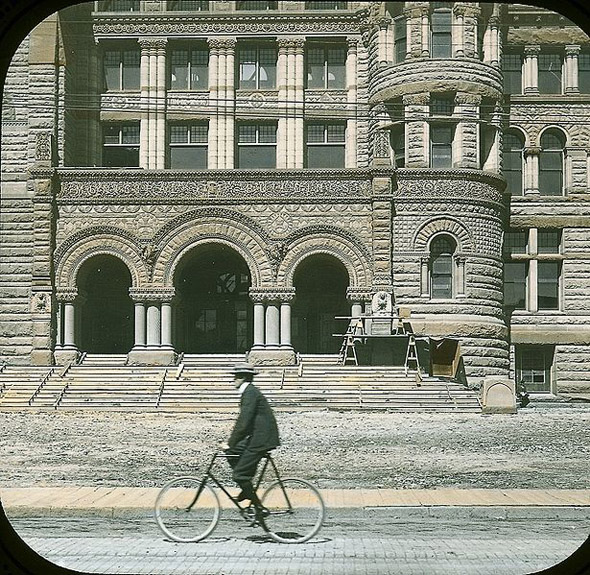
1900 - When (old) City Hall was young
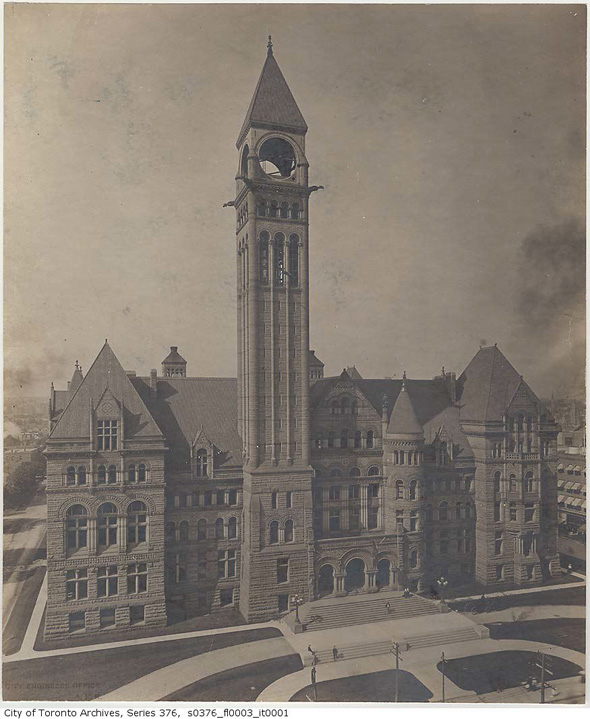
1911 - Looking north
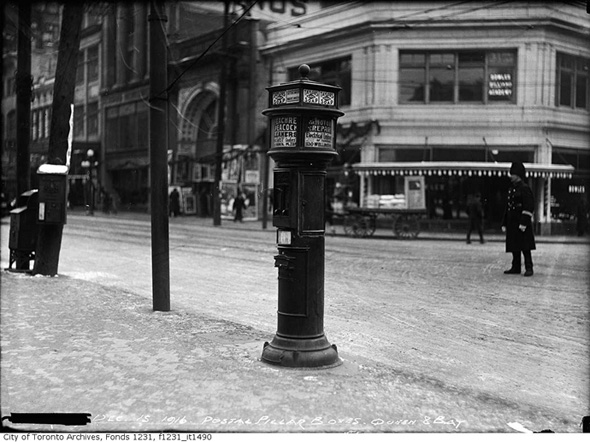
1916 - Postal pillar box
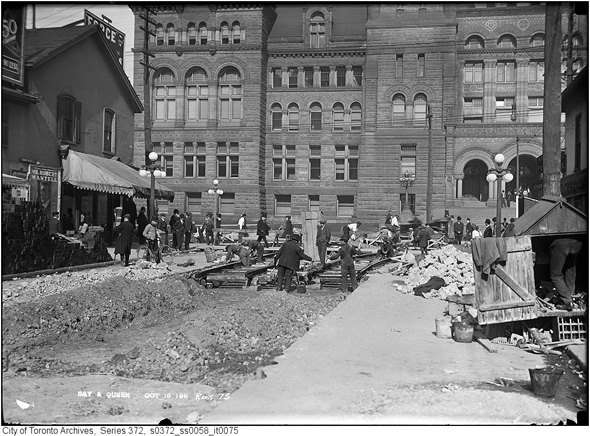
1916 - Southeast corner
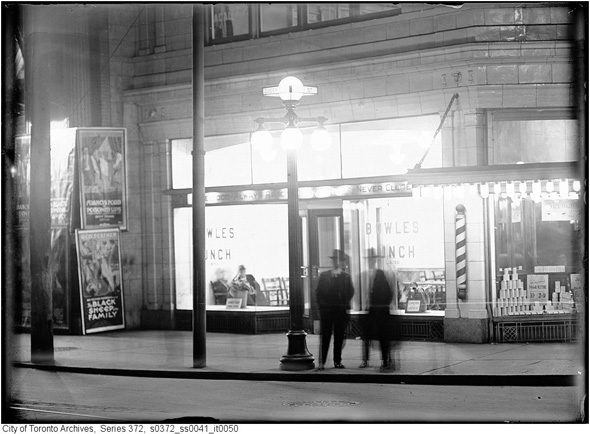
1923 - Looking northwest
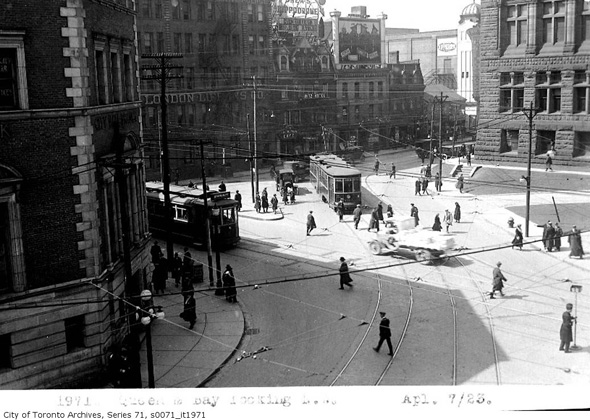
1924 - Snowy Queen Street
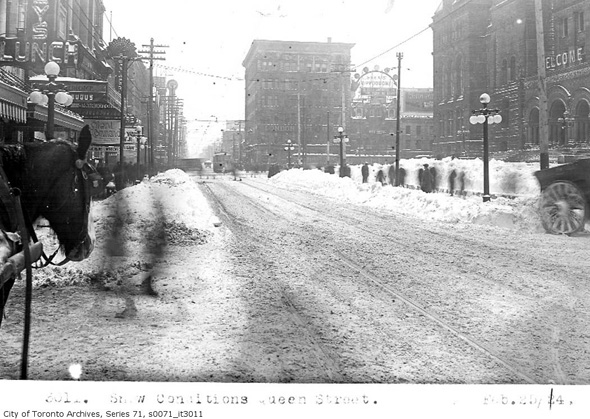
1931 - Orange Parade
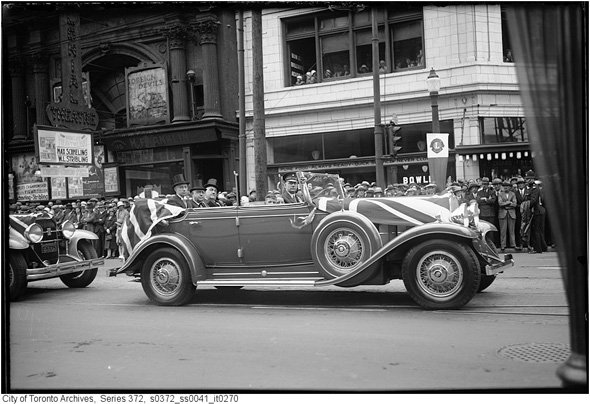
ca. 1940s - The Temple Building (southwest corner, now demolished)
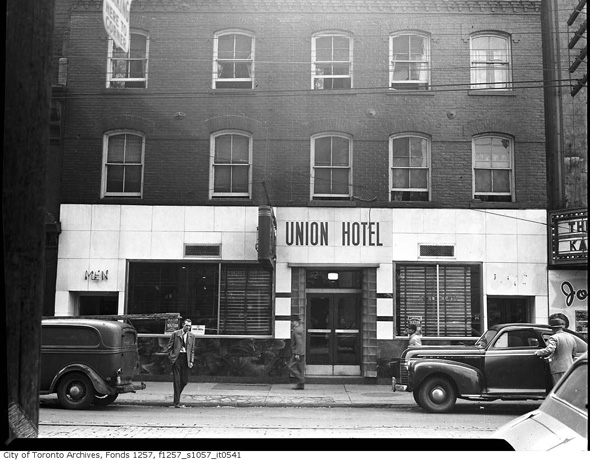
1947 - Union Hotel (demolished)
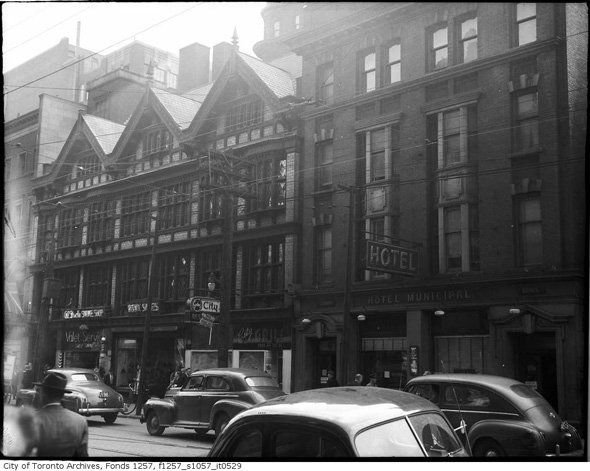
1947 - Municipal Hotel (demolished)
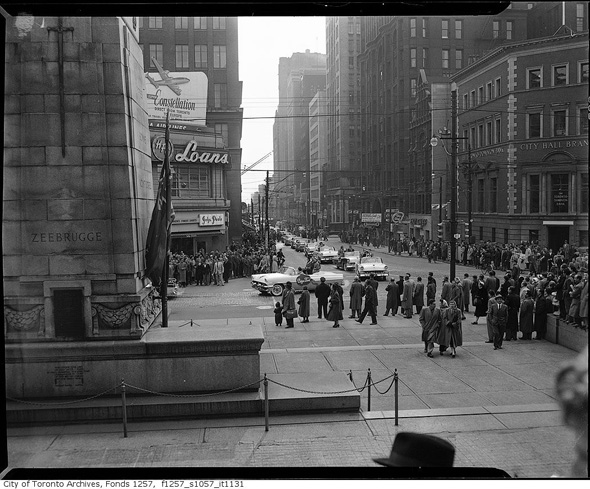
1955 - Looking south
1962 - Construction begins on (new) City Hall
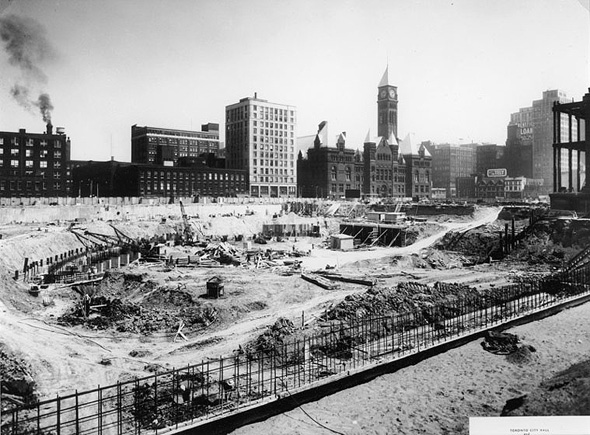
1964
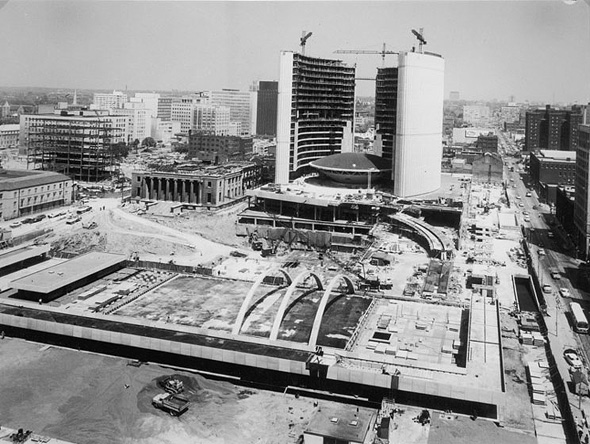
1964
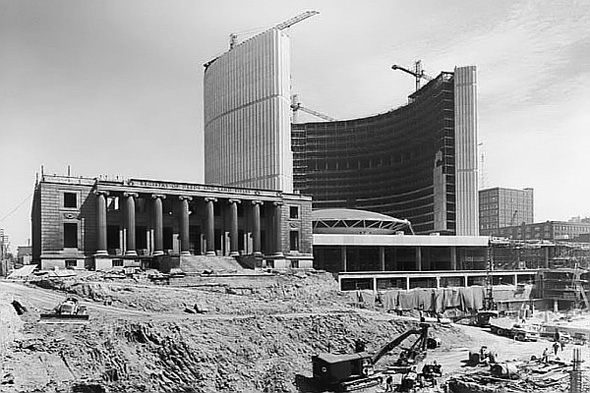
1964
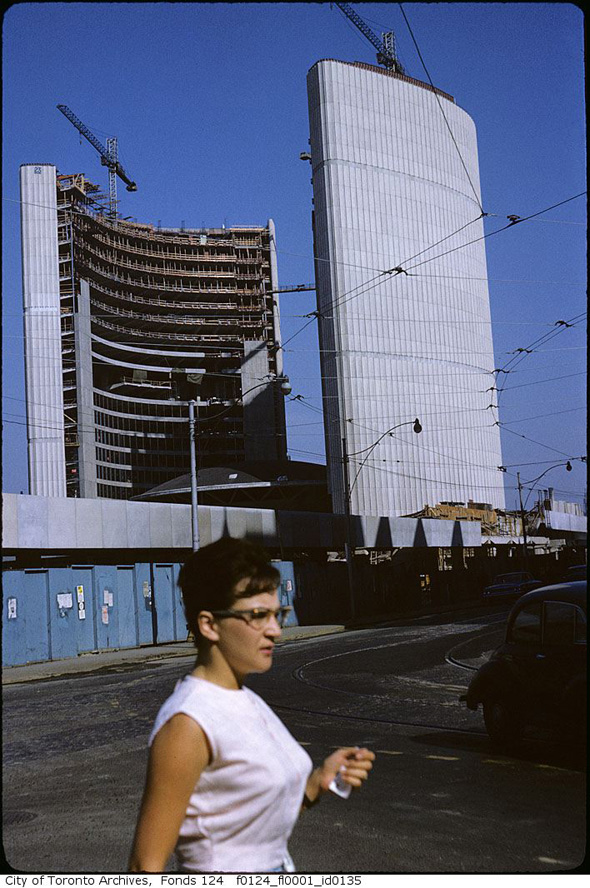
1966 - The new Nathan Phillips Square
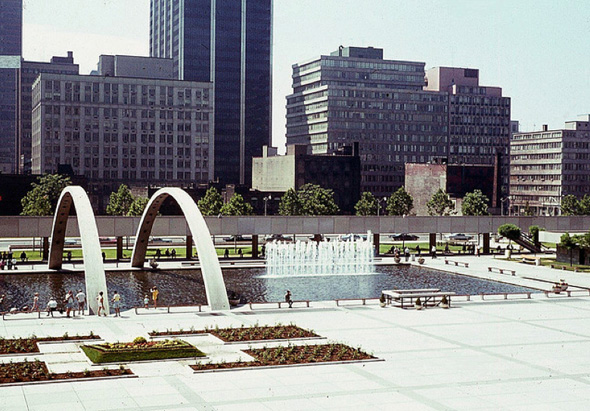
ca. 1970 - Across from what is now Nathan Phillips Square
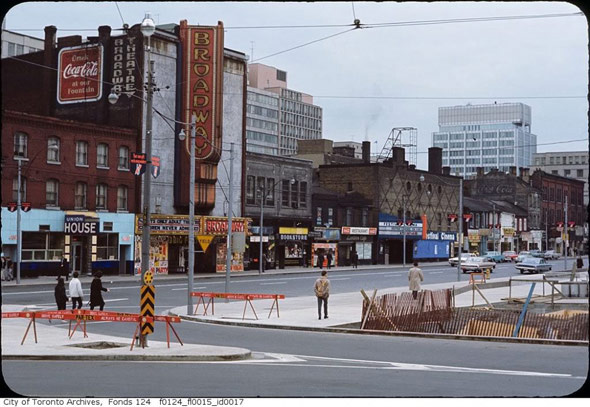
ca. 1970 - Different Angle
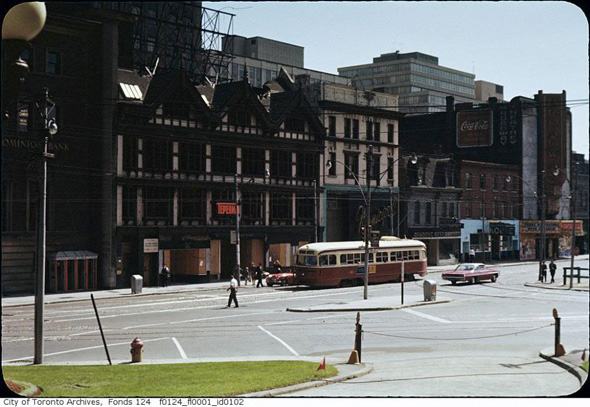
ca. 1970 - Bay Theatre (demolished around 1963/4)
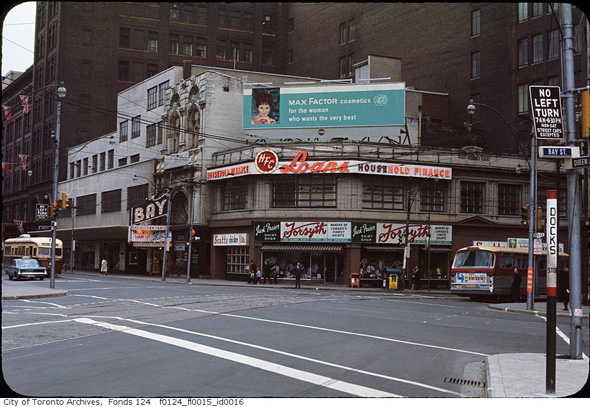
1976 - Looking east
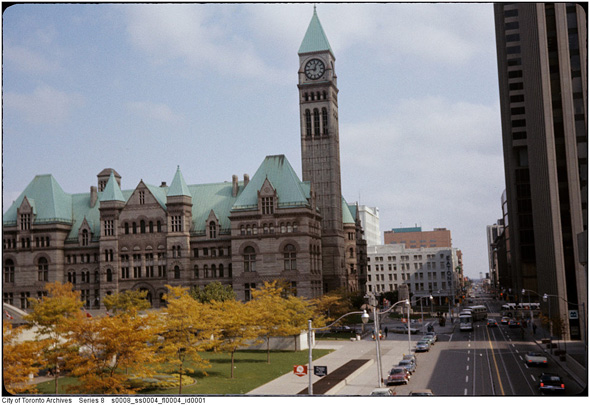
Today
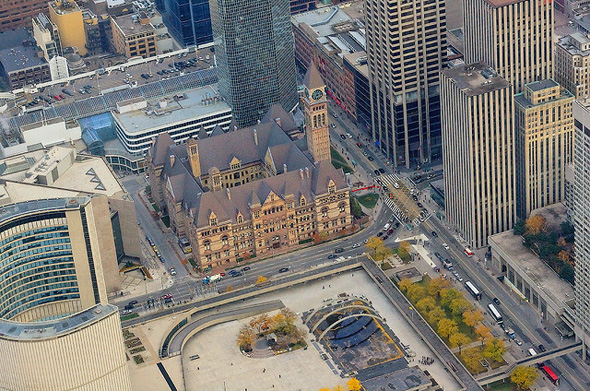
Photo by royhenry.
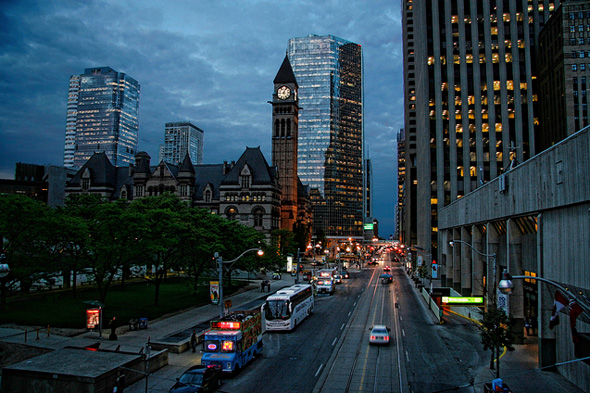
Photo by Cameron McMaster.
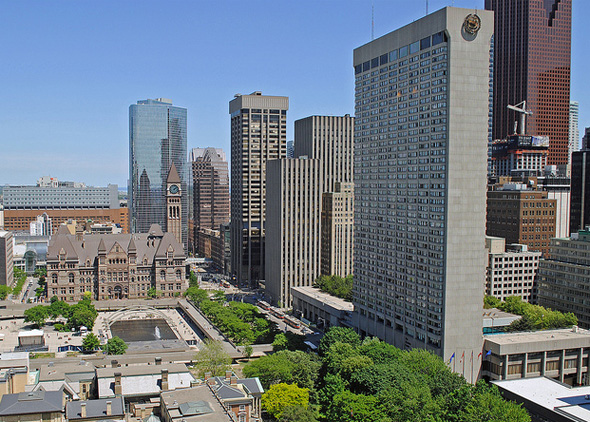
Photo by Keith.ca.
If you know of photos from the 1980s and 90s, I'd love to fill that gap. Let us know in the comments.
Unless marked otherwise, images are from the Toronto Archives.


