City
Toronto of the 1900s
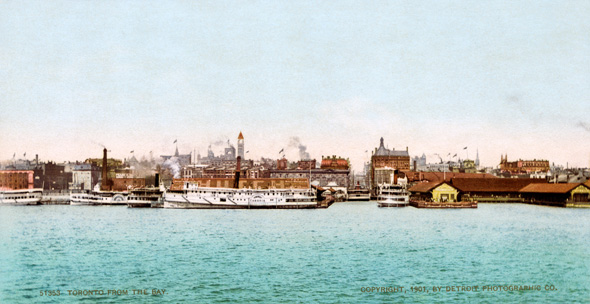
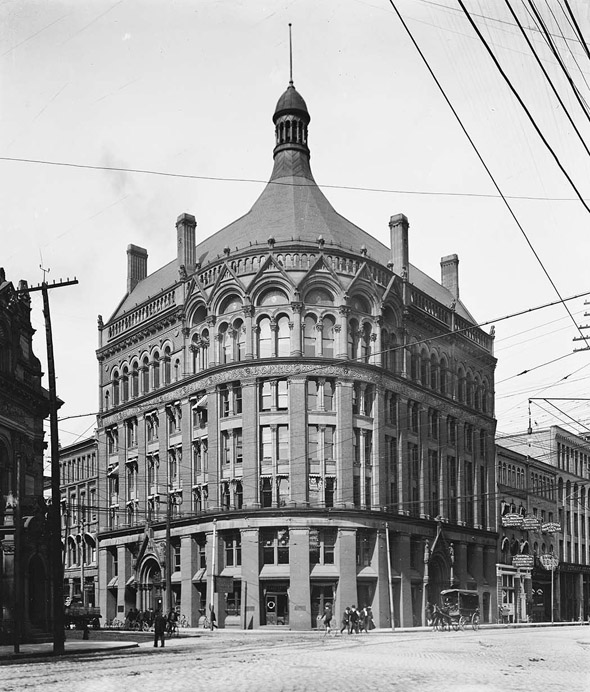
Toronto of the 1900s didn't much resemble the city we know today. Not only was the skyline virtually undeveloped -- the tallest structures were the Temple Building at 10 storeys and the Trader's Bank Building at 15 storeys -- but the Bloor Viaduct was yet to link the east and west sides of the city. Old Union Station and the Yonge Street Warf were still the main arrival points for the city, and Hanlan's Point was the place to be during the summer months.
On the flip side, what's now Old City Hall was already a towering and familiar presence, having been completed in 1899, and places like the St. Lawrence Market and the University of Toronto would be easily recognized by anyone able to travel back in time to that period.
In the 1900s Toronto had a population of approximately 210,000 people, horses and carriages were still common on city streets, and the city suffered one of the worst fires in its history, losing almost all of the main commercial district (bounded by Bay, Wellington, Yonge, and Front Streets).
Here's what it all looked like, captions above each image.
1900
Toronto skyline

Board of Trade Building
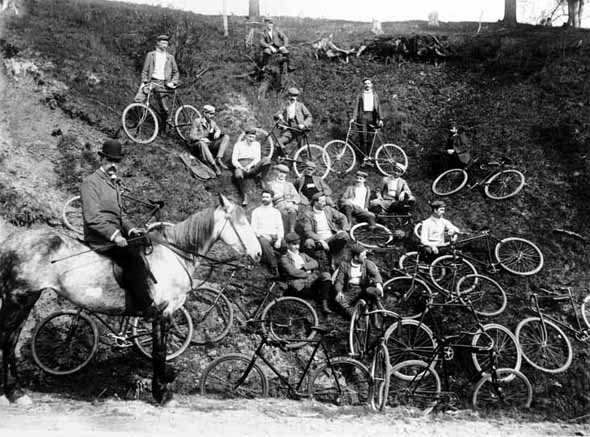
Cycling club
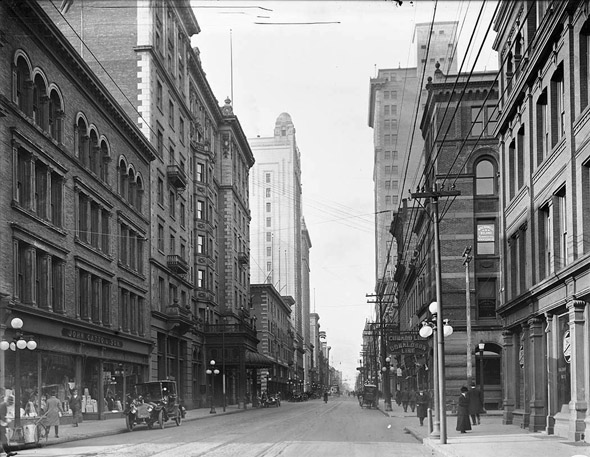
King Street
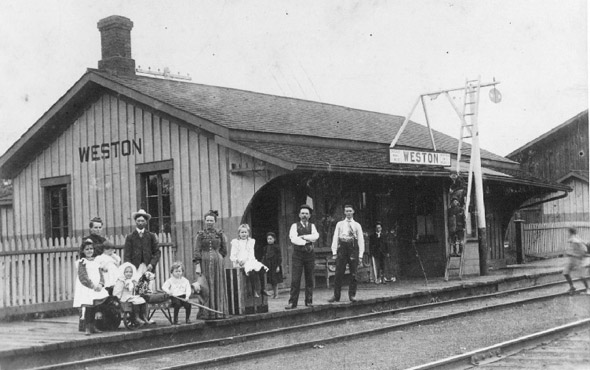
Weston Train Station

1901
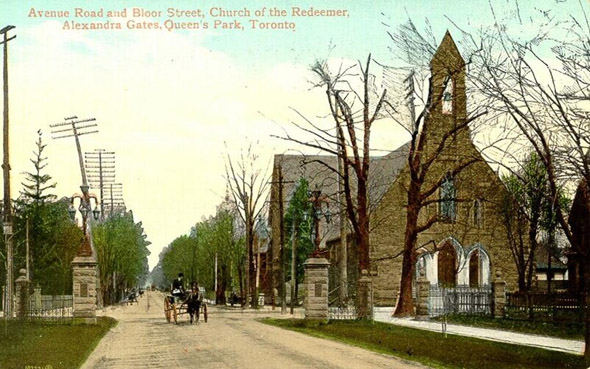
Avenue and Bloor
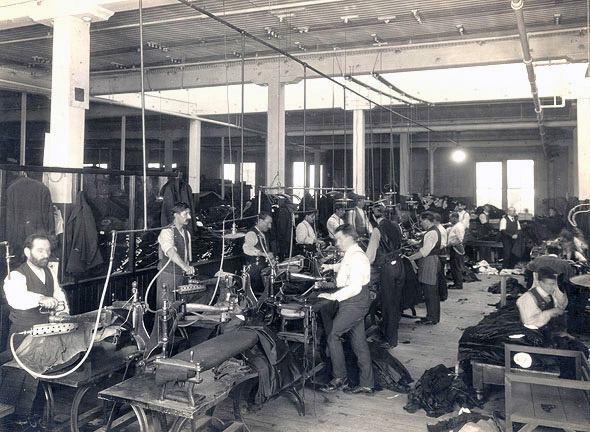
Eaton's factory interior

1902
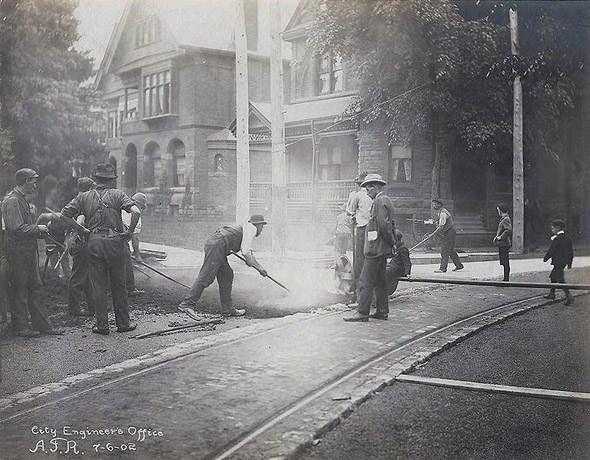
Laying asphalt on Elm Avenue

1903
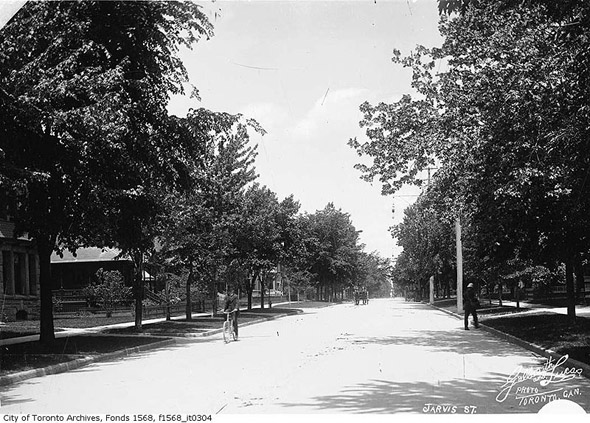
Jarvis Street
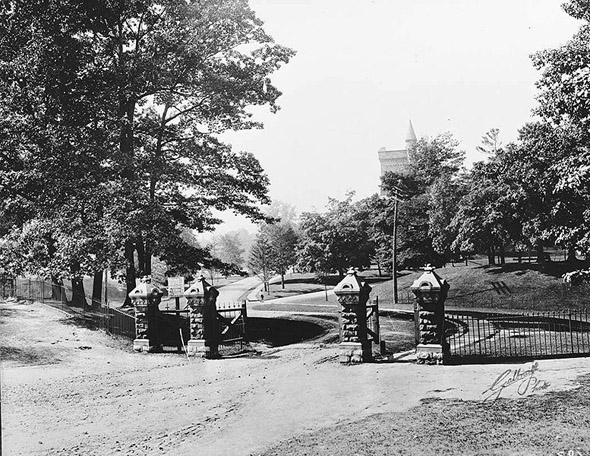
Entrance to U of T campus
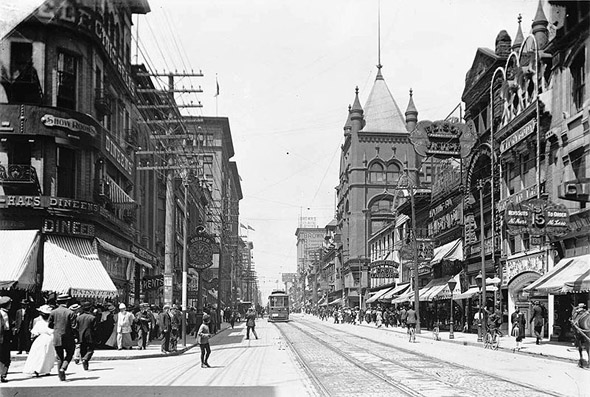
Yonge looking north from Temperance

1904
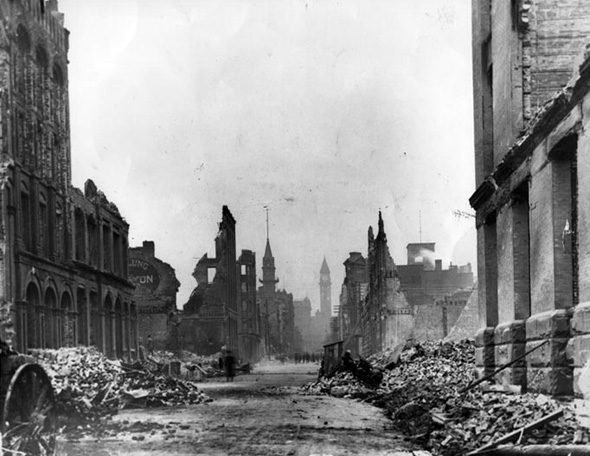
Fire aftermath
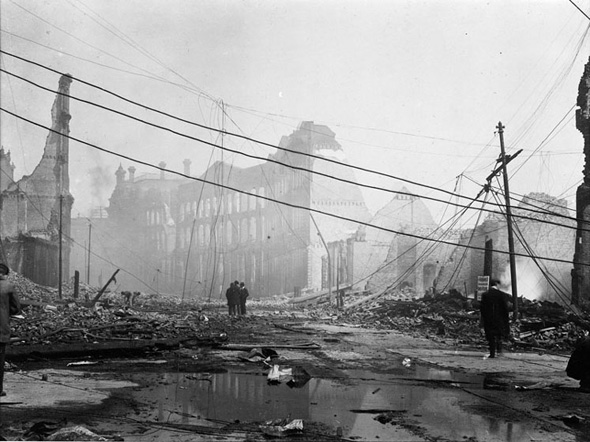
Fire aftermath
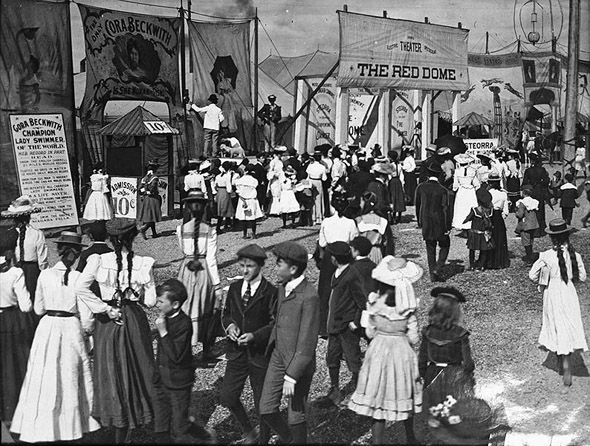
CNE midway
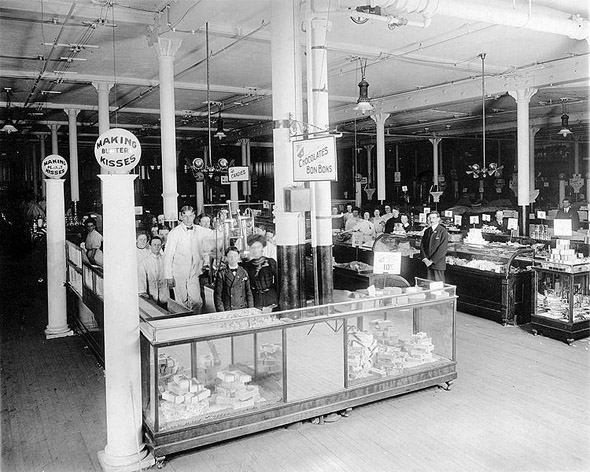
Candy department Eaton's
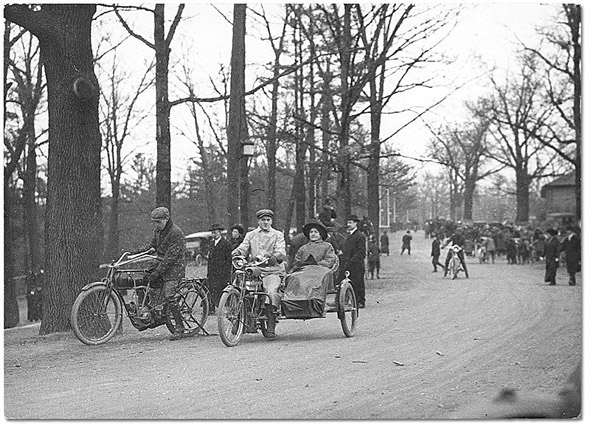
High Park
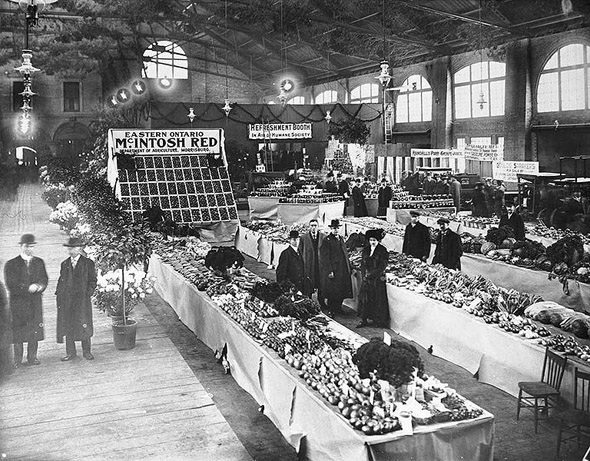
St. Lawrence Market
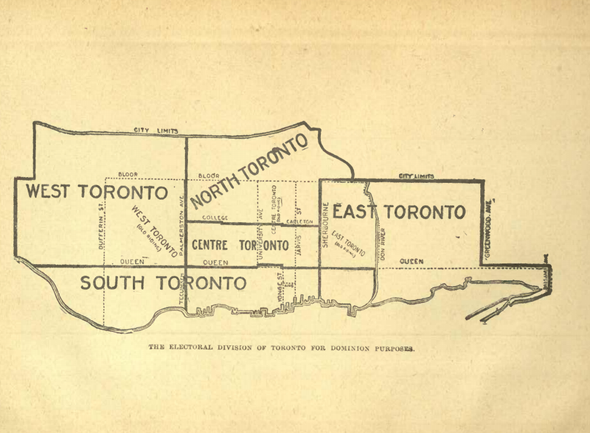
Toronto Ridings

1905
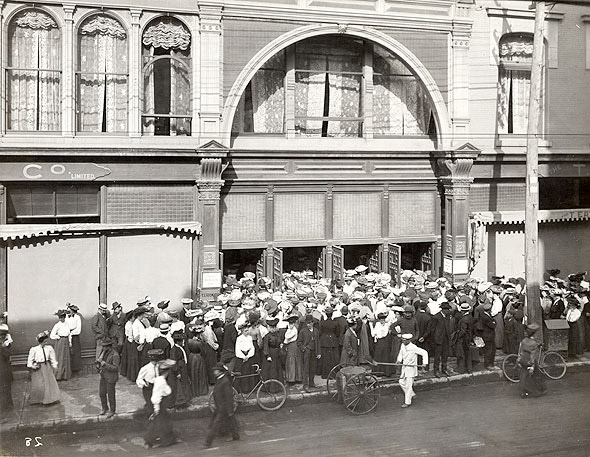
Friday deals at Eaton's
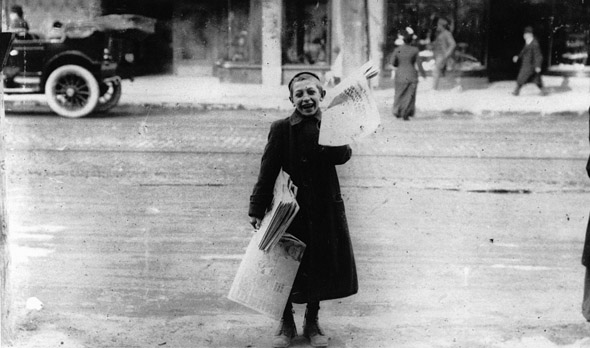
Newsboy
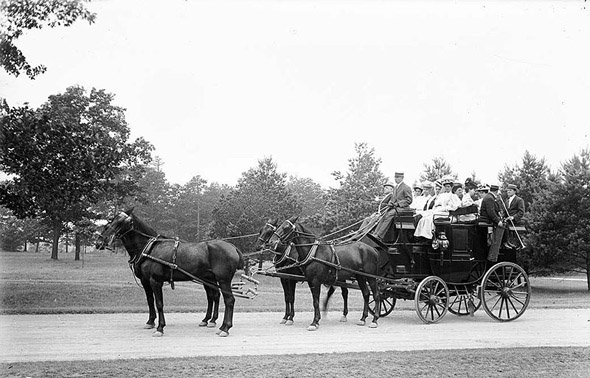
Tally Ho showing visitors around the city

1906
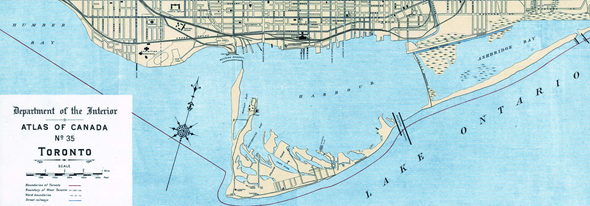
Toronto Harbour map
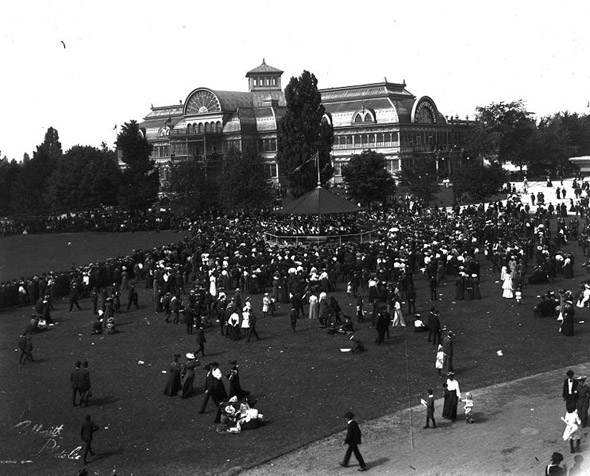
Crystal Palace (later destroyed by fire)
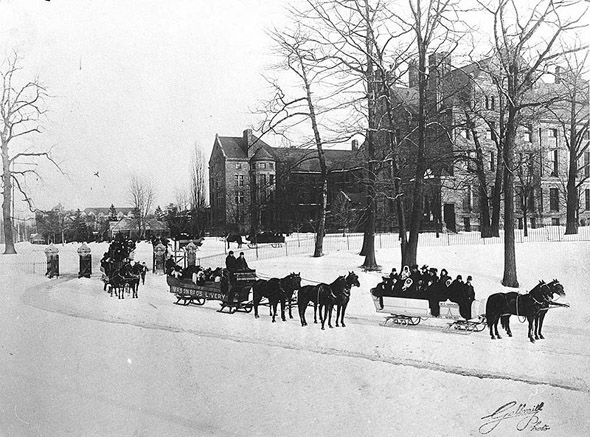
Sleighing at Queen's Park
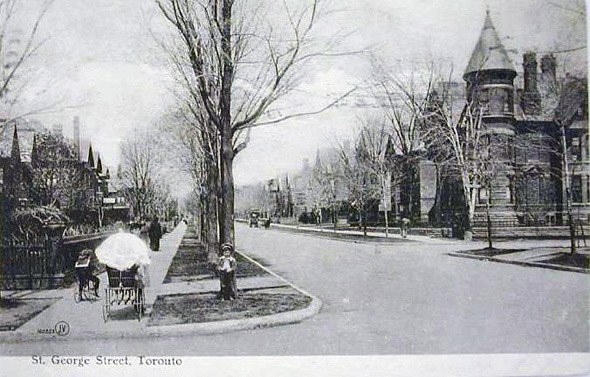
St. George Street
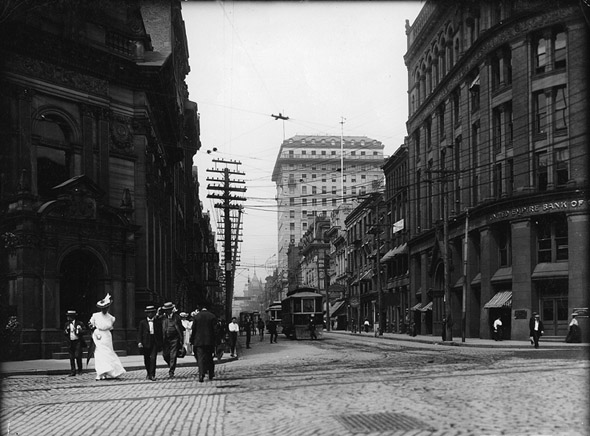
Yonge and Front
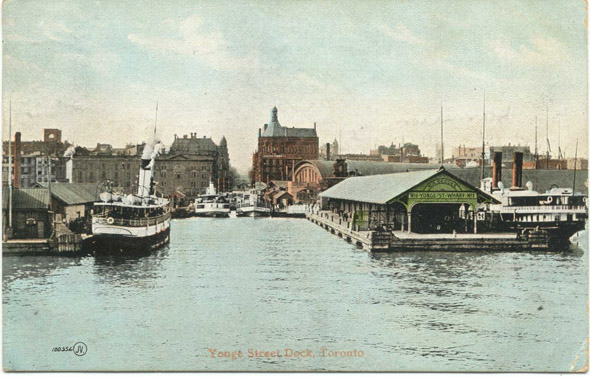
Yonge Street Dock

1907
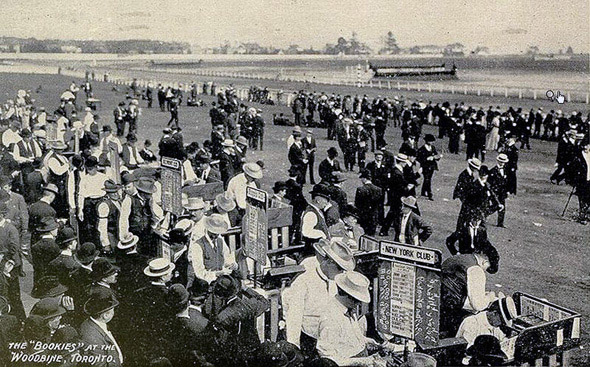
Bookies at Woodbine Race Track (original)
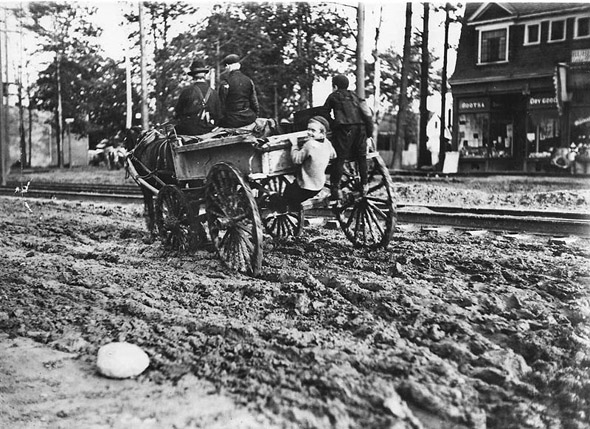
Carriage ride
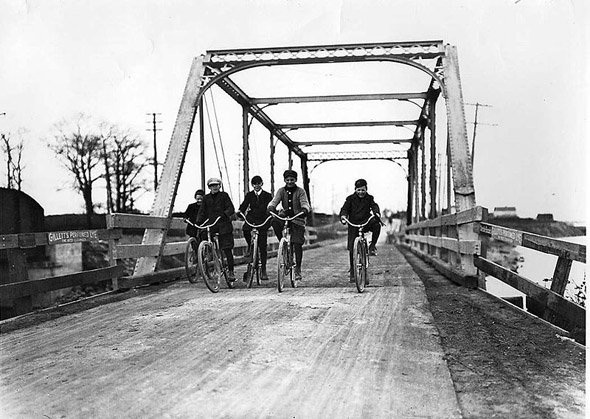
Cycling in Mimico
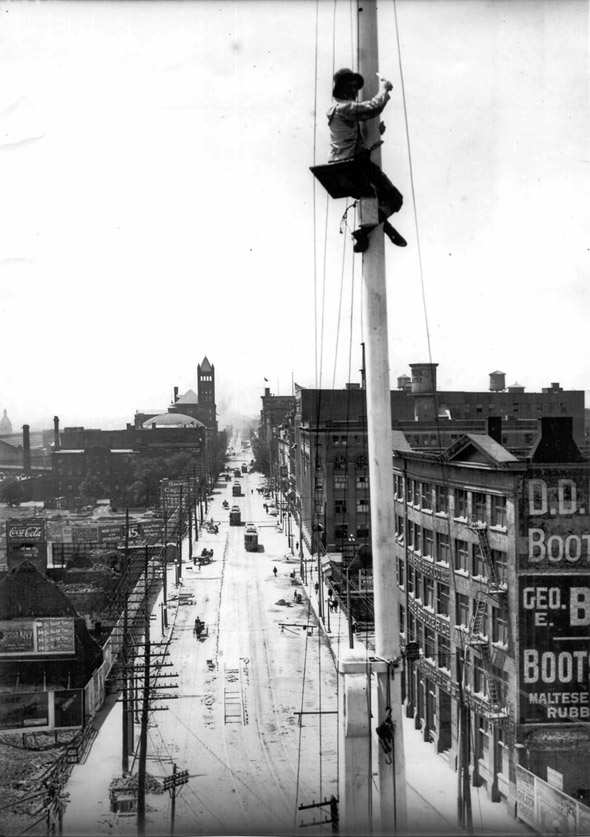
Flagpole painter looking west on Front
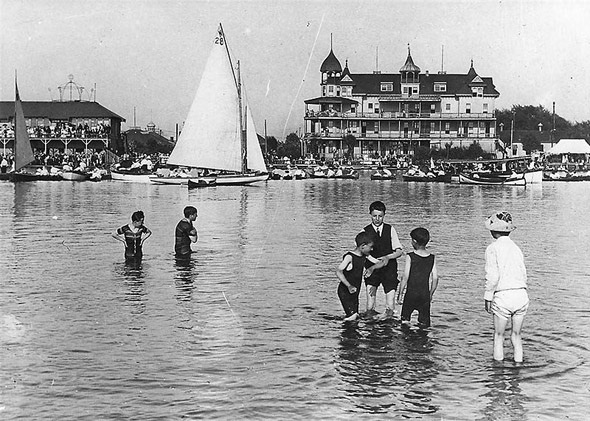
Hanlan's Point Hotel and Regatta
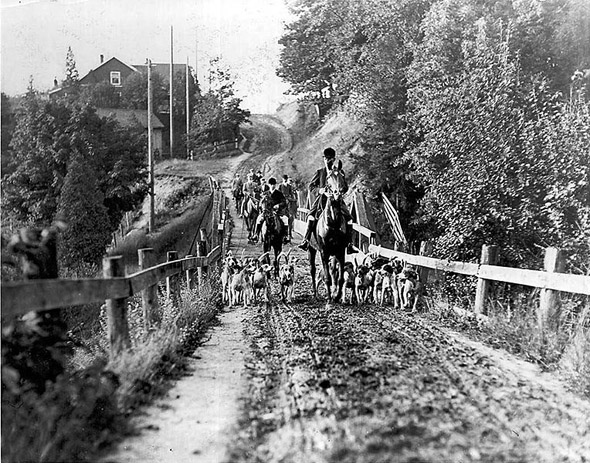
Bathurst north of St. Clair
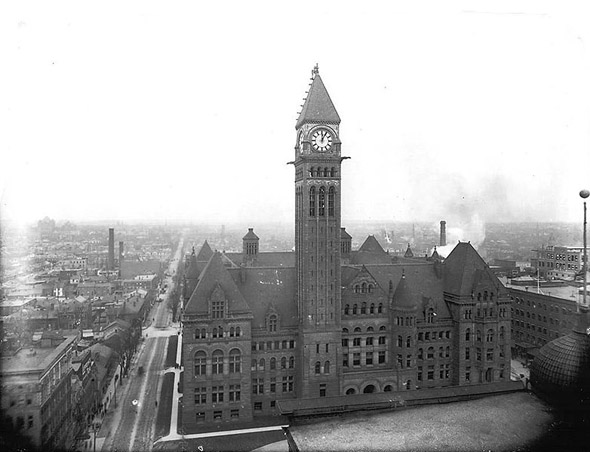
Old (but then new) City Hall
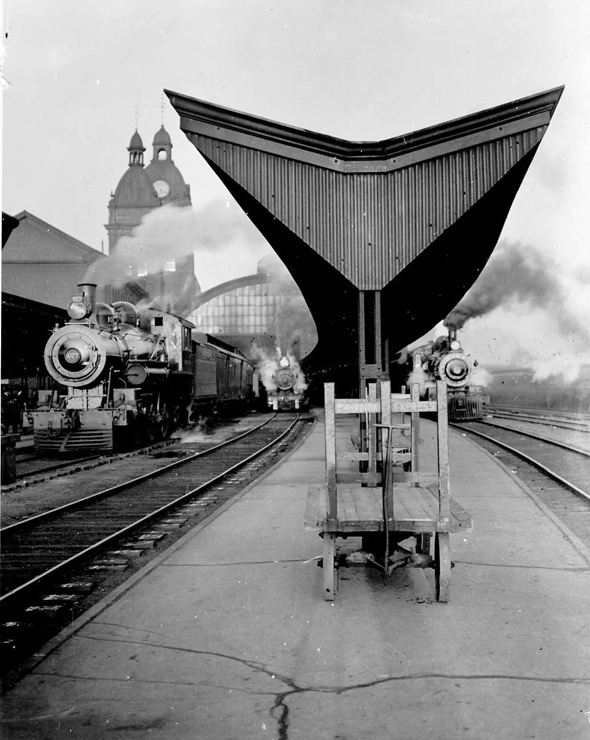
Old Union Station
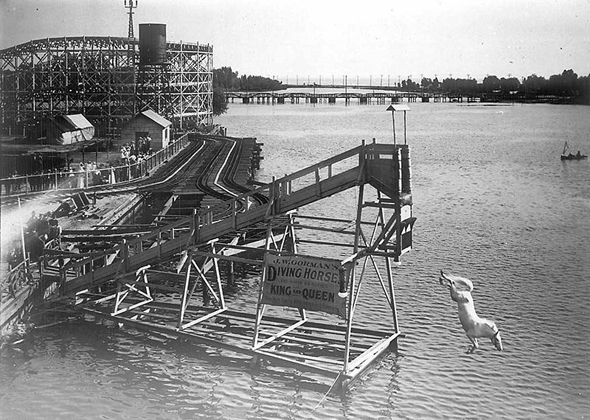
Diving Horse at Hanlan's Point
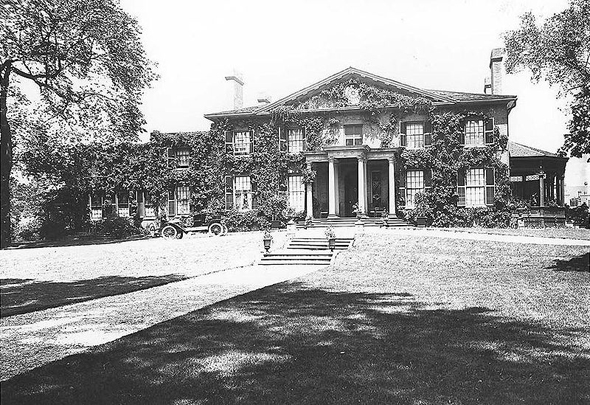
The Grange
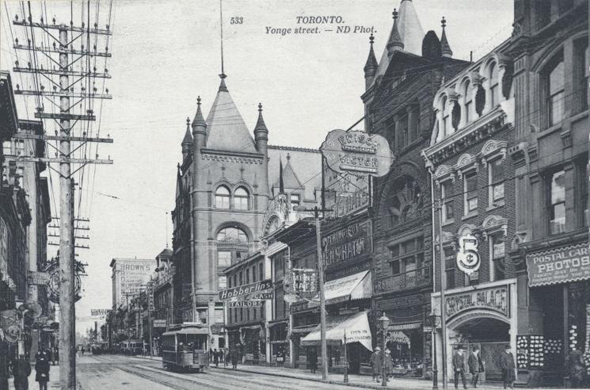
Confederation Life Building
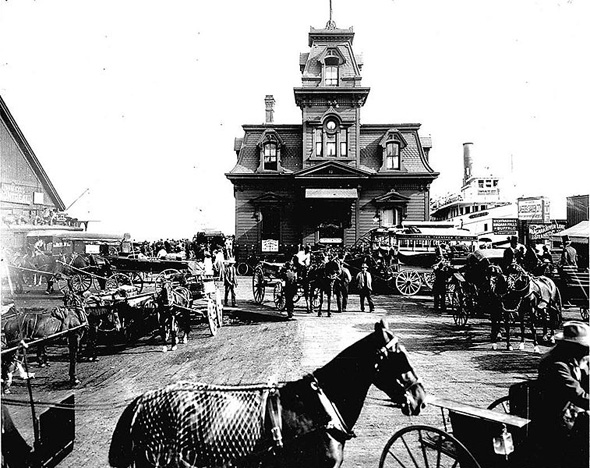
Yonge Street Warf
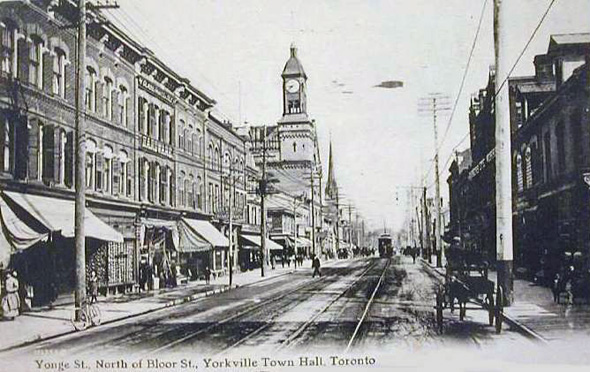
Yonge north of Bloor

1908
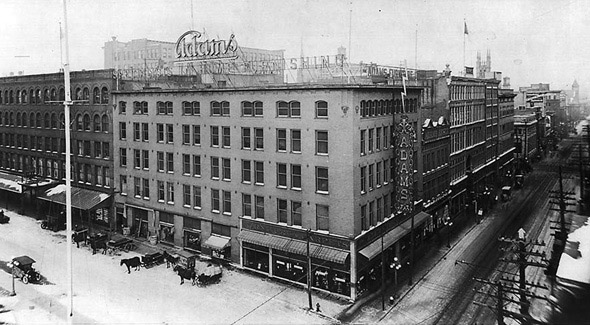
Queen and James
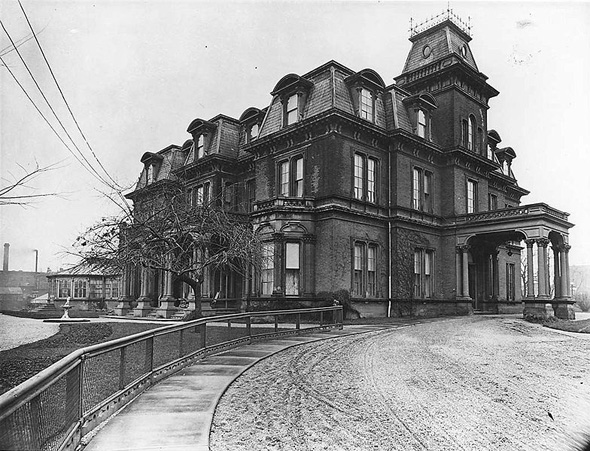
Government House
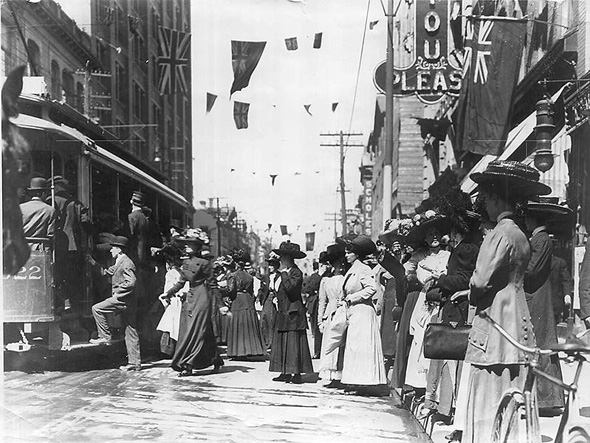
Yonge and Queen
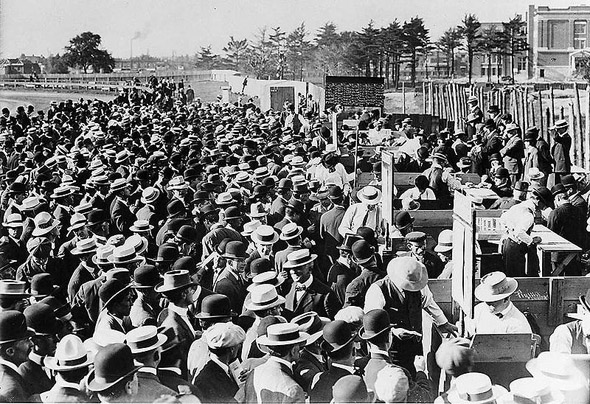
Dufferin Racetrack
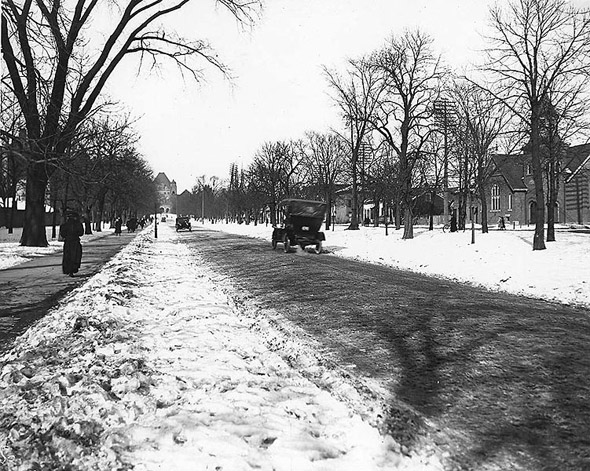
University Avenue (with Queen's Park in the distance)
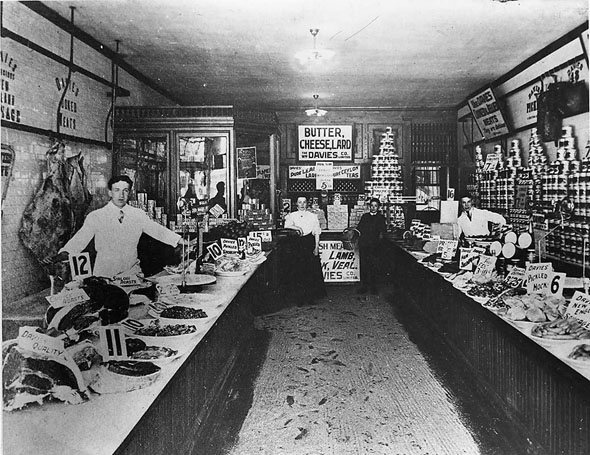
William Davies Store
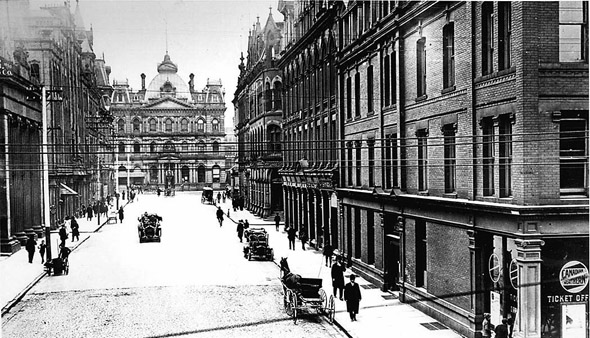
Toronto Street

1909
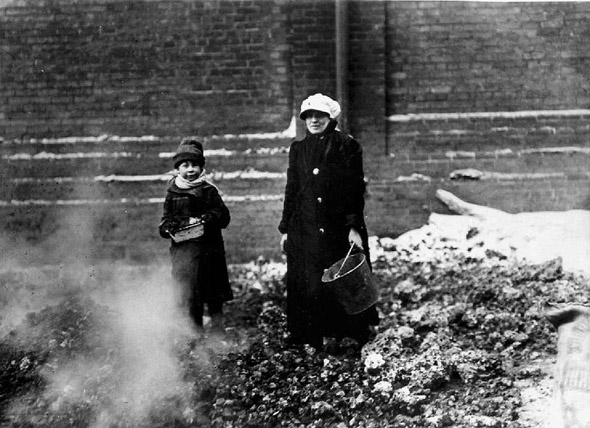
Collecting coal
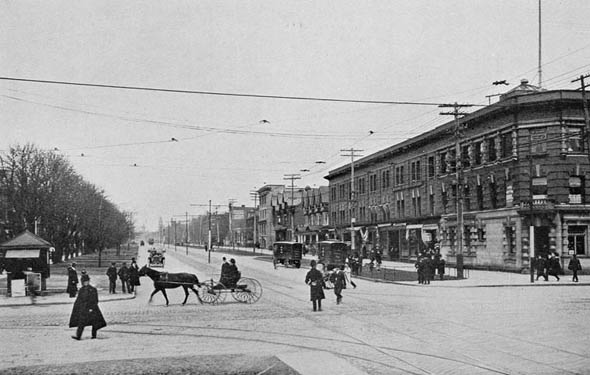
Queen and Spadina
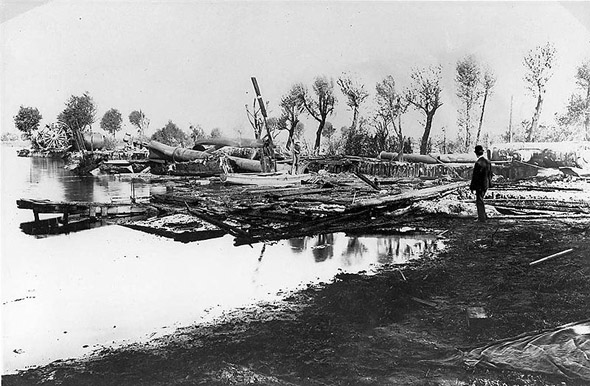
Ruins of Hanlan's Point Hotel

All images sourced via the Wikimedia Commons.


Discussion
51 Comments
Sort By Oldest First / Newest First
Subscribe
very interesting to see some of the buildings that are still here and to note how their surroundings have changed.
@ Janice - no, this is the narrowness of the city thinking of the day. They never saw beyond the quarter million people that the city was - never envisioned when it might be 2 or 3 million, or that people might want to get around easily. All those people crowding onto the streetcars would soon enough be abandoning them for cars, yet the city still couldn't see more than 5-10 years ahead. Vancouver, on the other hand, realized it's streets were too narrow and as that city began to expand beyond the Georgia Strait/English Bay isthmus, and into east Vancouver and Burnaby, the streets were PLANNED and widened to accomodate the future.
Imagine that.
Toronto, on the other hand, envisioned their citizens being rattled and shaken to Mimico and points west in streetcars. They didn't get busy with road building until the 1940s and by then it was too late - much of the city had surrounded its arterial roads and choked them off.
Off topic, but intriguing is that at the same time these photos were taken, Sao Paulo was also 250k people. Avenida Paulista was like Jarvis St, lined with coffee plantation mansions. However, that city exploded in the 1950s and 1960s like seen nowhere else before or since and the governments of the day were not hampered by NIMBY zealots and launched large scale public road building and subways, resulting in all the mansions along Avenida Paulista being bulldozed for a roadway that looks very similar to University, although about twice as long. Now, they have 18 million citizens to care for, which really puts Toronto's paltry issues in perspective.
I almost hope that the Board of Trade building was lost to the fire and not to demolition. To think that we tore it down is too awful.
I recognized the Queen and Spadina shot right away. Everything else looks different, but the building on the northeast corner fives it away immediately.
waterfront the Board of Trade/TTC building
was.
Also, the gateposts at the end of Queen's Park
are the same as at the entrance to Philosopher's
Walk.
Also, my grandfather worked in the Eaton Terauley
Street factory until they found out he was,
in fact, a bespoke tailor from England.
Then, he got transferred into the main store's
Men's Wear department.
The photo of Jarvis is great -- I wish that it had been waved around more during the fictitious "War on the Car" to show people what the street would look like with proper landscaping (the original plan for the renovated streetscape). Toronto's main commercial streets have very few street trees for a North American city and Jarvis was a chance to right that historical wrong. Too bad it ended up with a badly designed bike lane scheme that pleased nobody.
It's interesting to see how automobiles appear more and more on the scene as we approach 1909. Bicycles and horses still remain popular, though.
Don't you dare compare Toronto with Sao Paulo. I only mentioned it because there was a city that met its future, for better or worse, head on. They are still tearing up their downtown core for a new subway line. Perhaps we should be taking a look at all this hodge podge of development and ask ourselves, 'what are the real advantages of living in 'mega-cities?' Does the quality of life improve? Is there some point where maybe, just maybe, growth should be stopped because quality of life hits some sort of wall and then declines precipitously? Do we want Toronto to turn into another HK, or SP? Is that the answer? Should we all be forced into 400 sq ft boxes in the sky, because some socialist nightmare decrees that is how we should live?
I find it amusing, because the few people I know who own bicycles don't use them to scurry around crowded downtown streets (they wouldn't be caught dead downtown ever), but strapped to the roof of their car to go up to Algonquin with their canoe. Real people with real lives that go beyond the stench of Kensington Market and the crowded chaos of St. Lawrence.
Makes me wonder what the self-appointed chattering classes are smoking these days.
What do you know? This wasn't just a typical day in Toronto.
This must be embarrassing for you.
I just this second decided not to get upset with what Gadfly says anymore, but rather to consider him/her a charming mascot for the BlogTO comments pages, not to be taken seriously.
Widening roads means less space for buildings at grade, so that anticipated growth has to be upwards, with increased density as a result. If Toronto is going to get any bigger physically and numerically, we will see taller buildings and sprawl to the north. It's all very well building more and bigger roads to attract/facilitate traffic (all the cool cities are doing it!), but there has to be something there to be served by those roads. Toronto definitely has looming congestion issues, but they will have to be addressed in terms of managing the mobility that already exists first.
You can invoke Sao Paulo all you want as some kind of model of anticipating the future - much of its growth was far greater and faster than we will ever see, besides being unplanned and unauthorized.
I'm curious to see how you would define a mega-city with regard to Toronto: how much population growth, density and sprawl can we expect to see? Are the advantages and disadvantages of being such a city the same for everyone? How would we measure the quality of life that you vaguely imply may possibly, perhaps, maybe kinda sorta deteriorate (again, in what terms?) to the point that it 'should be stopped' (how?)?
The fact that current development includes small boxes in the sky is a function of the market, not some edict from the city. How SHOULD we live?
The fact that your friends are purists who view cycling solely as a recreational pursuit to be indulged in many, many kilometres from the city (there's nowhere that's closer?) is slightly interesting but ultimately irrelevant. It's clear you dislike urban cyclists and enjoy the fact that you see so few of them from your window. There are still many more people for whom cycling is a practical and efficient form of transportation, partly because transit and driving don't always suit their purposes. The downtown streets may be crowded but it's nothing bikes can't get through. Or pedestrians, for that matter.
And there are of course many other destinations besides Kensington and St Lawrence Market. Not sure what you have against them (Kensington's bad for driving, I guess, but no idea about the other one) but it's probably safe to assume you'd prefer to see them replaced with something else.
It really seems like your problem is more to do with Toronto itself and less with urban planning, and you're ragging on everything else you can think of out of unfocused frustration.
Lastly, the 'chattering classes' are never self-appointed. I don't think you understand the term or who applies it.
I would not promote Sao Paulo as a model of anything; rather, it's a city I know well and despite its incredible growth (obviously 4Xs faster than the GTA's in the past 100 years), it does work reasonably well as a city, all things considered. For one, it has a far better subway and bus system than Toronto (when you pay cash, it spits out an automatic ticket, just like Toronto and you can pay for distance - something I doubt the TTC union will allow any time soon. They also run smaller buses on smaller routes, not the behemoths I see 3/4 empty trying to navigate Bay St., Richmond and Strachan!)
There seems to be a critical mass of downtowners on these pasges who feel that only 'their' views are acceptable. They refuse to even contemplate that some people might prefer Don Mills or even Brampton as a place to live (for the record, I do not, but much of my family lives out in those areas and I do appreciate their merits.) It amazes me how a vocal 3 or 4 % not only hijack the agenda at City Hall, but on most of these blogger pages as well. This kind of thinking is not necessarily normal, it's just common around here, by the way.
Truthfully, folks - do you not get bored of patting each other on the backs and congratulating each other for regurgitating various versions of the conventional thinking of the day? Do you not realize that in 20 years an entirely new batch of Ry-high grads will come along and tell you that you are wrong?
Toronto has a great many things going for it, but the way it totally fumbled its early growth (as in the picture I was discussing earlier) is going to haunt the city big time. It's easy for folks to say the city would never dare bulldoze throroughfares to make room for more traffic, but many cities have had to do it and are still doing it. At 10 million, the city may have to bulldoze Bloor/Danforth or Kingston Rd. or whatever to make room for dedicated streetcar lines, more traffic or something, because they are wholly inadequate for what they are expected to handle today.
You are not going to accomodate 10 million in the GTA with access through or around downtown with our current or planned roads/highways or subways. Streetcars are a joke and an impediment - at least as they are laid out now in most parts of the city.
So, before the city hits 5 million, we (the people) had better get our heads out of the sand and start pressuring public officials of all levels to build the kind of city that MOST people want. Although condos are a more recent phenomenon, MOST people want some sort of a backyard and light without obstructed views. Even the more crowded, 'enlightened' countries such as Germany and England still have burgeoning suburbs.
But, no, let's just sit back and sling arrows at those who dare espouse a different viewpoint from what the conventional thinking is around here. Gawd forbid if we actually learned from history and the starkness of those photos to try and build a better city for EVERYONE. (Not just for those who have recently grabbed the microphone and think streetcars and bicycles are what 50,000 years of Civilization has aspired to.)
Jesus Christ... PEOPLE WERE OUT CELEBRATING A WAR ENDING. HOW CAN I MAKE THIS MORE CLEAR?
You: Wow, guys. Look at this picture of our roads as late as 2006!!! http://farm1.static.flickr.com/68/206603018_bdf688d774_z.jpg?zz=1 Clearly we never learnt the lesson from that first photo can't deal with the development of our city!!! I mean LOOK at how CROWDED the photo is!
It is frankly absurd to claim that no road in Toronto has ever been widened, incidentally.
You can email me at sabsofsteel@gmail.com or on Twitter @sabsofsteel
Thanks,
Sabrina
I read the Toronto Star about three times a week just to keep up. Loved all the old photos. During the war we lived on Briar Hill off Dufferin north of Eglinton in York Township. People used to ask my mother why she liver "way up there"! Dufferin was a single lane road with ditches on either side. We were literally snowed in for 3 days during the great storm of 1944. No milk or bread because the HORSE wagons couldn't get through.
The 1901 census for your grandmother's location is difficult to decipher since many changes are made on the page. Her mother, Matilda, died suddenly in 1904. Her residence is given as 570 Sherbourne St. Her sister, Myra, died in 1923 and her residence was 10 Beatrice St. Myra is buried in Mt. Pleasant cemetery.
Photo's are wonderfull
Thank you