
Seeing the Slabs of Toronto in a New Light
Despite an overall lack of density, Toronto is nevertheless a city of apartment buildings. Scattered throughout the city, these concrete slabs are a throwback to both the architecture and planning of the 1960s and 70s. Monumental, use-oriented, and almost invariably ugly, they don't tend to inspire aesthetic reflection.
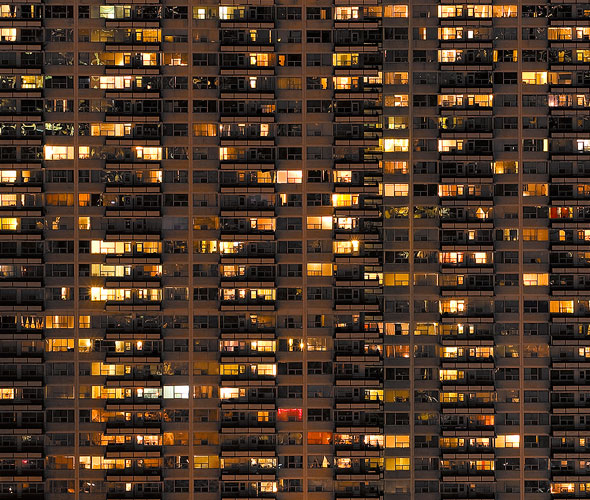
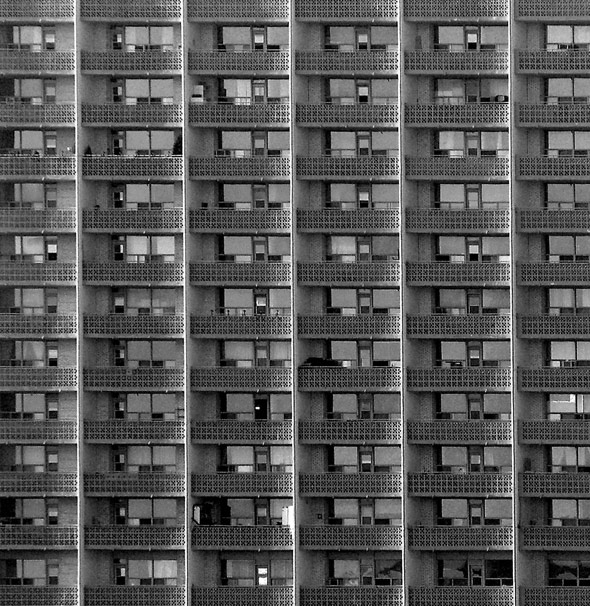
But, strangely, I've always been fascinated by them. Perhaps it's the convergence of so many lives in one place, the grid-like patterns formed by the balconies, or the warm light that emanates from the many windows at dusk, but when looked at from a particular perspective, these structures often reveal a beauty that belies their Brutalist roots.
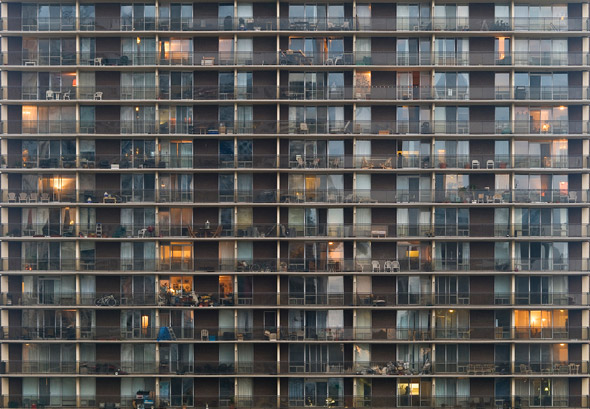
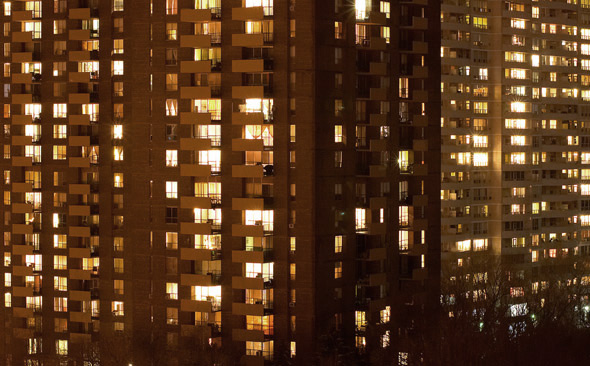
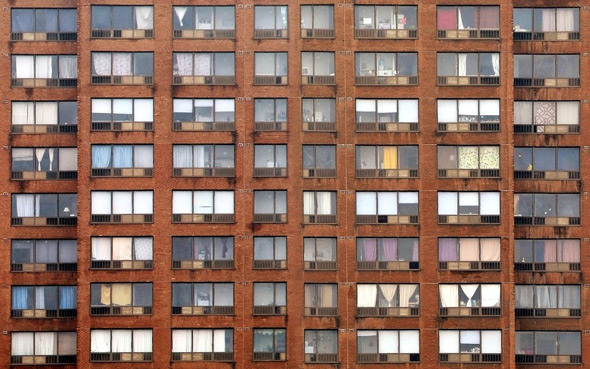
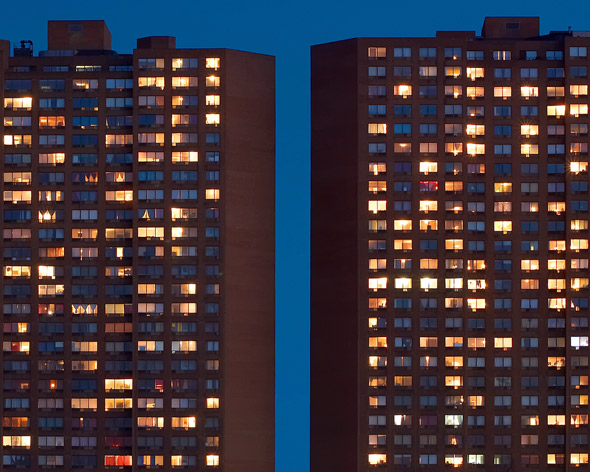
To see this beauty, however, some conditions need to be met. For one thing, you need to get to a position of height so as to be able to take in the entire building. And, perhaps even more importantly, the light has to be right. On a dreary day, Toronto's slabs are anything but inspiring. In the evening, on the other hand, a sort of transformation takes place. With the apartment lights on, it's possible to catch a glimpse of what goes in the metaphoric honeycomb.
But, rather than engage in unabashed voyeurism, I prefer to capture the buildings from a macro level, so as to see the entire structure and a glimpse of its workings. I find that there's something tantalizing about viewing from exactly this distance. A gesture to the inherent narrative limits of the photograph, it strikes me that the resulting images offer snippets of stories, the details and context of which remain obscured by the distance and the halt of the flow of time.
Far more skilled photographers than I have engaged in similar projects. Most notable among them, I believe, is
. It would be disingenuous not to acknowledge the degree to which my photos are inspired by Wolf, and yet I maintain that one way that my images differ is in their local focus. Like
Andreas Gursky, Wolf's work has taken on an international focus, charting density as a marker and manifestation of late capitalism. My series of apartment buildings, however, operates in a more local capacity. It is my hope that they present a portrait of something that we Torontonians see everyday but rarely find the time to engage with.
More of the series can be found here.


