
Revisiting The Ruins of the Hearn Thermal Power Station
Just over a year ago, I wrote a piece here outlining the history, importance, and final degeneration of Toronto's Hearn Thermal Power Station. In err, I had assumed that my many years of photo-documenting its decline from activity to decay were at their end.
On a recent journey back to the site, however, I realized that although much hollowed (even since my last visit), substantial portions of the space remain standing. The sense of scale in this building is almost unfathomable, and always leaves me in awe. I have spoken to many of the workers (whether plant or demolition), and they all seem to agree on this point: no matter how many times one returns, it is a perennial shock to bear witness to its mass.
The most striking aesthetic development lies not within the building itself, however, but rather with its burgeoning neighbour -- the new energy plant next door. The stark contrast of old red brick and sterile metal creates quite a scene. Hearn still manages to eclipse the less imposing eastern building, though...
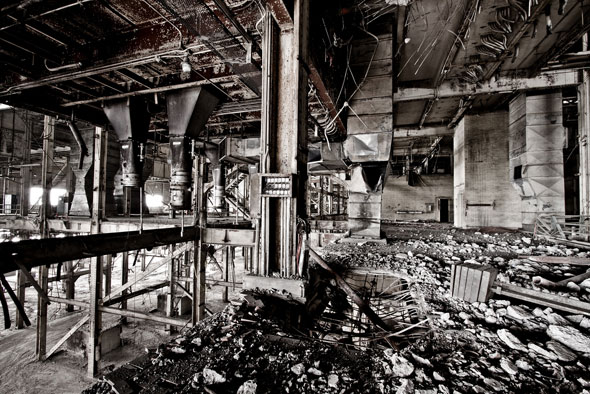
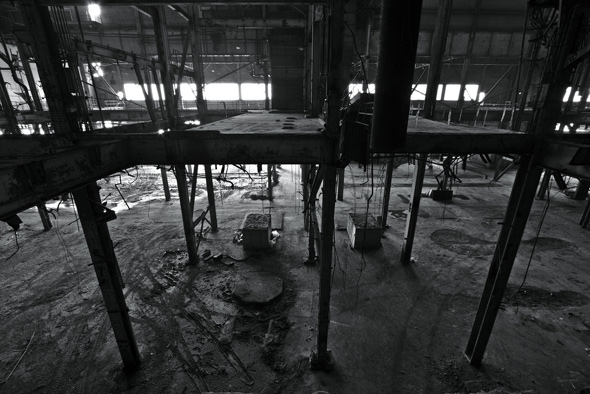
With its turbines long removed, the deep gullies left behind give a wonderful sense of depth...
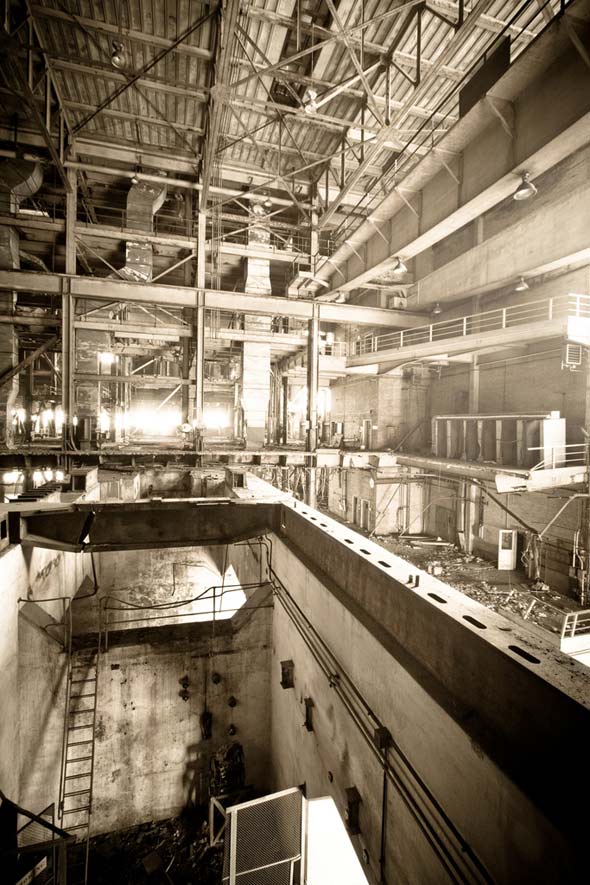
Although many of the stairways, catwalks, and equipment have been cut, dropped, and (finally) swept out of the hulking giant, some of the metallic intricacy and detail can still be seen across the way...
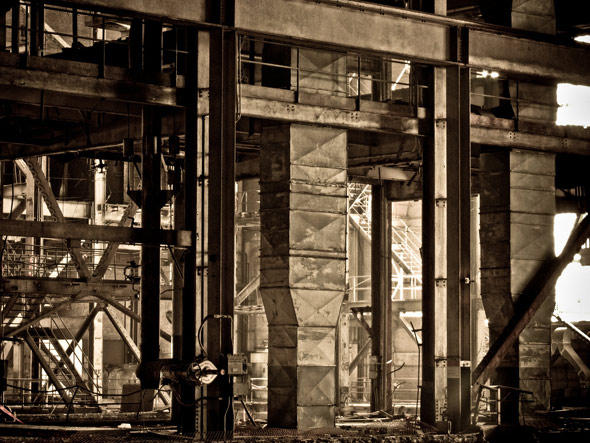
A deep fog passed through the buildings many holes on our recent visit, which although beautiful, created the ominous sense that the building had no discernible end - a sentiment expressed to me by an ex-plant worker recalling its operational days...
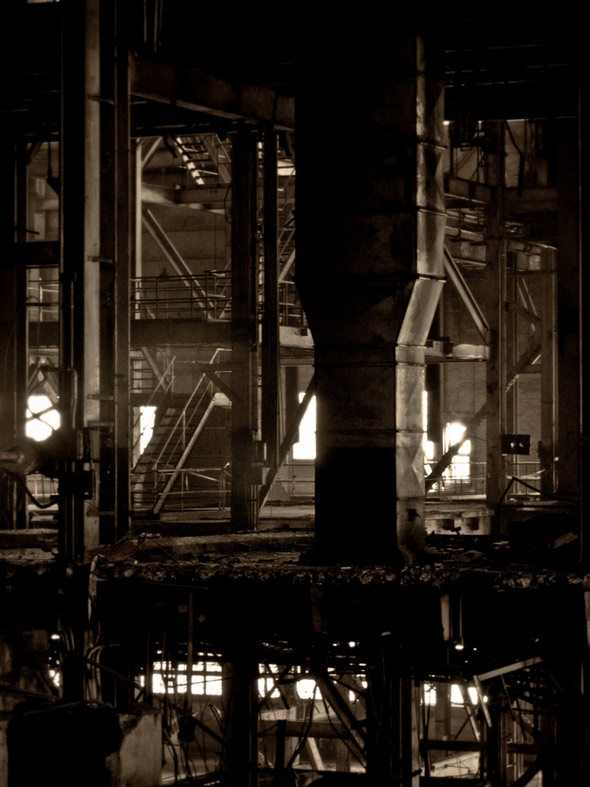
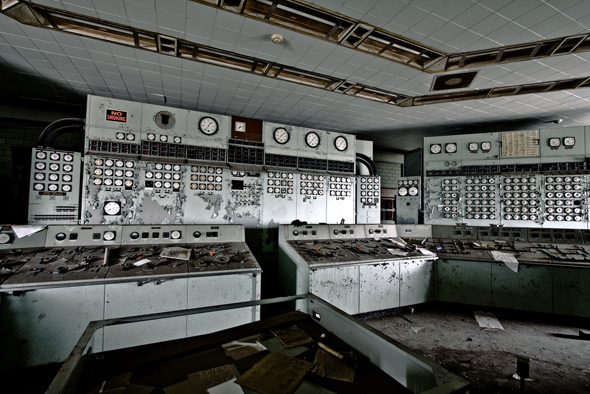
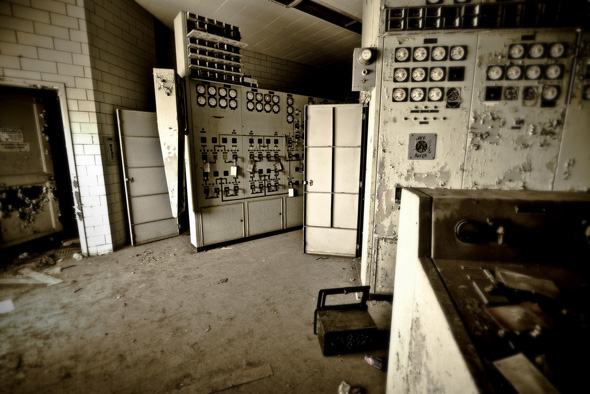
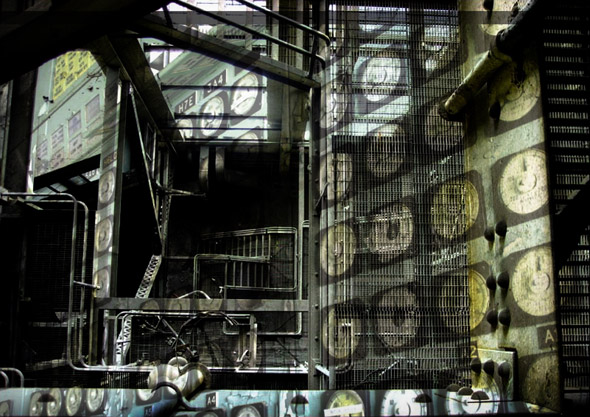
Initially hearing that the building was now no more than a shell, I was amazed to find that much of the instrumentation in the master control room -- although ransacked, stripped and vandalized over the years -- was still present! The very cold-war era green paint still manages to arouse in me a deep appreciation for all that took place inside these walls in its past life...
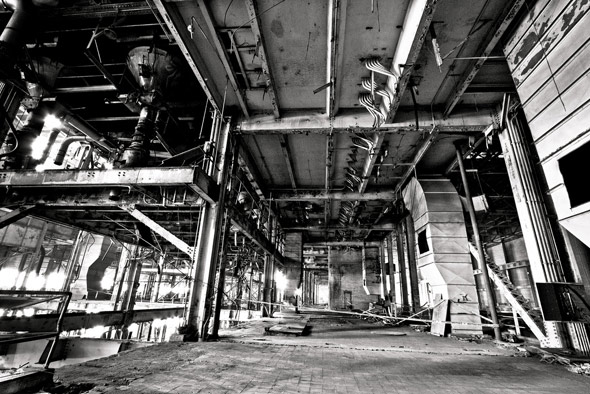
What was a wasteland of fallen debris and machinery in years past on the ground level is now a cleared out wash of dirt, rusty residue, and tread-marks...
My feelings and memories of the Hearn will always be muddled; in order to revitalize historical industrial space, it unfortunately needs to be made profitable. However, if this is pursued as an end in itself, rather than a means to preservation, one ends up with a space torn in so many different directions, that there is nothing left to do but take it down, piece by piece (it's use as a film-studio, for instance).
For so many decades, this iron and brick giant has sat conspicuously at Toronto's foot. It is only the industrial silence, however, which ever drew me to it. In a dramaturgical sense, I view its current state as the acting out of a tragedy -- the stage's fourth wall already dismantled.
This loss, however, can serve as a warning for similar projects in other parts of Ontario which have yet to enter their final phases. Over the next few weeks, I will show you several other decommissioned power stations not far from Toronto, and I believe that the message will be very apparent - even if only though photographs.
That being said, I am glad to have had the opportunity to visit, once more, a place that over the years became very close to my heart. Returning to places like these has always been a very difficult affair for me, for as memory and imagination increase in intricacy, the places themselves tend to diminish, until nothing is left but a series of photographs.
"We will not cease from exploring and at the end of our exploration we will return to where we started and know the place for the first time" (TS Elliot).
(To see the rest of the series, as well as high-res. versions of those above, you can check out my flickr slide-show below. Also, you can check out my original article on Hearn here.)


