Lighting Up History Around St. Lawrence Market
The city of Toronto launched a new night lighting initiative, highlighting heritage and historic buildings in and around the St. Lawrence Market neighbourhood Friday night.
Perhaps a little overshadowed by Toronto winning the bid for the 2015 Pan American Games, this celebration was somewhat subdued. That didn't stop about 100 of us from getting a small tour of these buildings by local historian Bruce Bell.
St. Lawrence Market, St. Lawrence Hall, the Flatiron building, St. James Cathedral and the south façades along Front Street (south of Berczy Park) now look much more majestic at night now, highlighted with theatrical LED lighting.
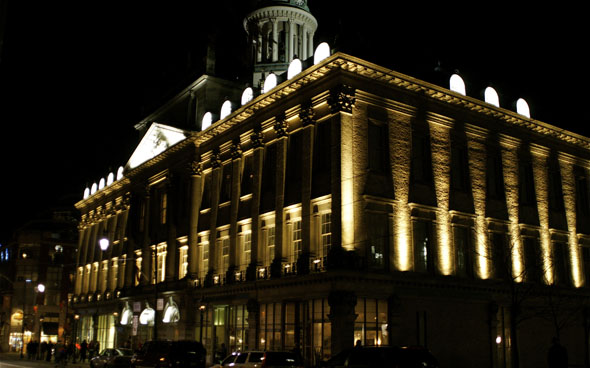
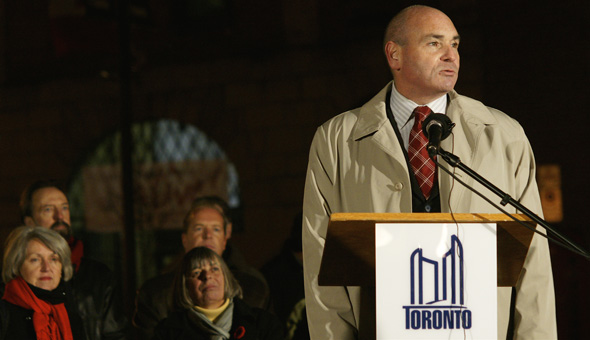
Ontario's Deputy Premier and Infrastructure Minister George Smitherman was on hand at the ceremony, where they flicked the switch, shortly after it got dark.
The Gooderham "Flatiron" Building, built in 1892 by architect David Roberts, was among the historical buildings to get the LED treatment.
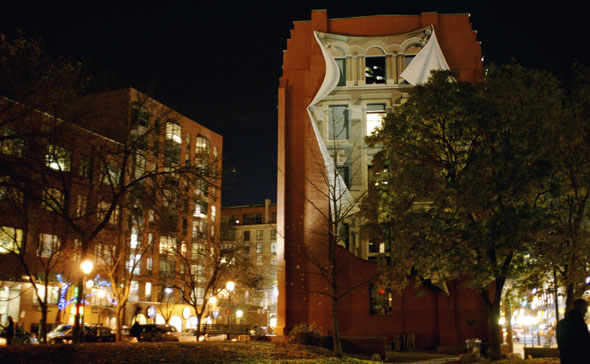
The lighting demonstration showcased what this Heritage Lighting Project will grow to become. While the majority of the lighting is on display for the weekend's events only, some of the new lighting is a permanent fixture.
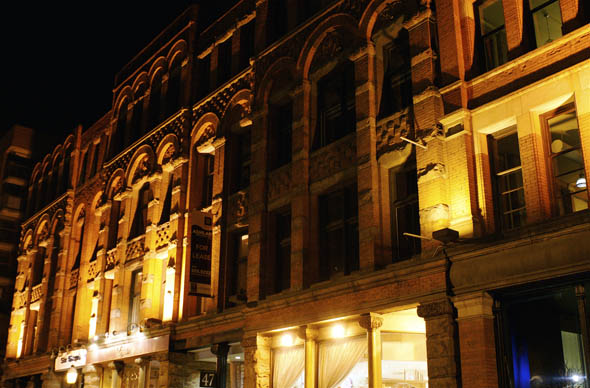
The Heritage Lighting Project is part of St. Lawrence Market's 205th anniversary celebrations.
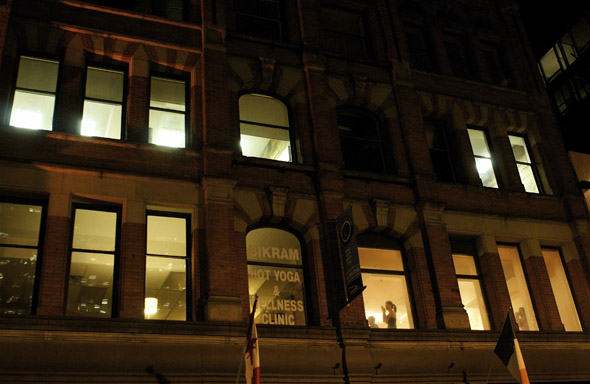
Toronto Hydro is organizing a festive light exchange in conjunction with this new display of lighting in the St. Lawrence Market neighbourhood.
If you bring in two strings of energy-guzzling incandescent lights, they'll give you a replacement string of free LED lights. The exchange will be held in front of the north market on Saturday from 10 a.m. to 1 p.m.
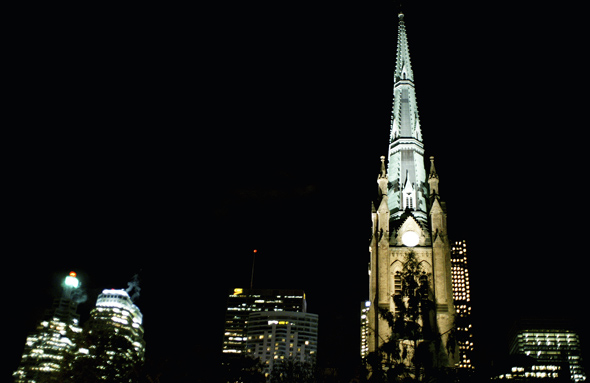
Perhaps the most majestic display was saved for last. When they flipped the switch, The St. James Cathedral lit up the sky, its bells loudly chiming into the chilly night.
Comments (16)
Is this permanent then? Isn't it a waste of energy (even if they're LEDs or whatever)? Doesn't it contradict the kill-the-lights, save-the-birds initiative, somewhat?
Lookin good, I could care less about the power consumption. We are finally starting to highlight what we should be proud of. Right on!
The point of kill the lights save the birds is mostly office towers; birds fly into lit up windows not lit up concrete.
The city of lights, Paris France better watch out! Toronto is lighting up its history!!! Bird lovers, don't worry, the birds get lost hitting the skyscrapers and not low buildings. Hope this progresses from every Friday night to ALL nights.
It's a shame to see all the negativity here. This beautiful historic neighbourhood is filled with incredible buildings that many of us walk by every day without appreciating. I missed the opening, but in the photos the lighting looks very tasteful. Most of the lighting is only temporary. Toronto in the winter can be a grey and dreary place; a little bit of colour and light goes a long way towards making a neighbourhood feel welcoming and safe. Summarizing this initiative as mere "light pollution" seems unfairly harsh.
Light pollution, energy use, and winter gloom would all be mitigated if they had the lights on for, say, three or four hours after sunset.
Hate to come across as an ass, but night photography requires the use of a tripod. Not only are these photos awful (technically and cmpositionally), but they barely illustrate just how illuminated this area really is. Too bad, I would have loved to see some good ones.
That's the first thing i noticed with this article. The blurry photos. I've taken sharper photos even without a tripod. The blur was distracting but I think they were purely for illustrative purposes anyways. In any case good=article poor=photos
Awesome. Toronto does not have a good track record with properly lighting it's few, but key, historical buildings. This is a vast improvement.
The Ontario Legislature needs to come next though. So strange to have "ceremonial" University Avenue end in a blur of darkness when all of us that live in the city konw that a big honkin' important building is located there.
Congratulations Toronto for your heritage lighting but be aware that a little knowledge about the effects of light pollution on the night skies can be minimized by controlling up-light. Wouldn't it be wonderful if we could call ourselves "the city of nights" rather than the "city of lights" by carefully controlling ALL city lighting, saving energy and the night environment to boot without sacrificing our safety.


RSS