City
The TTC Metropass Mess
If you commute downtown to work on a daily basis, picking up a Metropass is a no brainer. It allows Torontonians to access the transit system whenever they please, even if the destination is only a few stops away. Since its introduction in the 1980s, the pass has been the preferred fare payment of TTC 'regulars.' It has, however, recently come under public scrutiny.
When the pass was made transferable, it definitely patched up a small hole in my pocket. Before I moved out, my roommate and I would split a pass every month. I worked during the day, and she worked during the night. Our household was able to use one Metropass - for the cost of two. With many similar living arrangements in the city (especially among students), I am not surprised that the TTC is projecting a $17.4m deficit.
What's worse? The $20 million and change that was saved during the garbage strike will now probably be used to cover the gap. On average in Canada, 60% of public transit operating costs come directly from money paid by the user (compared to 40% in the US). Due to this large percentage, a change in fare practices could affect the total yearly-revenue quite easily. The rest of the cash is supplied by Federal, Provincial and Local governments. I believe the sudden change in Metropass restrictions is why the TTC lost so much, so quickly.
As operating costs rise, so do fares; it's inevitable in any transit system. In November of 2007 the price of the adult Metropass went up to $109 - in order to save money you would have to take 49 trips (42 if you include the tax credit). Soon after, the pass was made 'transferable' - a definite incentive to purchase one.
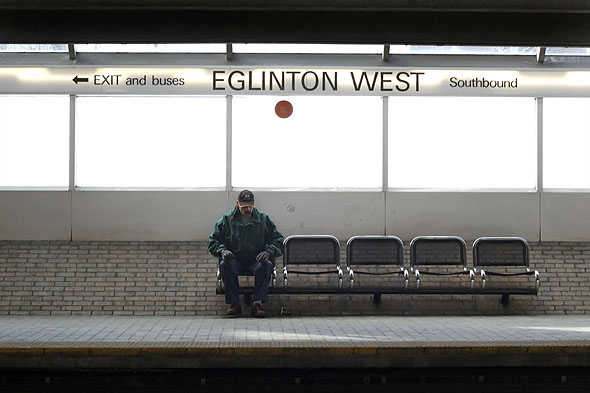
This was an attempt by the TTC to make the pass more valuable while retaining a steeper price point, but now it has come at a cost... a $17-million cost. With ridership projected at a record 473 million trips this year, shouldn't the TTC, if anything, be making more money? The transferable pass is to blame, and I, as many others, saw it coming.
Although the Metropass is a key culprit, spending on extravagant projects may also be a cause. I'm talking about the projects that make the system more visually appealing, instead of actually improving service. The $5 million used on Museum Station could have definitely covered a large portion of the deficit. In addition to this are other initiatives, such as purchasing your Metropass with AirMiles instead. A move that costs the red rocket some additional capital.
The end result? I smell a fair hike in the near future. Mayor Miller promised that one would not take place in 2009 as Torontonians are struggling with the recession. I'm extremely confident that one will take place in early 2010 in an attempt to keep the TTC's budget balanced for the following year. The other solution is to make the pass non-transferable again, which would ultimately enrage many commuters. Either way, one thing is clear - the TTC has a mess on its hands once again.


Discussion
78 Comments
Sort By Oldest First / Newest First
Subscribe
idea what they're doing.
"...exorbitant salaries the TTC pays their employees." Do you know how much they pay them or are you just pulling this out of your ass?
From the TTC website: http://www3.ttc.ca/Jobs/transit_operator_drivers_recruitment.jsp
"As per the Local 113 ATU Collective Agreement, the starting hourly wage rate for this opportunity is $21.90 (rate after training) to 28.57 (ater 24 months)."
Assuming a 40 hour paid week, that equals from $45,552 to - $59,425. Is this "exorbitant" to you? If so, perhaps you should apply - just click the link, and you can better your life.
http://stevemunro.ca/?p=2638
On what premise, for the love of god, did the TTC conclude the MetroPasses are the source of all its woes? might it not be their poor forecasting? resource mismanagement? unions? lack of funding? If they increase the price, will the loss of users be made up for by the higher revenues? for a lot of metro users that use the subway to commute to work, using tokens already makes sense over the pass, and that means that anytime that is not rush hour, they revert back to driving, as i have been doing.
The TTC is subsidized by tax-payer money precisely because it brings social benefits that (when its workers do not strike) far exceed its immediate monetary cost to its users. Of course the TTC loses money with every rider - the city benefits from reduced traffic (lost productivity), pollution, and the myriad other benefits of public transportation, and hence it is (or should, if it does not do so sufficiently) footing the bill for the difference.
It is hardly news that for the available infrastructure, the TTC fares are exorbitant by any benchmark, or as compared against most (certainly the ones i've used) public transit transportation systems in the world. The fault is probably not limited to their unions or management, but also the very city and province that, by the same global standards, heavily underfund the enterprise. But as the critics of their current rationale note - to point the finger primarily at its users, especially its most dedicated ones - exceeds the stupid and irresponsible.
Geezus - where do city workers get their entitlement from? Let's look at what the real world pays - and it's far less than $22 an hour to start in a menial job (like sitting on one's ass, snarling at customers behind a ticket booth all day!) Or $22 an hour to sweep floor (and smoke cigarettes in a closet half the day!) I've seen these guys in action and they sure as hell are not worth $22 an hour!
I'm not saying I would want to do these jobs, but if these jobs were put up for competition, the pay scale would drop. If the front line workers don't like it, get an education like the rest of the world and 'earn' their living.
1) Museum Station Reno - most of that was funded by the Toronto Community Foundation
2) Air Miles Metropass - Air Miles still pays for the passes. It's not like the TTC is giving them to Air Miles for free.
Also, to use a capital expenditure, such as a station renovation, to fill in gaps in operating budgets is just a ridiculous notion. Where will that $5-million be next year? If we kept bleeding money from state-of-good-repair capital projects, we'll have stations collapsing, trains constantly breaking down, and god forbid, switches in such bad condition that they contribute to disasters like the 1995 Russell Hill subway crash.
1. More convenient
2. More extensive
3. Less expensive
I'm not a daily rider and I find $2.75 already expensive for the rickety streetcars that move at a snail's pace until they breakdown and clog up the line...only to transfer to a subway that lets me off at some random station...from where I still have to walk another 12 blocks to my final destination.
Is somebody pocketing money on the sly? I just don't understand how this could be the public transport system for the greatest city in Canada!
Not very well done article BlogTO.
If you factor in the overtime and benefits, as well as the job security, we are overpaying for unskilled labour.
Hey, I'm all for everyone earning a living wage. But I'm paying a very sizable chunk of my *considerably* smaller salary for a service that isn't working, and if the fares go up again, I'm not sure I'm going to be able to afford it. I WISH I earned even close to what these guys are making. Maybe I'll have to quit my job and work for the TTC! So yes, I think those salaries are exorbitant, especially when the system is as terrible as it is.
That said, I might not mind fares being more expensive if the TTC actually worked well.
In addition to all of that, I'm sure the new cards cost significantly less to produce. It couldnt have been cheap to use the photo system. Hell, they can sell metropasses at retailers now eliminating the need to pay an employee's salary.
I highly doubt the TTC is making less money now because of the transferable passes. It's probably quite the opposite.
But they aren't the problem, the problem is the lack of funding from the provincial and federal government. The TTC doesn't receive anywhere near the subsidies that other transit systems in North America and has to fund itself primarily on fares. It's harder to vent at something
So, people like Alex Fayle, tell your laughing Spanish boyfriend that our transit system is shit because Canada is not Spain. We face an entirely different constellation of problems and we have different financial priorities. Should we all laugh at Spain for being 16th on the UN's human development index, while Canada is third? Stop being obnoxious.
Royson James covers the structural underfunding of the TTC in this article published yesterday: http://thestar.com/comment/article/700152
"The TTC is better than most systems in covering 71 per cent of its budget from fares. U.S. transit systems recover only 40 per cent to 50 per cent from the fare box. But even 71 per cent isn't enough.
Here's the dilemma. Transit users want more and better service. Users can't pick up the full cost of a trip. The general property owner is not about to embrace higher property taxes to cover the subsidy. The provincial and federal governments will not commit to long-term, permanent funding. And the beat goes on.
We need some new approaches to funding transit. But politicians running for mayor are not brave enough or bold enough to tackle the elephant in the budget room. They'll talk about poor management and cost savings and fiddle around the edges. They won't embark on the comprehensive, costly and politically charged initiatives that this requires."
Somebody up above made a comment about how if it was all privatized, TTC salaries would go down. No shit sherlock! Are you saying YOU love that kind of situation yourself? Wouldn't you prefer a union helping you get a better wage? Or maybe you just want to bring down anybody who has what you don't have.
P.S. By the way, the Montreal Transit System's pass is $68.50 a month so why, when we pay $109, is our system so poor?
http://stevemunro.ca/?p=456
Again, people here complain about it being "unskilled". These free marketeers also seem to forget about something called "supply and demand". There's a huge washout rate for people training to be operators, 35% according to one of the comments on that post. If it is so unskilled, how is it that one in three applicants fail the training? If graphic designers and IT people aren't getting paid as much, the reason isn't because you're uneducated, it is because there's too many of you going to school for it and you get to compete with foreign workers who will do it for a fraction of the cost. Why is it that so many on here complain how little they get paid, yet rather than do anything constructive about it like apply for one of these high-paying jobs, would rather tear down others?
That's when the resentment comes. "How can a bus driver make more than me? I have a degree, I'm supposed to have higher social status! I'm supposed to make more money! They are supposed to be poor!" Seeing there is no way they can get more money, they want everyone else to earn less than they do.
Even if it doesn't affect you directly ddt, other people have a right to be concerned about this issue.
From: http://www.toronto.ca/demographics/pdf/2006_income_and_shelter_costs_briefingnote.pdf
"Average annual income in Toronto was $80,343 for households...."
But hey, don't let facts get in the way of your hate-fest.
-ttc will continuously bleed money and face deficits
-ttc customers will inevitably face fare hikes and bad attitudes
HOW CAN THIS BE FIXED?
Why don't they have a transferable pass for a little more -- say $120 -- and keep the monthly pass at $100-105?
How about maybe everyone, including to some degree the public. The TTC is broken, and no matter who you ask it's always someone else's responsibility.
Before you blame anyone else, ask yourself - What can *I* do?
I know a tonne of people who get metropasses (myself included) and don't often ride the ttc 10+ times a week. It's a rip off in itself. I don't know enough about the TTC's budget to do anything but speculate, but it seems these folks can't effectively run this service.
I agree completely that the problem doesn't come from Metropasses or driver salaries - it comes from more than forty years of a complete lack of vision for public transit in the GTA. Look at the Bloor Viaduct - built in anticipation for a possible subway system that hadn't been approved yet. That's forward looking. What has happened since then that has that kind of forward thinking in Toronto's transit world?
Going back to the Madrid transit system, when they build new stations, they prepare them for future lines because they have an expansion plan in place - they don't build one-off projects that don't relate to each other.
Of course it helps that Madrid is the capital of the country so the political and financial power of the country sees transit as a good thing, but Barcelona, Bilbao, Sevilla and the high speed train network between cities all point to a unified vision of transit. Anything even remotely like that in Ontario? Or even southern Ontario? Oh right that GTA body that doesn't seem to do anything...
As for other things, yes, I do point out to my boyfriend all the shortcomings that Spain has in comparison to Canada (like housing standards). After all turnabout is fair play. ;)
On top of all that, of the people who do share a Metropass, how many of those people would buy a Metropass if they weren't transferrable.
Once we know these two variables, we would have a better understanding on how much, if any, of the $17M deficit is due to the introduction of the 'transferrable' option.
Also, people tend to ignore concepts like cost-push inflation when defending spiralling wages. Ever wonder why even just 40 years ago an average car cost about $3,500 and now an average car cost $35,000? If one large group of workers paid for by public funds makes higher and higher wages then the next public secotr group argues for the same (our most recent strike). In turn the money must come from the public and businesses. Businesses must increase prices to recover higher tax burdens. Accepting the union-supporting argunment that union wages bring private sector wages up or else employees will leave for these public sector jobs (yeah, right, if they know someone and can get in) then to recover the higher cost of labour the businesses must again increase prices. This further creates a situation where, given wages linked to inflation, the union demands more money and sets the process off again.
This is how you get wage disparity and so-called "barely living wages". Also, what is a living wage? Is it defined by merely having money for food, rent and clothes? Or does it include being able to buy more than one car, a house, take vacations, buy big-screen TVs and other toys? If it is the former, then $12/hour will aloow you to live. If it is the latter, then let's make the "living wage" $100k or $200k. See how ridiculous it gets?
Its fun to cherry picks stats isn't it?
Because 1 in 3 people are hopelessly stupid. I am not surprised anymore by the depths of stupidity floating around in the human race. Really, if you can't count and press a button or are able to write a little sign that says "deposit fare and walk through" while you disappear to wherever the collectors go (maybe washroom but maybe to smoke - seen that many times) then you are truly a moron.
Thank you Bradley and Vlad for pointing to some actual facts re the TTC $17M shortfall. The one tidbit noted in teh article (again slightly erroneously charactized) about the proportion of budget derived from the fare box goes to the heart of the matter - the Metropass is not to blame. Rather, riders of the TTC assume much more of the cost of the PUBLIC transit system (a public good) than elsewhere in the world. A fact debatable as a principle, but again nothing to do with the Metropass being a source of funding shortfalls unless you advocate for a system purely funded by fares (which no world-class systems do).
A more worthy debate would be the breakdown of funding (not supplied by the fare box) by level of jurisdiction (municipal, provincial, federal) and then extended to the ability of the various jurisdictions to raise revenues (i.e. taxation levers etc).
Hear hear!
I gross $45k -- $24/hr -- 1.5 yeras into my comfortable, comparatively stress-free office job... almost exactly the same as the base salary quotes above for a new TTC operator. After taxes (which I do *not* feel are excessive) and debt payments for the bachelor's degree, college diploma, and master's-still-in-progress I need to land this job I just barely make ends meet. No savings to speak of, no car, no kids, no vacations, no second bedroom in the tiny basement apartment my partner and I share... and no hope of any of those things changing substantially in the next 10 years.
Am I put out by the fact that someone who works harder than I do in a much more stressful environment manages to make just as much as I do (with more wage growth over time, to boot) without spending 10 years and $60k+ on post-secondary education? No, I'm not. I'm interested in transit, but I know I wouldn't last a week as a TTC operator. My guess is that most of the armchair compensation and labour relations experts here wouldn't, either.
That said, those who complain about TTC operators being overpaid oafs doing unskilled work don't know what the hell they are talking about. Yes, the job does not require a university degree but that doesn't mean that just anybody can do it.
The bottom line is that about 35% of people the TTC takes a chance on FAIL during the training period which lasts 4-6 weeks depending on what the person will be driving. Since it costs about 12-20K to train each new hire, those who FAIL represent a significant expense for the TTC.
If candidates successfully complete their training, they must endure a 10month minimum probation. Needless to say, many operators do not make it past the probation because of various incidents accidents or inability to meet the TTC's rigorous driving standards. There are also those new operators who decide to leave within 2 years because they don't like the stresses of the work, find the physical demands too draining, are unwilling to work the weird hours involved (many find split shifts very draining) or unable to be as punctual as the job requires.
Bottom line is that with respect to the Operator positons, people who can do the job AND are willing to keep doing it are hard to come by. For all those who think it's a cushy job, feel free to apply... they are constantly trying to fill positions.
Paying people less, as many people on this site are suggesting, would just increase the turnover for this position -- and lead to significantly increased training costs.
TTC system is completely outdated, the new website is still like a joke. Where the heck did they spend the money on?? Can they not come up with something better? It's almost 2010....poor Torontonian....
So how did the TTC get so many customers despite its obvious shortcomings? Cuz we're all saps? Please. Cuz we can't afford cars? It is expensive to operate a car here, but the majority of rush hour riders have them, and choose to leave them at home. That's a remarkable reality.
Maybe the credit goes to our city planning, then. It makes it so easy to use transit, no matter the quality... or, maybe the transport system actually works with the urban environment.
So, despite the glaring problems -- wildly inconsistent customer service, relatively little traffic-free rail service, quaint fare-paying 'technology' -- maybe something is being done right.
Some of us here take the TTC a lot. We see daily stupidities -- and the more you learn about the commission, the more you see -- but what's the point of acknowledging only the failures and losing perspective on Toronto's understated, but real, successes?
Not at all. As some others have pointed out, it's not a particularly cost-efficient option. If you only use TTC to commute to and from work every weekday, you'll pay less if you buy tokens.
I can't tell you after being a citizen in Toronto for 27 years what a breath of fresh air the Vancouver transit system is. The TTC is a disgrace.
Need a Metropass? You can use your credit card at 4 booths around Toronto. Count 'em - 4. And enjoy the lineup and having to deal with some of the rudest service employees in the country. They installed some fancy new machines at a few stations - and if they haven't run out of Metropasses, you can buy one using just your debit card. Sad.
To suggest that any credit should go to city planing is laughable, what city planning? Doesn't seem that any has taken place in the last 20 years beyond build condos and bike lanes to nowhere. If people do take the TTC instead of their car it could also be due to the crappy roads and gridlock that arises from all that wonderful "city planning".
TTC should stand for Take The Car.
However, we also need to remember the money issues here, it takes a lot of money/time to do the necessary upgrades, a lot of which TTC doesn't have.
Well they should not receive any!
In Japan transit make profits.
We'll never make profit here with overpaid unionized workers and corrupted manager who pocket everything they can.