
Ontario's Forgotten Landmarks: Camp 30
Who would have thought that a group of unassuming, derelict buildings in Bowmanville, standing in the tall grass about an hour's drive East of Toronto, was once a Nazi POW camp which held some of Hitler's most notorious U-Boat commanders and captured officers? Several recent fires have partially destroyed this rare and beautiful property, which will soon most likely be razed to make way for a housing complex.
The historical merit of such a property was given in detail in a recent Toronto Star article. But I would like to show you Camp 30 as I saw it on a recent visit. These pictures remind us of the stories that remain here, stories which remain untold.
The property has passed through the hands of several owners since the infamous days of the Second World War, the most recent being
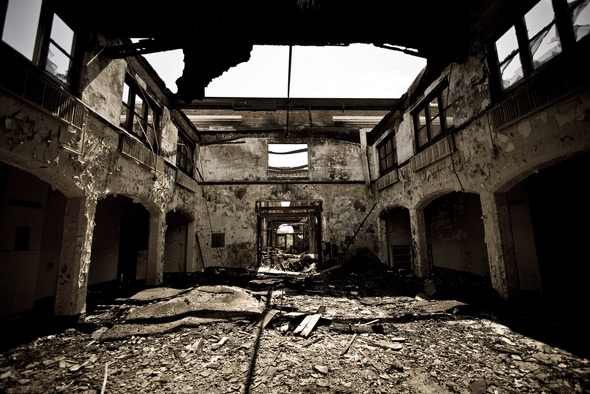
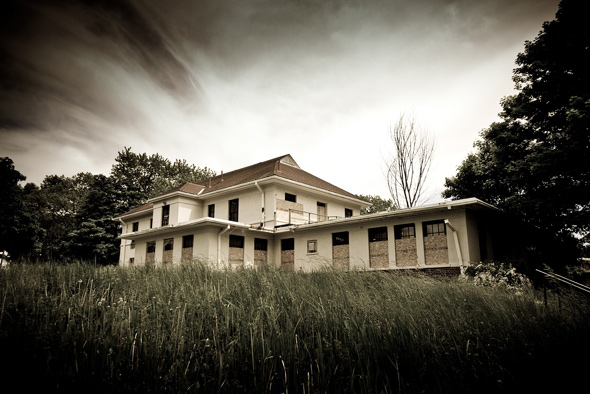
. The remaining artifacts in many of the buildings are rather scattered and random, reflecting the many uses the buildings have had since...
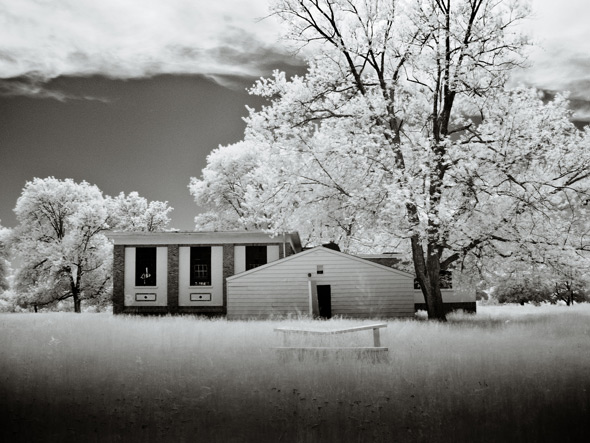
The smaller low-lying buildings reminded me of the cottages at the old Whitby Psych, with the grass swallowing up most of the walkways in-between buildings...
I used infrared techniques to capture many of my exterior impressions of the place, as the long exposures tend to capture a disturbing calm absent in most other kinds of photography...
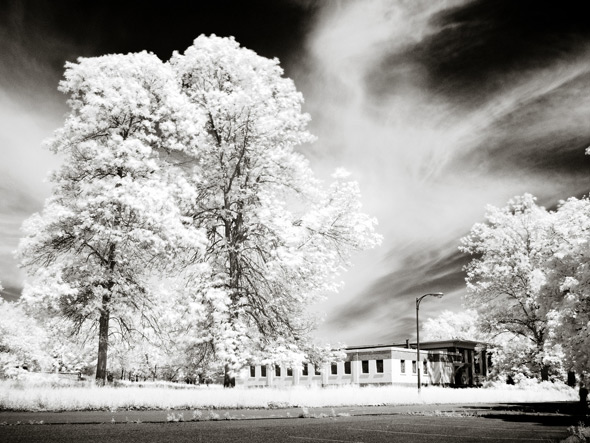
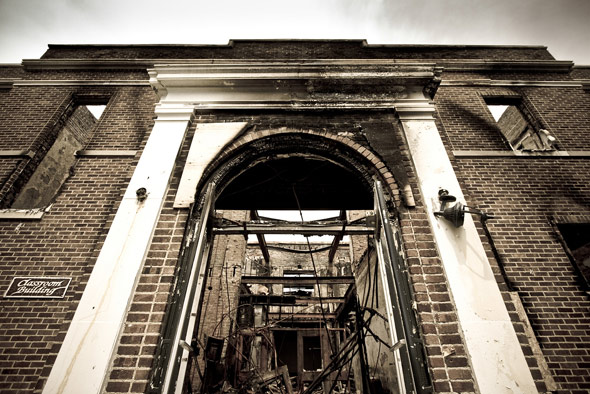
The building which contained an auditorium, gymnasium and classrooms fell victim to a serious fire some months back...
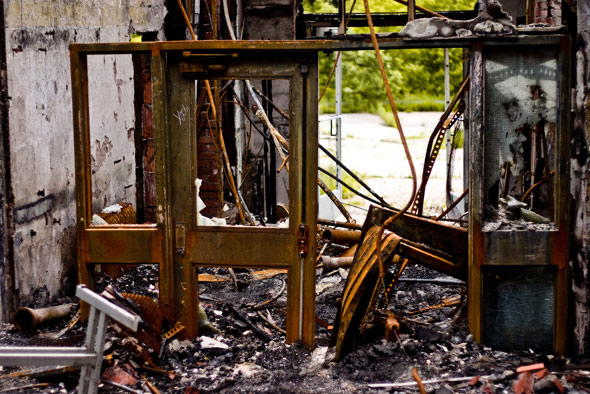
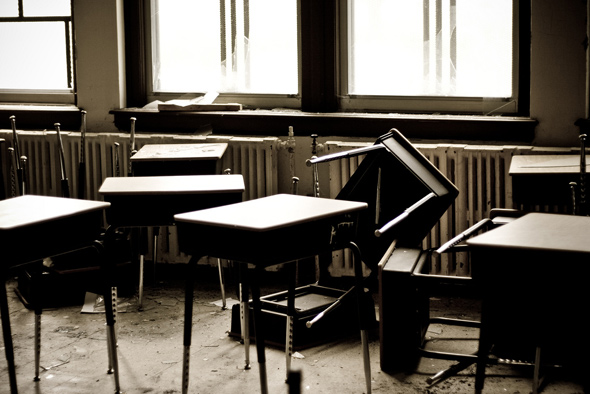
Some portions, however, remained unscathed...
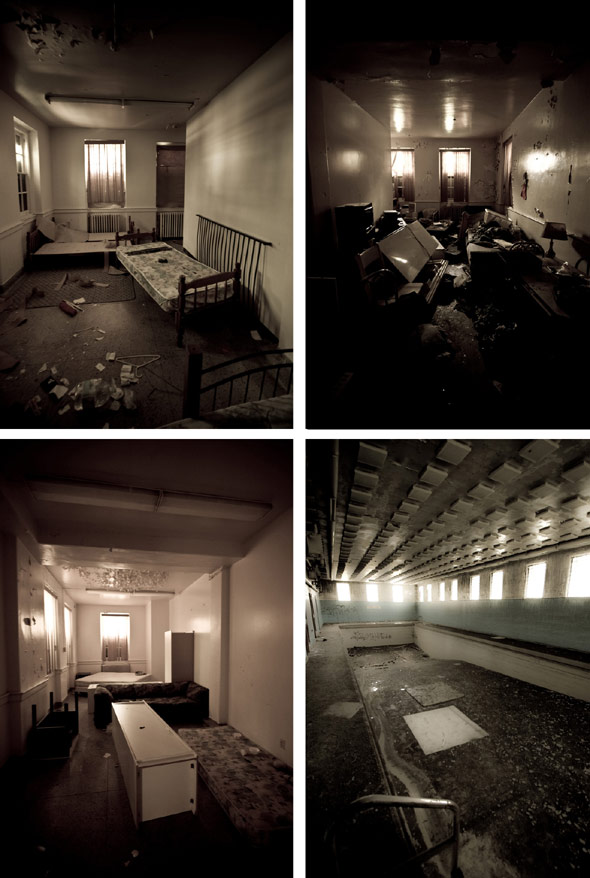
At least 3 of the smaller buildings still retain much of their contents - furniture, personal belongings (from the more recent residents), even an emptied swimming pool. For me, these 'found objects' add another entire level to exploring abandonments.
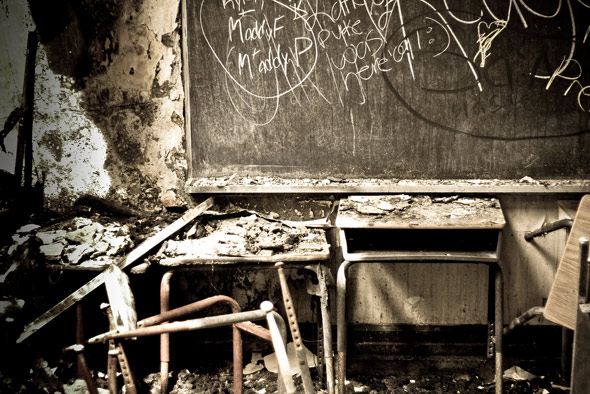
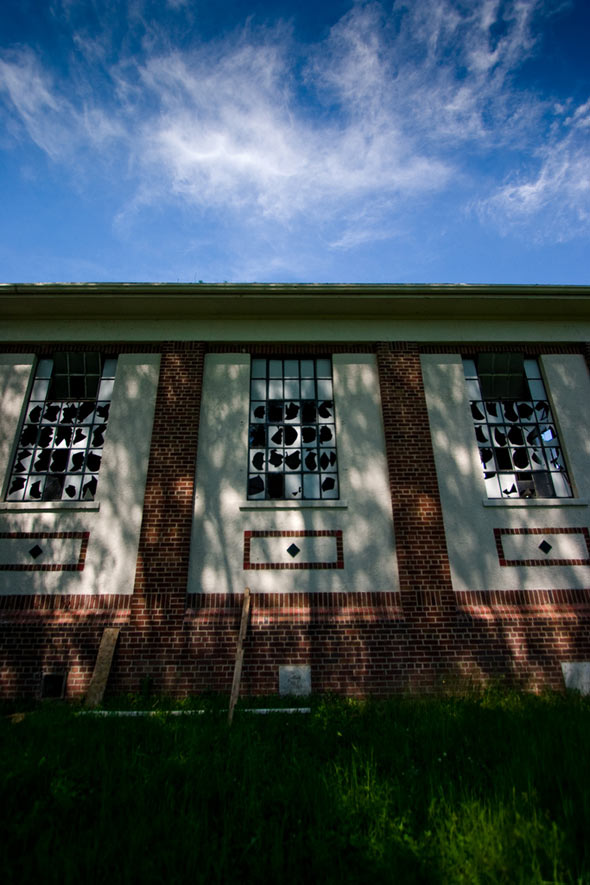
The recreation building was probably the most barren of the lot...
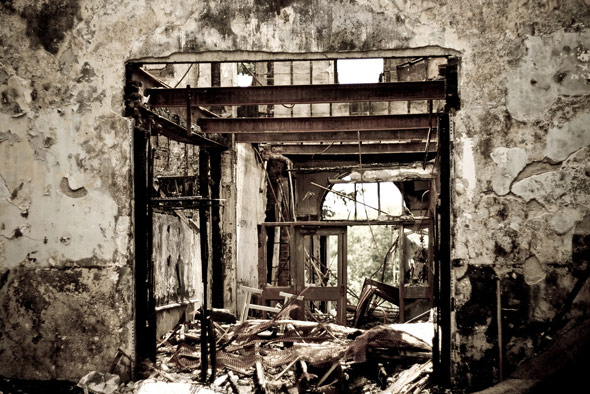
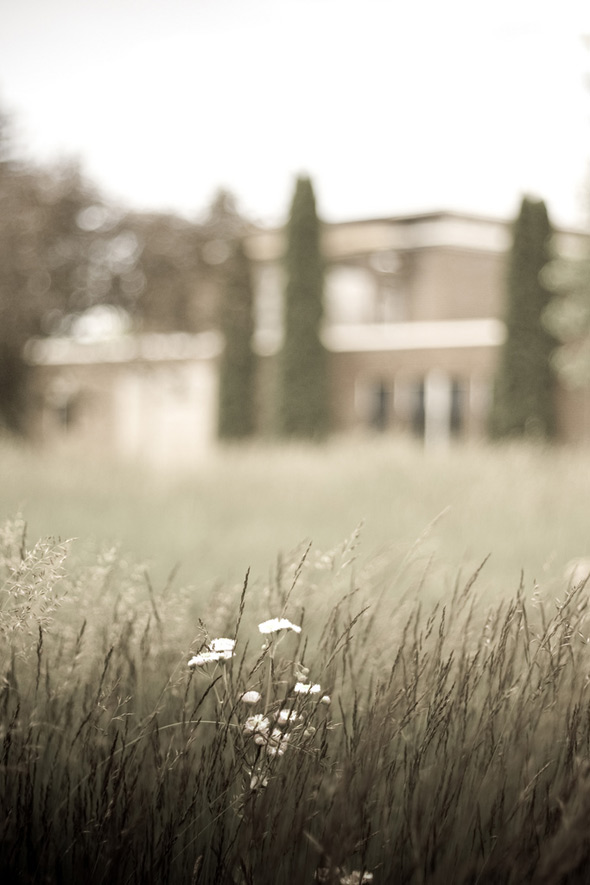
The tall, soft grass which covers much of the property creates a very dream-like atmosphere - and one very easy to be pulled into...
Einstein once said: "Nationalism is an infantile disease, the measles of mankind." During the ideological epidemic that swept through Germany during the Second World War, it seems that the Allied Nations had no recourse except quarantine. Indeed, the duties imposed upon civilized nations in those times made such camps a terrible necessity. But, in the absence of such dangers, it seems we are willing to consign such places to the ash-heap of history, willfully forgetting the burdens of the past.
These buildings are the living reminders of that strange chapter of Canadian history; the past we are erasing is our own. During the week in which we celebrate Canada Day, we should be proud that our sober country stood against an insane power. We should honor that memory, and the places where that memory remains.
(To see the rest of the photo set from this terrifyingly beautiful place, as well as high-res versions of the images above, please see my flickr slide-show below.)


