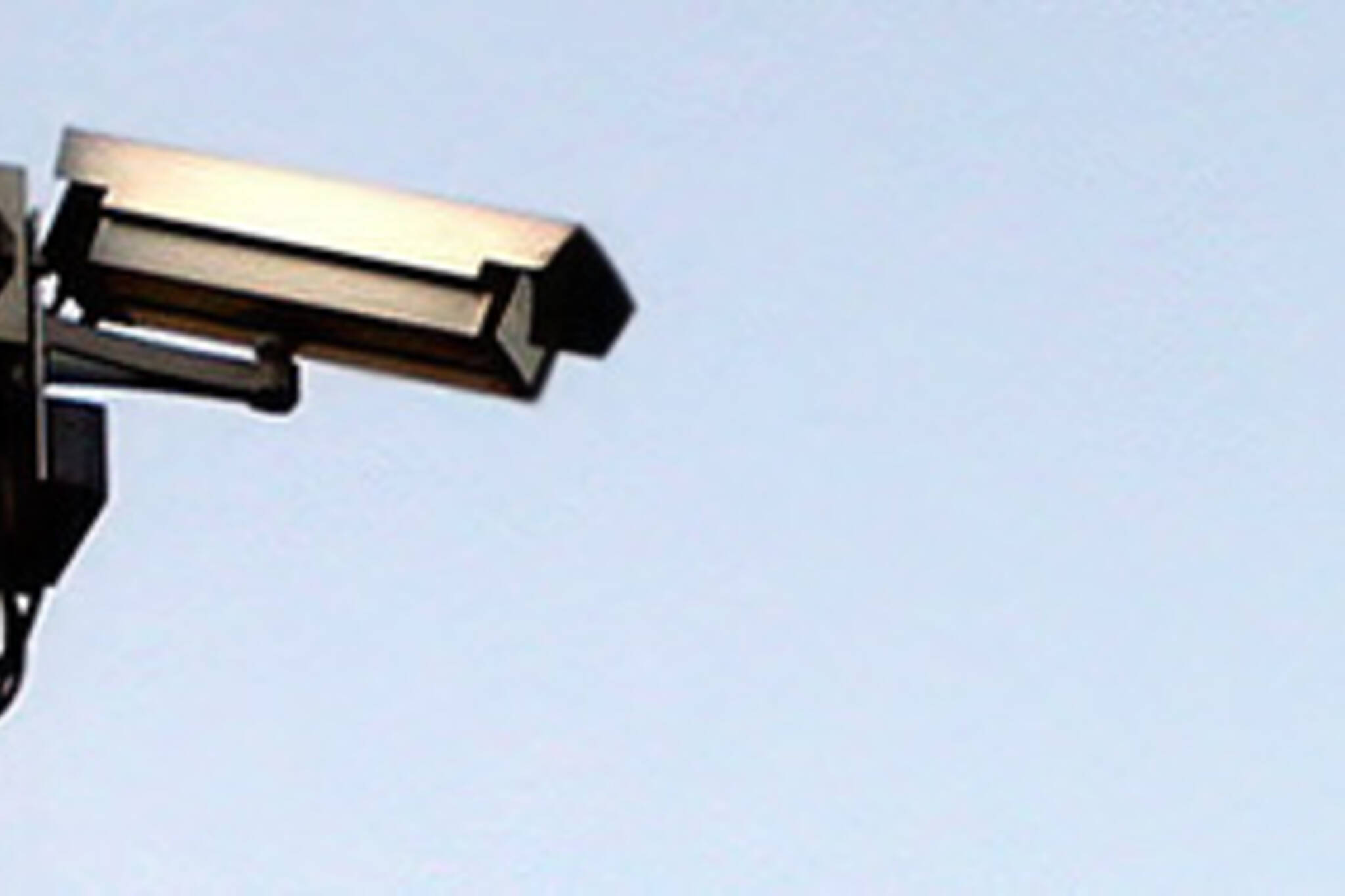
Video Surveillance in Public Spaces
Last week, when a hail of bullets were fired at a moving car at Yonge & Shuter, just a few steps away from the Eaton Center, I was instantly reminded of the horrific 2005 Boxing Day shooting.
Yesterday, Toronto Police Services issued a press release regarding last week's shooting, including still images (image1, image2) acquired from nearby private surveillance cameras that they hope will help them identify and apprehend possible suspects.
Would police have any leads were it not for the video footage? I have little doubt that the media will we be hailing the use of surveillance cameras should these videos lead to arrests and convictions. But should the police have their own cameras mounted on street corners and other public spaces?
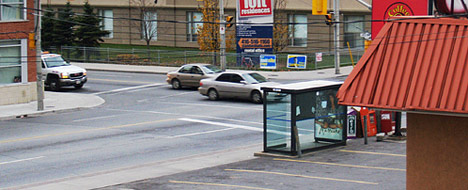
Does the public like the idea? A Globe and Mail poll conducted earlier this year suggests that the public is supportive.
Toronto Police have been asking for permanent video surveillance cameras to be placed in the downtown core in hopes that they will both deter crime and assist in the capture of suspects. The Ontario Ministry of Community Safety and Correctional Services has already committed $2million to the Toronto Police closed-circuit television (CCTV) project. Fights, stabbings, and shootings in various downtown areas including the club district are particularly problematic and happen far too often. But where are appropriate locations for the cameras, and should we be concerned about our privacy being compromised?
I spoke briefly with Detective John Babiar of 51 Division, who is heading the Yonge/Shuter shooting investigation. When asked about possible future locations for police surveillance cameras, Babiar was unable to comment. He did, however, suggest that with cameras already in malls, banks, and many other privately owned locations, we're already on camera in our everyday lives and when we enter into public spaces.
City property, including City Hall and Nathan Phillips Square already have surveillance systems in place, funded by the city budget. City if Toronto spokesperson Brad Ross assured me that these systems adhere to the Freedom of Information and Protection of Privacy Act and are only intended to maintain the safety and security of staff and visitors. Police occasionally request footage taken at city property entrances, exits, and parking lots. For the most part, footage is recorded digitally and anything older than 30 days is overwritten.
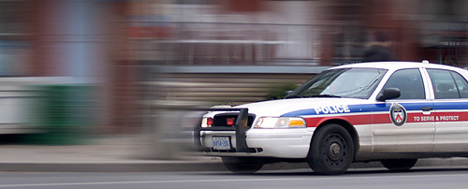
In addition to the Toronto Police program proposal for CCTV cameras in public spaces, and according to the most recently published minutes of the Toronto Police Services Board, another program involving mobile video cameras is already in the works. An ongoing pilot program currently has in-car cameras in 18 marked patrol cars. A report on the pilot program is expected in March of 2007, and Toronto Police hope to have 450 cars equipped (at a cost of $11million) thereafter.
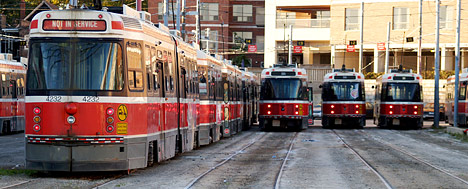
We also recently saw the installation of cameras on beginning on TTC surface vehicles.
All of these projects make a lot of sense to me, since they likely will act as crime deterrents and enhance employee and public safety. To be perfectly honest, I'm not particularly concerned about additional cameras in public spaces. If I were a victim of crime, video evidence that would help convict those responsible would be welcome. As long as implementation and use of the systems are ethical and carried out as proposed on page 76 of the draft policy, the thought doesn't bother me.
The City policy states that, 'proper video surveillance, where deemed necessary, is one of the most effective means of helping keep City facilities and properties operating in a safe, secure, and privacy protective manner.'
Do my fellow Torontonians feel the same?
(surveillance camera photo: Moe)
Latest Videos
Latest Videos
Join the conversation Load comments