Saturday, May 26, 2012Mostly Cloudy 21°C
Film

A Drink, A Sofa, and A Remix Manifesto

Posted by Chandra Menard / March 12, 2009

Richard CrouseCanada Screens hosted a fete on Tuesday, screening and discussion panel at the Drake Underground for Brett Gaylor`s copyright-defiant doc RiP! A Remix Manifesto.

"I'm an old school geek!" Gaylor wrote via email yesterday, explaining how he got onto the subject. "I sort of grew up at the same time as the internet, watching it evolve from terminals and telnet to the World Wide Web. There was always this tension between the Internet ideals of information sharing and the existing corporate models. When Napster emerged, I knew that this had reached a certain peak, and I began thinking about how to make a film about copyright and culture."

Do copyright laws stifle creativity? In the film, Gaylor argues that mega corporations have the most to gain from intellectual property rules, and that creating requires "sharing".
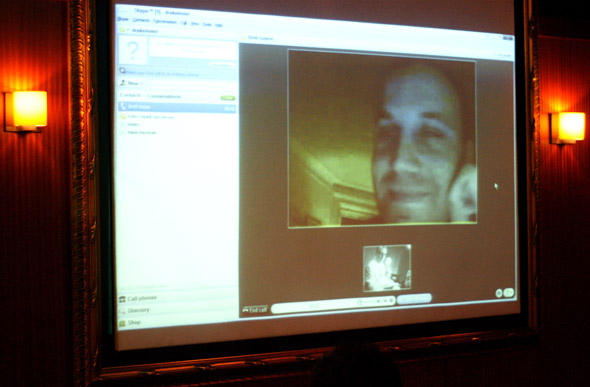
Brett Gaylor on Skype

He spends a lot of time following biomedical engineer-turned-remix artist Girl Talk (Gregg Gillis). The music mixer is openly experimenting with pushing the boundaries of infringement laws. Gillis admits to blatantly sampling between 200 and 250 loops on his album Night Ripper, none of which he has obtained permission to use.

Taking advantage of grey areas in the "fair dealing" clause of the Canadian Copyright Act, Gaylor was able to legally use Girl Talk's music (and some sexy live clips) to make a point about the politics of sampling.

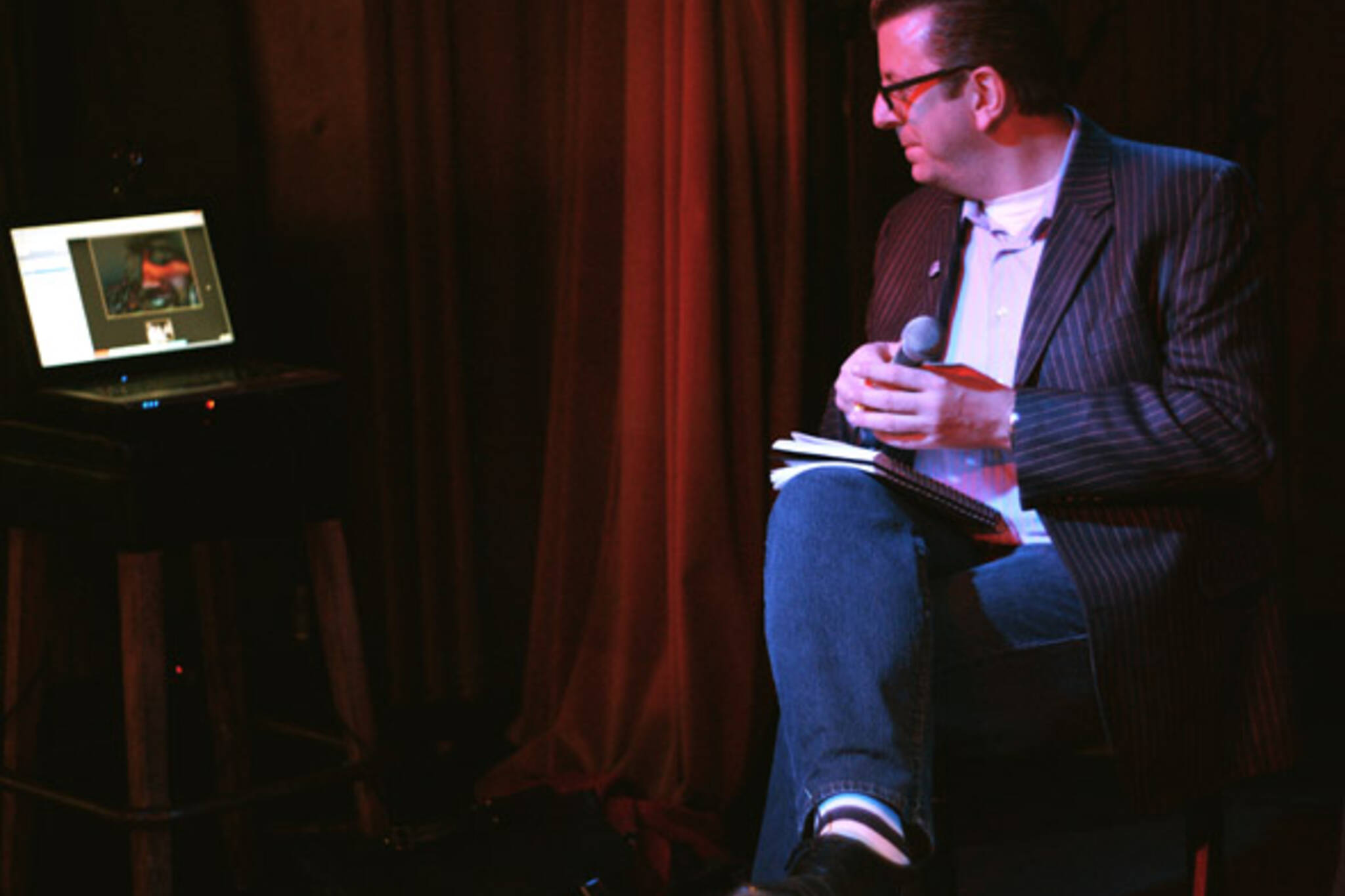
For this installment of the monthly post-screening Q&A series, Brett Gaylor Skyped in from his home in Montreal. I sit on a comfy couch enjoying the last of my wine with fellow blogTOer Roger Cullman, while Richard Crouse moderates a discussion about the film. It leads to a lively debate about copyright: maintaining artists' rights? a vibrant public domain? are they mutually exclusive?

RiP: A Remix Manifesto opens Friday, March 13th at the AMC & Royal. Photography by Roger Cullman.

Trailer:

Discussion

6 Comments

Mike / March 13, 2009 at 03:53 am
user-pic
I saw this at Ryerson tonight. I greatly enjoyed it. I am all for sane copyright law which fosters creativity and doesn't incriminate average citizens. I am really, really reluctant to criticize the film because I think the message is a very important one for people to hear.

However, I'm left wondering about the copyright license the film itself is under. It's a Creative Commons Attribution-Noncommercial-ShareAlike. This means I am free to redistribute and remix so long as I don't make any money from it. There's two big issues with this:

1) There's no download available. I can download the raw footage but not the film itself. I realize the license doesn't require that one actually release anything, but it does sort of go against the spirit of the license to not do so. After all, how can we share what we don't have?

2) Noncommercial clause. The film glorifies Girl Talk, the artist we all know and love who profits (substantially) from reusing other's work. Just don't do the same with this doc.

I realize it might be impossible for Gaylor to make any money from the doc if he releases it for free or drops the NC clause. It's a great film and he absolutely should profit from it if he desires. But on the other hand, isn't this a little hypocritical?
Mark / March 13, 2009 at 01:44 pm
user-pic
Not hypocritical at all. The NC means that someone can't take the entire work and use it commercially. It is different from the ND (no derivative works) which would prevent people from ripping parts of the film and creating a new project, or translating it, or transcribing it, or singing it, or whatever. The proviso is ShareAlike, which is the ethos of the film: together we're all smarter and more creative.
Mark / March 13, 2009 at 01:47 pm
user-pic
One more thing. The NC designation does not mean that no one (aside from the creator) can commercialize the work. It simply means that if you want to commercialize it, you have to have that particular conversation with the creator which is entirely fair and consistent with the message of the film.
Mike / March 13, 2009 at 03:49 pm
user-pic
Mark, it's not that simple. The NC clause grants no additional rights beyond what is already in an 'all rights reserved' license. Gaylor and Gillis both benefit commercially from other's copyrighted material in a manner which is possibly illegal.

By your logic the standard 'all rights reserved' doesn't mean that one cannot commercialize the work either. One just has to get permission to do so.

In practice we know that there isn't a shot in hell of getting EMI or whomever to sign off on that without a large chunk of money changing hands. Whether Gaylor is more likely to waive the clause than EMI doesn't matter. Would Gaylor be willing to release the work for a derivitave doc which is highly critical of his? Maybe, maybe not. By using the NC clause he is potentially hindering that voice from being heard. This is exactly what he argues against in the film.

He has essentially recreated the legal quagmire he's so deeply against, just to a lesser degree.

You also didn't really address my first point. The license permits anyone to take the film and post it on YouTube in its entirety. Why hasn't Gaylor done that himself? Obviously, he wants to make money from it. Doing that would probably prevent him from succeeding. But if he doesn't want it distributed for free he shouldn't release it under ShareAlike. How is that not totally hypocritical?
Brian McKechnie / March 13, 2009 at 07:07 pm
user-pic
When we asked him about his views on someone making money off his work all he said was he'd want credit. You can check out our interview with him here for more http://www.citynews.ca/news/news_32889.aspx
DBL / March 14, 2009 at 06:54 am
user-pic
Noncommercial clause is evil. Basically, it says, 'If you have no hope or ambition, then yeah, go ahead and sink your time into remixing my stuff.' It's the bullshit version of sharing. And adding the 'share-alike' on the end is just an extra kick in the pants -- you can't make money off your remix AND you have to give it away, too? What? Is? The? Point?

It's hard enough to make money as an artist without pouring any precious inspiration into a pre-locked box marked, 'amateur'.

As for Gaylor: chickenshit. All I have to say.

Add a Comment

Other Cities: VancouverMontreal