Sunday, February 12, 2012Cloudy -7°C
Arts

The underground opera, now in a Toronto tin shed

Posted by Ryan Bolton / August 24, 2010

underground operaThe underground opera has arrived in Toronto. There I am, walking along quick-paced in the west end's industrial area. Massive, condemned factories line the street with holes poked in their square windows. It's an area of the city, when dusk rolls around, that I take the cash out of my wallet and stuff into my left sock. When I reach my destination - a tin shed behind 128 Sterling Rd. in the industrial vicinity of Bloor and Landsdowne - I'm washed with comfort, yet bemused.

I'm here to see an opera. The so-called operatic mash-up from Opera Erratica, Orlando/Lunaire.
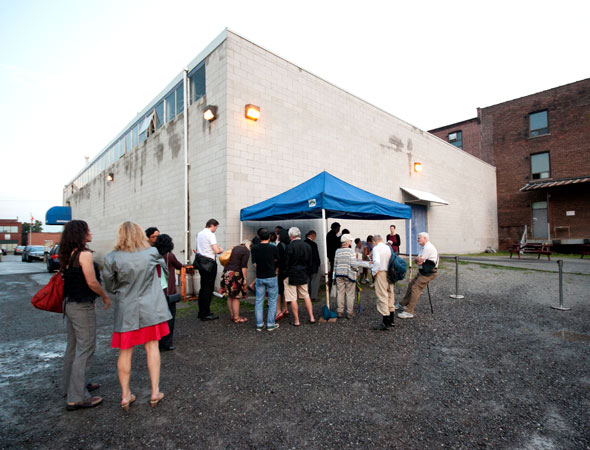
underground operaThis isn't your typical I'm-in-my-Sunday's-best night out to see a highbrow opera. Well, it might be. Avant-garde is one way to put it, but doesn't quite do justice. It's a collaboration in experimentation by a number of Toronto artists sewn together on a stage. And while parts work (the haunting and transcendent operatic voices, the sketchy but fitting physical environ, the modern-cum-classic costume design) other parts either fall flat or come off as simply pretentious, eruditely smug even.

Here's the low down. The opera is a pastiche of 18th century Baroque composer George Frideric Handel's Orlando and the expressionist songs of German translated poems by poet Albert Giraud in Arnold Schoenberg's melodrama, Pierrot Lunaire. Pieced together to form a semi-discernable narrative of 21 chapters (like Giraud's 21 poems), director Patrick Eakin Young, a genial and well-dressed fellow, wasn't out to construct a bite-sized opera. He was out to turn heads, perk ears and take the audience for a stroll in abstract performance art dressed as a manic opera. And for that, he succeeded.
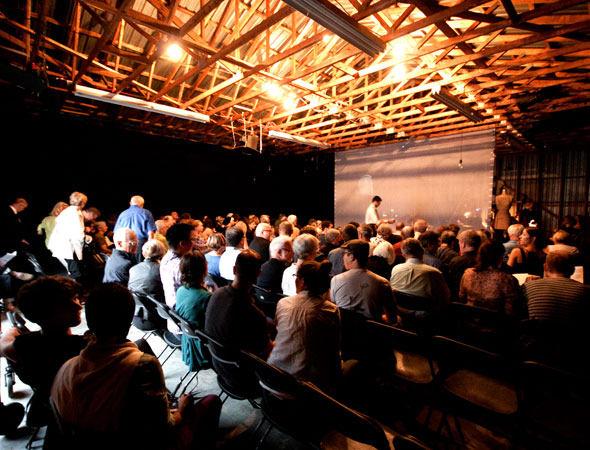
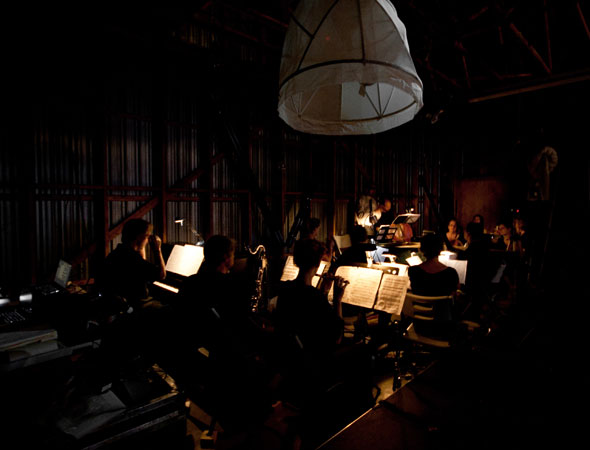
underground operaAs you sit in the tightly seated, er, theatre on plastic foldout chairs, bare light bulbs dangle above. The stage, raised about a foot or so, is only feet from the first row allowing for unbarred intimacy. (Then again, we are in a tin shed.) A white scrim divides the stage and the orchestra, which is manned by the multi-talented Ashiq Aziz. The music is inspired, but tends to become secondary to the voices of soprano Carla Huhtanen and countertenor Scott Belluz, who steal the show. The orchestra tends to jump from a quiet soundtrack to a boisterous noisemaker reminding you of its presence. Like a young distant cousin running around your house.
underground operaAs Huhtanen and Belluz divulge into the multi-characters, their dialogue - Handel's Italian and Schoenberg's German - is projected behind them onto the scrim. The words at times jumble around seemingly playing off the character's emotions and mental states. The language, albeit abstruse but nevertheless poetic, emerges from the lungs of the operatic singers with unfathomable ease and lights up the tin shed. And with minimal lighting, otherwise than handheld mechanic lights, local alternative fashion designer Heidi Ackerman's inspired pieces are a standout. The ruffled outfits - the costume changes occurred in front of the audience - add a modern fare to your formal baroque costumes.
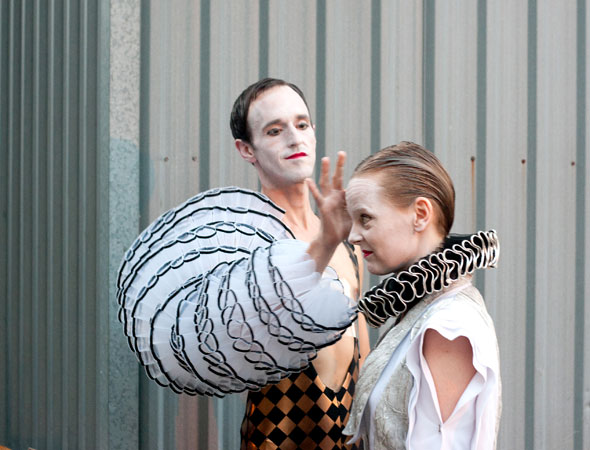
underground operaI caught up with Ackerman during the intermission. She explained that she was approached after this year's Toronto Alternative Fashion Week (FAT), where Ackerman's futuristic tinge and trademark knits are a must-see, to collaborate on the opera. The first time giving such a project a shot, Ackerman noted that she would Skype with Young, who was in London, about the inspiration, but was given free reign over the designs.
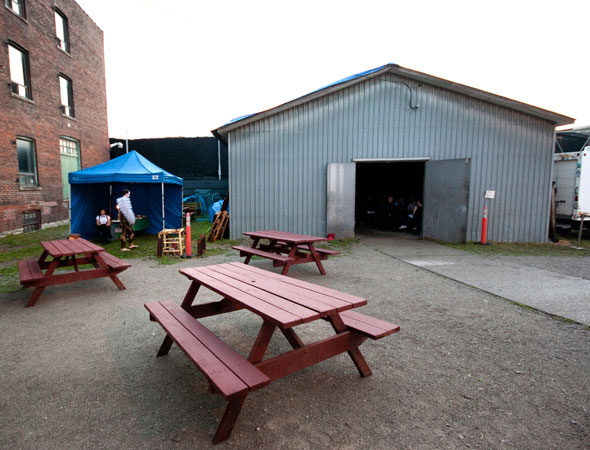
underground operaOpera is a word that comes with many preconceptions. But it is a mold that can be broken, but this is an acquired taste - that goes for both the opera and the progressive handiwork in unraveling and then mashing it. Young and Aziz take a valiant stab at pleasing both camps in an attempt at making high-culture opera accessible, fun even. And to some degrees this is the case. In other cases, I was aware that I was in a bloody tin shed.
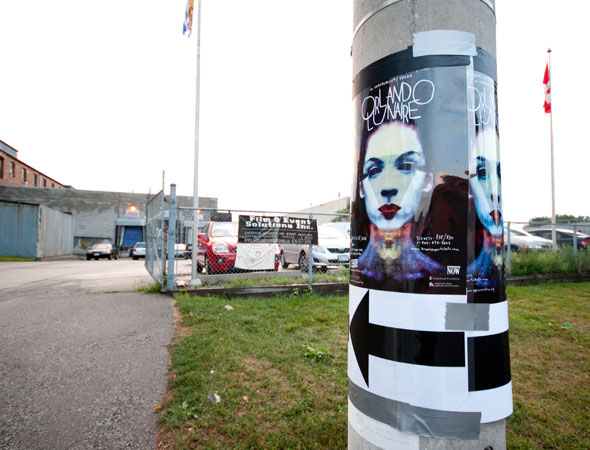
underground operaOrlando/Lunaire is running until Aug. 28 in a storage shed behind 128 Sterling Rd. Tickets are available through www.opera-erratica.org. Photos by Dennis Marciniak. Note: photos of the actual performance itself were not permitted.

Discussion

6 Comments

Leslie / August 24, 2010 at 11:35 am
user-pic
Love it!
ziogreg / August 24, 2010 at 11:51 am
user-pic
This is great! Looking forward. http://www.enjoidj.blogspot.com
Kala Maxym / August 24, 2010 at 02:42 pm
user-pic
Thanks for posting such a great review of this piece. I was really interested to see what the reactions would be. Could I republish this review on our Facebook page for The Opera Insider? Thanks so much!
Ryan Bolton replying to a comment from Kala Maxym / August 24, 2010 at 03:12 pm
user-pic
Kala, we're happy to have you post a link and a snippet, but our protocol is that we don't syndicate our content.

R.
avatude / August 24, 2010 at 03:20 pm
user-pic
Here's a beta version of the article, in case anyone else had trouble reading it:

The underground opera has arrived in Toronto. There I am, walking at a quick pace through the west end's industrial area. Massive, condemned factories with broken windows line the street. When dusk rolls around, I take the cash out of my wallet and stuff it into my left sock. When I reach my destination - a tin shed behind 128 Sterling Rd., near Bloor and Landsdowne - I feel a little surge of relief, and bemusement.

I'm here to see an opera. The so-called "mash-up" from Opera Erratica, Orlando/Lunaire.

This isn't your typical blacktie night of highbrow opera. Even "avant-garde" doesn't quite do it justice. It's a group experiment by a handful of Toronto artists, sewn together on a stage. Some parts work: the haunting and transcendent vocals, the derelict environment, and the modern-cum-classic costume design. Other parts either fall flat or sink under their own pretensions.

The opera is a pastiche of 18th century Baroque composer George Frideric, Handel's Orlando, and songs from Arnold Schoenberg's melodrama, Pierrot Lunaire. Pieced together to form a semi-discernable narrative of 21 chapters (like the 21 Albert Giraud poems on which Lunaire is based), genial director Patrick Eakin Young wasn't out to construct a bite-sized opera. He was out to turn heads, perk ears and fill seats for abstract performance art dressed as a manic opera. To that aim, he succeeded.

You sit in the tightly seated, er, theatre on plastic foldout chairs. Bare light bulbs dangle above. The stage, raised about a foot or so, is only feet from the first row. A white scrim divides the stage and the orchestra, which is manned by multi-talented Ashiq Aziz. The music is inspired, but tends to fall secondary to the voices of soprano Carla Huhtanen and countertenor Scott Belluz, who steal the show. The orchestra periodically jumps from a quiet soundtrack to a boisterous noisemaker, asserting its presence.

[Imagine the following paragraph is a bulleted list.]

As Huhtanen and Belluz divulge into the multi-characters [I'm not editing that because I have no idea what the author is trying to say there], their dialogue - Handel's Italian and Schoenberg's German - is projected behind them onto the scrim. At times the words jumble around, echoing the characters' emotional and mental states. The singers deliver the abstruse but poetic lyrics with masterful ease. Local alternative fashion designer Heidi Ackerman's inspired pieces are a standout. The ruffled outfits - costume changes were exposed to the audience - are a modern variation on formal baroque costumes.

[Stop imagining the bullets. We're back to paragraph structure now.]

I caught up with Ackerman during intermission. She explained that she was asked to collaborate after this year's Toronto Alternative Fashion Week (FAT), where her futuristic tinge and trademark knits were a must-see. This was her first project of this variety, and although Young collaborated on the concept, she was given free reign over the designs.

Opera's high-culture status quo deserves a challenge, but alternatives can be an acquired taste. Young and Aziz take a valiant stab at making opera accessible, fun even. On one hand, it may have worked. On the other hand, I was in a bloody tin shed.
annakarenina / August 24, 2010 at 07:02 pm
user-pic
avatude.. why dont u suck my d!@k *chuckle*

Add a Comment

Other Cities: VancouverMontreal