Sunday, May 27, 2012Partly Cloudy 15°C
Tech

Streetcar GPS technology is a homebred success story

Posted by Erin Bury / March 26, 2010

ttc gps nextbusIt's no secret that Torontonians have strong opinions about anything and everything to do with the TTC (just look at the popularity of the I Slept with Adam Giambrone buttons earlier this year). So when the TTC debuted their GPS streetcar tracking program in beta last March, the opinions weren't lacking. For once, the negativity was. Streetcar riders mostly had praise for the service ("The timing on the 505 this morning was flawless") and the TTC's adoption of technology ("I'm really glad to see the TTC moving forward leveraging technology to better serve their customer base").

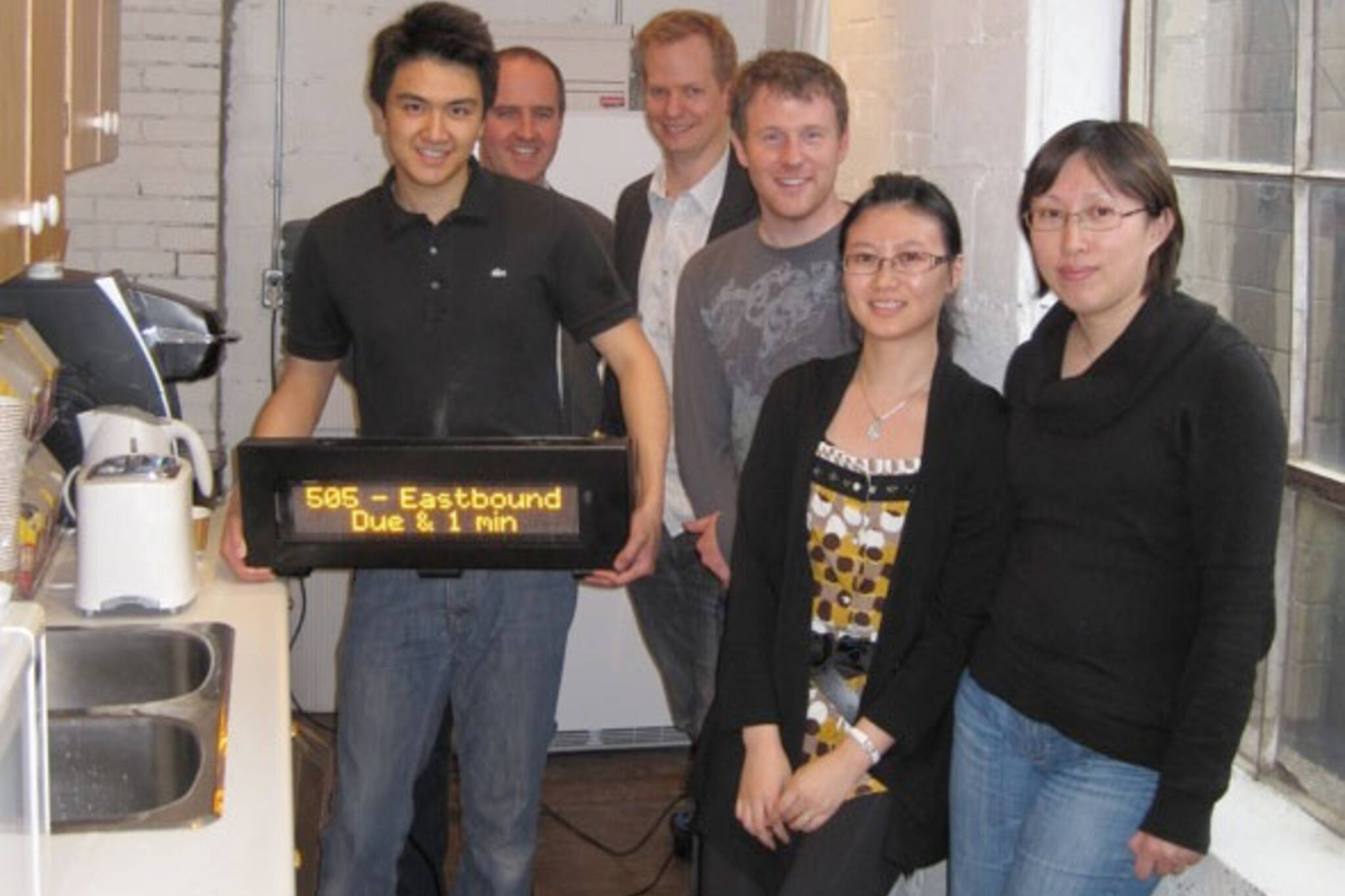
What many in the city don't know is that Grey Island Systems, a Toronto-based company, is behind the technology powering the TTC's Next Vehicle Arrival System (NVAC) program - and Toronto is just one of many cities on their long list of clients. As the TTC prepares to include more streetcar routes and more buses in the project, we take a look at how a local company got involved with local transit.

Brian Boychuk is the co-founder of Grey Island Systems, a company he named after a Georgian Bay hideaway where he and his two brothers-in-law decided to start a wireless tracking company. In 1998 the company launched their product, Interfleet (an online vehicle location and dispatching solution), and began by wirelessly tracking ambulances in Saskatoon. The company grew slowly, and in 2005 Grey Island acquired San Francisco company NextBus.

NextBus combines GPS data with predictive software to give transit passengers an arrival time for the next vehicle. It combines GPS satellite technology with GPS receivers mounted on vehicles to find the vehicle's location and intended next stop. This data is then communicated to a central information centre, and software allows the calculation of an estimated time of arrival for the vehicle. This information is then displayed on electronic signs at transit stops, online, and it's also pushed to riders' mobile devices (via SMS or the mobile site).

Guelph was the new team's first Canadian client, and they started working with the TTC two years ago after winning the contracts in 2006. The company, who has their office in King West, now has 55 employees in Toronto and offices in NYC and California - although the NextBus team is located mostly in San Francisco, the team in Toronto works on the TTC project on a daily basis.

Boychuk agrees that working with the TTC means dealing with community feedback, whether positive or negative. But he says that the TTC shouldn't be worried about launching projects in beta. "They've got nothing to lose by rolling it out," he says. "Even if it's imperfect, it's better than nothing." He says beta projects engage the community in a dialogue, which is invaluable in shaping the project's future.

What about the $10 million project price tag that has some Torontonians raising their eyebrows? Boychuck says that the $10 million is a projected cost after completion - he says it will take them another 5 or 6 years to get there.

And what happened last year when the TTC posted several routes equipped with NVAS technology, and then reduced them to only two? Boychuk says if you know where to look you can find the exposed feed, and some U of T students did just that. The TTC quickly caught wind of it and left two routes up (509 Harbourfront and 510 Spadina, the only two there today) to throw the public a bone. The company also works with the MBTA in Boston, and there they've handed the feed to the public to develop on it. Will we have that in Toronto anytime soon? It's up to the TTC - but Boychuk says "the more the information is democratized, the better."

Soon riders will have a chance to test out NextBus technology at more stops - the TTC will be rolling out more streetcar routes in the next couple months, and buses as they're installed on each vehicle. And with 450 million passengers annually on the TTC, Brian is expecting his homegrown team to get a lot more feedback. But he's not worried - he's tested the system himself and is confident in their technology: "It's like eating your own dog food."

Discussion

10 Comments

Julian / March 26, 2010 at 10:19 am
user-pic
No word on what happened in March when Dundas & King streetcar locations were on the site and removed without explanation a couple of days later?
Derek / March 26, 2010 at 10:25 am
user-pic
Great to hear about local technology successes like Greyline/NextBus.

I hope they continue to pressure the TTC to open the feed. There are numerous technologists here in the GTA ready to do great things with this data, as evidenced in this DataTO.org forum http://www.datato.org/app/need/show/20
DSTO / March 26, 2010 at 11:04 am
user-pic
Maybe someone from Grey Island Systems can explain why the displays on buses and streetcars seem to reboot between stops constantly with messages like "RTC Fail", "Serial Address: 0A", the device MAC address, etc. See this happen ALL the time. System still announces stops correctly, but definitely something weird going on with the displays on many vehicles.

Great system to have in any case - if it works properly.
Christopher / March 26, 2010 at 01:06 pm
user-pic
Interesting piece, but it fails to answer a couple one key question: the public was promised real-time vehicle tracking for surface routes in fall 2009 - why has it not yet happened? Is it due to delays at Grey Island Systems? Is it due to TTC problems rolling the equipment out? Is it due to politicians announcing overly optimistic timelines?

Also, this does not answer why certain streetcar routes were available on the NextBus site a few weeks back, then mysteriously removed with no explanation.

Again, great article - but we need more info.
Design Girl / March 26, 2010 at 01:09 pm
user-pic
Any reason why the Carlton 506 Line (east and westbound) was on the site for the first 2 days and then removed??

KitKatNeko / March 26, 2010 at 03:04 pm
user-pic
But why reinventing the wheel every time (and spend more money)? does that technology exist and being use by other transportation companies?
Laurence / March 26, 2010 at 05:59 pm
user-pic
DSTO : The on vehicle displays are not part of the NextBus/Grey Island system. It's an in-house developed GPS next stop display system - though why it the malfunctions are happening, I'm not sure. However, I've seen it happen a lot less than when the system was first deployed, so it's likely a bug that they've been ironing out.
mike / March 26, 2010 at 11:16 pm
user-pic
Hold on, are you saying they have two GPS systems running in parallel?

According to TTC documentation, they already spent nearly $900,000 on 1,546 GPS systems in 2006.

http://www.ttc.ca/postings/gso-comrpt/documents/report/f2955/_conv.htm

Is the Grey Island system not using these GPS systems we already spent a million dollars for? How much did we spend on additional redundant GPS units?

Is the SVASAS system something entirely different than the Grey Island system? From the documents above it seems like the "SVASAS" system was budgeted in at ten million dollars as well. Is this the same project, or is that just the standard amount the TTC pays for everything?

Do any of these numbers include the money spent on the website / trip planner?

How many tens of millions has the TTC spent on all this. Is the number over 50 million? Is the ten million given to NextBus a projected amount (ie. can they get more if "unlikely" cost overruns occur?) or is that the final number?
Boby / March 27, 2010 at 11:48 pm
user-pic
Oh no! Conspiracies abound! Why did the street car lines disappear from the NextBus site? Where did the money go? Is there really TWO GPS systems running in parallel?

LOL, you people have too much time on your hands. Go find a hobby that doesn't involve conspiracy theories.
Paulie / March 29, 2010 at 10:35 pm
user-pic
Implementation of a Next Bus system in Toronto is terrific. And relative to other capital improvements it is so inexpensive. For the cost of twenty buses the TTC could have a full-blown predictive arrival system on all its routes and vehicles. The associated convenience far outstrips the benefits of adding twenty buses to an 1800 bus fleet. It seems so simple.

TTC Managers have done a pretty good job of getting the bus to the stop. Now their job should be to deliver passengers to the stop at the time the vehicle is about to arrive. That would be marvelous.

Add a Comment

Other Cities: VancouverMontreal