Sunday, February 12, 2012Mostly Cloudy -9°C
Film

Kurosawa retrospective comes to Toronto

Posted by Chandra Menard / June 9, 2010

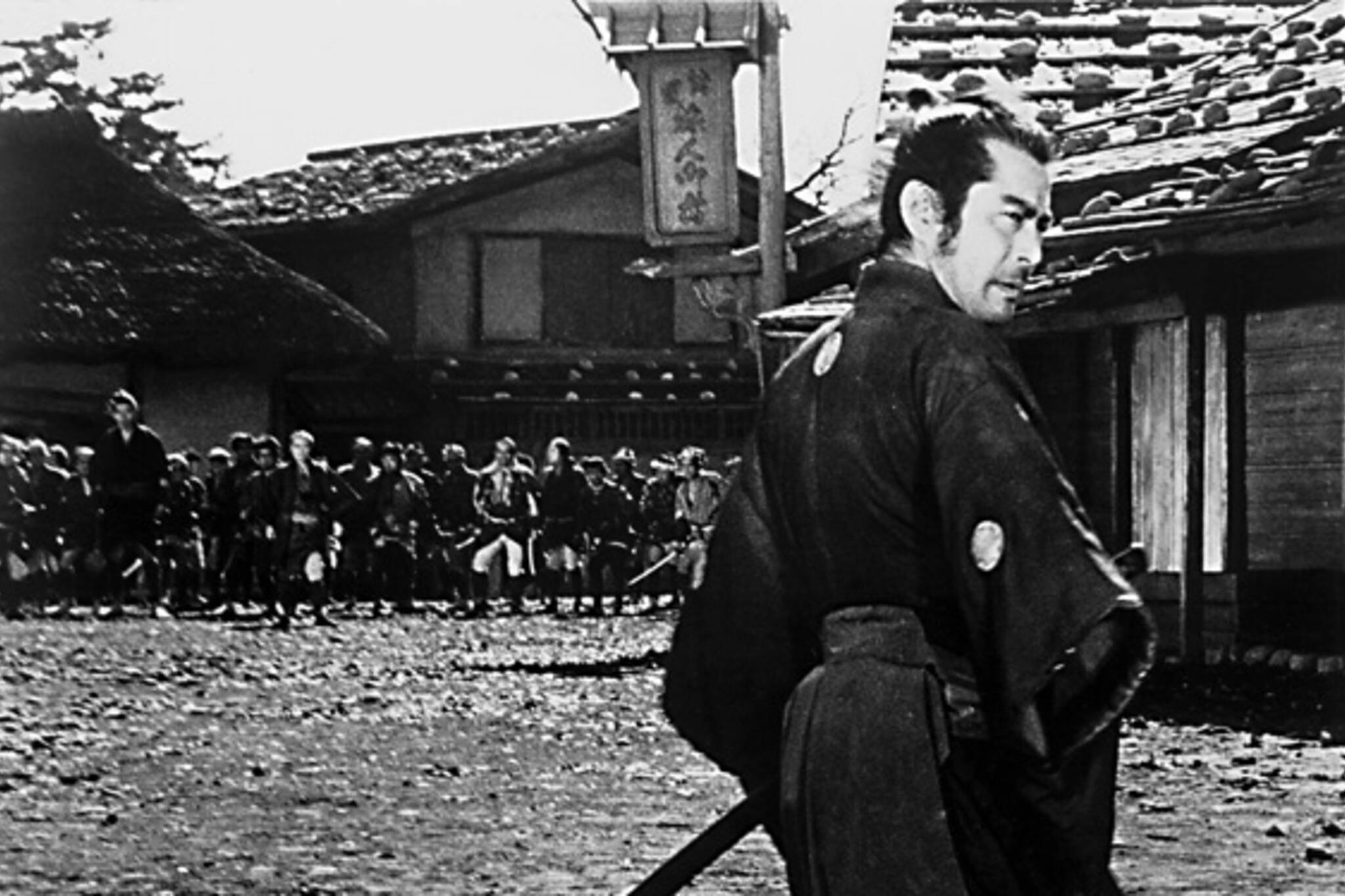
YojimboLegendary filmmaking god Akira Kurosawa gets much-welcomed big-screen time in Toronto this summer, with an extensive TIFF Cinematheque curated retrospective, 29 films in all. From iconic samurai flicks to lesser-seen gems, the Akira Kurosawa: Centenary of a Sensei series celebrates the master of Japanese cinema's distinguished career starting this Friday, June 11th at Jackman Hall.

While I've never seen a Kurosawa film that I didn't like, a newly restored 35mm print of Rashomon (June 11) is my pick of the pack. It's about a "bandit" that crosses paths with an aristocratic couple in the forest. What happens next is anyone's guess; the story unfolds in flashbacks told by four witnesses to the crime, each with a different version of events.

Despite being pretty much a straight swordfighting movie, Yojimbo is entertaining from start to finish and brilliantly crafted to balance violence with humour. The action centers on a brash swordsman (played by Kurosawa's main leading man, Toshiro Mifune) who arrives in a town, realizes there is money to be made from the local gang wars, incites a showdown, and sells his battling skills to the feuding leaders.

And High and Low (July 13) is a must-see, if you haven't already. The story begins to take shape when we learn that a kidnapper has snatched the chauffeur's son instead of the wealthy entrepreneur's son, and still demands a generous ransom. As the cops close in on the bad guy, High and Low turns into a nailbiter of a detective flick.

Also on the roster, Seven Samurai (a ragtag bunch of samurais fight bandits to defend a farming village), Drunken Angel (an alcoholic doctor tries to save a gangster from tuberculosis and a questionable choice of career), Ikiru (a terminally ill bureaucrat chases a final dream), plus Throne of Blood, Stray Dog, Ran, and tons more.

Akira Kurosawa: Centenary of a Sensei screens as part of the TIFF Cinematheque's 20th anniversary season. While I was hoping that my next milestone celebration would be billed as "a summer of sex, swords and seduction," it looks like the Cinematheque has beat me to the punch. Festivities continue through to the end of August with director spotlights on Catherine Breillat, Pasolini and Eric Rohmer, and a closing night guest appearance by Julian Schnabel.

Akira Kurosawa: Centenary of a Sensei runs from June 11 to August 2 at Jackman Hall, 317 Dundas Street West.

*G20 closure update: the Yojimbo and Ikiru screenings have been canceled as the AGO will shut down on Friday, June 25th at 4pm through to Sunday, June 27th. The Cinematheque is trying reschedule as many of the films as possible - check tiff.net/cinematheque or call 416-968-FILM for updates.

Still from Yojimbo courtesy of TIFF Cinematheque.

Discussion

9 Comments

jamesmallon / June 9, 2010 at 09:33 am
user-pic
Kurosawa is to film what Shakespeare is to literature: if it's not in Kurosawa, humans haven't experienced it. No surprise his Shakespeare interpretations are incredible: 'Throne of Blood' - 'Macbeth', 'Ran' - 'King Lear'.
Amanda / June 9, 2010 at 11:36 am
user-pic
Just a note, the screening of Yojimbo on June 25 has been canceled, as has Ikiru on June 27 (and a few other non-Kurosawa films).

The G20 strikes again!
LanternBell / June 9, 2010 at 12:32 pm
user-pic
Grrr. Damn you G20. Ikiru is one of the most wonderful films in the history of film.
Rich / June 9, 2010 at 06:30 pm
user-pic
I'm not much of a film buff but I became absolutely enchanted with my the first Kurosawa film I ever saw, Ikiru, then even more so when I saw Seven Samurai, I went through the Library at York U seeing every Kurosawa film they had and I remained enchanted with each and every one, well to be honest his final film Rhapsody In August I think it was called I didn't find as impressive as all the rest of his films, I totally agree with jamesmallon who said "Kurosawa is to film what Shakespeare is to literature" I'm still waiting to see a print of Seven Samurai as beautifully restored as they did with Rashoman though
jamesmallon / June 9, 2010 at 08:50 pm
user-pic
It's the breadth of Kurosawa that puts me in mind of Shakespeare: known for Japanese period dramas (Seven Samurai...), but no less excellent at gangster/police films (Stray Dog...), or devastating commentary on the unintended consequences of colonialism (Derzu Ursala), or the redemption of a meaningless life (Ikiru). That's just off the top of my head!
BH / June 9, 2010 at 10:15 pm
user-pic
This is awesome. And @#&%^ you G20 for taking out two of Kurosawa's best.
chandra / June 10, 2010 at 10:33 am
user-pic
Damn you G20 rescheduled showtimes announced:

Monday, June 21
7pm - NO REGRETS FOR OUR YOUTH
9:15pm - YOJIMBO

Wednesday, June 23
7:30pm - LETTER FROM AN UNKNOWN WOMAN

Thursday, July 14
9:15pm - DAY OF THE DEAD

IKIRU - canceled.
victor enyutin / August 9, 2011 at 10:56 am
user-pic
“Yojimbo” by Akira Kurosawa can stylistically be considered as a “study” for his “Sanjuro” made (in) a year after “Yojimbo” (with the same main character played by (the) [a] unique [actor] in the history of cinema (actor) Toshiro Mifune). But thematically it is quite [an] independent film that concentrates on [the] specificity of economic fight between rivaling groups of entrepreneurs with taste for semi-legal or just [outright] illegal strategies of self-enrichment (the types we [are] today in [the] 21st century [so familiar with and] know only too well). Kurosawa uses a tiny (Japanese) provincial city [in Japan] of 19th century as a setting for metaphorizing of up-to-date behavior of international cast of predatory money-makers [like our own day global corporate CEOs]. Like we [are] today (after invented wars and financial collapses [and whole host of other disasters]) Kurosawa in “Yojimbo” thinks what to do in a situation when (a) pathological greed of [the] financial decision-makers endangers the life of (human) population[s]. Again, [as] (like) we [are] today, Kurosawa was disappointed [with the] (in) traditional idea of “revolutionary transformation” of a corrupt society – the experiencee of Soviet Union and Eastern Europe is enough to discourage us from this way. Instead, Kurosawa offers in his too films Sanjuro as, in essence, a role model for our hope. Instead of “revolution” as a strategy for social-psychological transformation of life Kurosawa offers “non-participation”. Sanjuro is [an] outsider by moral reasons. It is this status (under-status[ed]) “of not belonging” [that] colors his personality as [a] moral alternative to those who while being horrified by the cruelty of the system are doomed to participate in its everyday rituals because they share many of its conventions and prejudices. The intensity of “Yojimbo’s” critical energies joins the elaborateness of its analysis of today’s formal democracy’s vices and sins hidden under the beautiful [Universalist declaration of enlightenment and] make-up[s] of its proudly humane ideological pronouncements. “Yojimbo” is full of wit and humor, but also of human emotions, suffering and joy, and real problems.
Victor Enyutin
victor enyutin replying to a comment from victor enyutin / August 9, 2011 at 03:53 pm
user-pic
There is comment with mistakes. My apologies. Here is the corrected one.

“Yojimbo” by Akira Kurosawa can stylistically be considered as a “study” for his “Sanjuro” made a year after “Yojimbo” (with the same main character played by a unique actor in the history of cinema Toshiro Mifune). But thematically it is quite an independent film that concentrates on the specificity economically determined fight between rivaling groups of entrepreneurs with taste for semi-legal or just outright illegal strategies of self-enrichment (the types we are today in the 21st century know only too well). Kurosawa uses a tiny provincial city in Japan of 19th century as a setting for metaphorizing up-to-date behavior of international cast of predatory money-makers. Like we today (after invented wars and financial collapses) Kurosawa in “Yojimbo” thinks what to do in a situation when pathological greed of the financial decision-makers endangers the life of human populations. Again, as we are today, Kurosawa was disappointed with the traditional idea of “revolutionary transformation” of a corrupt society – the experience of Soviet Union and Eastern Europe is enough to discourage us from this way. Instead, Kurosawa offers in his two films Sanjuro as, in essence, a role model for our hope. Instead of “revolution” as a strategy for social-psychological transformation of life Kurosawa offers “non-participation”. Sanjuro is an outsider by moral reasons. This status (under-status) “of not belonging” colors his personality as a moral alternative to those who while being horrified by the cruelty of the system are doomed to participate in its everyday rituals because they share many of its conventions and prejudices. The intensity of “Yojimbo’s” critical energies joins the elaborateness of its analysis of today’s formal democracy’s vices and sins hidden under the beautiful make-up of its proudly humane ideological pronouncements. “Yojimbo” is full of wit and humor, but also of human emotions, suffering and joy, and real problems everybody can relate to. Please, visit: www.actingoutpolitics.com to read essay about “Yojimbo” (with analysis of stills from the film), and articles about Kurosawa’s other films and the films by Godard, Resnais, Bergman, Bunuel, Bresson, Pasolini, Antonioni, Cavani, Bertolucci, Fassbinder, Alain Tanner, Herzog, Wim Wenders, Jerzy Skolimowski, Rossellini, Maurice Pialat, Moshe Mizrahi and Ronald Neame.
Victor Enyutin


Add a Comment

Other Cities: VancouverMontreal