Sunday, March 21, 2010Cloudy 4°C
Environment

Let the Light Shine In: Toronto Rolls Out Solar Water Heater Program

Posted by Brady Yauch / March 11, 2009

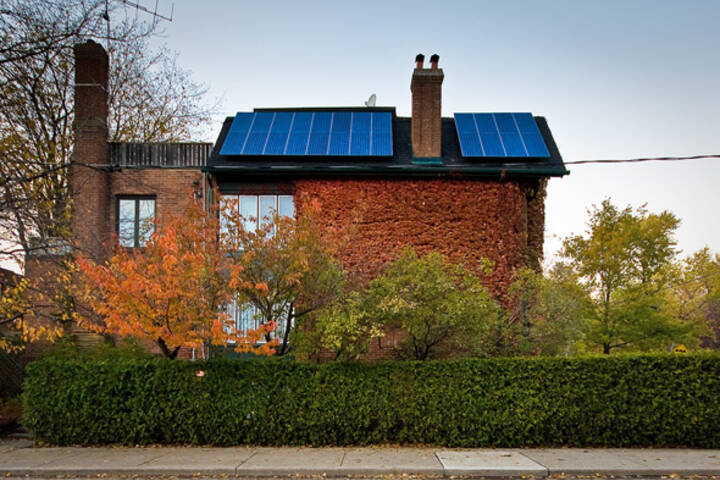
solar heaterToronto's lawmakers are showing an increasing interest in pushing green initiatives. Though far too small and ineffective for some green activists, they are at least a start. As part of the city's green push, it recently launched a pilot program in the Toronto-Danforth ward - the Solar Neighbourhoods project.

The Solar Neighbourhoods project is supported by both the City of Toronto and Toronto Hydro, and it's designed to help residents in the ward purchase and install a solar water heater. In the process, help assessing a home's suitability for solar panels, assistance with installation and a kick in of about $1,000 of rebates will be provided.

A representative from the city says 84 homeowners have already paid for and completed the eco-energy audit and solar site assessment. He says the next step for these participants to select an approved contractor to install the system. He expects the first installs to be completed this spring.

This all sounds great - especially the fact that the city's $1,000 incentive comes on top a provincial and federal rebates equaling the same amount. But that $2,000 total still falls WELL short of the amount needed to install an efficient solar water heater. According to Solar Neighbourhood's website, a solar hot water system can cost anywhere between $3,500 and $8,500. While there are definitely better deals out there than the $3,500 quoted by the city, they're still far above what the homeowner would have to shell out.

Consider those costs in the face of the advertised savings of as little as $325 per year. Assuming the city's low-end $3,500 figure, it would take more than ten years and absolutely no maintenance costs for a homeowner to actually see the benefits of a solar hot water system.

Which begs the question: Is the city the serious about this initiative? If so, wouldn't it make more sense to highly subsidize the pilot program, so it would then have a larger sample size to analyze its effectiveness? In my opinion, the city would be better off buying the solar heaters for those interested in the project. If it's a success in producing lower energy bills and little hassle, then the program could be expanded to wards across the city.

As the program stands right now, it seems only those homeowners passionate about environmental and green causes are likely to sign on. Anyone who's slightly skeptical about green initiatives is likely to wait for the up-front costs to come down, or for the city or the provincial and federal governments to increase the value of rebates. In the face of all the recent power outages, there's every reason to believe an increasing number of homeowners would consider new power solutions. But I think the city needs to offer better bait if it wants them to bite.

Photo by RJL 20.

Discussion

15 Comments

Ryan / March 11, 2009 at 1:36 PM
user-pic

My family had a solar pool heating system installed last year. At the time, we worked out that it would pay for itself in a couple of years compared to what we were paying with our gas heater. So there are cases where it can make sense.

Mark Dowling / March 11, 2009 at 2:19 PM
user-pic

What Ryan said. The rebate scheme should be targetted to buildings who have high energy usages across the city of Toronto rather a small group of already enviro aware folks in Ward 30. That way you get more energy saved for the same number of installations.

DJ / March 11, 2009 at 5:22 PM
user-pic

Even with optimistic figures, a payback of ten years is not very good. Consider that the roof under those solar collectors and pipes will need to be replaced every 20 years requiring some sort of reinstall. You'd also be better off targeting this program in the suburbs where the roofs are a little larger.

If you have to subsidize something, it probably doesn't make economic OR environmental sense.


PhilipJ / March 12, 2009 at 12:23 AM
user-pic

@DJ Not everything has to make economic sense, as long as it makes good environmental sense. (See: the TTC.) That doesn't mean, however, that there aren't always room for improvements.

Martin / March 12, 2009 at 9:46 AM
user-pic

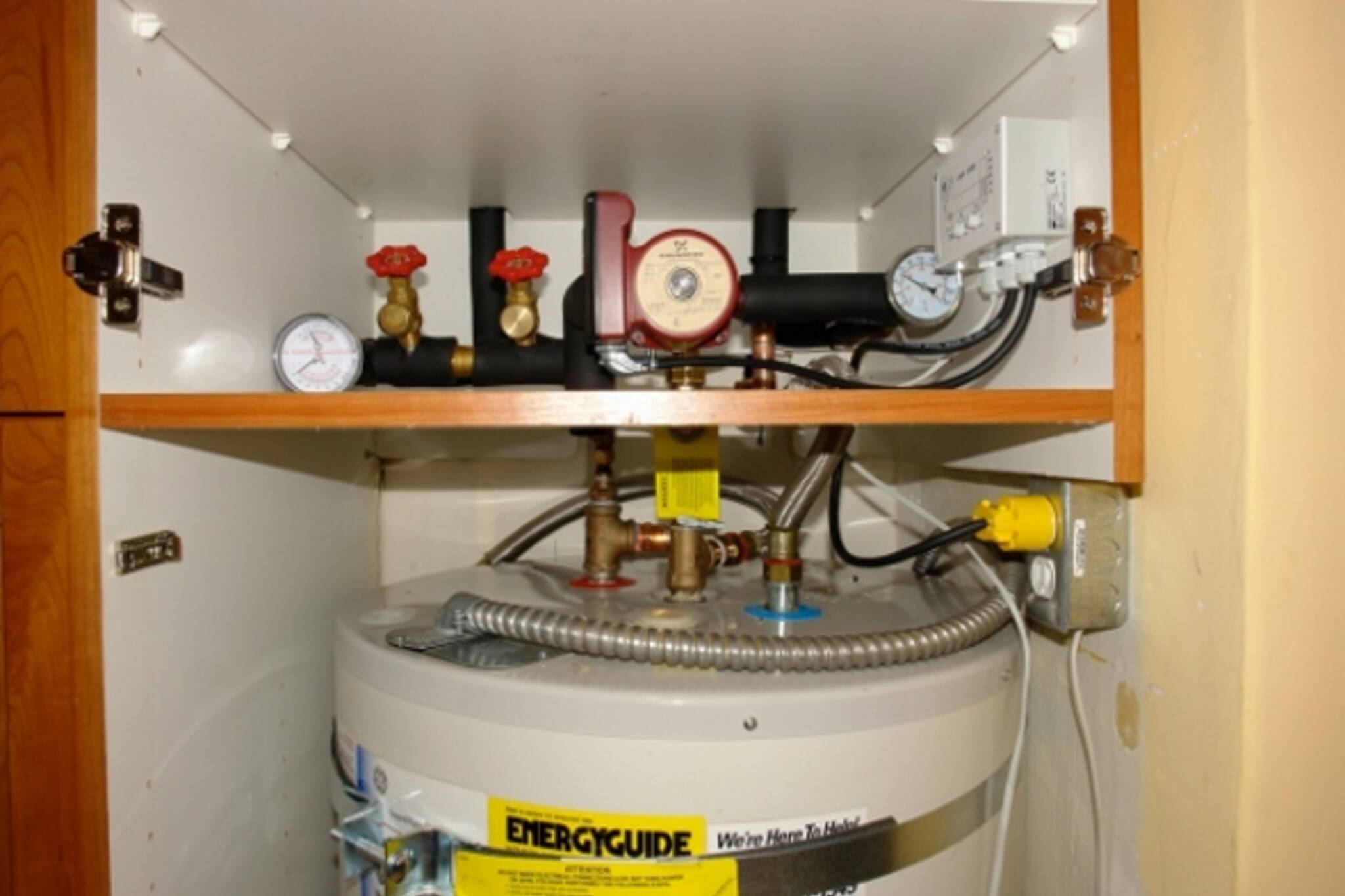
This is a poor system at best. From the website it states you will need a backup system, like an additional water heater or a tankless water heater. If you have a backup water tank you are using energy to heat and store that hot water, plus the hot water in your solar tank, how does this make environmental sense?

Scrap your hot water tank, install a tankless system and use solar panels to generate electricity and feed that back into the grid.

Greg Smith In replying to a comment from Martin / March 12, 2009 at 10:12 AM
user-pic

I may be wrong, but in such a setup I think the solar water heater is used to heat water before it enters the hot water heater so that less energy is required to bring it up to the full temperature. It's like putting warm water into a kettle instead of cold water so that it takes (marginally?) less energy to bring it up to a boil.

Greg Smith / March 12, 2009 at 10:25 AM
user-pic

...wouldn't it make more sense to highly subsidize the pilot program, so it would then have a larger sample size to analyze its effectiveness? In my opinion, the city would be better off buying the solar heaters for those interested in the project. If it's a success in producing lower energy bills and little hassle, then the program could be expanded to wards across the city.

A higher subsidy might make sense, but governments (or, more specifically, the critics of governments) are reluctant to approve programs that pay the full cost of providing a benefit to the public. Instead, they tinker with incentives in an attempt to find a sweet spot where the least possible subsidy produces the greatest possible result.

Remember when the City had a program to disconnect homeowners' downspouts from the drains for free? Remember when that program was massively overloaded with requests, and everyone freaked out at the cost (and delays) involved in completing all of that work? It was a good idea that effectively addressed a real problem, but going too big too soon backfired. There are similar forces at work here. If the full cost of equipment and installation were covered, the per-installation cost to the City be much greater and fewer units could be installed with the funds available. In a pilot project meant to test a concept's effectiveness and appeal, it makes sense to start small both in number of installations and in subsidies.

I imagine that it is from this (the arguably insufficient incentive embodied in the smaller subsidies) that the decision to run the pilot in Toronto-Danforth flows as it is a part of the city where many relatively affluent people who would like to try alternative energy apparently live. These people, predisposed to experiment with solar not by disproportionately high current energy use but by an ideological or intellectual orientation friendly to the idea, will probably respond well to a small subsidy. There are already many small solar and wind power installations in the area (I live there), as well as many homes under renovation where solar water heating can be added to an ongoing project.

Martin In replying to a comment from Greg Smith / March 12, 2009 at 10:34 AM
user-pic

It could be or in a 4 season set up you use a heat exchanger. I think generating electricity is a more efficient use of solar panels.

Greg Smith In replying to a comment from Martin / March 12, 2009 at 10:50 AM
user-pic

Again, I could be mistaken, but solar water heaters don't really use "solar panels" (i.e. photovoltaics, most of which are actually not very efficient) per se but instead use dark-coloured pipes filled with liquid to absorb heat from sunlight. The solar neighbourhoods site refers to them as panels, but that really means a bank of pipes.

Reader / March 12, 2009 at 11:19 AM
user-pic

Actually, solar water heaters are more efficient than solar panels for the same amount of square footage. That is, you save more household energy by putting solar water heating on your roof than by putting solar electricity panels on your roof. So, start with solar water heating, and then if you still have room (and, err, disposable income), then you install photovoltaics.

Patrick / March 12, 2009 at 12:12 PM
user-pic

Toronto Hydro could help itself by removing some of the massive barriers they (and Queen's Park) put up for those wishing to sell power into the system. Solar panels would be so much more plausible if there was the possibility that that investment could be recouped for profit at some point in the future. Hydro would help to ease its own burdens and there would be much more impetus for people to actually invest in solar panels, wind turbines, etc.

The last figure I read surrounding this issue was that it would take somewhere on the order of five years in terms of up-front costs, licensing costs, taxes, etc. before a private generator sees any profit on their investment. Even the profits beyond that time are destroyed by further taxes and fees to the effect that, in some cases, people would be paying for panels to stay in place.

Municipal lawmakers may have their heart in the right place but until they have support from provincial/federal levels (by which I mean a serious rethinking of some of the regulations currently in place), there ain't gonna be much happening any time soon.

http://toronocitylife.com/

RyanS In replying to a comment from Reader / March 12, 2009 at 2:06 PM
user-pic

You are spot on, Reader. if you are gong to say things about a subject, please make sure you know what you are talking about (Martin). misinformation / a lack of good info. is one of the main constraints that stop people from taking up these technologies.

If you really are concerned with maximizing your investment (maybe not making it +ve but maximizing it), you need to do the right steps (in order):
1) retrofits to make your home as energy efficient as possible
2) solar thermal (water or air) system
3) PV system

going any other way is just a big(ger) waste of money.

Also, I think rebate/grant programs such as this are designed to attract early adopters, stimulating the market and eventually bringing these technologies down to a price that makes them economically viable rather than to make the payback on these technologies 'affordable'. (let's not even talk about the real price of electricity that we Canadian's afford at a heavily subsidized rate. If we took into account the REAL cost (e.g. tax dollars going to health care costs due to pollution generated from coal power stations, etc.) the payback on solar would be much much more attractive).

Ratpick / March 12, 2009 at 3:01 PM
user-pic

Wouldn't it suck if you paid to have one of these systems installed, only to have the city later approve a large condo building nearby that throws your roof into shadow for much of the day?

Martin In replying to a comment from RyanS / March 12, 2009 at 5:32 PM
user-pic

Ok, I should have clarified the difference between photovoltaics & solar water heaters. I'm aware that photovoltaics are not as efficient as solar water heaters, and as Ryan posted regarding his pool, I think that's a fantastic application of this technology.

Would anyone not agree that hot water tanks are a somewhat wasteful use of energy? Heat up water and keep using energy to keep it hot, as opposed to a tankless system, use energy to heat what you need on demand. So now we are trying to develop a system to augment the energy used to heat the water in the tank. Most likely you will still need a second tank for cloudy days or when there is no sun, that is still hooked up to your current energy source.

With the limited amount of roof I have I would rather try to generate electricity than heat my water.

I'm not opposed to having data put forth that shows this is the best use of solar energy in the home, but it just seems that in Toronto it isn't. Doesn't mean that it wouldn't work elsewhere.

Brady / March 13, 2009 at 9:14 AM
user-pic

Hey guys,

Very informative debate. I noticed this article in the New York Times and thought some of you might be interested.

http://www.nytimes.com/2009/03/13/business/energy-environment/13solar.html?ref=business

The article looks at how governments in Europe pay top dollar for homeowners to produce solar or wind electricity. Whatever excess power they generate, the government buys it off them at rates four times higher than power from coal stations. Now, the idea is moving into the States. Wonder if Toronto is next? I know the government pays Ontario farmers and other rural residents who install wind generators (not sure what the rates are that they pay them). Maybe Miller will do the same for homeowners in the city.

Add a Comment

Other Cities: VancouverMontreal