Monday, February 13, 2012Partly Cloudy 2°C
Environment

Building An Eco-Modern Home

Posted by Greg Davis / June 27, 2008

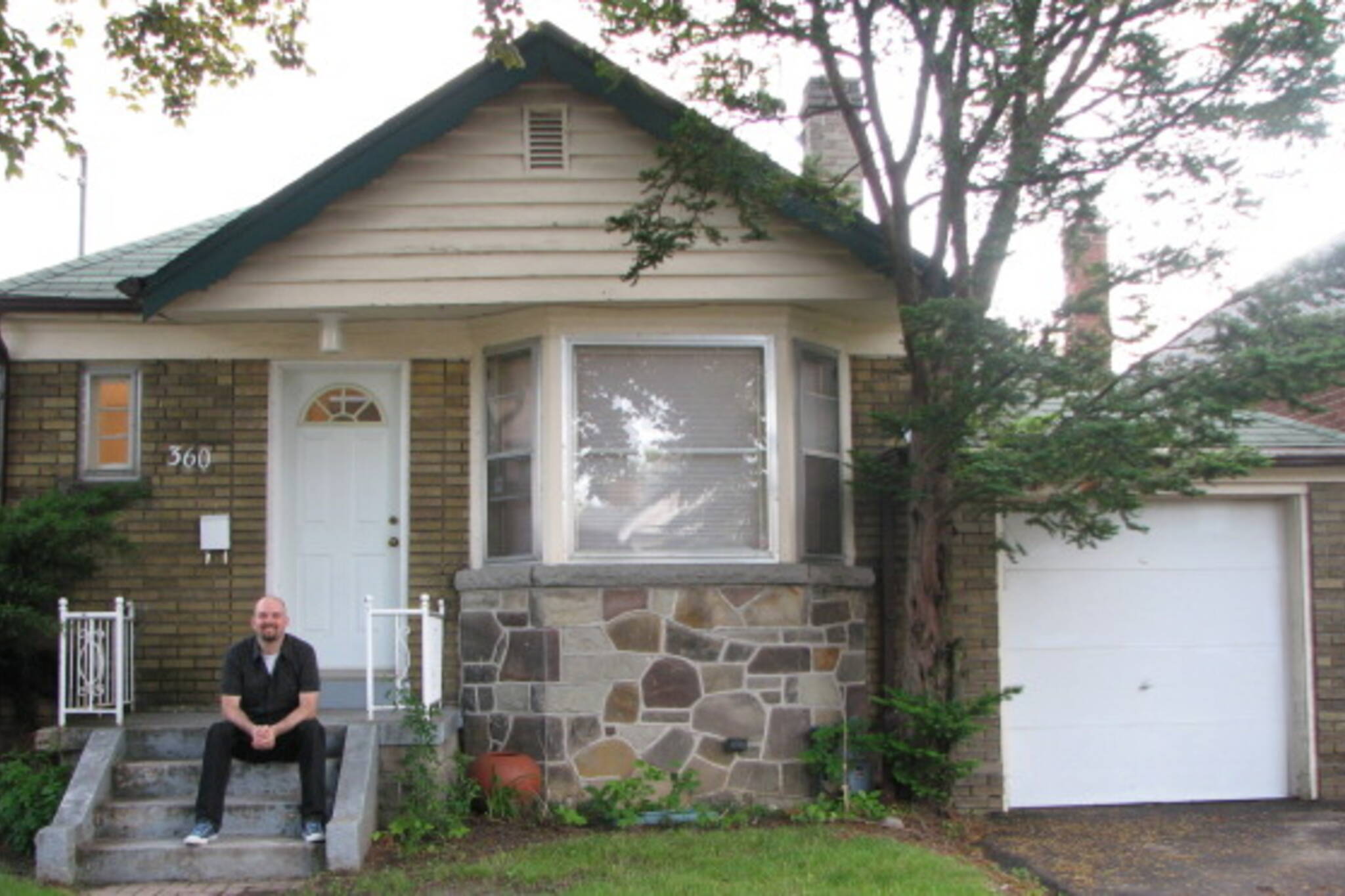
360 WinnettTake a good look because this house at 360 Winnett Avenue is about to be demolished in favor of a new "Eco-Modern" house to be built in its place.

Jeremy Bell and his wife have embarked upon quite a project- to document their experience designing and constructing a brand new home on the lot they have lived in for the last five years. They have set up a blog with the aim of sharing the details involved in choosing to build an eco-friendly home over simply buying something new.

Jeremy says that although it's great to share green design and construction ideas, he hopes that blogging the process will provide a platform to answer all the little questions people have about what he's doing. Daily photos, a calendar, webcam, and open access to project documents (including budgets) will all be a part of the site which is live now but gaining more content as the demolition phase is scheduled for the end of July.

Is it really possible to have absolutely no prior experience in building design or construction and decide to be involved every step of the way? "My experience ends with Holmes on Homes," says Bell. The original plan started with a pretty normal design with an emphasis on more space than the current home. He just had a feeling he could do better with the money they were spending and came around to the idea of quality over quantity. The new design has a reduced size but more features and "less empty space".

Bell emphasizes that a good architect willing to spend the time explaining the pros and cons of the various "eco-friendly" options is essential. Solar panels and water collection units sound like great ideas but are not always the best investment when working with a budget. He's already taking a bit of heat for forgoing some of these more hardcore green ideas and focusing on quality (expensive) insulation, windows, lighting, and otherwise less glamorous design features.

You can take a look at some cardboard model photos.

For potential buyers, the perceived high Toronto house prices can make renovating a more attractive option. And Cedarvale is consistently ranked as one of the Toronto's hottest real estate markets if judged by prices on the rise. A big renovation might not be the best option if your agenda is to flip your home, but if it's somewhere you know you want to be for a long time it gives you real control over your space. The fact that the project is technically considered a renovation- they are rebuilding what was already there- actually qualifies them for more grant money (federal and provincial energy efficiency audit grants) than if they were building on a new lot.

They might be paying more upfront to build the home they want but they see that as a sacrifice worth making. And sacrifice they will- they'll be living with in-laws for the 6-8 months it will take for the new house to go up.

Discussion

21 Comments

A|Layton / June 27, 2008 at 12:42 pm
user-pic
look up 41 mckenzie ave on an upcoming globe news story
Ratpick / June 27, 2008 at 12:46 pm
user-pic
Wait a minute -- he's "forgoing some of these more hardcore green ideas" to focus on quality? This piece isn't really about an Eco-Modern home. Just a couple tearing down a wee house and replacing it with a BIG house. Which is fine. I likes me some big house.
Brad / June 27, 2008 at 01:08 pm
user-pic
It's neat they are publicizing it but this has been done before. I just hope the trend continues and it inspires others.
david / June 27, 2008 at 02:24 pm
user-pic
Surely tearing down the house will use more energy than just keeping the place as it is? Besides, a large home just doesn't fit the streetscape here. Very annoying seeing such a nice older home being knocked down.
darren / June 27, 2008 at 03:36 pm
user-pic
just a vanity project
Diane / June 27, 2008 at 03:37 pm
user-pic
I don't get how this is "Eco".
Dave / June 27, 2008 at 04:36 pm
user-pic
I have to disagree slightly with the idea of this being a vanity project. Those houses are beautiful in their own right, but they are pretty small by today's standards. Putting a second story on top of the existing footprint of the house, or adding an addition (and staying in the city) is a perfectly good alternative for a growing family instead of moving out to the suburbs and commuting in. Besides, the nature of that neighbourhood is that they are putting larger additions to the existing homes or tearing them up entirely.

I'll agree that it doesn't quite fit into the character of the neighbourhood. It's not ugly, it's... different. I quite like it, but it's up to the neighbours/city to decide if they approve of the elevation. (In all honesty, what they appear to be doing can easily be done in a house that fits the style of the 'hood).

Diane, I've looked into buying these old homes and they are actually very inefficient with their energy use. Typically they have almost no insulation around the house... so in the winter you are pretty much heating the outdoors. I would love to tear out all the walls of these houses and lay insulation, upgrade the furnance and a/c, but the problem is that it gets really costly. It's better for the environment and somethings are easier on the pocketbook (ie. new furnace, a/c, tankless waterheater) - but when it comes to the structure of the house... sometimes you have to tear much of it up.

Lastly... I wonder if for all of this work it's even worth it. Buying a house in that neighbourhood probably cost around 400k, house construction probably another 350-400k. So they'd have to sell for about 800k to make it worth it. I'm not so sure they will be able to make that much back in the short term, given current house prices in the neighbourhood...
jeff layton / June 27, 2008 at 05:30 pm
user-pic
This is a joke.
What is green about this project? For example, is he reusing any of the materials? Is he installing geo thermal? Is he making use of siting to take advantage of the sun? Any solar passive or otherwise?

This is as 'green' as our Mayor. Green with envy for those actually doing it.
Jayomatic / June 27, 2008 at 05:35 pm
user-pic
Hey, give the guy a break. He is trying to build a house thats eco friendly that is on a budget. Maybe you should all read his blog before you go slagging him off.

I'd love to see any of you guys try and build Eco like your describing on a budget. Maybe you should go research on the costs of geothermal or solar.

The problem is that most of these Eco solutions are still very expensive so its about making due with what fits in budget.
Jeremy Bell / June 27, 2008 at 06:51 pm
user-pic
Thanks everyone - I really appreciate the dialog, and completely understand where your opinions are coming from.

I can't say I can justify the aesthetics of the house as it's far to subjective to make an argument, however I can definitely speak to our eco strategies:

* Energy Star certification
* Compact house footprint that fell below allowable coverage
* ICF foundation
* Closed cell, medium density spray foam insulation
* Low E II insulated, argon-filled windows
* High efficiency furnace + heat pump
* On-demand hot water
* Passive heating & cooling (solar chimney + cross ventilation + window shading)
* Daylighting (clerestory + internal windows)
* Energy Star appliances
* Rainwater collection
* CFL and/or LED lighting

I just wrote a new post that highlights some of the green features we're planning for, and some we've had to abandon. Hopefully it sheds a little more light on the topic.

http://www.360winnett.com/2008/06/27/shades-of-green/
jeff / June 27, 2008 at 07:54 pm
user-pic
Jeremy
While its great your doing these things the reality is they were leading 'green' 15-20 years ago and these days to reach the level one would expect under this too trendy monicker, you would need to go much, much deeper and invest far more than you obviously are intending.

Consider it the cost of entry but that's reality.

I'm not certain who's advising you, but there are certain things like solar, for example, that given its very low efficiency might be not worthy of investment today, especially if its a fixed application versus a tracker, until the next version of technology is available which will almost double the return from 15% to 30%.

Just a suggestion from one who is also waiting.
Danielle / June 28, 2008 at 01:54 am
user-pic
I don't understand your argument Jeff, are you saying that if it's not the MOST efficient, it's not worth it? I think that their renovation will definitely be more effective than all those stupid commercials about "use energy efficient lightbulbs, it's simple!" or "recycle, it's simple!"
jeff / June 28, 2008 at 10:48 am
user-pic
Danielle
It is because of the cost of investing in these upgrades that you need to first determine what will get you the biggest return for your budget and meet your objectives.

It's no different than putting in a new furnace, you need to calculate each room's heat loss and factor in any future additions or changes to size the unit correctly. A salesman can't do this and that's why most homes waste energy heating and cooling with improper equipment. Of course getting the most efficient helps as well.

Jeremy should be developing a plan that he can add to as his budget allows. Perhaps hiring an HVAC engineer who specializes in these items would save him lots down the road.
Greg Davis / June 28, 2008 at 02:38 pm
user-pic
I don't think the place will be "huge" by any means and have to defer to their website for more detail on why its "eco"
Dave / June 28, 2008 at 05:33 pm
user-pic
re: Jeff Layton

Geothermal may not be as good right now as you think it is... It may be good in terms of cooling, Enwave's working in a number of buildings downtown, but you're limited by the location of the house. Apparently, this member of the green party doesn't think it offers much promise compared to good old insulation. http://danforthgreens.ca/geothermal-heat-and-insulation/

Cost wise, solar power doesn't make much sense at the moment. I saw a some information posted that if you figure the solar panel's lifespan of 25 years, the amount you are paying for electricity is about 40?/per kilowatt hour. Right now we pay some 5.0?/kWh - 5.9?/kWh. Which makes more sense to use if you are on a budget?

Another website discussing solar panels and their cost - not the one I saw, but something similar... http://firestallion.blogspot.com/2007/09/is-solar-panel-cost-effective.html
Dave / June 28, 2008 at 05:34 pm
user-pic
The ? in the post above were originally the cents symbol
Garreth / June 28, 2008 at 07:08 pm
user-pic
It's nice to see someone considering the environment these days even if it's 90% vanity and 10% environmental conscience. I hope this post makes it into the book you're planning on writing (and selling I'm sure) as your blog states.
jeff / June 28, 2008 at 10:37 pm
user-pic
re Dave
the article you tag is really all over the place.

The issue is not one or the other but a combination. you need insulation, preferably continuous spray foam to keep out drafts and keep your conditioned air inside. That means whatever HVAC system doesn't work as hard.

In toronto you can't take advantage of Enwave which is a deep water cooling system for your home. It's only available to commercial buildings in the core. It is a geo system but limited to the cooling side.

What the lady's article doesn't explore is drilling vertically for the ground loop which can be installed in a double driveway. There are advantages in the winter because you are only heating up the difference between the temperature coming in which is a constant 56 degrees up to say 68 degrees. That gets heated via a heat pump but only that small 12 degree difference. And generally these are radiant systems which hold heat longer not forced air. That's where the savings are versus a typical system that heats much wider variances and if it draws air from the outdoors is heating from zero or below. In the summer, the temp coming out of the ground eliminates the need for a typical AC compressor so the savings are quite high.

As I stated earlier, solar is impractical at this point because it is at best 15% efficient.

For this man's project he would be best to insulate the hell out of his place with 2lb. spray foam -ON THE EXTERIOR- to catch all air leaks that Tyvek won't, put in insulate glass with low E, and get a 90+ efficient gas furnace that is 14 seer rated for AC all running on variable speed DC motors.

Is it 'eco' no just more efficient and will be eligible for some government rebates and will lower his consumption greatly.

When I put in these items my costs dropped 30% in gas and hydro.

I think the problem for Jeremy is he's using the 'eco' / 'green' label which is very misleading when all he seems to want is more efficiency. Go for that and lose the vanity. Just a suggestion.
Greg Davis / June 29, 2008 at 11:55 am
user-pic
jeff you make fair points. while your last statement makes sense, in a way i disagree- for Jeremy, part of this whole thing is that he originally sets out with the thought/image/fallacy of a "green/eco" home (theres is no real such thing) and his journey might lead him down the "efficiency" path. ultimately building a greener home for everyone other than those willing to sink $ into cost ineffective choices is basically seeking more efficiency.

i applaud jeremy for not being afraid to take on the vanity of eco/green and wish more "environmentalists" would learn from those who actually have to sort through the array of alternative investments.
Eric / July 4, 2008 at 03:23 pm
user-pic
1) drain water heat recovery
2) I would not mind the footprint. I'm looking for 1,000 sq-ft for a family of 4.
3) passive solar design, NO A/C - they should be banned
4) adapt - make due with less. What's the point of a $30k ground source heat pump if the home only needs $300 in heating a year?
5) solar water heating - with a small (electric) on-demand heater. Don't design for unlimited hot water. Mind you the only nat. gas water heaters (and they are EXPENSIVE!!!) I've seen are more powerful than my furnace. Again - why spend $5k to provide $70 of hot water a year? My family of 4 spends $70/yr for our electric water heater - the nat. gas one was more expensive.
6) Diet. If you want to make a difference; remember that 1/3 of your GHGs are home, 1/3 are transportation and 1/3 are food. Ditch the meat and all of the processed crap. You'll loose weight, gain health and tread lighter on the planet - and it'll cost you LESS without investing in expensive technology.
7) Low-E windows are ok. The minimum should be the TiR; although I'd consider triple glazed on anything but the solar gain (south) side of the home. On the south side it gets mess - insulating shutters on the outside are the best (if you can find such a thing) and they can be insulated on the inside (Passive Solar Home by Kachadorian) but that's got issues too. My calculations for Ontario (it's very cloudy in the winter) show that at best you'll get about 30% of your winter heat from the sun. One can get around that with a wack of evacuated tube solar water collectors - but that's expensive and complex. I think that the solution would be to just make due with cooler home temperatures in the winter. http://fourMileIsland.com is a neat home
8) Build a cold cellar and ditch the freezer and/or fridge.
9) Read Better Off by Eric Brende and consider why you "need" what you want.
10) Why are you thinking of greywater? Why do you need toilets? Why not just compost the humanure? Read the Humanure Handbook. Greywater would be relatively easy to do - but it would require a pump and tank. If you conserve you'll be pressed to get enough water to flush your toilets; even if you get dual-flush toilets. But it's better to just stop polluting drinking water with human manure.

For comparison - my family lives in a stock 1991 home and it costs $350/yr in natural gas for heating (+$200 for the yearly connection fee) and around $70/yr for electric water heating (19 gallon super insulated tank), and about $25/mo in electricity.

One has to have windows - and they should be optimized for solar gain in winter.
Gord / August 1, 2008 at 10:02 am
user-pic
I'm surprised to see so much criticism on this page regarding this design. Sure, those older homes are "cute", but they are a nightmare to renovate and full of problems. As well, cost is a determining factor for most of us, so hard decisions must sometimes be made. At least these people are taking a big step forward. This design is a breath of fresh air. Kudos

Add a Comment

Other Cities: VancouverMontreal