Sunday, February 12, 2012Cloudy -3°C
Eat & Drink

How Toronto Sewage Sludge Ends Up On Farms

Posted by Lauren / March 9, 2009

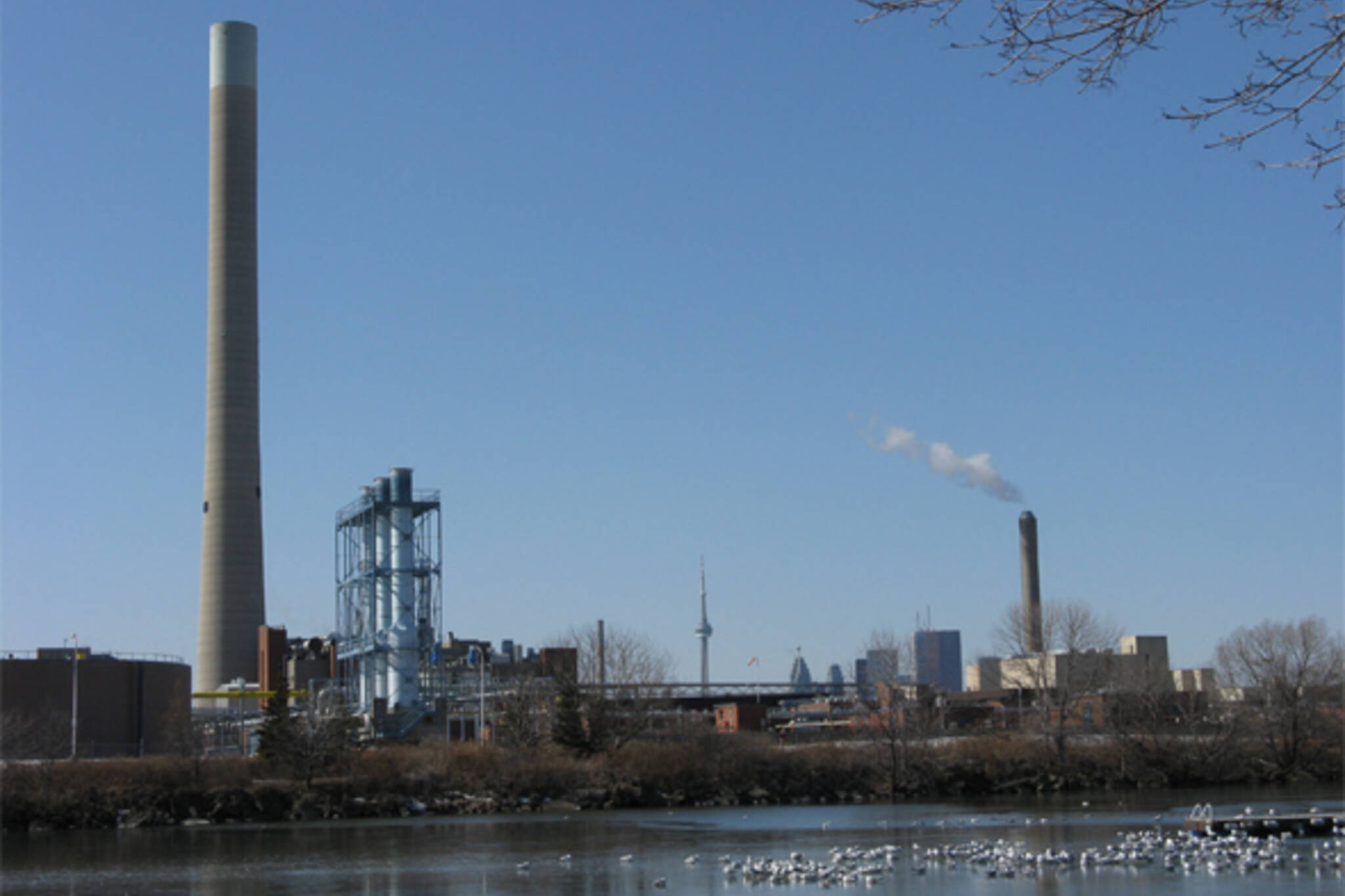
Ashbridges Bay Water Treatment PlantSewage sludge contains every imaginable substance being flushed down toilets, sinks and sewers from homes, businesses, laboratories, industrial applications, and landfills. It is a mess of pathogens, heavy metals, dioxins, and other contaminants that gets treated to become a biosolid.

So what does that have to do with Ontario farms? In what some would call "recycling gone wrong" Toronto's biosolids ended up on 15,000 hectares of farmland last year.

While coverage of this food safety issue has been picking up in recent months, it's is an area of waste management that many Torontonians know little or nothing about.

While the practice of spreading sewage sludge on farmland (aka land application) has been happening at a smaller scale for over 30 years, the widespread land application of Toronto's biosolids has been practiced since 1996. It was driven forward by the stiffened sewage treatment guidelines in the Great Lakes Water Quality Agreement, which created an increased volume of sludge and consequently the problem of how to dispose of it.

As a solution, the Ontario Ministry of Health encouraged the uptake of land application, which is governed by the provincial Nutrients Management Act (NMA). It is completely legal to spread treated sewage onto farmlands from which we harvest crops (mostly corn, wheat, soy and pasture for livestock).

Why are we using sewage on our farmlands? How is this practice considered "recycling" or even acceptable?

In the NMA, biosolids are identified as containing beneficial soil nutrients such as nitrogen, phosphorous and potassium. They can help improve the pH levels in soil and increase its water retention capacity. And they provide farmers with an affordable (often free) way to fertilize their crops.

To make sewage sludge safe for land application, it is treated by anaerobic digestion for about two weeks in an environment heated to 37°C, which is supposed to "significantly reduce" the pathogen content.

However, heavy metals (arsenic, cadmium, chromium, cobalt, copper, lead, mercury, molybdenum, nickel, selenium and zinc), dioxins, and pathogens that were not killed during "digestion" can remain in the sludge.

So what does this mean for our food?

The NMA sets forth waiting periods that must be observed before harvesting or pasturing animals on sludge-covered fields in order to "prevent possible transmission of disease." Assuming these guidelines are followed, the Ministry believes that land application of sewage sludge is safe for humans and the environment.

But it has been documented that substances such as PCBs, dioxins, and brominated flame-retardants are being expressed in the milk and meat of cattle. And plants can absorb heavy metals, or they can be left behind as residue on the surface of fruits and vegetables like tomatoes and potatoes.

Big names in the food business like Campbell Soup, who operates a plant right here in Toronto, have taken the safe route and refused to use produce from fields being sludged. They claim there just isn't enough information to support the safety.

Right now the city is mapping out how biosolids will be managed for the next 45 years. A public consultation process is in place, and the next set of public meetings will take place in June 2009. From there the final Master Plan will be developed and is slated for completion in the fall of this year. Because our solid waste is for the most part out of sight and out of mind, public discourse has been limited.

Something to think about next time you flush the toilet... or eat a salad.

For current news and updates on the sludge situation in Toronto, you can join the SludgeWatch listserv, which is open to anyone to subscribe and post to.

Photo of Ashbridges Bay Water Treatment Plant by Lauren Wilson

Discussion

11 Comments

Ryan L. / March 9, 2009 at 11:42 am
user-pic
It's no longer sewage when it hits the fields. Much like how mushrooms aren't grown in shit. It's converted, changed into something different. When animal manure is used, it is much closer to putting shit on our food than using sludge. That said, the heavy metals in sludge is a serious concern and needs to be addressed seperately from the 'ew, gross' factors.
Vic / March 9, 2009 at 12:48 pm
user-pic
It's not the poo that bothers me. As Ryan said, it has all been converted.

But think of all the other NON-crap that gets flushed into the sewers. Toilet bowl cleaners, other household cleaners, old medication, and various other horrible things that people flush.

I have similar thoughts about compost that comes from the green bins...
james / March 9, 2009 at 01:01 pm
user-pic
mmmmm . . . bias
Mark Dowling / March 9, 2009 at 01:09 pm
user-pic
Incinerate it with European-quality scrubbers on the stacks - it's the only way to be sure. The sludge can be replaced by Toronto-made compost when the green bin processing centres come on-line.
Rick Mason / March 9, 2009 at 01:49 pm
user-pic
A number of the farms around where I grew up were sludged over a few years. In one case a field that had been left barren from over-production of corn was brought back to life by this process. I do agree though that I'm quite concerned about all the stuff in the sludge that isn't removed. Would be great if there was a a truly safe way to clean the sludge as the benefits of the sludge for farmers can be substantial.
Ryan L. replying to a comment from Rick Mason / March 9, 2009 at 02:08 pm
user-pic
I wonder what is causing all the heavy metals in the sludge? Surely it isn't coming from the uh...waste?

If the waste were properly separated from the industrial byproducts, would we be able to get it clean enough so we wouldn't have to worry?

Uh oh...I think I just invented the 'brown bin'
noni / March 9, 2009 at 03:33 pm
user-pic
Even poop isn't always so benign... If you're on medications, there will be traces of that in your poop.
Jim Bynum / March 9, 2009 at 05:05 pm
user-pic
RECYCLING SEWAGE EFLUENTS -- All testing for Pathogens are not Equal or Truthful THE PROBLEM -- POLITICS & SEWAGE EXPERTS

"In 1910, Teddy Roosevelt observed that "[C]ivilized people should be able to dispose of sewage in a better way than putting it in the drinking water." (Nancy Stoner, NRDC)

One hundred years later, after spending 69 billion in the 70s on sewage treatment plants, sewage experts are not only putting antibiotic resistant pathogen contaminated sewage in drinking water, they are putting it on our food and where our children play. It is time we require the wastewater industry, FDA, and EPA to quit misleading the public, work in the real world, with real science, just as hospitals must do when they test for infectious disease causing organisms in humans. If the required testing was for bacteria that grow at optimum temperature became the standard, without suppressing pathogenic bacteria they don't want to find, there would be no sludge biosolids or reclaimed water use near food supplies or our children and all water would be safer. If the wastewater industry did not lie about the nature of the tests they
would not be exposing the public to so many pathogenic disease organisms and health costs would be reduced. http://thewatchers.us/book/pathogens.html
Ryan L. / March 9, 2009 at 08:43 pm
user-pic
Jim, your Google-Fu is impressive.

Your copy/paste however could use some work.
Justin Peters / March 10, 2009 at 08:23 am
user-pic
Having served the Chair of Toronto's Works Committee in a previous life, I have to say this is no easy problem to solve. I recall 6-hour sessions of meetings on Waste issues alone, filled with Beachy McBeachers who seem not to produce any biosolids or who propose ridiculous solutions like moving the Treatment Plant (Canada's largest ongoing infrastructure project in $.) Of course the fire in the pelletizer a few years ago didn't help any (due to an oil leak.)

I do agree that high-quality European-style Energy-from-Waste facilities need to be looked at. Isn't it interesting that environmentalist types seem to love the Dutch for their Bike lanes but not their Waste Disposal systems? Instead of simply opposing a Gas-Fired Power station on the Portlands, I was shocked that no one proposed solving our long-standing Waste issues in our own community. I guess shipping it to someone else's backyard (then Michigan, soon London) is much easier.

However, this issue has been reviewed numerous times and time and time again, the application to farmer's fields has been approved by those in authority to do so. Perhaps inspection of application is a better, more cost-effective solution than an all new approach to disposal or paying for another costly report that will inevitably come to the same conclusion - that it is a safe practice when conducted properly.
Justin Peters / March 10, 2009 at 08:30 am
user-pic
Perhaps a bigger problem is the amount of Estrogen in our Water due to the prevalence of Birth Control pills? Something to think about the next time you're .... er... you know. At least Condoms hit a mesh filter! lol

Add a Comment

Other Cities: VancouverMontreal