City
New Project Introduces On-Street Parking Spaces for Car Share Vehicles in Toronto
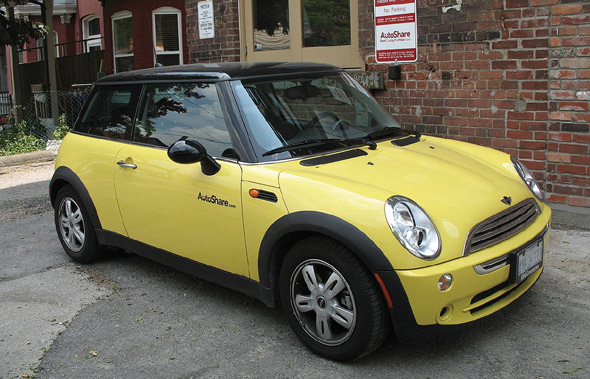
In a move designed to promote further alternatives to car ownership in the city, Toronto City Council has approved a proposal to allow car share vehicles to occupy reserved on-street parking spaces in selected areas throughout the downtown core.
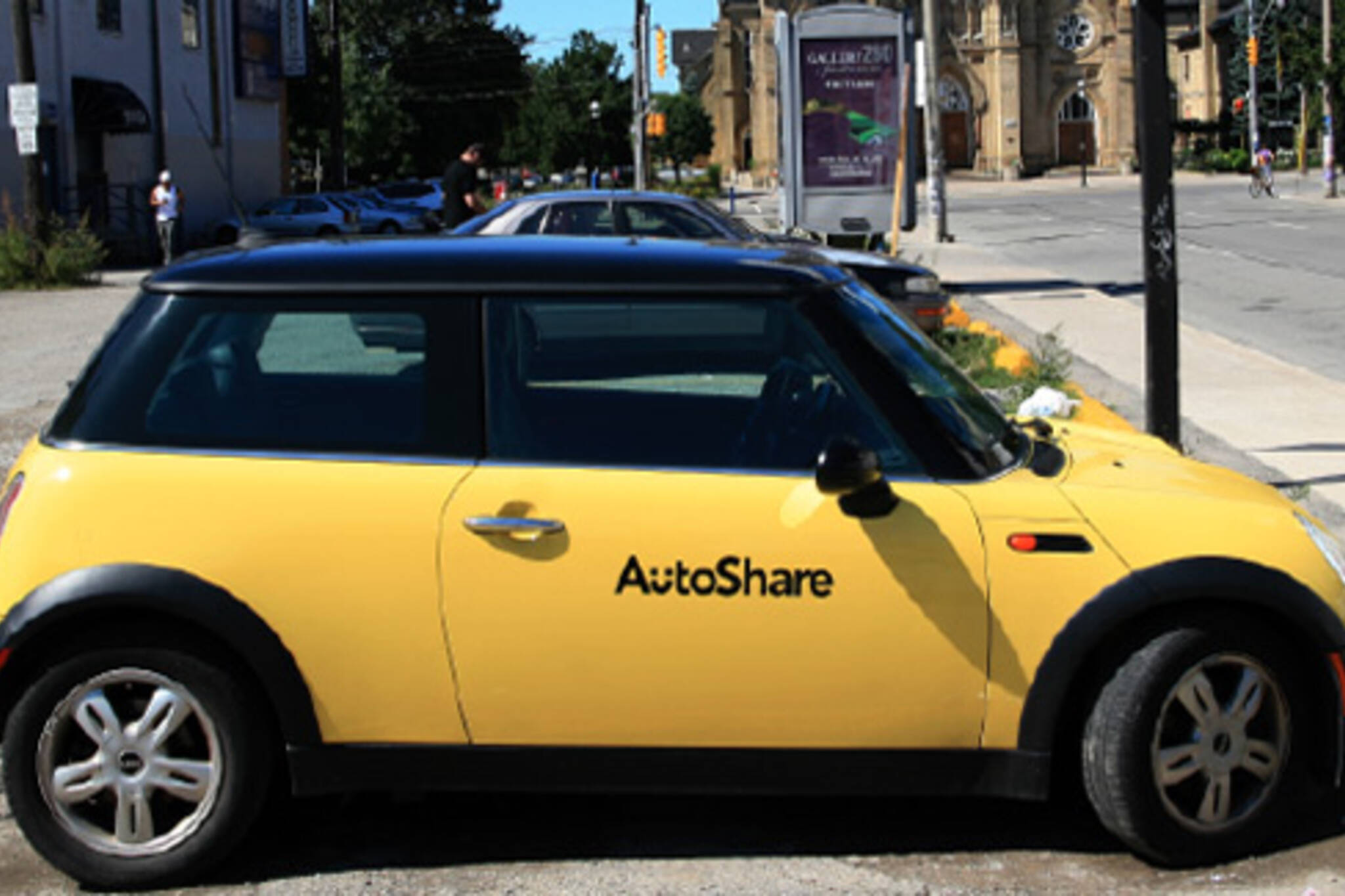
The one-year pilot project, which is part of the Sustainable Transportation Initiative, includes 20 spaces in such areas as King and Yonge and the Entertainment District. Up until now, companies like Autoshare and Zipcar have had to use primarily private parking lots and spaces to store their vehicles. And although these are common throughout Toronto, the ability to utilize street parking will almost certainly increase both the visibility and convenience of car share programs city-wide.
The decision to pilot the program in Toronto comes on the heels of a proposal to build the city's first condominium without permanent parking spaces at the former site of the Royal Canadian Military Institute at Dundas and University streets, and at a time when citizen participation in car sharing is at an all time high. Zipcar's Toronto membership, for instance, has increased almost 40% since last year. And, according to the city of Toronto, between its fleet and that of Autoshare, there are now over 12 000 residents participating in car share services through the use of approximately 600 vehicles throughout the city.
Similar programs have been successful in other cities throughout North America, including Portland, Philadelphia, Seattle, and Washington DC.
Allan Brown, a Zipcar user and downtown resident, welcomes the increased ease that on-street car share spaces will provide. "Car sharing is already quite convenient, but it's a natural progression that such vehicles will now be located on city streets."
Autoshare founder, Kevin McLaughlin, believes that Toronto's willingness to pilot the project "is another example of [the city's] willingness to show leadership in sustainable transportation and carbon reduction." Naturally, Micheal Lende, General Manager for Zipcar Toronto also expressed enthusiasm over the project's approval. "We're thrilled with the leadership the City of Toronto is demonstrating by recognizing the importance of car sharing," he explained shortly after the proposal passed.
According to studies, one car share vehicle reduces approximately ten private cars from the road and can reduce a user's annual driving by as much as 50%.
Lead photo by Tim Shore, second by the robertson building of Flickr.


Discussion
44 Comments
Sort By Oldest First / Newest First
Subscribe
However now that I own my own car, I'm a little annoyed that the cheaper street spaces are going to be crowded out by company vehicles.
This is good progress.
Now if we could just get the TTC to agree to let carsharing companies use their parking lots, we'd be in business!
Its long since time car-sharing came to Kennedy Station!
Actually, the Sun will eventually become a Red Giant. Some time after this, because it has insufficient mass to generate temps high enough to fuse carbon at its core, it will evolve into a White Dwarf. Due to the Sun's mass being less than the Chandrasekhar Limit, the Sun will not become a supernova.
The reason the city would want to support his idea is that it can reduce road congestion and pollution. The city report says it is revenue neutral, meaning the net cost is zero for the tax-payer. AutoShare and Zipcar will pay an annual parking fee for these on-street spots. My question is why wouldn't the city want to do this?
So what if AutoShare is a private business, all levels of government give some consideration to businesses to encourage good community outcomes whether it is increased employment or otherwise.
And to be correct, every car is a foreign car in Canada since we don't have a Canadian car maker.
The point of the project is to reduce traffic congestion and the use of private cars. Since these vehicles are shared, they do not fit the definition of private car.
I never argued for support for Ontario's auto sector.
But, as Alogon says, I DO take it a step further. I try to buy only from Canadian retailers (no Walmart no matter how cheap), Ontario fruits and vegetables over imports even if they are more expensive, and shop at mom & pop shops in my neighbourhood. None of this is to support auto-workers: it is to support Ontario agriculture and main-street retailing.
I think Alogon and J-Dawg and I are on the same page, really.
And Sandra Bussin is an idiot.
The reasons to avoid Walmart are so numerous, one could write a book. Oh, somebody already did:
http://tinyurl.com/ybakavd
I am willing to bet that you worked there when Sam Walton was still alive: he seemed to have a conscience. Walmart is well known for squeezing suppliers ruthlessly, and I bet your old employer had to give up supplying Walmart to a Chinese competitor, or go broke trying to keep Walmart as a customer. I haven't been to Walmart in 10 years, and never will go again, even if they do stock some Canadian made goods. I'll buy your Leslieville made goods at another retailer, and keep those old friends of yours employed that way.
Of course, if you did any digging, you'd see that Consumers Reports mea culpa last year (due to the all the problems the V-6 Camry and new Avalon were having) ended that love affair, finally.
And, yes, Toyota does assemble a few vehicles here, but that is only to avoid any future protectionist motions of our governments. GM and Ford both build and DESIGN their vehicles here. The GM fuel cell vehicles were designed in Oshawa, as were the Impala and Equinox. Toyota and Honda import most of their parts from Japan and throw their cars together here so we can pat ourselves on the back because we are driving 'Canadian.' Ever driven the anemic Corolla? Do you think it's 'real world' gas mileage is the same as the Cobalt when pushed hard? Or do you not realize that both the EPA and Energuide numbers are generated on a dynometer in a lab?
But here's the $64,000 question: where are the value-added jobs. You know, the metallurgists, the chemists, the engineers who design the cars? Japan. Since the Auto Pact (and all the way back to McLaughlin) GM, Ford and Chrysler have invested billions in Canada so that we can stay in the game.
Who cares about a few assemlby line workers: no single item produced by Mankind results in anywhere near the same spin off technologies and advantages for society than the automotive industry. Exhibit A would be the fact that all of the G8 nations, and G20 for the most part, have healthy auto industries. All other nations are relegated to the back of the bus - and the G20 nations know this, which is why such a hue and cry was raised when they are threatened. Not even aerospace employs the same numbers of people or results in the same investments in all types of technologies, from fuels to plastics to electronics - the list is endless. Canada needs a piece of that action; not the lipservice the Toyota and Honda pay.
Anyway, as usual City Hall is taking a chain saw to the challenge of Toronto's traffic. Good grief - Toronto is a lousy 3 million people and we moan and groan about what can we do about our traffic? Gee, what did New York, Paris and other cities do when their cities hit 5, 10 and then 15 million?
This city needs to stop congratulating itself for being world-class and grow up. Our traffic is atrocious and throwing bandaids like propping up auto-sharing fads are not going to solve anything in the long run.
And J-dawg, the Ontario Milk Marketing Board ensures that no Japanese milk will get into Ontario, so you need not fret about what kind of milk to buy, just the bread.
And it does help the auto industry cause its people in an automobile that wouldn't otherwise be in one.
On the other hand, I'm all for alternative solutions to "single-rider" owned cars. And maybe by allowing these companies to park on the streets, in front of business, it may make people think twice about using personal cars to do simple "down-the-block" groceries. More cars off the road really.
So ya, good idea.
Let's just wind the clock back to the 1800s, then everyone can be happy. It's so much easier than actually having to move forward.
It takes at least 15 minutes to drive from Bloor/Ossington to Bloor /Lansdowne - not in rush hour. Between the lack of left-turning lanes and parking on either side of Bloor (and College, and Dundas, and Queen, and King - never mind the pokey old streetcar tracks), no wonder people in this city have road rage - all the busiest streets are single-lane! It is entirely frustrating to drive anywhere. If you're going across town, unless you are hauling a heavy load the only sensible thing to do is take the subway.
I am an Autoshare member for one year now, and couldn't care less about whether I got to park on the street or in a Green P or on a quiet side street. I mostly use the shared car for trips to places that already HAVE parking (grocery stores, shopping centers, peoples' homes, etc).
The Big 3 realized that with Canadian productivity being superior, lower taxes and production costs coupled with a free trade zone makes building in Canada an economic "no-brainer". In fact during the Auto Pact, the U.S. companies only kept blue-collar jobs here the same as you are deriding the japanese for. The Asian car companies see Canada as the more economical place to do business when selling to the US for the same reason I mentioned for the U.S. concerns so they build here for that reason as well. I doubt that they really spend so much money building plants here merely to avoid any weak government protectionism which they could complain to the World Trade Organization about the same as they did about the Auto Pact. Besides, that is something the US makes did as well, so that is two things you tried to use as a negative about the Japanese yet already applied to the US makers you were promoting.
I also disagree that no other industry except the auto industry has led to more spin-off tech. I think that would have to go to the military arms and vehicles industry. Many, many of the common products today were based on or developed from military products and R & D. This especially since the practice of war has been around much longer than the making of cars.
i) It is just that, a Pilot Project, for 1 year, to see how it works for everyone involved (and to look at things like appropriate fees etc..)
ii) Taxi's, for instance, do not pay anything to park at taxi stands all over the city - because the city sees these as important to our Transportation System
iii) Something like 40% of our parking spaces at surface lots have disappeared in the last 4 years, turned into condos & commercial buildings
iv) parking standards for condos & commercial buildings were not designed with modern ideas like car sharing in mind. This pilot project is important to help the city plan better for the next 30 - 50 years. Surely we can all see that there will be fewer private cars in our city, and more shared cars (and sorry, no flying cars). So for instance, more condos need parking that can also be made available to the public, or at least to a car sharing program.
While Zipcar & AutoShare may have less than 600 cars in Toronto today, that still translates into more than 20,000 people, oalmost 1% of Torontonians, using the service (or, about 3% of the old city, and as high as 5% in certain neighbourhoods). And we are growing every day, with access to suitable parking the biggest obstacle to becoming convenient in every neighbourhood.
Kevin McLaughlin
President & founder
AutoShare
When are you going to stop this shit and accept that GM & Chrysler are the economic backbone of this province? That neither company can build mass transit vehicles? That what they're good at is what they're good at?
GM and Chrysler are not the economic backbone of this province. They are a part of the automotive sector, which is apparently about 40% of all manufacturing in Canada. So, in fact all automotive in Canada employs less than 5% of workers, and GM and Chrysler a part of that:
http://www40.statcan.gc.ca/l01/cst01/econ40-eng.htm
Not to mention Chrysler went bankrupt earlier this year as did GM. Ontario has a diversified economy, thank goodness, and that will go along way to keeping people off UI and Welfare.
And finally, GM was a major public transit manufacturer building locomotives and buses for decades:
http://en.wikipedia.org/wiki/General_Motors_Diesel_Division
They should get back into it.
http://en.wikipedia.org/wiki/General_Motors_Diesel_Division
They should get back into it.</blockquote>
Except that they <i>don't</i> want to get back into it, Tuds-especially since there are companies making buses, streetcars, subways, and LRT's that do the job better than GM might, as I said before. GM's specializing in what they do best; making cars, trucks, and vans, and trying to make those cars cleaner (the upcoming Chevy Volt hybrid). With cars and vans like that, buses, subways, streetcars, and LRT's mean nothing to them.
FWIW, I support AutoShare & Zipcar, and wish both the best of luck.
There are huge opportunities in North America for making streetcars and subways as the only domestic maker is Bombardier. Siemens has a plant in Canada too, I think, but the profits leave the country (as do profits of foreign automakers, at least until GM and Chrysler's bankruptcies). There is more competition in the bus arena.
As I have said before, we need an integrated transportation network, which naturally includes cars and public transport. I feel auto-makers could get some nice incremental and not insignificant profits from having a public transportation division.
AND PLEASE STAY AWAY FROM US AT ALL TIMES! DO NOT TRY AND CUT BETWEEN THE PLOWS. WE HAVE VERY BIG CAN OPENERS ON THE FRONT.IF YOU MESS UP WE CAN'T GUARANTEE WE CAN STOP IN TIME!