City
Morning Brew: McFalafels and McShawarmas, Street Racing Law Unconstitutional, Blue Jays Attendance at All-Time Low, Ghost-Hunting Tragedy
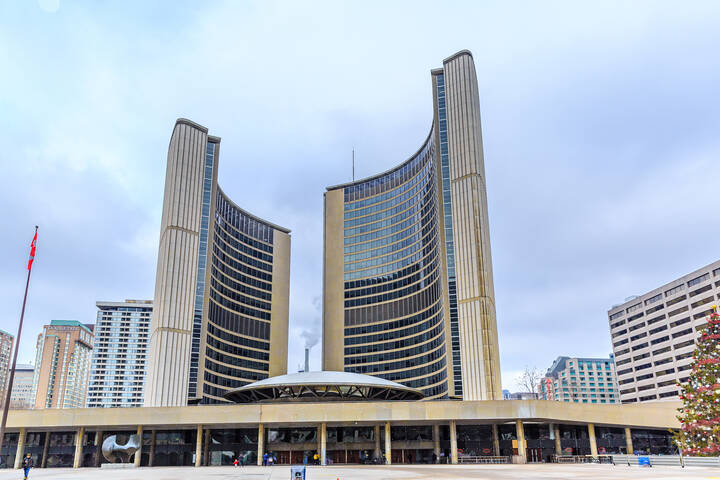
Photo: untitled by Megan Faulkner, member of the blogTO Flickr pool.
What's happening in the GTA (and sometimes beyond):
It's a really low point for the Toronto Blue Jays. Last night they saw just 11,159 fans come out to the ball game, representing the lowest attendance count ever at the SkyDome. With kids going back to school, and the team going from hot stuff at the beginning of the season to weaksauce (mostly due to problems plaguing pitching), it's no wonder the stadium is under 25% of its capacity when Minnesota is in town.
A man and woman believed to be taking part in ghost-hunting atop old buildings at U of T saw their adventure become tragedy when the woman fell to her death when trying to hop from one section of roof to another. Ironically, her quest to discover ghosts may make her the figure of a ghost legend in the future.
Unless he's selling Irish/Mediterranean fusion food, I can't see how using the prefix "Mc" in his falafel restaurant's name is wise to begin with. Why would anyone who cares about good food willingly associate their business name with McDonalds? Apparently the "Mc" was chosen to represent "Mediterranean Cuisine". And the red and yellow colour scheme and prominent "M" in the logo design? He's fighting a losing legal battle, I think.
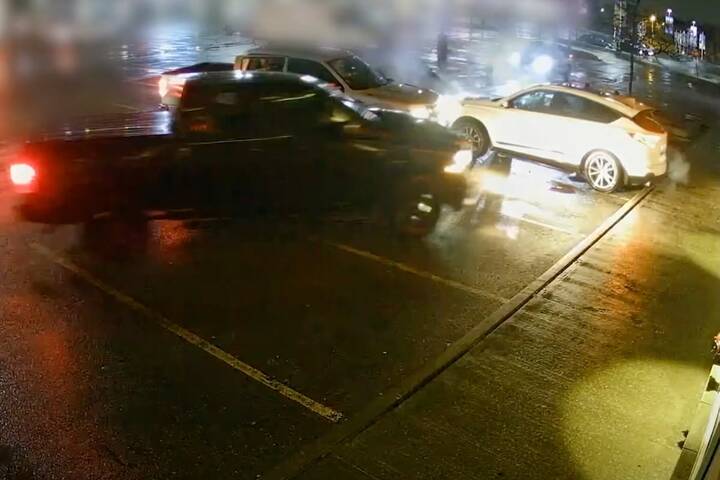
Ontario's "street racing" law has been deemed to be unconstitutional by Ontario Court of Justice in Napanee after a 62-year-old grandmother, Jane Raham, fought the charge. She claims that she was passing a transport truck when the OPP nabbed her, and admits that she was speeding but since street racing is an "absolute liability" offence, there is no possible defence. The OPP are saying that they'll continue to enforce the law (immediate vehicle impounding and license suspension included), even though every single charge will likely be thrown out later.
Waterfront development of Queen's Quay may be slowed due to the slump in the condo market. The dependence on private-sector funding to supplement government dollars means that uncertainty is major factor in the project.
No balloons allowed! Leon's is sad that they can't do a promotional giveaway in Toronto involving the launch of balloons containing prizes. As much as this appears to be anti-fun, I'm sure there's a reason for it (whether that be air traffic safety, or pollution).
And check out this (clearly planned but seemingly unannounced) public performance of "Seasons of Love" from Rent that went on in Yorkville earlier this week:


Discussion
34 Comments
Sort By Oldest First / Newest First
Subscribe
Whether she's Grandmother or not, whether she's passing someone or not, there is no justification for doing 50 km over the posted limit. Perhaps a hefty speeding ticket would've been more appropriate, but that is also RECKLESS driving, IMHO, and yes, it's a danger to other people on the road. So wake up, Granny!! You're not above the law just because you're OLD!!!!!
Additionaly, the speed limits on our highways are rediculously low for a country like Canada.
"The judge didn't say licence suspension or a car tow was unconstitutional. What he said is that a conviction for stunt driving by speeding is unconstitutional," Morton said.
Is there a minimum jail time or fine required by the legislation? If so then I can understand his ruling, otherwise it's just bizarre.
Seems like this whole situation is a debate over the moniker of the legislation as the "stunt driving law". When the law first came into being two years ago, it seemed like we were being told that excessive speeding was being lifted into the realm of street racing and stunt driving. That's not exactly fair.
Perhaps this would have never been raised in the court of appeals if they had called it the "going waaay to fast" law.
I do believe that speed limits are for our protection, but there are a lot of areas where they could be adjusted. Why don't the millions of people who use our roads every day have more of a say in how we're able to use them?
In dense urban areas, or highly trafficked ones, it makes sense to control speed. However, in sparsely populated areas, there's no reason why we can't have higher speed limits when there's more room to maneuver.
Here's what happen: YOU LOSE YOUR CAR FOR ONE WEEK WITHOUT BEING FOUND GUILTY OF ANYTHING. Your charter rights are violated. You're left in alot of grief and face untold misery of finding a way home from a difficult position and are labeled as a racer or a stunt driver for speeding. You'll probably have a big problem of getting to work and faced with the financial burden of not being to get to where you need to be to make money. All without due process. Welcome to the fascist nanny state.
Thankfully the courts have finally found this law to be crap, and hopefully the appellate court will throw the appeal by the crown out the window.
Unfortunately, yes. The police are tasked with keeping the peace and protecting citizens' lives and property. It's not their job to also protect your rights.
It IS the job of the courts to protect your rights, and that's what happened in this case.
"Is it not a waste of police resources and tax payers' money to pursue something that will be thrown out of court?"
The police are in favour of any legislation that increases their authority not only to arrest you but to convict you too.
Note that the police also report to the insurance company the fact that they have charged and, regardless of whether that charge is later thrown out of court, your insurance company happily quadruples your insurance premiums. So the police officer gets to punish you anyway.
"Would the resources not be better utilized for catching people who commit serious crimes...?"
Yes. Speeding is a relatively minor contributor to traffic fatalities, but the relative ease of identifying speeders with radar guns has allowed police to exaggerate it's importance.
There are certainly other things the police could be doing that would actually make us safer. But handing out speeding tickets is easier (and profitable).
It goes into the government's (either Toronto's and Ontario's) coffers as "general revenue". The City and the Province are unsurprisingly reluctant to say just how much they get, which is what suggests that it's an embarrassingly high figure.
Ryan, it just occurred to me that you may be thinking about revenues from red light cameras, while by all accounts seem to be falling short of paying for themselves.
Absolutely not. An arithmatic increase in speed (or more specifically the causes an <b>exponential</b> increase in the likelyhood of death. And that is only talking about single car accidents. Add the second car in and it becomes a whole lot worse for every km/h more one car is travelling than the other.
Also INTENT is the other half of a crime, passing a truck is NOT the same as actual street racing / stunt driving, so being charged for that despite doing the other is a problem.
There should be separate laws and penalties for excessive speed that is exclusive of street racing / stunt driving.
Maybe the truck was speeding and going 100km/h...but then why are you trying to pass it?
(By the way, F=ma is not an exponential relation.)
So any one traveling at 150km/h has 2.25 times as much kinetic energy to dissipate upon crashing relative to someone traveling at 100km/h ( 150^2 / 100^2 = 2.25 ). Speed kills. There is no excuse for exceeding the limit by such a large margin.
Yes, kinetic energy "E" equals 1/2 the product of mass times velocity squared. But that's not impact force. Your "E" is the work needed to accelerate a body of a given mass from rest to its current velocity.
For impact force, to be described in ft.-lbs. or similar units, we use F=ma (or, if "a" as acceleration makes you uncomfortable, F=mv^2).
Oh, and in your equation, your exponent is fixed at "2", so that's not an exponential relation either. It's a power function.
Wait, wrong movie...