City
Environmentally-Focused Alternative School Opens in the West End
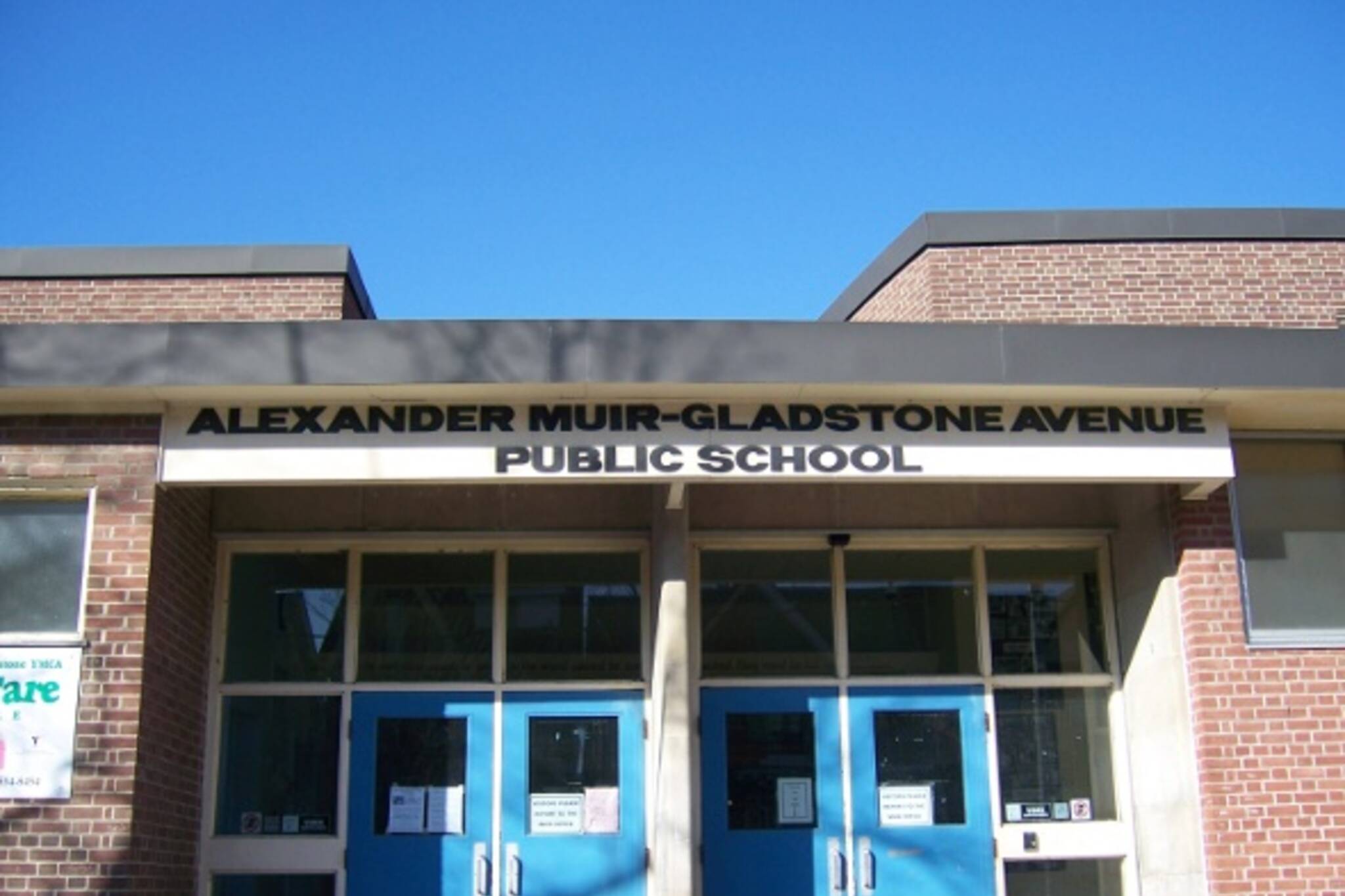
What happens when you mix environmentalism, social justice and community activism with elementary education? You get the Grove Community School (GCS). After two years of preparation, the proposed alternative public elementary school on Gladstone (just north of Queen) has been approved by the Toronto District School Board. The K-6 school is set to open its doors in September of 2009 at the Alexander Muir/Gladstone Avenue Public School.
According to the GCS mission, the school seeks to "support the diverse developmental and educational needs of students in a learning environment emphasizing environmentalism, social justice, and community activism." As part of this process, the school will establish an open and collaborative community where students, teachers, parents and community members will help determine its guiding values, principals and curriculum.
"Parents want to be involved," Kim Fry, one of the parents and activists behind the founding of the school, told me. "They want to participate in creating their children's curriculum." By creating the school, the parents are taking a more active approach in how their children are educated. They want to create a stronger link between the values they promote at home, and what their kids are taught at school.
While still adhering to the Ontario Ministry of Education requirements, the founders of GCS are seeking to promote and stimulate the curiosity, imagination and social, ecological and personal responsibility of its students. One of the biggest components of this model of education is creating a more active and experiential form of knowledge. By doing so, the school's creators want to instil a sense of community in the students.
According to the GCS founders, the school will be the first of its kind in Canada that incorporates ecological sustainability and community activism into its curriculum. As part of this curriculum, students will be taught "ecological literacy" through concrete experiences and community involvement.
Alternative schools are not without critics. Many parents have expressed concern that alternative schools create an uneven educational system within the city. They point out that a number of alternative schools (particularly art-centric ones) require students to audition in order to be enrolled. This, they say, caters to children from high income families, as they're more likely to benefit from having taken private lessons.
And we won't even touch on the merits/drawbacks of the Afri-centric school...
Critics aside, "three new elementary schools appeared recently," Kim told me. She added that, "clearly there's a lot of interest." She then quickly pointed out that,"we had to do a lottery for the kindergarten acceptance. We are overwhelmed by the excitement from parents. "
One potential drawback that I think Torontonians should consider when addressing the subject of alternative schools is how they're going to benefit or harm the city's educational infrastructure as a whole. Shouldn't we be trying to incorporate some of these 'alternative' teaching methods in all public schools rather than implementing them in pockets across the city? And, are we moving towards an education system that's fragmented and specialized, catering to particular needs for niche groups of parents and students?
While I applaud the founders of GCS for pursuing their vision and creating a school that promotes social, civic and ecological responsibility; I believe the effects alternative schools have on our public school system should continued to be questioned and examined. But in the meantime, I'll raise a glass to the parents taking an active role in their child's education.


Discussion
22 Comments
Sort By Oldest First / Newest First
Subscribe
I'm certainly not involved with the Toronto public school board at all, so I don't know but this 'alternative model' sounds like a crock of self-entitled hogwash to me.
To keep things balanced, I suppose the TDSB is also planning a Young Capitalist Alernative School for the children of parents who think the school system is already too liberal.
Maybe, but if so, would it not be prudent to run a pilot project at one school before rolling it out on a larger scale?
"are we moving towards an education system that's fragmented and specialized, catering to particular needs for niche groups of parents and students?"
Not likely. Adding a few more alternative schools doesn't mean the system as a whole is "moving" anywhere. It's just adding variety. If the schools work, fine, if not, fine.
Students (and to a much lesser extent, parents) who do have special needs should be catered to... the operative word being <em>needs</em>. In this case, I don't see a need; however, that doesn't mean it isn't a cool idea. But I wouldn't necessarily lump in "themed" alternative schools like this one with those aimed at addressing groups that can demonstrate the necessity (or, failing that, a strong claim of positive benefit) of an alternative curriculum or whatever else it is that differentiates the alternative school from "standard" TDSB schools.
I agree withthe above posts, that more money and time should be spent on teaching kids ettiquette and manners. I mean boys are still wearing baseball caps in class?!?!? What happened to old fashioned respect?
Those kids will have to face the real world someday though.
However, I think further segregating children based social policy is foolish.. and sets an obscene precedent, just as the afro-centric school would have.
Let's please run pilot projects within the framework of the public school system, and if anything reinforce these obviously valuable enviro-concepts in the traditional curriculum streams.
I see motivation as the biggest obstacle to education. If you let people - kids, parents, teachers - try something new, they'll put their heart and soul into it. One standardized provincial curriculum? That's stifling.
And let's not forget there are schools in this city catering to a whole swathe of niches - if you're willing to ante up the tuition fees. Let people who can't afford $10 000 / year have access to something different!
Yeah, the more basic elements were provided in the 70's, but not to the extent that it could have.
In this day of cost efficiency, it's easier to have specific programs provided within a smaller environment, rather than in a large scale program where it will be wittled down, or hotly contested as even being useful.
That same tactic certainly doesn't seem to apply to Phys-Ed, with all it's booster and incentives, and how useful is football in later life.
I was never a gym kid, and the topics I really would have loved to have learned in school just could not be provided, so I was stymied at all turns, and eventually was forced to move on.
Something like this could be perfect for kids who have more specific goals for their future in mind.
Someone said these students will eventually have to live in the real world. Maybe they already are, and it is we who need to adjust
Also, at least <a href="http://www.diabetes.ca/about-diabetes/what/prevalence/">according to the <em>Canadian</em> Diabetes Association</a>, there will be 3 million Canadians with diabetes by 2010 and that "a North American child born in 2000 stands a one in three chance of being diagnosed with diabetes in his or her lifetime". So I'm not sure what evidence you've based your other"[autism is] more common than..." claims.
It actually just looks like some talking points cut-and-pasted from elsewhere.
I'm glad you didnt dive into the Afri-Centric schools, as these in my opinion are an entirely different approach to niche education systems. In my opinion race should not be an identifier of cultural studies taken. We have an advantage here in Canada with our multi culturalism, we need a way to educate everyone on these ways of life to properly prepare and invest in our leaders for tomorrow.
"Someone said these students will eventually have to live in the real world. Maybe they already are, and it is we who need to adjust", well said Christopher. The kids of today are obviously nothing like the kids of the 70's. Yes we have cell phones and ipods and our 'strange' music. We ARE distracted because there just might not be anything to stimulate us enough. Those of us living in massive urban centres are bombarded with so much stimuli it's ridiculous! The system just might have to change to meet our growing needs. The post-modern city has solidified the idea of the individual and role specialization compared to 30-40 years ago. You can't expect us to fit into an educational model whose base was formed during a time when North America's cultural values and attitudes were still shifting from rural community closeness to urban individualism. The times have changed, A LOT.
Alternative schools take kids who may feel marginalized in the regular stream and gives them the opportunity to be themselves and shine. I'll tell you now you'll likely know my son's name in 10 years because he got what he needed out of the Alternative School System. He was always an A student even in the regular stream but he didn't "FIT IN". Now he's more confident and his talents are blossoming.
His feelings of inferiority were left behind in elementary school, his middle school years have given him a whole new outlook. I thank god the TDSB has such schools!!