Learning from the Air France Crash at Pearson
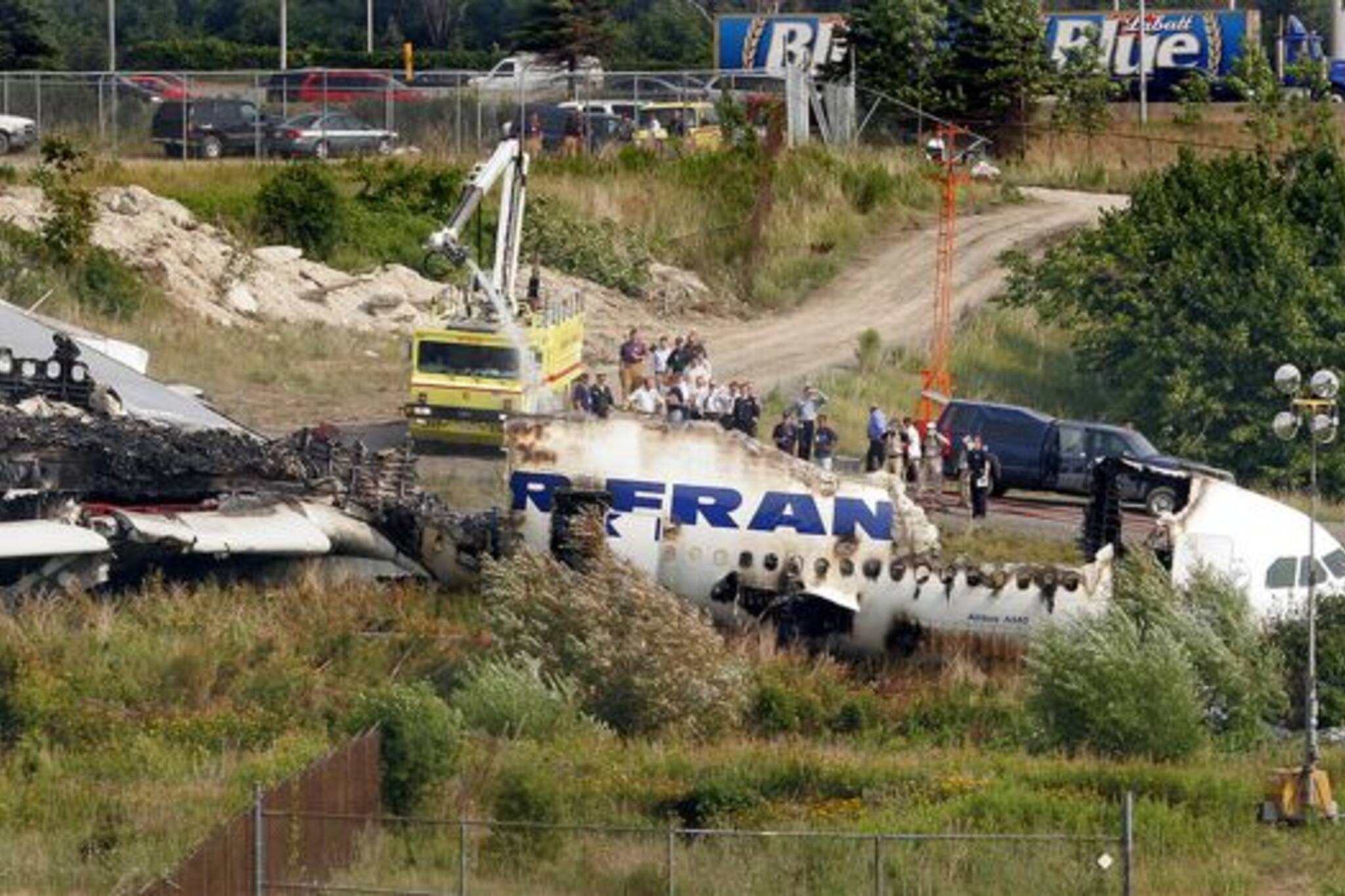
Just over two years ago, I returned home to the smell of burning metal and rubber permeating the neighborhood, and a cloud of smoke surrounding the airport a few blocks away. And while all 297 passengers and 12 crew members survived the crash, that cloud of smoke caused by Air France Flight 358 was still classified as one of the biggest crises to hit Toronto's Pearson International Airport in its seventy year history.
Yesterday, the Canadian Transportation Safety Board's probe into the two-year-old crash — a probe that was predicted to take years — reiterated what has been said since that miraculous August day: pilots need clear rules and better training on how to properly handle a landing in severe weather.
The board released seven recommendations yesterday as a result of their two-year investigation, most of them focusing on worldwide standards for pilot training and severe weather landing recommendations. Only one of the recommendations, however, addressed structural issues at airports themselves: a 300 meter safety area at the end of major Canadian runways.
While I applaud the efforts of the TSB, I wonder if Pearson Airport can do more to try and mitigate such events in the future. It's no surprise that Toronto gets its fair share of "severe weather," so perhaps the GTAA can look at some of the best practices from other airports in similar environmental situations — in Canada and abroad — in order to reduce the risk of weather-related incidents.
This might be happening already, so I'd love for someone involved in airline safety to give me some insight as to what other precautions are being taken to avoid incidents like the Air France Flight 358 crisis in the future. And of course, I'm no aviation expert, just someone that flies a lot, so if there's anyone out there with more expertise in airport and airplane design standards, I'd love to hear your thoughts on the recommendations.
(Photo of Air France wreckage by Never Was An Arrow II.)
Latest Videos
Latest Videos
Join the conversation Load comments